
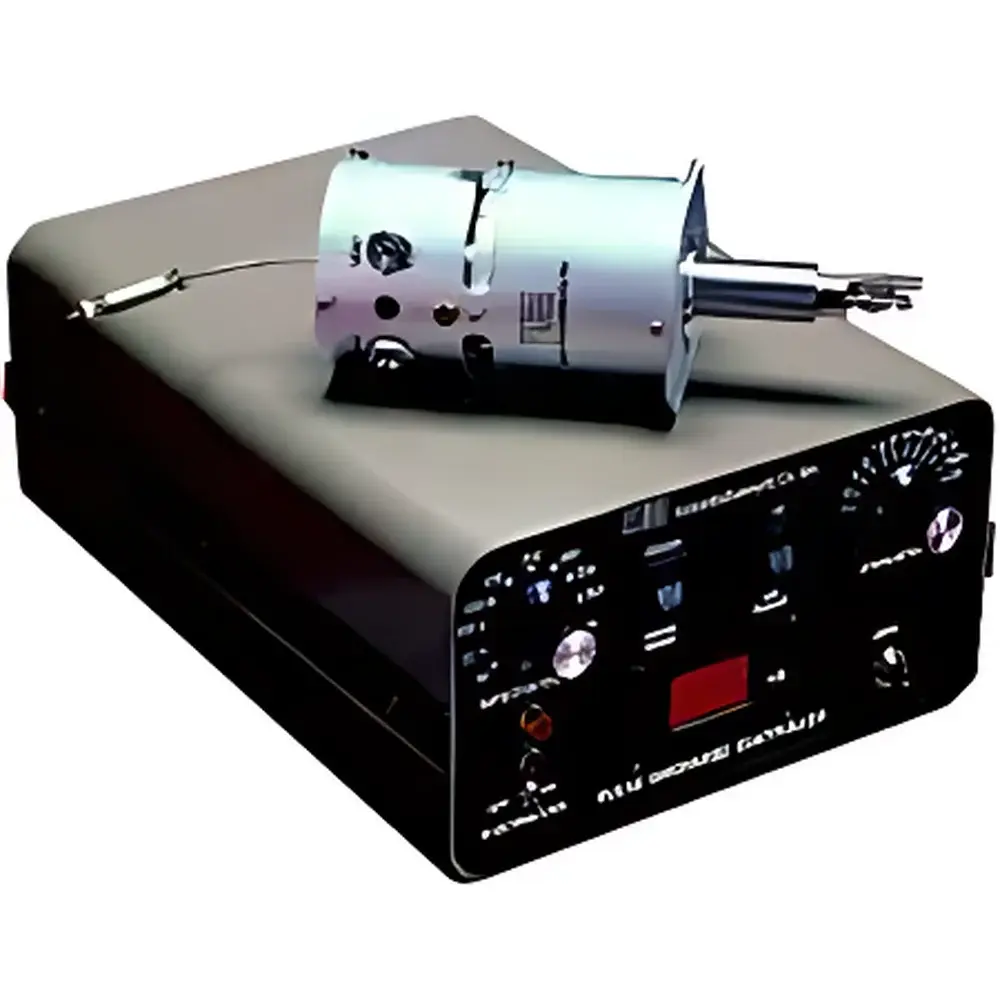
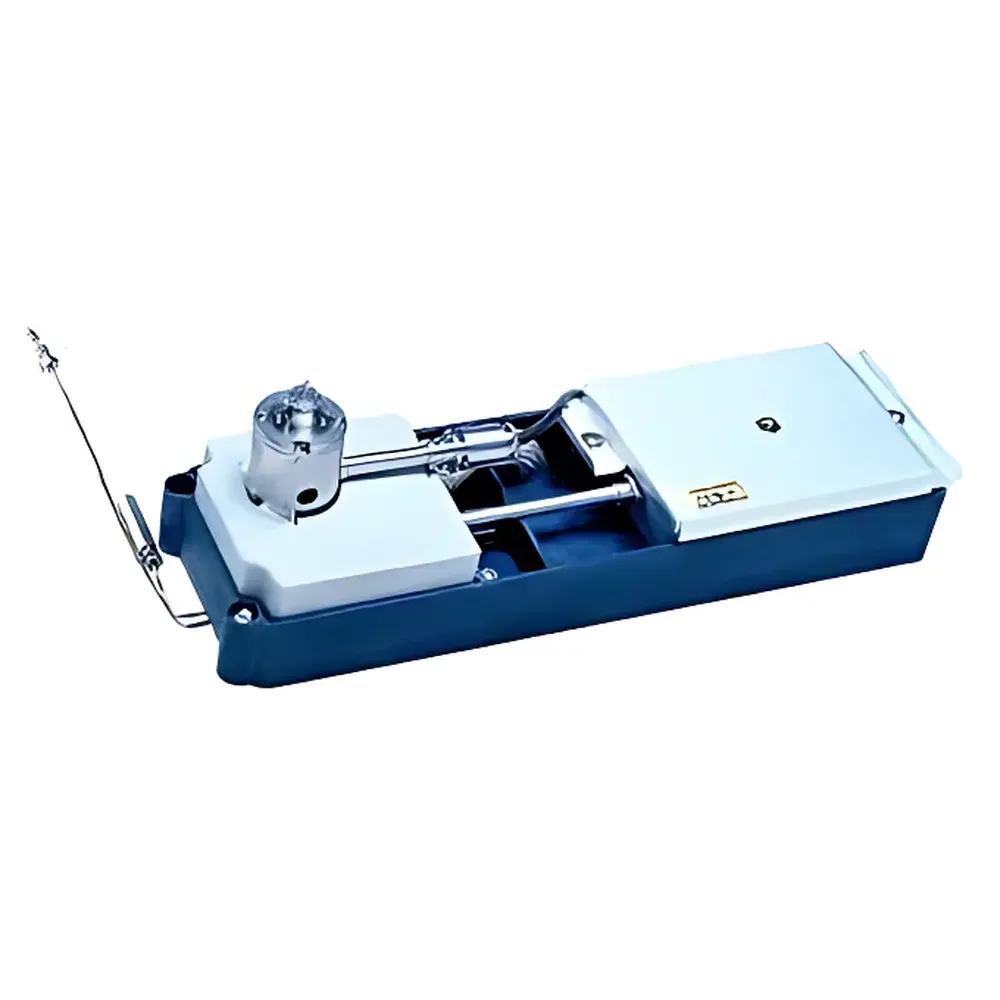
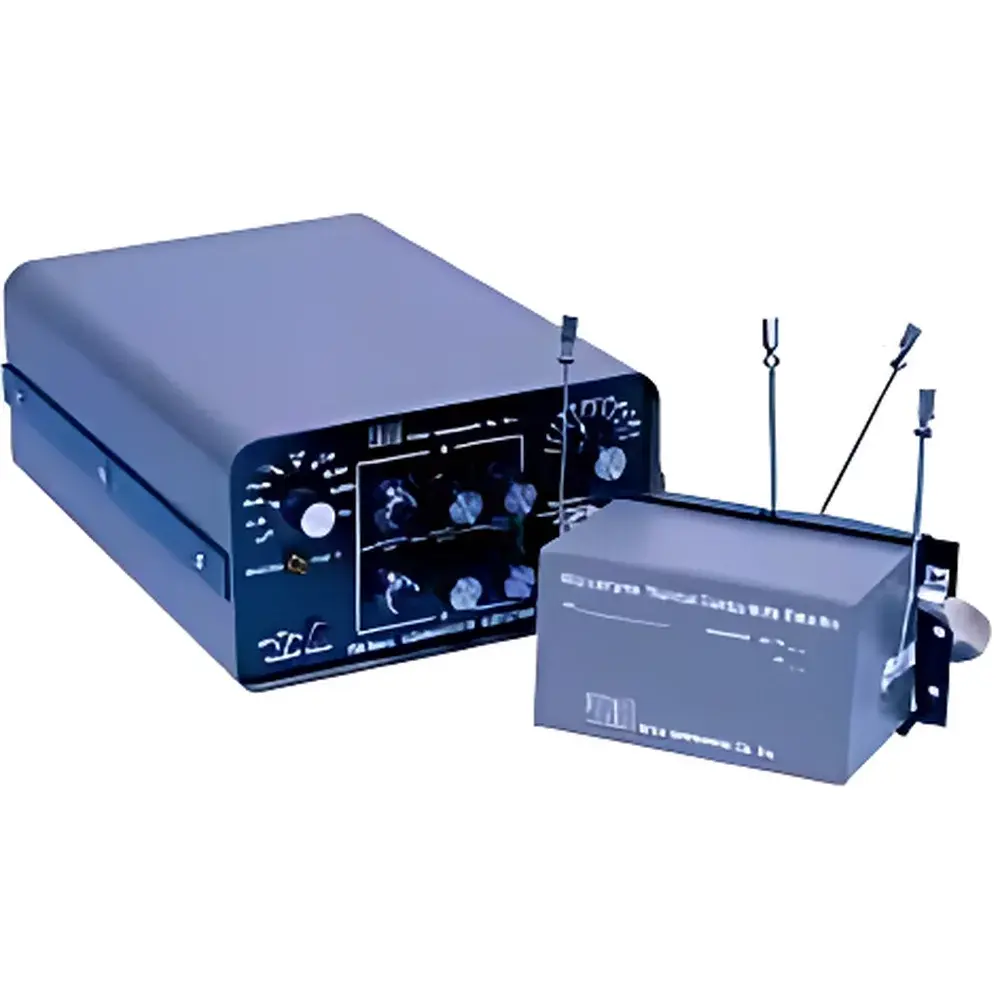
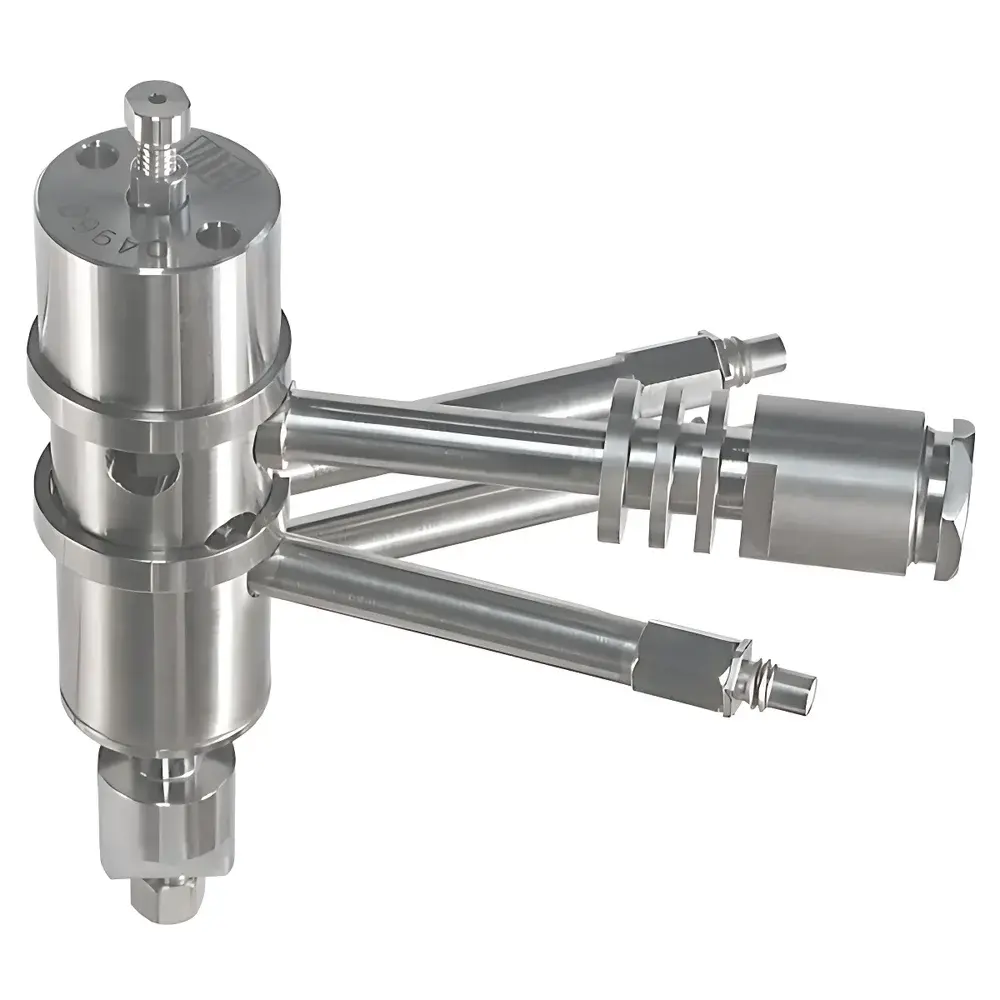
VICI PDD Series Pulse Discharge Helium Ionization Detector for Agilent 6890/7890/8890 GC Systems
| Brand | VICI |
|---|---|
| Origin | USA |
| Model Compatibility | Agilent 8890 / 7890 / 6890 GC |
| Detection Modes | Pulsed DC Helium Discharge (Electron Capture & Helium Photoionization) |
| Detection Limits | Sub-pg to fg (EC mode) |
| Temperature Stability | ±0.02 °C (TCD variant) |
| Carrier Gas Purification | Valco HP2 (He/Ar/Ne/Kr/Xe), NP2 (N₂), <1 ppm reactive impurities |
Overview
The VICI PDD Series Pulse Discharge Detector is a high-sensitivity, dual-mode chromatographic detector engineered for gas chromatography (GC) systems—specifically optimized for integration with Agilent 6890, 7890, and 8890 platforms. Unlike conventional radioactive electron capture detectors (ECD), the PDD utilizes a stable, low-power pulsed direct-current helium discharge as its ionization source—eliminating regulatory burdens associated with radioactive materials while maintaining exceptional selectivity and sensitivity. In Electron Capture (EC) mode, the detector operates via thermal electron capture by high-electronegativity analytes—including chlorofluorocarbons (CFCs), organochlorine pesticides (e.g., DDT, chlordane), halogenated hydrocarbons, and perfluoroalkyl substances (PFAS). In Helium Photoionization (HPI) mode, it functions as a universal, non-destructive detector leveraging vacuum ultraviolet (VUV) photons generated from metastable helium atoms (19.8 eV), enabling detection of volatile organic compounds (VOCs), permanent gases (e.g., CO, CH₄, NH₃), and inorganic hydrides without chemical derivatization or column degradation.
Key Features
- Dual operational modes (EC and HPI) selectable via software or hardware switch—no physical reconfiguration required
- No radioactive source: fully compliant with IAEA, NRC, and EU Directive 2013/59/Euratom regulations; eliminates licensing, transport restrictions, and disposal liabilities
- Sub-picogram detection limits in EC mode for halogenated compounds (e.g., 0.1 pg on-column for α-HCH); ≤100 ppb detection in HPI mode for C₁–C₆ hydrocarbons and permanent gases
- Plug-and-play compatibility with Agilent 6890/7890/8890 GCs—D-3 model designed for HPI-based trace analysis; D-5 optimized for EC-selective quantitation
- Micro-volume D-2-IM variant: 50% smaller footprint vs. D-4; 20% lower He consumption (≤5 mL/min); ideal for portable GC systems and resource-constrained environments
- Integrated temperature-controlled detector body with ±0.02 °C stability (applicable to TCD variants); precision analog output (0–1 mV) with linear response across six orders of magnitude
Sample Compatibility & Compliance
The PDD supports broad analyte classes without compromising column integrity or requiring post-column reactors. EC mode delivers high specificity for electronegative species conforming to ASTM D5504 (sulfur compounds), EPA Method 8021B (halogenated pesticides), and ISO 10156 (gas purity verification). HPI mode meets requirements for VOC monitoring per EPA TO-17 and EN 14662. All PDD models are compatible with standard fused-silica capillary columns (0.1–0.53 mm ID) and support split/splitless, on-column, and PTV injection. The detector complies with IEC 61010-1 for electrical safety and meets electromagnetic compatibility (EMC) standards per CISPR 11. When paired with Valco HP2/NP2 gas purifiers—capable of reducing O₂, H₂O, and hydrocarbon impurities to <0.1 ppm—the system satisfies USP , FDA 21 CFR Part 11, and GLP/GMP audit requirements for carrier gas purity in regulated laboratories.
Software & Data Management
PDD operation is fully integrated into Agilent OpenLab CDS and MassHunter platforms via native driver support. Real-time mode switching, gain adjustment, and baseline correction are accessible through instrument control panels. Audit trails record all parameter changes with user ID, timestamp, and reason-for-change metadata—ensuring full traceability per 21 CFR Part 11 Annex 11. Raw signal data (mV vs. time) is exported in ASCII or netCDF format for third-party processing (e.g., ChemStation, Chromeleon, Python-based chemometrics). Optional firmware updates enable enhanced noise suppression algorithms and dynamic range extension without hardware modification.
Applications
- Environmental monitoring: Quantification of CFCs, HCFCs, and SF₆ in ambient air per EPA Method 18 and ISO 14662
- Pesticide residue analysis in food and soil matrices under EU Regulation (EC) No 396/2005
- High-purity gas certification (He, Ar, N₂) for semiconductor manufacturing per SEMI F21
- Trace impurity profiling in pharmaceutical excipients (e.g., residual solvents per ICH Q3C)
- Field-deployable detection of chemical warfare agent simulants using D-2-IM-equipped portable GC systems
- Calibration-free quantitation of permanent gases (H₂, O₂, N₂, CO, CO₂, CH₄) in syngas and biogas streams
FAQ
Does the PDD require a radioactive source? Why is this advantageous?
No—the PDD uses a pulsed DC helium discharge instead of ⁶³Ni, eliminating licensing, transportation, and disposal compliance obligations while delivering comparable or superior sensitivity for halogenated compounds.
What carrier gases are compatible with the PDD?
Helium is mandatory for both EC and HPI modes; nitrogen may be used only for make-up gas in EC configuration. High-purity helium (>99.999%) is strongly recommended—Valco HP2 purification ensures sub-ppm O₂/H₂O levels critical for baseline stability.
Can the PDD be retrofitted to non-Agilent GC systems?
Yes—custom mounting brackets and signal interface modules are available for Shimadzu GC-2010/2014, Thermo ISQ, and PerkinElmer Clarus series, though firmware-level integration requires OEM collaboration.
How does temperature stability affect detection performance?
±0.02 °C thermal control minimizes baseline drift and retention time variability—essential for long-duration unattended runs (e.g., 72-h environmental monitoring) and multi-analyte calibration curves.
Is the D-2-IM model suitable for regulatory reporting?
Yes—D-2-IM has been validated per AOAC 2020.01 for VOC screening in drinking water and meets data integrity requirements when operated with 21 CFR Part 11-compliant CDS software and electronic signatures.





