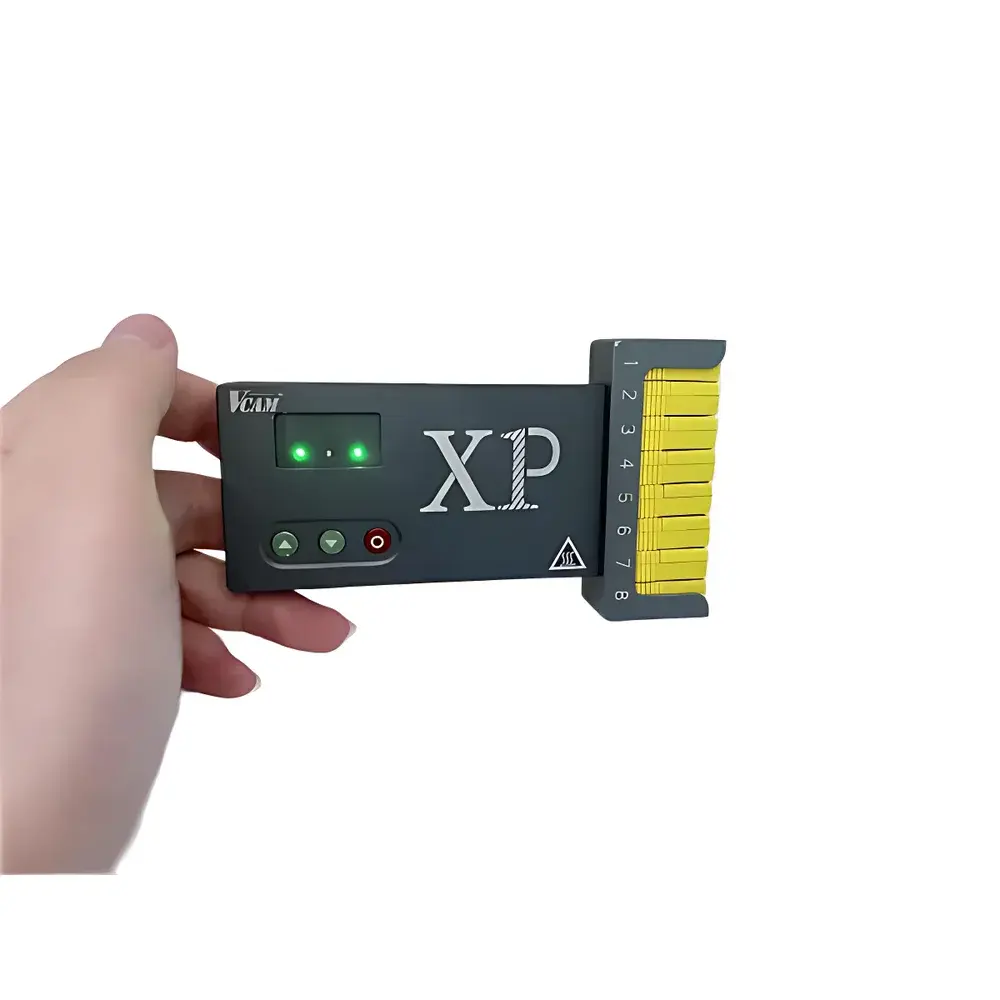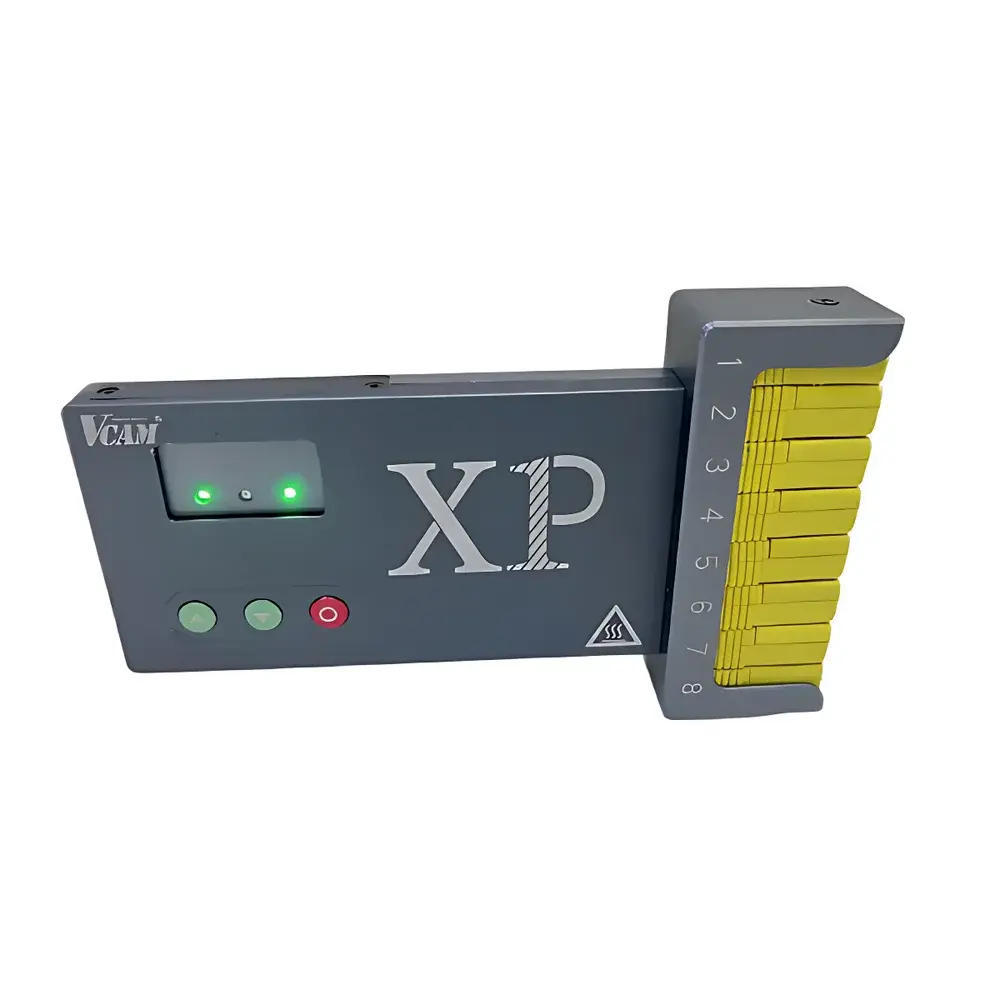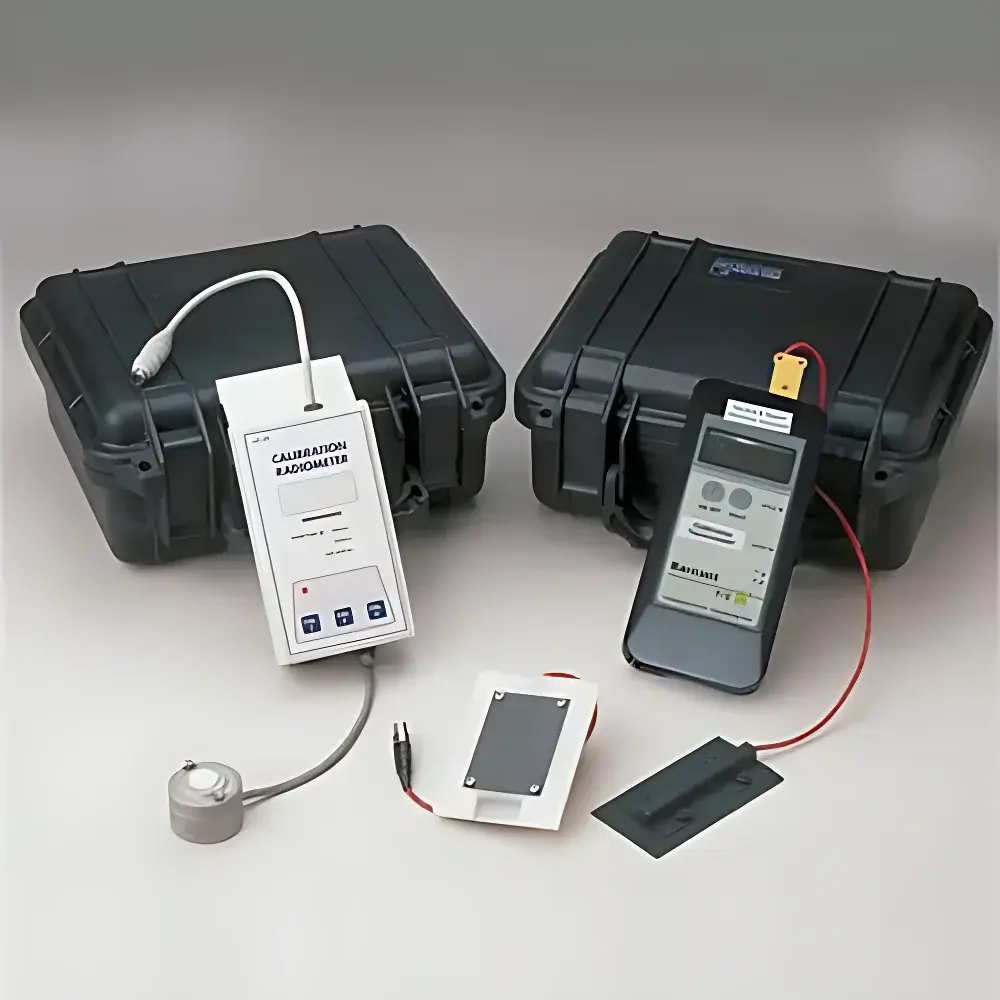
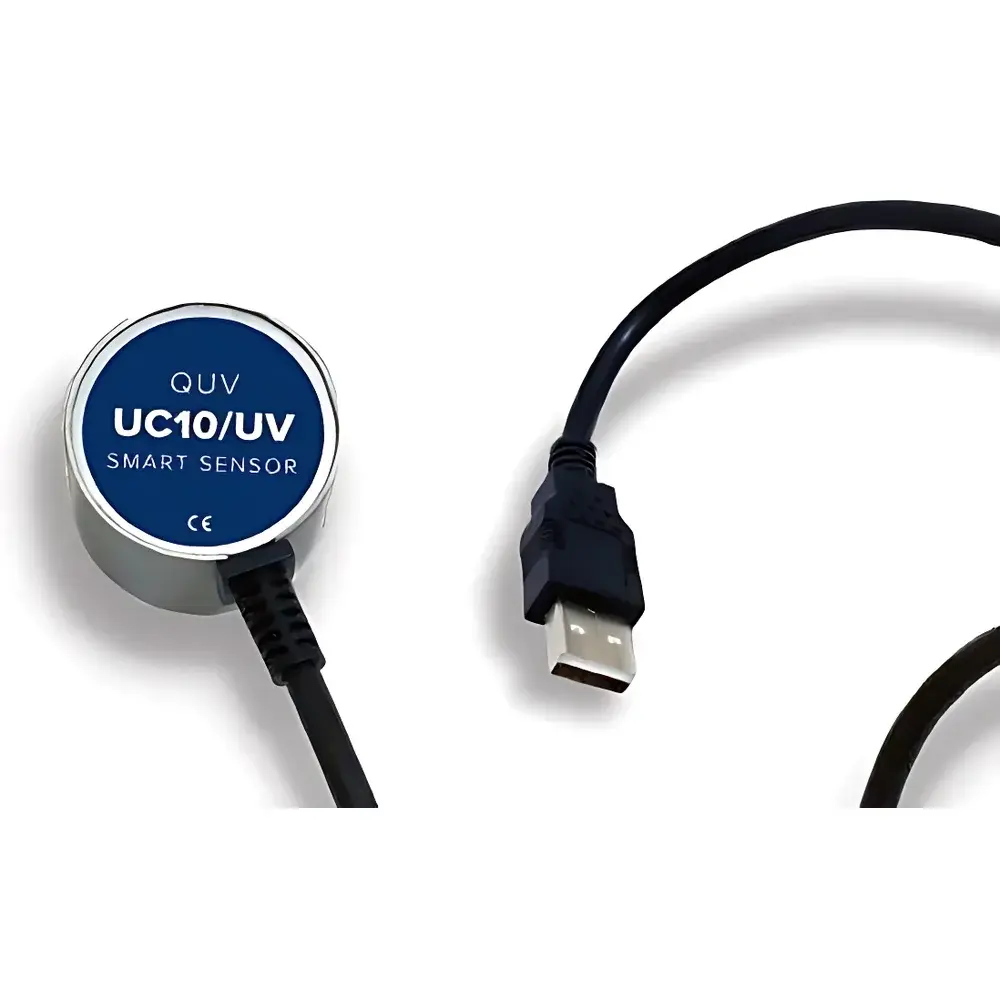
Q-LAB CR-10 UV Irradiance Calibration Radiometer
| Brand | Q-LAB |
|---|---|
| Origin | USA |
| Model | CR-10 |
| Calibration Traceability | NIST |
| Accreditation | ISO/IEC 17025 (A2LA & UKAS) |
| Recommended Recalibration Interval | Annually |
| Compatible With | QUV Accelerated Weathering Testers (UV-A and UV-B lamp configurations) |
| Excludes | QUV Basic, QUV/cw (requires CR-10/cw), Q-SUN (requires CR-20 series) |
Overview
The Q-LAB CR-10 UV Irradiance Calibration Radiometer is a precision reference instrument engineered for traceable, field-deployable recalibration of QUV accelerated weathering testers equipped with UV-A (340 nm) or UV-B (313 nm) fluorescent lamp arrays. It operates on the principle of spectral responsivity-matched photodiode detection, calibrated against primary standards maintained by the National Institute of Standards and Technology (NIST). The CR-10 serves as the physical realization of the AUTOCAL system — Q-LAB’s proprietary automated irradiance calibration protocol — enabling users to verify and adjust sensor output without removing the solar eye from the test chamber. This ensures continuity of measurement integrity across extended testing campaigns while maintaining compliance with internationally recognized metrological hierarchies.
Key Features
- Direct NIST-traceable calibration for UV-A (340 nm) and UV-B (313 nm) spectral bands, with documented uncertainty budgets per ISO/IEC 17025 requirements
- Integrated AUTOCAL interface compatibility: seamless integration with QUV controllers (except QUV Basic) for guided, operator-independent calibration routines
- Rugged, portable housing designed for laboratory and production-floor environments; IP54-rated enclosure protects against dust and incidental water exposure
- Factory-calibrated photodiode sensor with temperature-compensated analog output, minimizing drift during ambient thermal fluctuations
- Annual recalibration service available directly through Q-LAB’s A2LA-accredited calibration laboratory (Certificate No. 2369.01) or UKAS-accredited partner facilities
- Includes calibration certificate with full uncertainty analysis, serial-numbered traceability chain, and statement of conformance to ASTM G154 Annex A2 and ISO 4892-3 Clause 8.2
Sample Compatibility & Compliance
The CR-10 is validated exclusively for use with QUV models utilizing fluorescent UV lamp technology — specifically QUV/se, QUV/spray, and QUV/SPRAY — when configured with UV-A or UV-B lamps. It is not compatible with QUV Basic (lacking AUTOCAL hardware interface) or QUV/cw (cold white fluorescent lamp configuration, requiring CR-10/cw). All calibrations are performed in accordance with ISO/IEC 17025:2017, with measurement uncertainty reported at k=2 confidence level. The instrument satisfies metrological requirements referenced in ASTM D4329, ISO 4892-3, and IEC 61215-2 (for PV module qualification), supporting GLP-compliant data generation where irradiance accuracy is critical to pass/fail criteria.
Software & Data Management
No standalone software is required for CR-10 operation; calibration execution occurs via native QUV controller firmware (v5.2+). However, calibration event logs — including date, operator ID, pre- and post-adjustment irradiance values, and deviation metrics — are automatically recorded within the QUV’s internal audit trail. These records comply with FDA 21 CFR Part 11 requirements when the QUV system is configured with electronic signature and audit trail enabled. Raw calibration certificates are issued in PDF/A-1b format, digitally signed and archived for ≥15 years per Q-LAB’s quality management system (QMS), registered to ISO 9001:2015.
Applications
- Verification of UV irradiance uniformity and stability in QUV qualification and routine performance checks
- Supporting IQ/OQ/PQ protocols for regulated industries including medical device packaging (ISO 11607), automotive interior materials (SAE J2412), and aerospace composites (ASTM D7869)
- Enabling inter-laboratory comparison studies under ISO/IEC 17043 guidelines
- Facilitating root-cause analysis of non-conforming weathering results by isolating sensor drift as a potential variable
- Meeting internal QA requirements for ISO/TS 16949 and AS9100-certified manufacturing sites conducting accelerated durability testing
FAQ
What is the recommended recalibration interval for the CR-10?
Q-LAB recommends annual recalibration to maintain stated measurement uncertainty; this aligns with ISO/IEC 17025 clause 7.8.3 and industry best practices for reference radiometers.
Can the CR-10 be used to calibrate Q-SUN xenon arc testers?
No — Q-SUN systems require the CR-20 series (e.g., CR-20, CR-20/TUV, CR-20/LUX) due to fundamental differences in spectral output, detector responsivity, and control algorithms.
Is the CR-10 compatible with third-party weathering chambers?
The CR-10 is designed solely for QUV platforms with AUTOCAL hardware and firmware support; it does not provide generic irradiance measurement capability outside the Q-LAB ecosystem.
Does the calibration certificate include measurement uncertainty?
Yes — each certificate reports expanded uncertainty (k=2) for both UV-A and UV-B channels, derived from Type A and Type B uncertainty components per GUM (JCGM 100:2008).
How is traceability to NIST established?
Q-LAB’s calibration laboratory maintains direct links to NIST Standard Reference Materials (SRMs) 2069 and 2070 via secondary standards accredited under A2LA scope 2369.01; all CR-10 calibrations are anchored to this unbroken chain.