
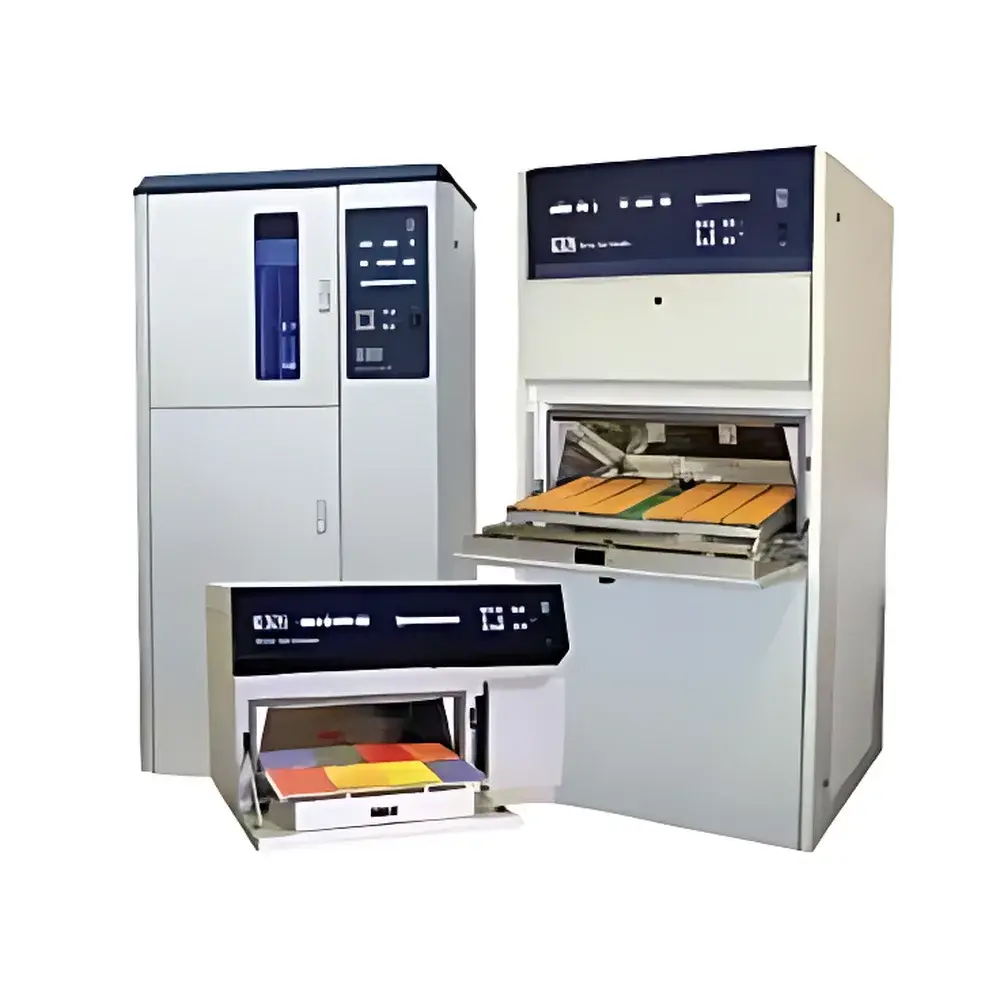
Q-LAB Q-SUN Xenon Arc Weathering Test Chamber
| Brand | Q-LAB |
|---|---|
| Origin | USA |
| Manufacturer Type | Authorized Distributor |
| Origin Category | Imported |
| Model | Q-SUN Xe-1 / Xe-3 / B02 |
| Xenon Lamp Power | 1800 W |
| Temperature Range | Ambient to 85 °C (operational, dependent on irradiance and humidity settings) |
| Humidity Range | 10–95% RH (controlled, model-dependent) |
| Lamp Life | ~1500 hours |
| Cooling Method | Air-cooled |
| Filter Types | Daylight, Window Glass, Extended UV |
| Compliance | ASTM G155, ISO 4892-2, SAE J2527, AATCC TM16, ISO 105-B02, GB/T 16422.2 |
Overview
The Q-LAB Q-SUN Xenon Arc Weathering Test Chamber is an engineered solution for accelerated light stability and weathering evaluation of materials under controlled, reproducible environmental stressors. It employs air-cooled xenon arc lamps—spectrally filtered to replicate natural solar radiation across ultraviolet (UV), visible, and near-infrared (NIR) wavelengths—to simulate outdoor or indoor exposure conditions. Unlike UV fluorescent or metal halide sources, xenon arc technology delivers the most accurate full-spectrum solar simulation, essential for assessing photodegradation mechanisms involving color shift, gloss loss, chalking, cracking, embrittlement, and chemical bond cleavage. The chamber’s architecture integrates precise irradiance control (typically 0.35–1.20 W/m² @ 340 nm), programmable temperature and relative humidity profiles, and optional water spray functionality—enabling correlation with real-world service life predictions per internationally recognized exposure standards.
Key Features
- Air-cooled 1800 W xenon arc lamp system with long-life design (~1500 h), minimizing thermal load and operational downtime
- Three standard optical filter configurations: Daylight (ISO 4892-2 Cycle 1), Window Glass (ASTM G155 Cycle 4), and Extended UV (for aggressive UV-driven degradation studies)
- Programmable relative humidity control (10–95% RH) with integrated humidity sensor and PID-regulated steam generator
- Automated water spray system using deionized water; configurable during light or dark phases to simulate dew, rain, or thermal shock
- Sliding sample tray design enabling rapid loading/unloading of 3D parts or flat specimens without tooling
- Intuitive touchscreen controller with preloaded test protocols, real-time parameter logging, and password-protected user levels
- Compliance-ready architecture supporting audit trails, calibration history storage, and data export in CSV/Excel formats
Sample Compatibility & Compliance
The Q-SUN accommodates diverse specimen geometries—including molded plastics, painted panels, textile swatches, coated metals, adhesives, and pharmaceutical packaging—without requiring custom fixtures. Its flat-bed (Xe-1, Xe-3) and rotating drum (B02) configurations support both planar and cylindrical samples. All models are validated against major international weathering standards: ASTM G155 (xenon-arc exposure apparatus), ISO 4892-2 (plastics—xenon arc methods), SAE J2527 (automotive interior materials), AATCC TM16 (textile colorfastness), ISO 105-B02 (color fastness to artificial light), and GB/T 16422.2 (Chinese national standard). The system supports GLP-compliant operation when paired with Q-LAB’s optional software modules for electronic signatures, 21 CFR Part 11 audit trails, and instrument qualification documentation (IQ/OQ/PQ).
Software & Data Management
Q-SUN controllers log irradiance, black panel temperature, chamber air temperature, relative humidity, and spray status at user-defined intervals (minimum 1-minute resolution). Data is stored internally for ≥30 days and exportable via USB or Ethernet. Optional Q-LAB’s SunTest™ PC Software enables remote monitoring, multi-chamber fleet management, automated report generation (PDF/CSV), and statistical analysis of colorimetric ΔE* values (CIE L*a*b*) when integrated with spectrophotometers. Calibration records—including lamp spectral output verification per LX-5060 technical bulletin—and maintenance logs are retained with timestamps and operator IDs, fulfilling traceability requirements for ISO/IEC 17025-accredited laboratories.
Applications
This chamber serves critical R&D and QC functions across regulated and industrial sectors: evaluating UV stabilizer efficacy in polyolefins and PVC formulations; validating fade resistance of automotive clearcoats per OEM specifications; screening pigment durability in architectural coatings; assessing photostability of topical drug products under ICH Q1B guidelines; qualifying packaging barrier performance for light-sensitive biologics; and benchmarking textile colorfastness in apparel supply chains. Its ability to decouple humidity, thermal cycling, and spectral irradiance allows mechanistic study of synergistic degradation pathways—e.g., hydrolytic cleavage accelerated by UV exposure—or validation of accelerated test-to-field correlation models.
FAQ
What spectral filters are available, and how do they differ?
Three primary filters are offered: Daylight (replicates unfiltered terrestrial sunlight), Window Glass (blocks UV-B/C, simulating indoor through-glass exposure), and Extended UV (enhances short-wave UV output for aggressive testing). Filter selection directly influences degradation rate and failure mode.
Is the Q-SUN compliant with FDA 21 CFR Part 11 for electronic records?
Yes—when configured with SunTest™ Software and enabled audit-trail features, the system meets Part 11 requirements for electronic signatures, secure login, and immutable record retention.
Can the chamber operate without water spray or humidity control?
Yes—humidity and spray functions are independently programmable; dry-heat or UV-only cycles are fully supported.
How often must the xenon lamp be replaced, and is recalibration required after replacement?
Lamp replacement is recommended at ~1500 hours. Post-replacement, irradiance recalibration using a NIST-traceable radiometer is required to maintain measurement integrity per ISO/IEC 17025.
Does Q-LAB provide installation qualification (IQ) and operational qualification (OQ) documentation?
Yes—Q-LAB supplies standardized IQ/OQ templates and can perform on-site qualification services upon request, aligned with GMP and ISO 17025 frameworks.



