
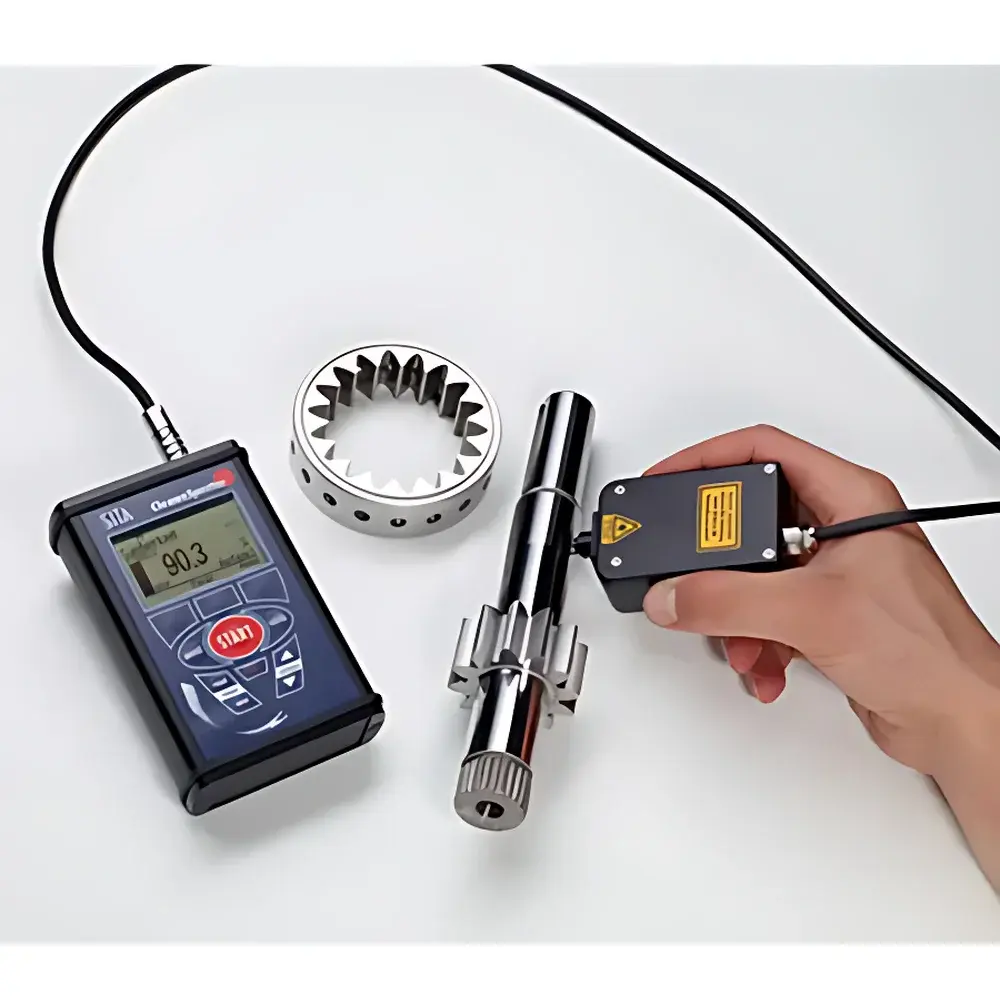
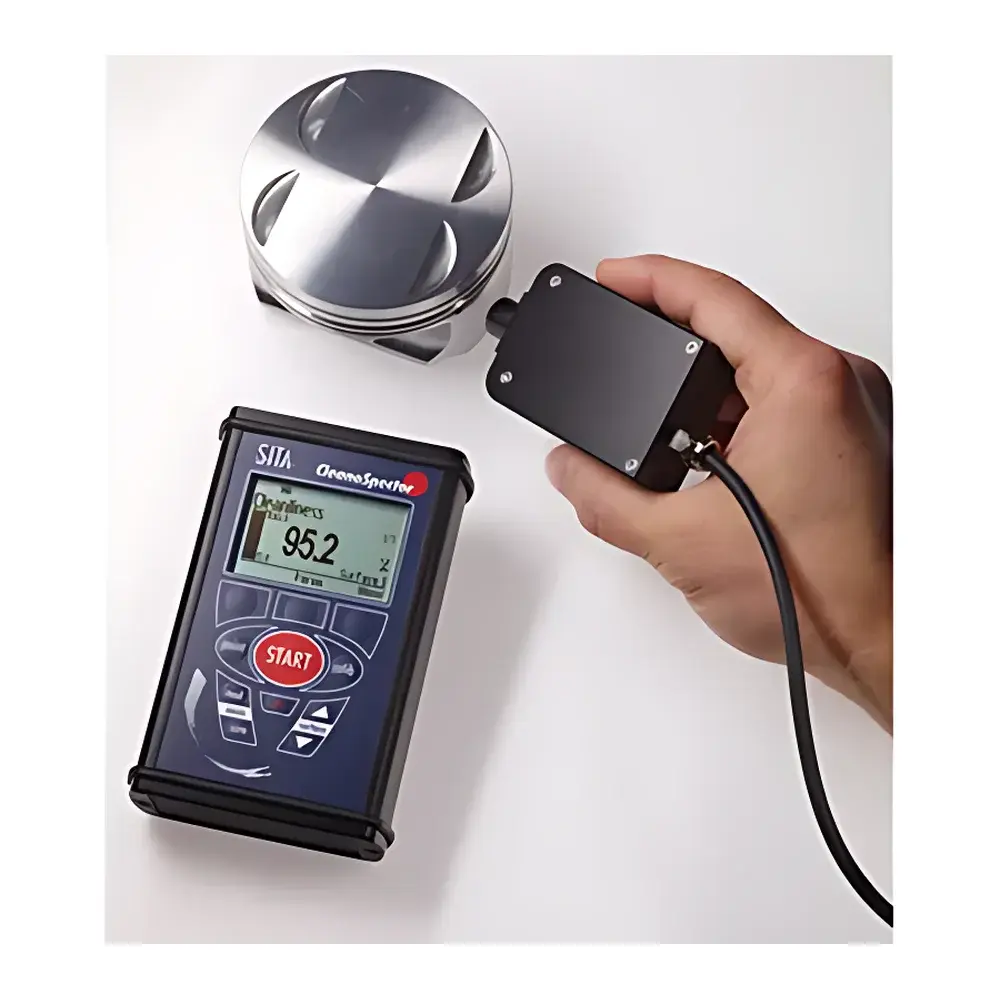
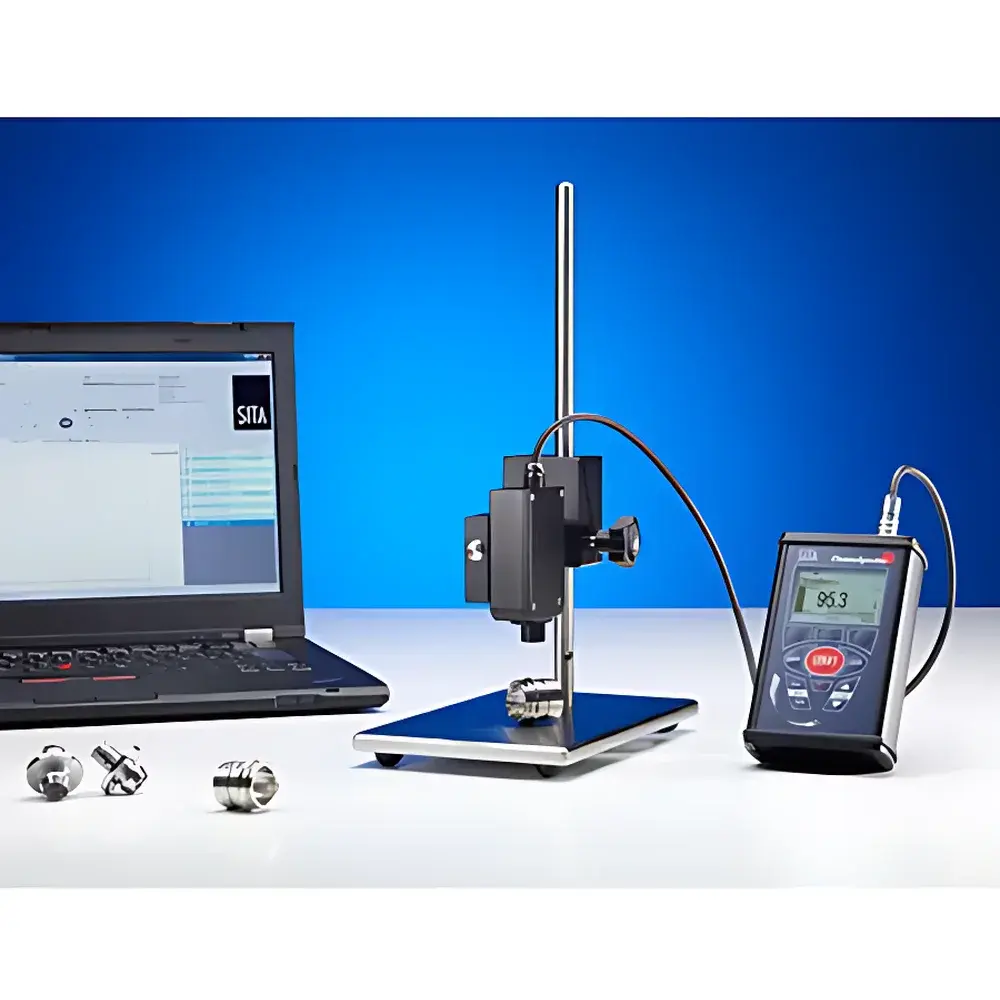
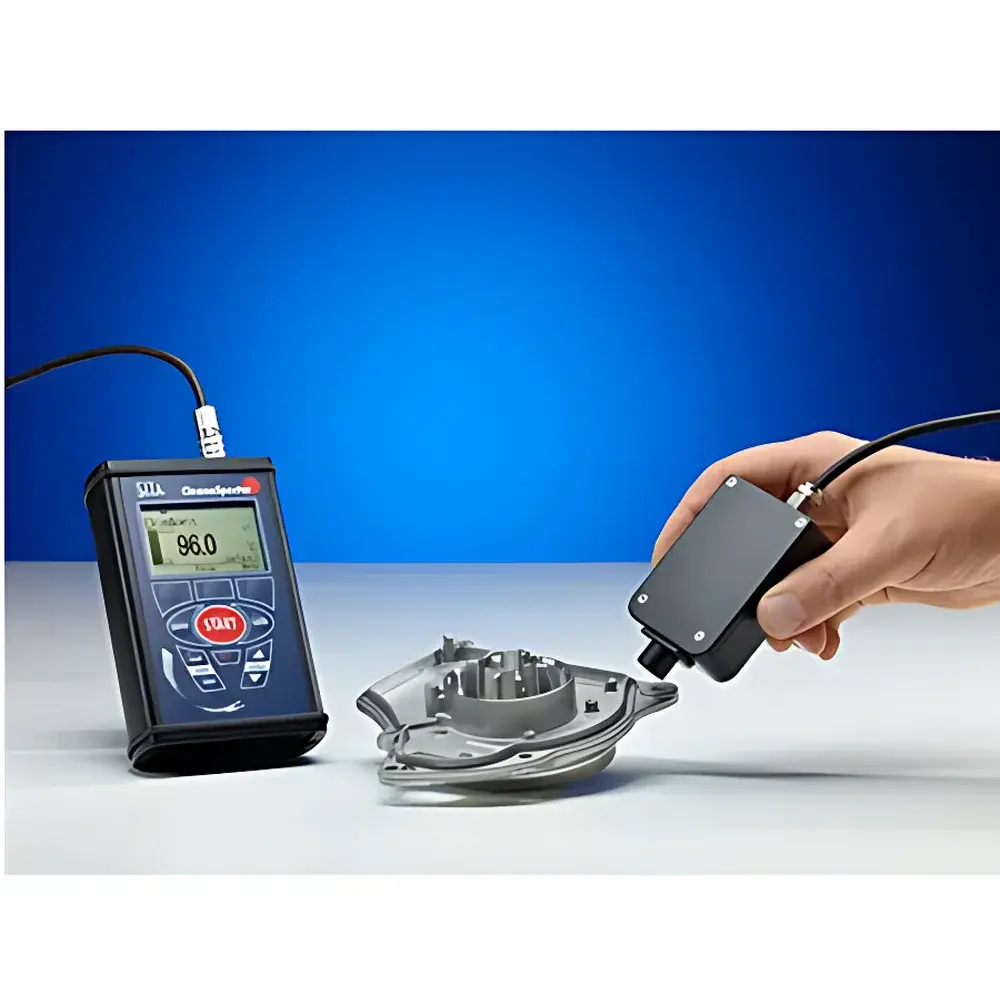
SITA CleanoSpector Surface Cleanliness Analyzer
| Brand | SITA |
|---|---|
| Origin | Germany |
| Model | CleanoSpector |
| Measurement Principle | UV-induced fluorescence (confocal detection) |
| Measurable Contaminants | Oils, greases, coolants, waxes, organic particulates |
| Output Unit | % cleanliness (0–100%, referenced to optically clean metal surface) |
| Calibration | Auto-calibration on clean reference metal surface (steel, copper, aluminum, gold, etc.) |
| Measurement Spot Distance | 4 mm |
| Power Supply | Rechargeable battery or AC adapter |
| Weight | 320 g (including sensor and handheld housing) |
| Environmental Robustness | Immune to ambient light, surface temperature variation, and surface roughness (within typical industrial metal finish ranges) |
| Compliance | Designed for ISO 8502-3, ASTM D7496, and VDA 19.1-aligned workflows |
Overview
The SITA CleanoSpector Surface Cleanliness Analyzer is a portable, hand-held instrument engineered for quantitative, non-destructive assessment of organic contamination on metallic substrates. It operates on the principle of UV-induced fluorescence spectroscopy with confocal optical geometry—where a precisely tuned ultraviolet excitation source (centered at 365 nm) illuminates the test surface, and an integrated photodetector measures the resultant fluorescence emission intensity in the visible range (peak sensitivity at ~460 nm). This spectral signature is directly proportional to the surface density of fluorophore-bearing contaminants—including hydrocarbon-based oils, machining coolants, drawing lubricants, waxes, and organic dust residues. Unlike contact-based methods or solvent extraction, the CleanoSpector delivers immediate, operator-independent % cleanliness values referenced to a fully decontaminated metal surface (defined as 100% cleanliness), enabling objective process validation in pre-treatment stages prior to coating, bonding, plating, or adhesive application.
Key Features
- Confocal UV fluorescence detection architecture ensures high signal-to-noise ratio and minimal interference from ambient lighting, surface topography, or thermal drift
- One-button operation with automatic zero-point calibration directly on certified clean metal reference surfaces (e.g., stainless steel, aluminum, copper, gold)
- Reproducible measurement repeatability ≤ ±1.5% RSD across multiple operators and shifts under controlled laboratory and shop-floor conditions
- Compact ergonomic design (320 g total mass) with integrated rechargeable Li-ion battery and optional AC adapter support for continuous field use
- Fixed 4 mm working distance optimized for consistent spot illumination and detector collection geometry—no manual focus adjustment required
- Real-time % cleanliness output displayed on high-contrast OLED screen; data export via USB-C to CSV-compatible formats
Sample Compatibility & Compliance
The CleanoSpector is validated for use on conductive and non-porous metallic surfaces commonly encountered in automotive, aerospace, medical device, and precision engineering manufacturing—including cold-rolled steel, hot-dip galvanized sheet, extruded aluminum alloys (e.g., 6061, 7075), electrolytic copper, and electroplated substrates. It complies with core requirements of VDA 19.1 (2015) for part cleanliness verification in automotive supply chains and supports alignment with ISO 8502-3 (surface cleanliness by fluorescent dye testing) and ASTM D7496 (standard practice for assessing surface cleanliness by fluorescence). While not a direct replacement for gravimetric or GC-MS residue analysis, it serves as a rapid, in-line screening tool suitable for GLP-aligned process control environments where trace organic residue quantification is critical to adhesion reliability and coating defect prevention.
Software & Data Management
The CleanoSpector operates autonomously without external PC dependency. All measurement metadata—including timestamp, operator ID (manually entered), substrate type, calibration status, and raw fluorescence intensity—are embedded in each exported record. Optional firmware updates (delivered via SITA’s secure customer portal) include enhanced audit trail logging compliant with FDA 21 CFR Part 11 requirements—supporting electronic signatures, user access levels, and immutable change history for regulated quality systems. Data files are structured in plain-text CSV format for seamless integration into LIMS, MES, or statistical process control (SPC) platforms such as Minitab or JMP.
Applications
- Validation of aqueous and solvent-based cleaning process efficacy in heat-treatment lines and CNC machining cells
- Pre-coating inspection for e-coat, powder coating, and PVD/CVD deposition processes
- Quality gate monitoring before adhesive bonding in structural assembly (e.g., EV battery module housings)
- Troubleshooting of paint delamination, weld spatter adhesion failure, and sealant void formation
- Root-cause analysis of corrosion initiation linked to residual organic films beneath protective coatings
- Verification of wax layer thickness uniformity during temporary corrosion protection (TCP) applications
FAQ
How does the CleanoSpector differentiate between types of organic contaminants?
It does not chemically identify specific compounds; rather, it quantifies total fluorescent organic load based on cumulative emission intensity at 460 nm. Different contaminants exhibit varying quantum yields under 365 nm excitation—calibration curves may be established per material class if needed.
Can measurements be performed on painted or anodized surfaces?
No—the instrument requires direct exposure of bare metal; overcoats absorb or scatter UV excitation and suppress detectable fluorescence.
Is surface roughness compensation built into the algorithm?
Yes—confocal optics inherently reject out-of-focus signal, and empirical testing confirms measurement stability across Ra values from 0.1 µm (mirror-finish) to 6.3 µm (as-machined).



