
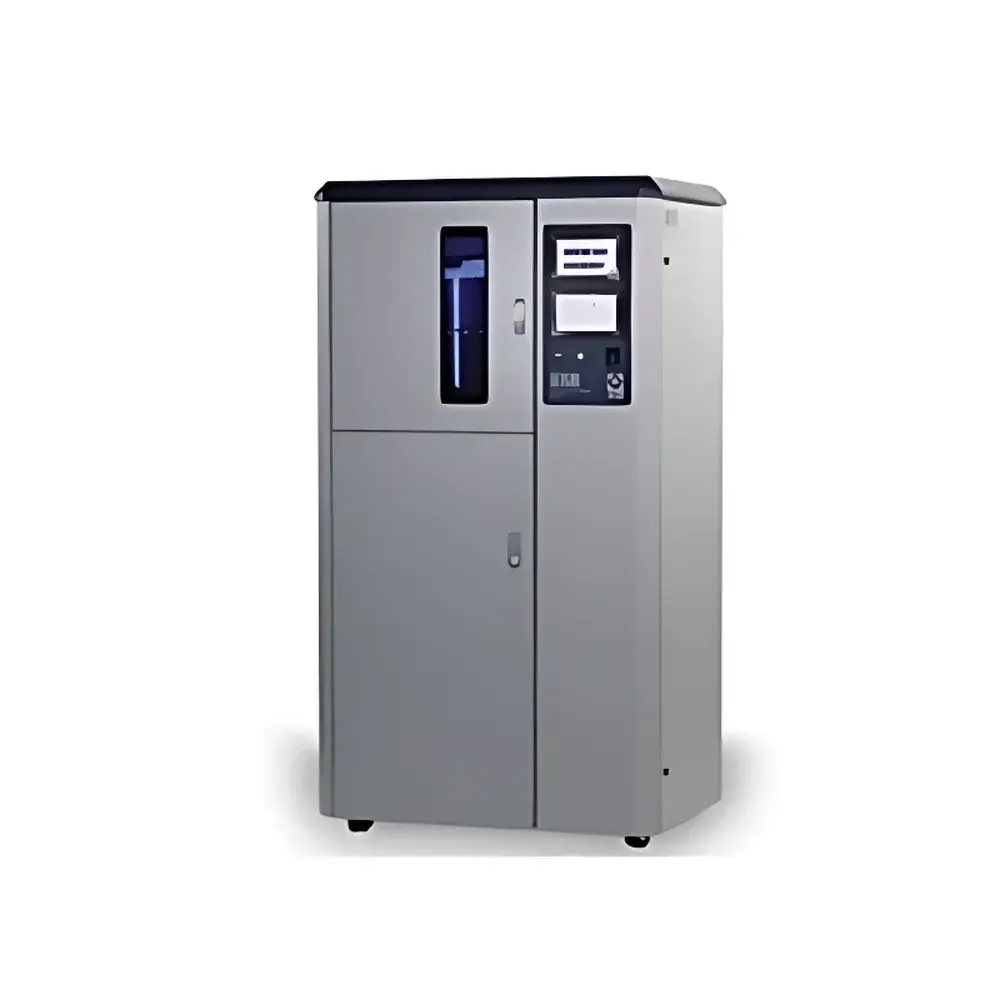
Q-Lab Q-SUN B02 Rotating Drum Xenon Arc Weathering Test Chamber
| Brand | Q-Lab |
|---|---|
| Origin | USA |
| Model | Q-SUN B02 |
| Radiation Intensity | ≤1800 W/m² |
| Light Exposure Duration | 1–9999 h (continuously adjustable) |
| Humidity Control | Standard |
| Water Spray Option | Available |
| Lamp Type | Air-Cooled 1800 W Xenon Arc Lamp |
| Lamp Life | ~1500 h |
| Sample Capacity | 31 AATCC pre-cut specimens (1882 cm² total exposure area) |
| Compliance | ISO 105-B02, ISO 105-B04, AATCC TM16 (Options 2 & 3), AATCC TM169, M&S C9/C9A |
Overview
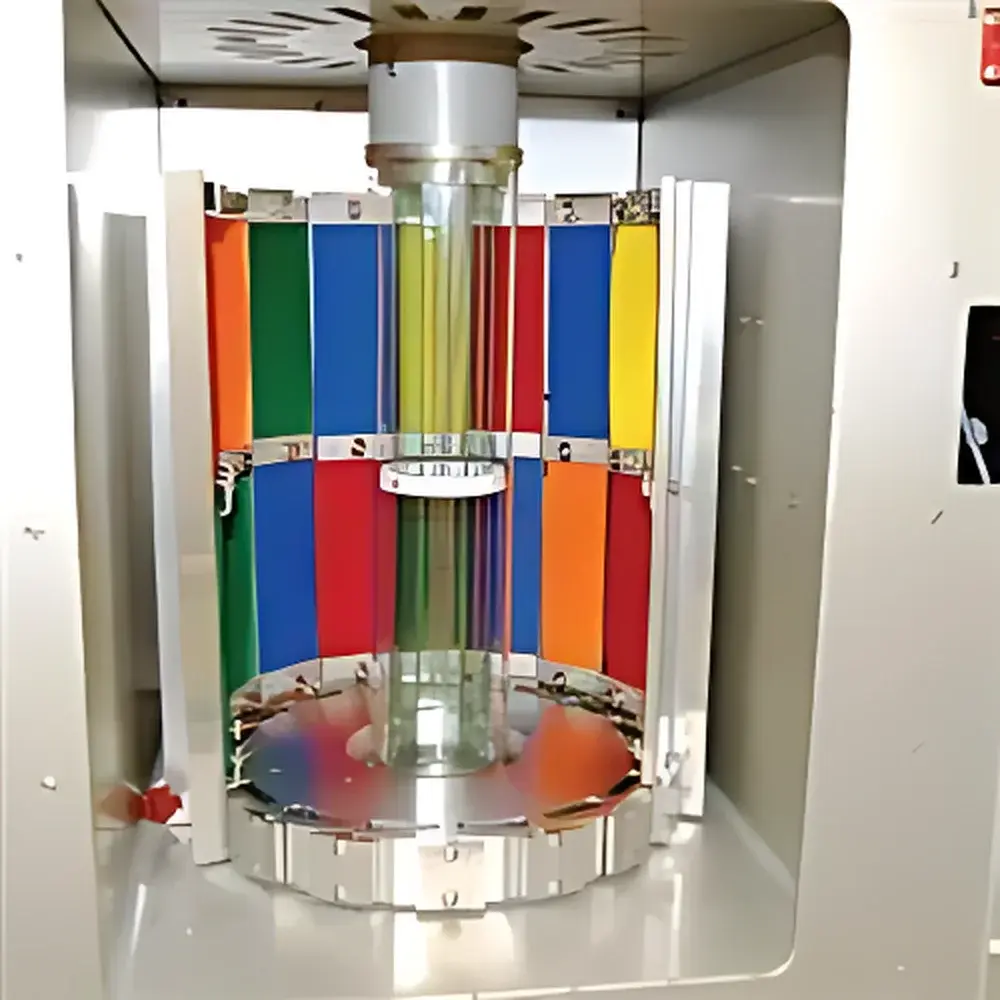
The Q-Lab Q-SUN B02 Rotating Drum Xenon Arc Weathering Test Chamber is an engineered solution for accelerated light stability and colorfastness evaluation of textiles, coatings, plastics, and other polymeric materials. It employs a single air-cooled 1800 W xenon arc lamp to reproduce the full solar spectrum—spanning ultraviolet (UV), visible, and near-infrared (NIR) regions—with spectral fidelity closely matching terrestrial sunlight filtered through window glass (ISO Window-IR / AATCC Window-B/SL). Unlike water-cooled systems, its air-cooled architecture reduces operational complexity, cooling infrastructure requirements, and long-term maintenance burden. The rotating drum design ensures uniform irradiance distribution across vertically mounted specimens while enabling high-throughput testing: up to 31 AATCC pre-cut samples (46 × 264 mm each) can be accommodated on 16 indexed fixtures—totaling 1882 cm² of active exposure area. This configuration supports rigorous adherence to ISO 105-B02 (Method 1 & 2), AATCC TM16 (Options 2 and 3), and related textile weathering standards requiring controlled photodegradation under defined thermal and hygric conditions.
Key Features
- Full-spectrum xenon arc illumination with spectral match to filtered daylight (CIE daylight illuminant D65 equivalent under specified filter configurations)
- Integrated SOLAR EYE irradiance control system for continuous real-time monitoring and feedback regulation at 340 nm, 420 nm, or total UV (300–400 nm)
- Independent control of black panel temperature (35–103 °C), chamber air temperature, and relative humidity (RH) — all displayed and adjustable via intuitive touchscreen interface
- Standard RH control system utilizing purified water; optional water spray module (top-mounted single nozzle) programmable for light/dark cycles
- Patented AUTOCAL calibration protocol enabling rapid user-performed verification of irradiance and temperature sensors without external instrumentation
- Modular filter assembly: outer high-borosilicate quartz cylinder + dual concentric heptagonal inner filter sets (7-element per set) compliant with ISO Window-IR and AATCC Window-B/SL specifications
- Self-diagnostic firmware with event logging, fault alerts, and Ethernet-enabled remote data export (CSV/Excel-compatible)
Sample Compatibility & Compliance
The Q-SUN B02 accommodates standardized textile specimens per ISO 105-B02 (including full-height and half-height masks for Methods 1 and 2), AATCC TM16 pre-cut panels, blue wool references (ISO 105-B04), and custom substrates up to 46 mm wide × 264 mm tall. Fixture kits support ISO-compliant textile masks (XR-11168-K, XR-11316-K, XR-11369-K, XR-11376-K), AATCC paper masks (XR-11229-K), frame-mounted fabric holders (XR-11273-K), and dual-specimen adapters (XR-11291-K). All compliance claims are validated against internationally recognized test methods including ISO 105-B02, ISO 105-B04, AATCC TM16-2023 (Options 2 and 3), AATCC TM169, and Marks & Spencer C9/C9A. The system’s traceable calibration framework—including annual third-party recalibration of CR20 irradiance meters and CT202 black panel thermometers—supports GLP and GMP audit readiness per FDA 21 CFR Part 11 requirements when paired with Q-Lab’s optional data management software.
Software & Data Management
The embedded controller features a web-accessible interface supporting local operation and remote monitoring via standard Ethernet connectivity. Test parameters—including irradiance setpoint, RH target, black panel temperature, chamber temperature, exposure duration, and spray timing—are stored in non-volatile memory with timestamped execution logs. Exported data files include irradiance history, thermal profiles, humidity traces, and system status events—all structured in comma-separated values (CSV) format compatible with LIMS integration. Optional Q-Lab’s Q-TRAC software extends functionality with automated report generation, multi-chamber fleet monitoring, electronic signature support, and 21 CFR Part 11-compliant audit trail archiving. Sensor calibration records, maintenance logs, and firmware revision history are retained internally and exportable for regulatory review.
Applications
The Q-SUN B02 serves as a primary tool for predictive durability assessment across regulated and industrial sectors. In textile R&D and QC laboratories, it quantifies color change (ΔE*), fading resistance, and physical degradation under simulated daylight exposure—critical for apparel, upholstery, automotive interiors, and technical fabrics. Coatings manufacturers utilize it to evaluate gloss retention, chalking, cracking, and adhesion loss in architectural paints, automotive clearcoats, and marine finishes. Polymer compounders apply it to assess UV stabilizer efficacy in polyolefins, PVC, and engineering resins. Its ability to decouple and independently regulate irradiance, RH, and thermal load enables mechanistic studies of synergistic degradation pathways—particularly where moisture-mediated photo-oxidation dominates failure modes. The system is routinely deployed in ISO/IEC 17025-accredited testing laboratories performing contract weathering services for global brands and certification bodies.
FAQ
What standards does the Q-SUN B02 explicitly support?
It is designed and verified for ISO 105-B02 (Methods 1 and 2), ISO 105-B04, AATCC TM16 (Options 2 and 3), AATCC TM169, and Marks & Spencer C9/C9A.
Is purified water required for operation?
Yes—both the RH control system and optional water spray module require deionized or distilled water (conductivity < 5 µS/cm) to prevent mineral deposition and sensor drift.
How is irradiance calibrated and maintained?
The SOLAR EYE system uses a calibrated photodiode sensor; users perform routine verification with the CR20 handheld calibrator, followed by annual factory recalibration per ISO/IEC 17025 guidelines.
Can black panel temperature be insulated or non-insulated?
Yes—the system accepts both insulated (IBP) and non-insulated (BP) black panel sensors; selection must match the installed hardware and intended test method requirements.
What is the expected service life of the xenon lamp?
Approximately 1500 hours under typical operating conditions; lamp output declines gradually, and irradiance control compensates until end-of-life threshold is reached.
Is remote diagnostics supported?
Yes—Ethernet connectivity enables secure remote access for firmware updates, log retrieval, and basic troubleshooting via Q-Lab’s authorized service portal.



