
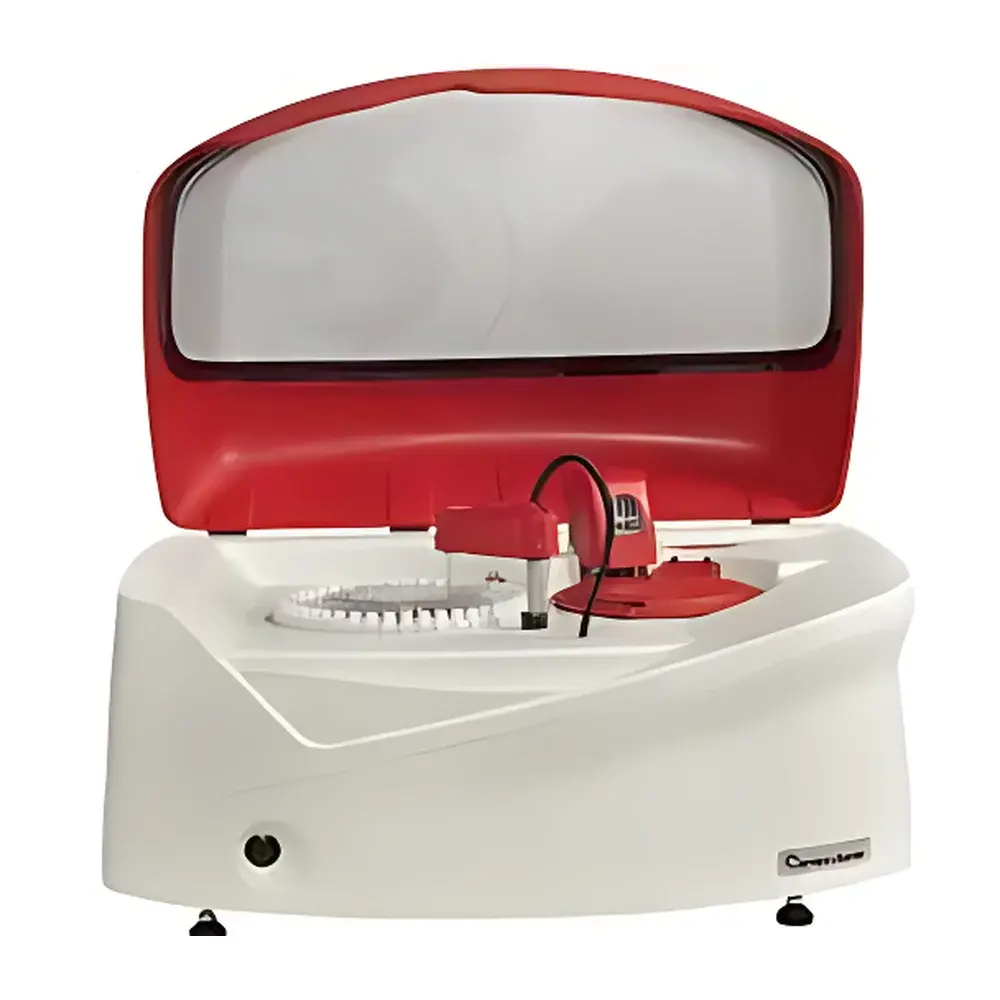
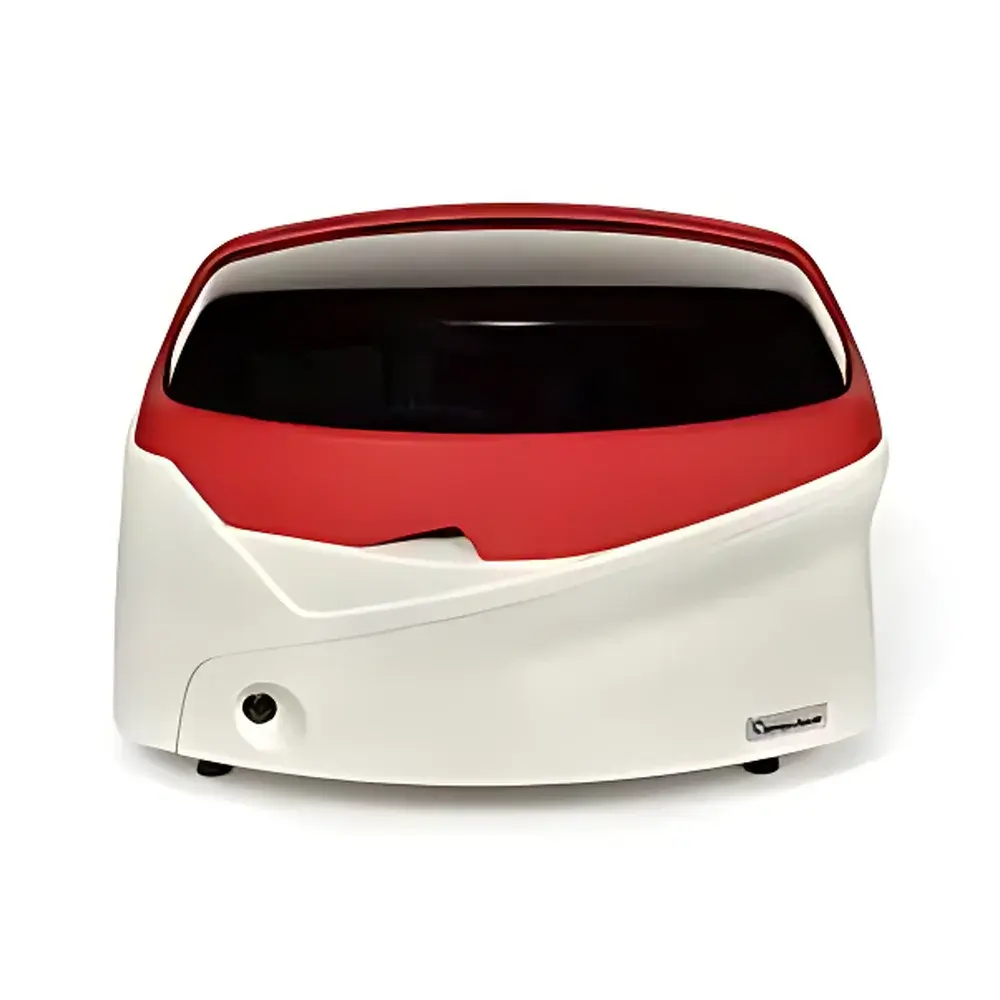
DeChem-Tech CleverChem Anna Discrete Automated Chemistry Analyzer
| Brand | DeChem-Tech |
|---|---|
| Origin | Germany |
| Model | CleverChem Anna |
| Product Type | Discrete Flow Analyzer |
| Wavelength Range | 400–900 nm |
| Sample Volume per Vial | 5 mL |
| Reagent Positions | 31 |
| Cuvette Path Length | 10 mm |
| Light Source | Tungsten-Halogen Lamp |
Overview
The DeChem-Tech CleverChem Anna Discrete Automated Chemistry Analyzer is a fully automated, benchtop discrete analyzer engineered for high-precision colorimetric and photometric determination of inorganic and low-molecular-weight organic analytes in environmental, agricultural, food, and industrial matrices. Unlike continuous flow or segmented flow systems, the CleverChem Anna implements true discrete analysis—mimicking manual wet-chemistry protocols by dispensing precise microliter volumes of sample, reagents, and color-developing agents into individual quartz cuvettes. Each reaction proceeds under controlled incubation time and temperature, followed by photometric measurement at user-selectable wavelengths (400–900 nm). This approach eliminates cross-contamination, ensures stoichiometric reaction completeness, and delivers metrological traceability aligned with ISO 8655 (volumetric delivery) and ISO/IEC 17025 (testing laboratory competence). The system is designed for routine compliance testing in accredited laboratories performing EPA, ASTM, ISO, and DIN-standard methods—including EPA 365.4 (phosphate), EPA 353.2 (nitrate/nitrite), ISO 15681-2 (phosphorus), and ISO 11905-1 (total nitrogen).
Key Features
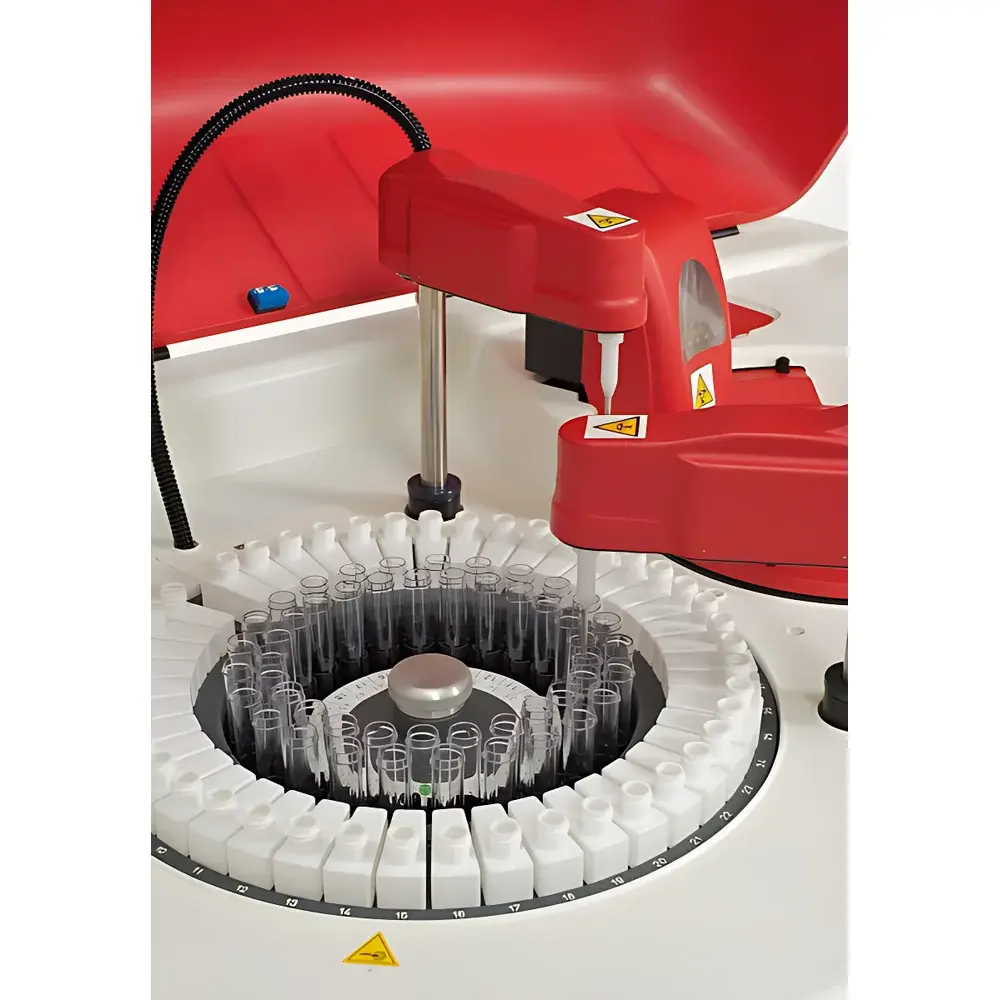
- Discrete cuvette-based architecture using 64-position reusable quartz cuvettes (10-mm path length), each subjected to a rigorous 7-step automated cleaning and optical validation cycle prior to reuse
- Throughput of up to 200 determinations per hour across multiple analytes—enabled by parallel processing of up to 49 samples per run with full parameter independence
- Micro-volume operation: typical sample and reagent consumption between 10–200 µL per determination, minimizing chemical waste and operational cost
- Integrated refrigerated reagent carousel (31 positions) with optional cooling activation (4–10 °C), preserving reagent stability and shelf life
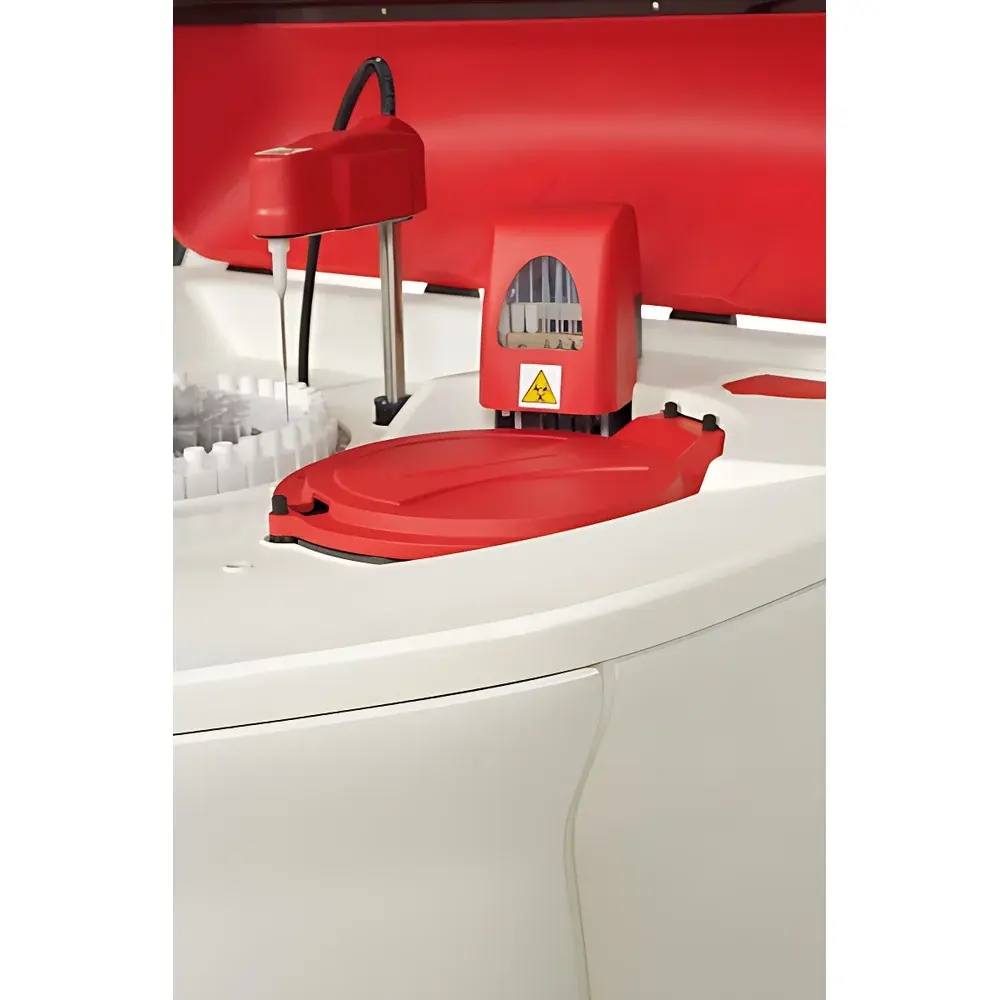
- Sealed waste collection system with liquid-level sensing and vapor containment—designed to meet OSHA HAZCOM and CLP/GHS requirements for hazardous substance handling
- True blank correction capability: independent measurement of sample blanks and reagent blanks, eliminating matrix interference and background drift
- USB 2.0 interface compliant with Windows-based host control; no proprietary hardware drivers required
Sample Compatibility & Compliance
The CleverChem Anna accepts liquid samples in standard 12 × 75 mm borosilicate glass or polypropylene vials (5 mL capacity), accommodating aqueous matrices including seawater, wastewater, soil extracts (e.g., Mehlich-3, CaCl2, KCl leachates), plant digests (HNO3/H2O2), fertilizer solutions, food homogenates, tobacco extracts, and wine/vinegar filtrates. Solid-phase extraction eluates and enzymatic hydrolysates are also compatible following appropriate filtration (≤0.45 µm). All assay protocols are developed and validated in accordance with ISO/IEC 17025:2017 requirements for method verification, including assessment of limit of detection (LOD), limit of quantification (LOQ), linearity (r² ≥ 0.999), repeatability (RSD ≤ 2%), and intermediate precision. Instrument software supports audit trail generation and electronic signature per FDA 21 CFR Part 11 when deployed in regulated environments.
Software & Data Management
The CleverChem Control Software (v5.x) provides a dual-language (English/Chinese) GUI with intuitive workflow navigation, method wizard-driven protocol setup, and real-time monitoring of pipetting, incubation, mixing, and photometric events. Raw absorbance data are stored in vendor-neutral CSV and XML formats, with embedded metadata (timestamp, operator ID, calibration status, cuvette ID). Calibration curves support linear, quadratic, and cubic regression models with forced-zero or floating intercept options. The software includes built-in QC tools: Levey-Jennings charts, Westgard multi-rule evaluation, and automatic flagging of outliers based on user-defined tolerance bands. Data export complies with LIMS integration standards (ASTM E1482, HL7) and supports direct transfer to Microsoft Excel, LabArchives, or Oracle Clinical.
Applications
- Water & Wastewater: Total nitrogen (TN), total phosphorus (TP), ammonia-N, nitrate-N, nitrite-N, orthophosphate, silicate, sulfate, sulfide, chloride, hexavalent chromium, acidity, alkalinity, hardness, Fe, Mn, Al, Cu, Zn, Mg, cyanide, phenols
- Soil & Plant Tissue: NH4+-N, NO3−-N, NO2−-N, available P, extractable Si, SO42−, B, total N/P, exchangeable cations
- Fertilizers: NH4+-N, NO3−-N, orthophosphate, water-soluble P, citrate-soluble P, sulfate-S, Cl−, B
- Food & Beverages: SO2, Cr(VI), total/preserved sulfites, titratable acidity, reducing sugars, glucose, fructose, organic acids (acetic, lactic, malic, citric)
- Tobacco & Biomass: Nicotine, total sugar, reducing sugar, nitrate, phosphate, HCN, volatile alkaloids, pH
FAQ
What distinguishes discrete analysis from flow injection or segmented flow techniques?
Discrete analysis isolates each reaction in a dedicated cuvette, eliminating dispersion, carryover, and dilution artifacts inherent in continuous-flow systems. It enables flexible incubation times, multi-reagent addition sequences, and post-reaction quenching—critical for kinetic assays and unstable chromophores.
Can the CleverChem Anna perform EPA-compliant analyses?
Yes—validated methods for EPA 365.4 (phosphate), EPA 353.2 (nitrate/nitrite), and EPA 160.2 (ammonia) are pre-installed and documented per EPA Method Validation Guidelines (EPA 821-R-02-016). Full validation reports and uncertainty budgets are available upon request.
Is the quartz cuvette set autoclavable or chemically resistant to strong acids?
The fused quartz cuvettes withstand repeated exposure to 6 M HCl, 14 M HNO3, and 30% H2O2. Autoclaving is not recommended; instead, the integrated 7-step wash cycle (including acid rinse, deionized water flush, and UV sterilization) ensures >99.99% removal of residual organics and metal ions.
How is data integrity ensured during long unattended runs?
Each measurement includes embedded checksums, timestamped event logs, and automatic recovery after power interruption. All method parameters, calibration files, and raw absorbance values are write-protected and version-controlled within the database.
Does the system support GLP/GMP environments?
Yes—the software provides full 21 CFR Part 11 compliance mode with role-based access control, electronic signatures, immutable audit trails, and secure user authentication via Windows Active Directory integration.




