
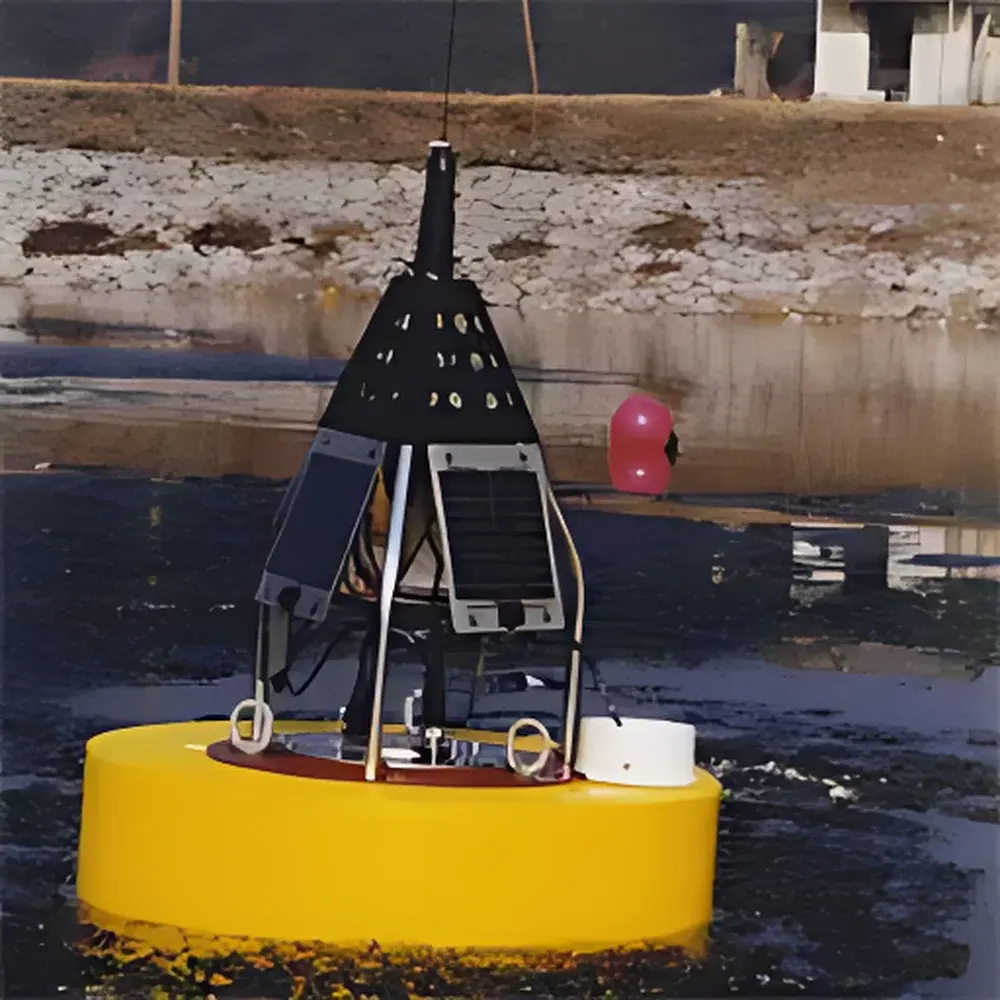
YSI EMM550 Environmental Monitoring Buoy System
| Brand | Xylem |
|---|---|
| Origin | USA |
| Manufacturer Type | Authorized Distributor |
| Origin Category | Imported |
| Model | EMM550 |
| Instrument Type | Online Water Quality Analyzer |
| Buoy Construction Material | Surlyn®-based Ionomeric Foam |
| Structural Design | Modular, Symmetric Circular Hull with Integrated Ballast Chamber |
| Certified Compliance | NOAA NDBC & USCG Approved Buoy Platform |
| Deployment Class | Coastal, Estuarine, and Inland Open-Water Long-Term Monitoring |
Overview
The YSI EMM550 Environmental Monitoring Buoy System is a purpose-engineered, marine-grade autonomous platform designed for continuous, unattended water quality monitoring in dynamic aquatic environments. Developed by Xylem (formerly Endeco/YSI), a leader in environmental sensing infrastructure with over three decades of buoy system deployment experience, the EMM550 integrates robust physical architecture with modular sensor integration capabilities to support real-time measurement of key physicochemical parameters—including dissolved oxygen, pH, conductivity, turbidity, chlorophyll-a, CDOM, temperature, and depth—under demanding operational conditions. Its measurement principle relies on calibrated, field-replaceable electrochemical, optical, and pressure-based sensors interfaced via RS-485, SDI-12, or analog outputs, all synchronized through an embedded data logger compliant with NMEA 0183 and Modbus RTU protocols. The system operates as a fixed-point observatory, enabling long-term trend analysis, regulatory compliance reporting, and early-warning detection for eutrophication, hypoxia, harmful algal blooms (HABs), and anthropogenic contamination events.
Key Features
- Structurally optimized ionomeric foam buoy hull fabricated from Surlyn®-based copolymer—engineered for exceptional impact resistance, zero water absorption (<0.01% v/v after 30-day immersion), and intrinsic UV/oxidative stability without surface coating.
- Integrated stainless steel ballast chamber and thermal-mass base plate that maintains internal electronics compartment temperature within ±3°C of ambient seawater, minimizing thermal drift in sensor calibration.
- Modular, symmetric circular geometry (122 cm diameter) providing hydrodynamic stability in wave heights up to 3.5 m and current velocities exceeding 2.5 knots.
- 318 kg net buoyancy with high strength-to-weight ratio (12.5:1), supporting up to 45 kg payload capacity while retaining deck-level stowage safety and vessel-handling compatibility.
- IP68-rated sealed electronics enclosure with corrosion-resistant stainless steel mounting frame and redundant O-ring sealing at all penetrations.
- Standardized mooring interface compatible with ASTM D3933-compliant anchor systems and recovery winch configurations per USCG Marine Safety Manual Vol. II.
Sample Compatibility & Compliance
The EMM550 is validated for deployment in saline, brackish, and freshwater matrices across tidal estuaries, coastal shelves, reservoirs, and large lakes. Sensor modules are certified to ISO 7027 (turbidity), ISO 5814 (dissolved oxygen), and ASTM D1293 (pH). The platform meets NOAA National Data Buoy Center (NDBC) structural specifications for Class III offshore buoys and conforms to USCG Aids to Navigation (ATON) standards for marker buoy integrity and visibility. All firmware and data logging operations adhere to GLP principles, with time-stamped audit trails, user-access controls, and optional 21 CFR Part 11–compliant electronic signature modules available upon configuration.
Software & Data Management
Data acquisition is managed via the YSI EcoWatch™ Logger Software suite, supporting remote configuration, diagnostic telemetry, and over-the-air firmware updates via Iridium Short Burst Data (SBD) or cellular LTE-M connectivity. Raw sensor outputs are stored in binary .DAT files with embedded metadata (UTC timestamp, GPS location, battery voltage, sensor health flags) and exported in CSV, NetCDF, or EPA WQX-compliant XML formats. Cloud synchronization integrates with Xylem’s HydroSphere™ portal for automated QA/QC flagging (e.g., spike detection, range validation, drift compensation), multi-parameter correlation dashboards, and role-based access control aligned with ISO/IEC 27001 information security frameworks.
Applications
- Regulatory compliance monitoring under Clean Water Act Section 303(d) and EU Water Framework Directive (WFD) monitoring programs.
- Real-time tracking of nutrient loading dynamics and hypoxic zone formation in stratified estuaries (e.g., Chesapeake Bay, Gulf of Mexico dead zones).
- Long-term climate-driven water quality trend analysis for IPCC AR6 Annex I reporting requirements.
- Early detection and source attribution of cyanobacterial blooms using synchronous phycocyanin/chlorophyll fluorescence and spectral absorbance profiling.
- Calibration reference platform for satellite-derived ocean color validation (e.g., NASA PACE, ESA Sentinel-3 OLCI).
- Supporting adaptive management of drinking water intakes and aquaculture lease sites through predictive DO and temperature anomaly alerts.
FAQ
What sensor interfaces does the EMM550 support?
It accepts RS-485 (Modbus RTU), SDI-12, 4–20 mA, and 0–5 V analog inputs, with configurable sampling intervals from 1 minute to 24 hours.
Is the buoy suitable for ice-covered deployments?
No—the EMM550 is rated for year-round operation down to –10°C but is not engineered for sustained ice load or freeze-thaw cycling; ice-capable variants (e.g., EMM550-Ice) require custom ballast and hull reinforcement.
How is data security ensured during transmission?
All wireless telemetry uses TLS 1.2 encryption; local storage employs AES-256 full-disk encryption, and remote access requires two-factor authentication via RADIUS or LDAP integration.
Can the system be integrated into existing SCADA networks?
Yes—native Modbus TCP and OPC UA gateways are available as optional add-ons for direct interoperability with industrial control systems.
What is the typical service interval for preventive maintenance?
Biannual inspection is recommended: fouling assessment, sensor recalibration verification, battery capacity testing, and mooring hardware torque verification per ASTM F2637.
Related Products







