
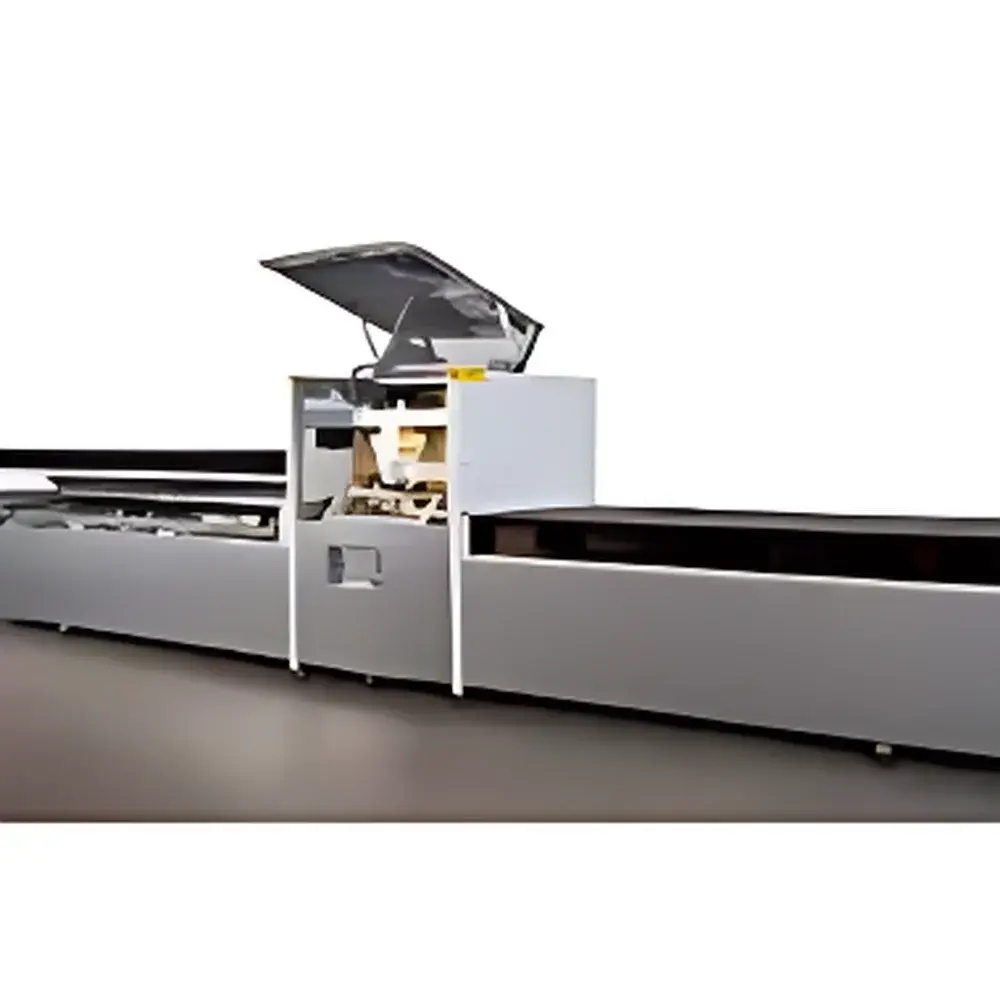
COX Itrax XRF Core Scanner
| Brand | COX Analytical Systems |
|---|---|
| Origin | Sweden |
| Model | Itrax XRF |
| Configuration | Benchtop/Floor-standing |
| Application Domain | Geological & Sediment Core Analysis |
| Elemental Range | Na (11) – U (92) |
| Detection Range | 1 ppm – 99.99 wt% |
| Energy Resolution | <140 eV (Mn Kα) |
| Repeatability | ≤0.1% RSD |
Overview
The COX Itrax XRF Core Scanner is a high-throughput, non-destructive core scanning system engineered for quantitative elemental mapping and structural imaging of unsectioned sediment, rock, and biological cylindrical samples. Developed in collaboration with the National Oceanography Centre (formerly Southampton Oceanographic Centre), the Itrax integrates three complementary analytical modalities—energy-dispersive X-ray fluorescence (ED-XRF) spectroscopy, digital X-ray micro-radiography (XRM), and high-resolution optical imaging—within a single, synchronized acquisition platform. Unlike conventional benchtop ED-XRF spectrometers, the Itrax employs a focused, collimated X-ray beam (50–150 µm spot size) coupled with motorized linear translation to perform line-scan rastering across intact cores up to 1.8 m in length and 120 mm in diameter. Measurements are conducted under ambient atmosphere without vacuum or sample preparation, preserving stratigraphic integrity and enabling downstream analyses (e.g., radiocarbon dating, stable isotope analysis, or DNA extraction). The system operates on the principle of secondary X-ray emission following primary X-ray excitation, with spectral deconvolution performed using fundamental parameter-based quantification algorithms calibrated against matrix-matched reference materials.
Key Features
- Simultaneous acquisition of elemental concentration profiles (ppm–wt%), digital X-ray attenuation maps (density/porosity proxies), and true-color optical surface images—all co-registered pixel-for-pixel
- Scan speed of up to 1 m core length in ≤10 minutes at 0.1 mm step resolution, delivering statistically robust data with superior counting statistics compared to slower alternatives
- High-sensitivity Si-PIN or SDD detector with energy resolution <140 eV (Mn Kα), enabling reliable discrimination of adjacent elements (e.g., V/Cr, Mn/Fe, Sr/Y)
- Automated multi-element quantification for 70+ elements (Na–U), including light elements down to sodium, validated per ISO 22036 and ASTM D7759 for sediment matrices
- Robust industrial-grade mechanics supporting unattended 24/7 operation; temperature-stabilized X-ray tube and detector ensure long-term signal stability
- Modular design accommodating variable core diameters (60–120 mm) and optional accessories: cryo-stage for frozen cores, magnetic susceptibility sensor, and RGB LED illumination for enhanced optical contrast
Sample Compatibility & Compliance
The Itrax is optimized for cylindrical, uncut geological and environmental specimens including marine/lacustrine sediment cores, glacial ice cores, peat monoliths, tree rings, and drill-core segments from boreholes. Sample integrity is preserved throughout analysis—no sectioning, coating, drying, or chemical treatment is required. The system complies with GLP (Good Laboratory Practice) documentation standards and supports audit-ready data workflows aligned with ISO/IEC 17025 requirements. All spectral and image metadata are embedded with timestamp, instrument configuration, and calibration traceability. Optional 21 CFR Part 11-compliant software modules provide electronic signatures, user access control, and immutable audit trails for regulated environments.
Software & Data Management
Itrax is operated via the proprietary CoxCore software suite, which provides full automation from sample loading to report generation. The software enables real-time spectral visualization, dynamic background subtraction, peak integration (net area calculation), and matrix correction using empirical or fundamental parameter models. Quantified element maps are exported in GeoTIFF, ASCII grid, or HDF5 formats compatible with QGIS, Python (xarray, pandas), and MATLAB. Batch processing supports multi-core alignment, depth normalization, and statistical outlier removal. Integrated tools allow direct correlation between XRF-derived Ca/Sr ratios and X-ray density anomalies—critical for identifying carbonate layers, tephra horizons, or diagenetic fronts. Raw spectra and processed datasets are stored with FAIR (Findable, Accessible, Interoperable, Reusable) metadata compliant with PANGAEA and NOAA NCEI repository standards.
Applications
The Itrax serves as a foundational tool in paleoenvironmental reconstruction, geochemical stratigraphy, and environmental forensics. In marine geology, it resolves millennial-scale variations in redox-sensitive elements (Mo, U, V) linked to bottom-water oxygenation; in lacustrine studies, it tracks anthropogenic metal contamination (Pb, Zn, As) across urbanization timelines; in glaciology, it identifies volcanic sulfate layers and dust fluxes through Ca–Al–Si correlations. Its ability to quantify biogenic silica (Si), carbonate (Ca), and terrigenous input (Al, K, Ti) supports multiproxy climate modeling. Peer-reviewed applications include IODP expeditions, EC-funded projects (e.g., PALEO-ICE, SEDIMENTS), and national monitoring programs (USGS, BGS, NGU).
FAQ
What sample preparation is required prior to scanning?
None—cores are scanned intact, unwrapped, and uncooled. Surface debris may be gently brushed away; no polishing, coating, or vacuum desiccation is needed.
Can the Itrax distinguish between different oxidation states of the same element?
No—ED-XRF is insensitive to chemical speciation. For valence-state analysis, synchrotron-based XANES or sequential extraction protocols are recommended as complementary techniques.
Is the system suitable for radioactive or hazardous samples?
Yes—the shielded cabinet meets IEC 61000-4-3 EMC and IEC 62471 photobiological safety standards. Optional lead-lined shielding and interlocked access doors support Class II radioisotope handling per national radiation safety regulations.
How is quantification accuracy verified?
Through routine analysis of certified reference materials (CRMs) such as NIST SRM 2702, USGS AGV-2, and BCR-414, with performance monitored via control charts tracking drift, precision, and recovery rates across daily QC runs.
Does the system support remote operation and data transfer?
Yes—Ethernet/IP connectivity enables secure remote desktop access, automated FTP/SFTP upload to institutional servers, and integration with LIMS via RESTful API endpoints.




