
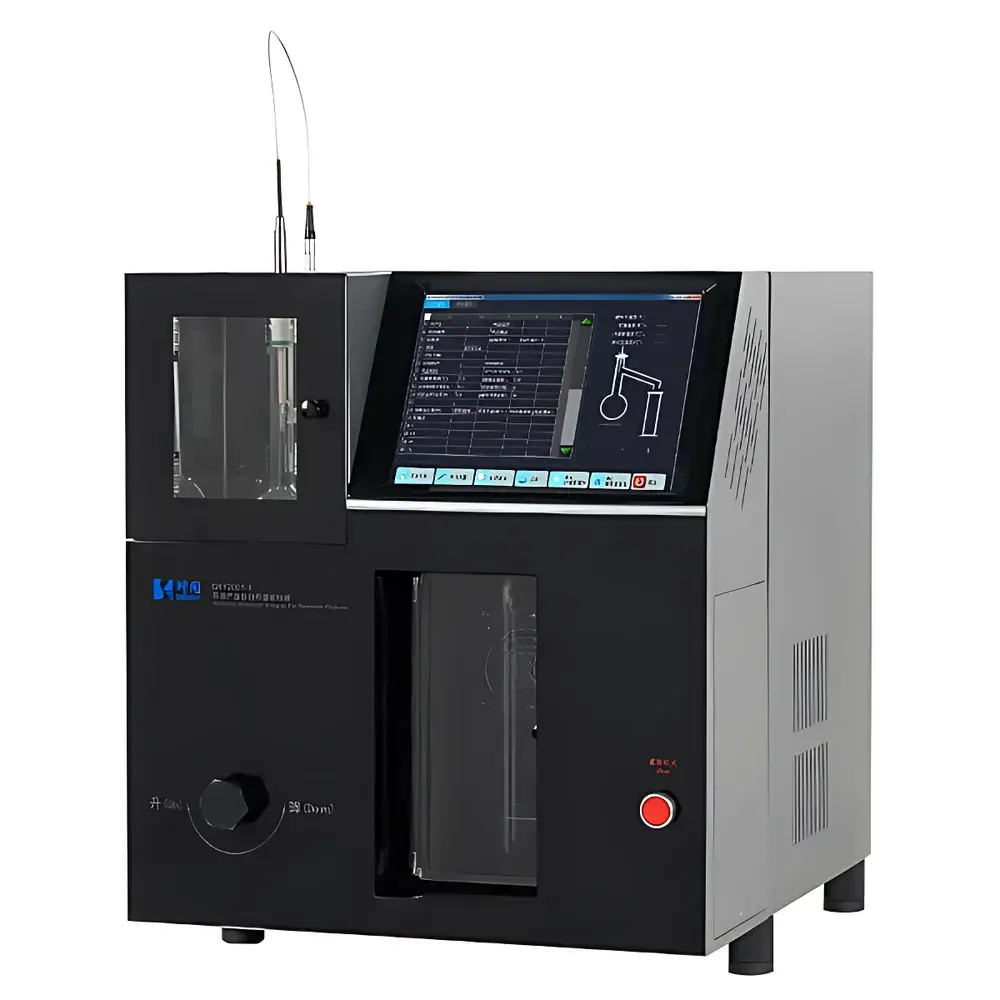
Shenkai SKY2001-II Automatic Petroleum Distillation Apparatus
| Brand | Shenkai |
|---|---|
| Origin | Shanghai, China |
| Model | SKY2001-II |
| Compliance Standards | ASTM D86, GB/T 6536, ISO 3405, IP 123 |
| Temperature Range | 0–400 °C (±0.1 °C) |
| Condenser & Receiving Chamber Temp Control | 0–60 °C (±0.1 °C) |
| Volume Measurement Range | 0–100 mL (0.1 mL resolution) |
| Data Storage Capacity | ≥5,000 test records |
| Power Supply | AC 220 V ±10%, 50/60 Hz |
| Dimensions (W×D×H) | 525 × 590 × 585 mm |
| Net Weight | 84 kg |
Overview
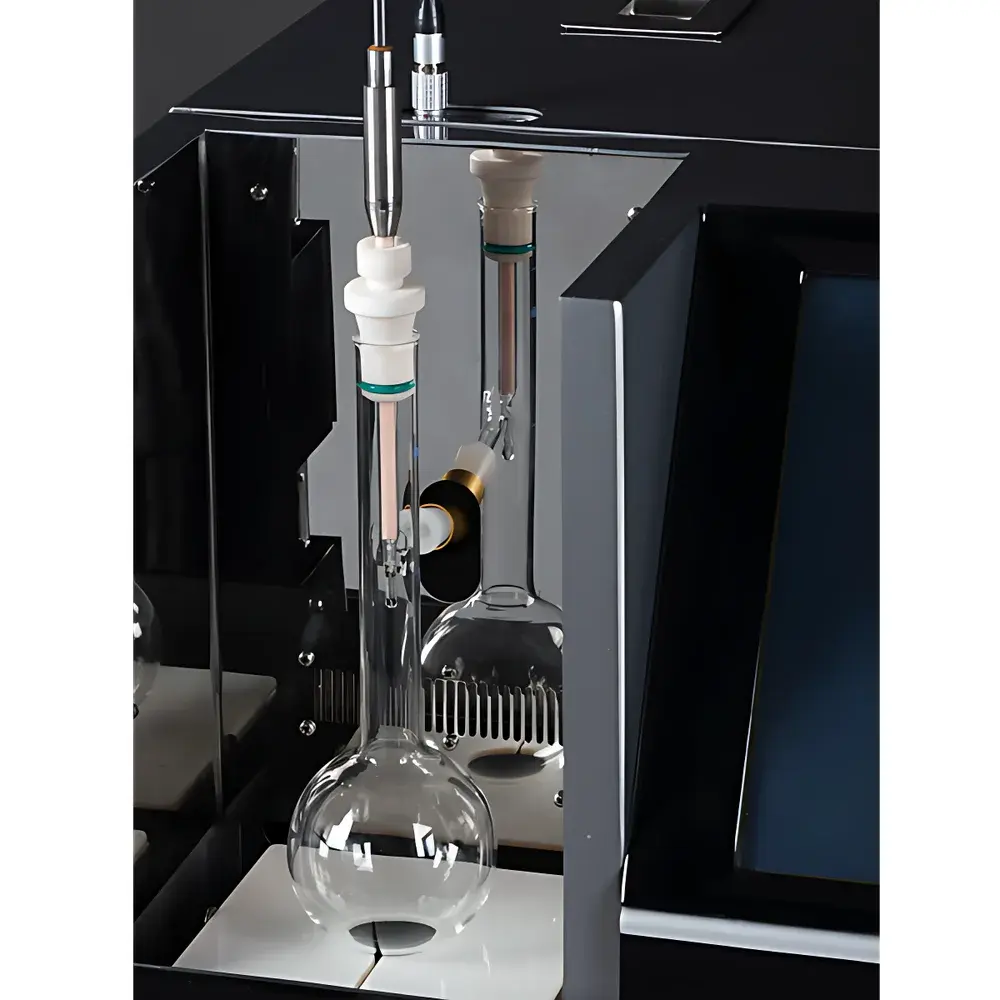
The Shenkai SKY2001-II Automatic Petroleum Distillation Apparatus is an engineered solution for standardized atmospheric distillation analysis of petroleum fractions in compliance with internationally recognized test methods—including ASTM D86, GB/T 6536, ISO 3405, and IP 123. It operates on the principle of batch-wise, controlled boiling under ambient pressure, where a representative sample is heated at a prescribed rate while vapor is condensed and collected incrementally in calibrated receivers. The apparatus continuously monitors real-time temperature at the distillation head (via traceable PT100 sensor), volumetric recovery at the receiver, and condensate temperature—enabling precise determination of key distillation parameters: initial boiling point (IBP), 10%, 50%, 90% recovery points, and final boiling point (FBP or dry point, when equipped with optional dry-point detection module). Designed for routine QC/QA laboratories in refineries, independent testing labs, and petrochemical R&D facilities, the SKY2001-II delivers high reproducibility across repeated runs through deterministic thermal management, optical liquid-level tracking, and closed-loop feedback control of heating power and cooling capacity.
Key Features
- iSKvator™ intelligent method execution engine preloads ASTM D86, GB/T 6536, and other standard protocols—enabling one-touch initiation of fully automated distillation cycles
- 12-inch full-color capacitive touchscreen interface with dynamic real-time distillation curve visualization and status dashboard
- Peltier-based thermoelectric cooling system for condenser and receiving chamber (0–60 °C, ±0.1 °C), eliminating refrigerant use and reducing long-term maintenance burden
- Low-voltage lightweight heating element with adaptive power optimization algorithm ensures consistent ASTM-specified heating rates across varying ambient conditions
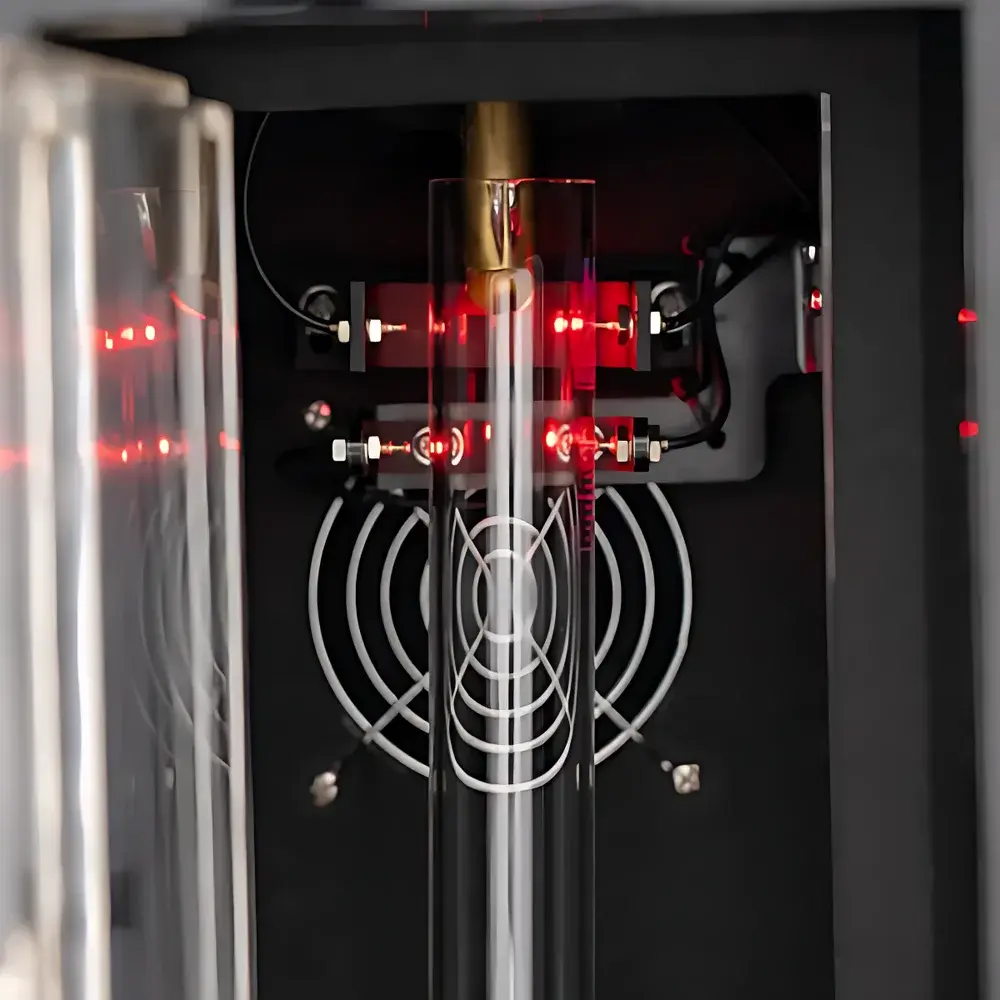
- High-resolution optical liquid-level detection using stepper motor-driven precision positioning and photoelectric sensors (0.1 mL volume resolution, 99 discrete measurement points)
- Integrated safety architecture: automatic fire detection via thermal sensors, dual-mode nitrogen-based suppression (manual/auto trigger), dry-run prevention, over-temperature cutoff (>70 °C at condenser/receiver), and flow anomaly monitoring (e.g., >15 mL/min or zero flow for >60 s)
- Self-diagnostic boot sequence verifies heater, cooler, sensor, and actuator functionality prior to test initiation
- Atmospheric pressure and temperature compensation applied automatically during data reduction per ASTM D86 Annex A1 and ISO 3405 Clause 8
Sample Compatibility & Compliance
The SKY2001-II is validated for distillation characterization of light to medium petroleum fractions including but not limited to: straight-run naphthas, stabilized natural gasoline (light hydrocarbons), automotive and aviation gasolines, jet fuels (Jet A, Jet A-1), diesel fuels (EN 590, ASTM D975), kerosene, and solvent naphthas. Its mechanical and thermal design conforms to the dimensional, thermal, and procedural constraints defined in ASTM D86 Section 6 and GB/T 6536 Clause 5. All temperature measurements are traceable to NIST-certified reference standards via factory-applied PT100 calibration coefficients. The system supports GLP-compliant operation through audit-ready event logging, user access control (via optional network authentication), and electronic signature-capable result export—facilitating alignment with FDA 21 CFR Part 11 requirements when integrated into validated LIMS environments.
Software & Data Management
Test execution, parameter configuration, and result review are managed exclusively through the embedded Linux-based firmware interface. Each run generates a structured data file containing raw time-stamped temperature/volume pairs, metadata (operator ID, method ID, atmospheric pressure, ambient humidity), and calculated endpoints with uncertainty estimates. Data export is supported via USB mass storage, RS232 serial transmission (ASCII format), or Ethernet (RJ-45) to laboratory information management systems (LIMS) using HL7 or ASTM E1384-compliant messaging. Internal non-volatile memory retains ≥5,000 complete test records with timestamp, method version, and pass/fail flags based on ASTM-defined repeatability limits. No proprietary software installation is required on host PCs; all reporting is web-accessible via built-in HTTP server upon network connection.
Applications
- Quality conformance testing of refinery product streams against specification limits (e.g., ASTM D439 for gasoline volatility, ASTM D975 for diesel distillation profile)
- Blending optimization studies requiring precise cut-point correlation between feedstock composition and distillate yield
- Regulatory submission support for fuel certification (EPA, CNPC, EN, JIS)
- Research into boiling point distribution effects on combustion behavior, cold-start performance, and evaporative emissions
- Method validation and instrument qualification per ISO/IEC 17025 Clause 5.5 and ASTM D6299
FAQ
Does the SKY2001-II meet ASTM D86’s heating rate requirements across all ambient temperatures?
Yes—the adaptive heating control system dynamically adjusts power delivery to maintain the specified 4–5 °C/min initial heating rate and subsequent plateau phases, regardless of lab ambient fluctuations between 5–35 °C.
Is dry point detection included as standard equipment?
No—dry point detection requires the optional Dry Point Detection Kit (DPDK-SKY2001), which integrates infrared optical sensing at the distillation flask base and triggers endpoint confirmation when vapor generation ceases for ≥30 seconds.
Can the instrument be operated in a fume hood?
It is not recommended—ASTM D86 explicitly prohibits operation in areas with significant air movement, as drafts affect condensation efficiency and temperature uniformity; the unit must be installed in a still-air environment per Clause 7.2.
What is the expected service life of the Peltier cooling modules?
Rated for ≥50,000 operating hours under continuous duty at ≤60 °C ambient, with mean time between failures (MTBF) exceeding 10 years when operated within specified environmental conditions.
How is data integrity ensured during power interruption?
All critical process variables are buffered in battery-backed RAM; upon recovery, the system resumes from last valid measurement point or initiates safe shutdown with full data retention—no loss of intermediate results.






