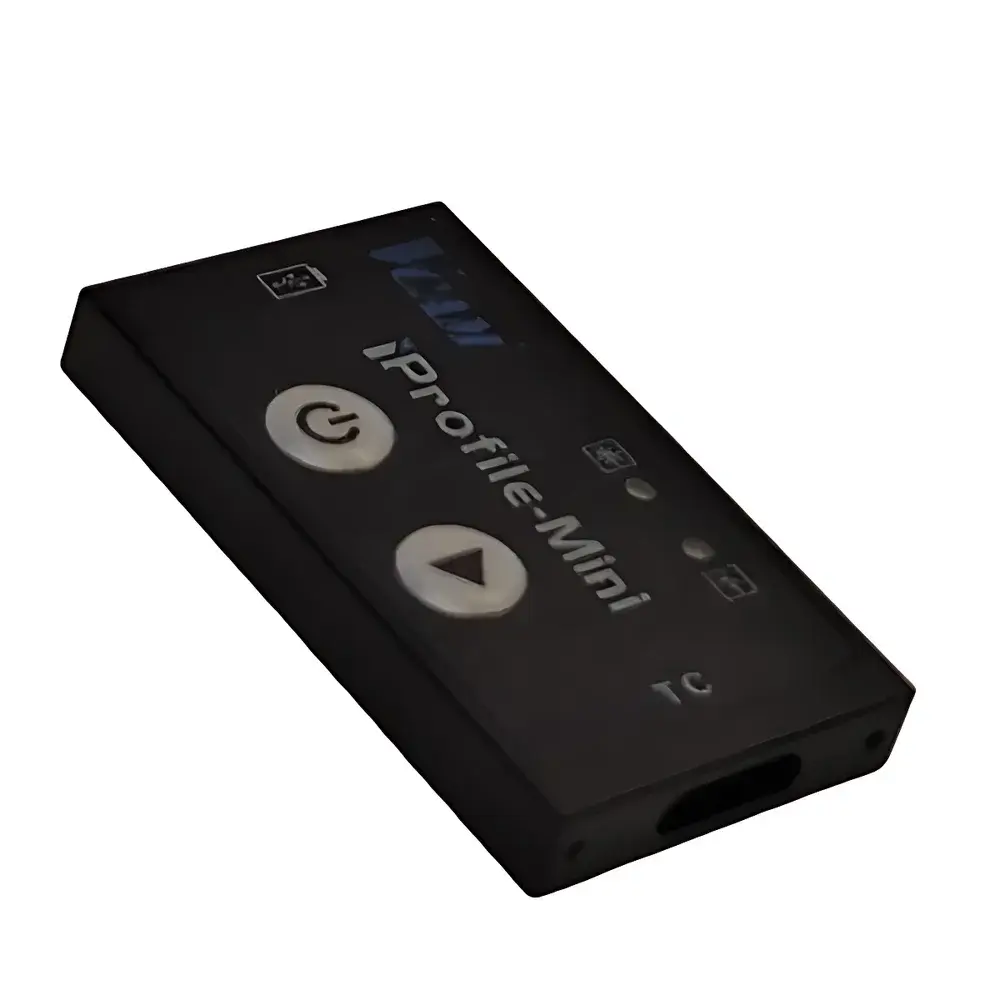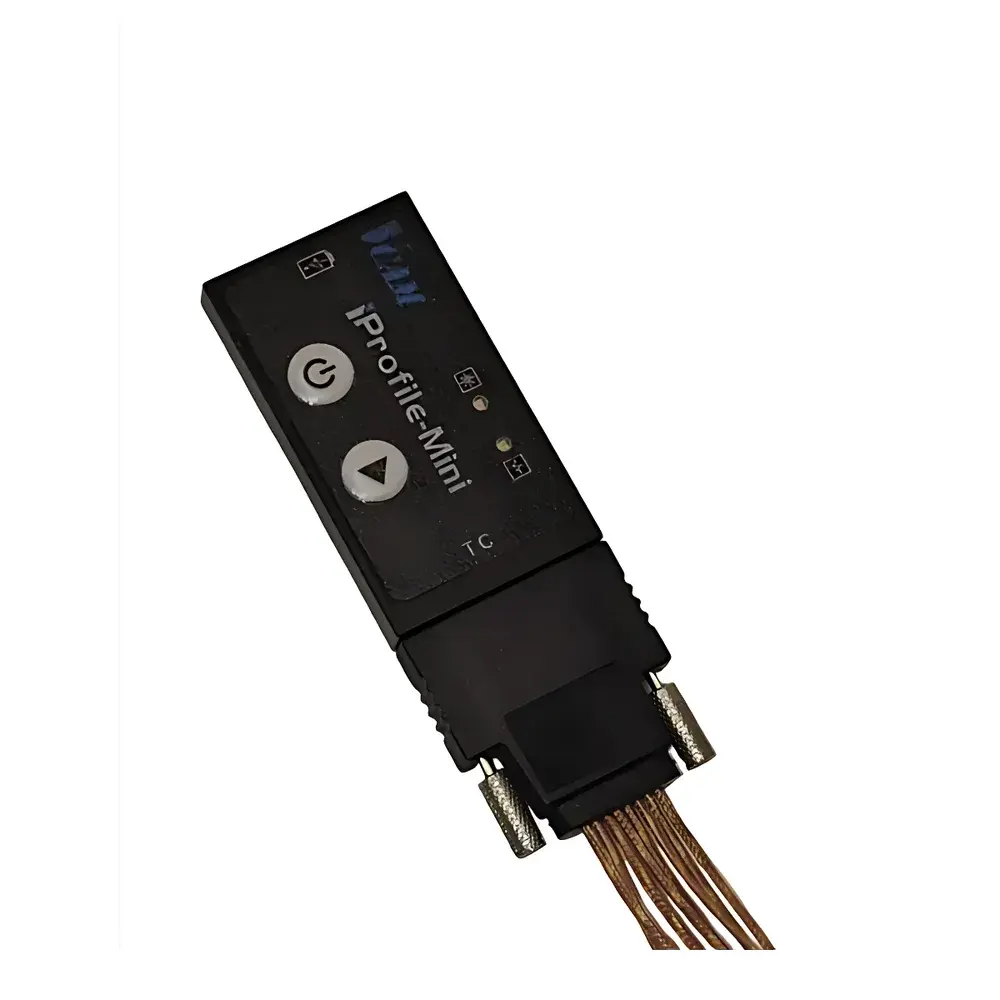
Lake Shore TC Series E- and K-Type Thermocouple Wire Sensors
| Brand | Lake Shore |
|---|---|
| Origin | USA |
| Manufacturer Status | Authorized Distributor |
| Origin Category | Imported |
| Model | Lake Shore TC Series |
| Pricing | Upon Request |
Overview
Lake Shore TC Series thermocouple wire sensors are precision-engineered temperature sensing solutions designed for demanding cryogenic and low-temperature measurement applications. Based on the Seebeck effect, these sensors generate a voltage proportional to the temperature difference between the measurement junction (hot end) and reference junction (cold end), enabling accurate, passive, and self-powered temperature monitoring without external excitation. Unlike resistance-based sensors (e.g., PT100 or Cernox®), thermocouples offer inherent robustness in high-radiation, ultra-high-vacuum, and strong magnetic field environments—making them indispensable in dilution refrigerators, superconducting magnet systems, quantum computing test benches, and space simulation chambers. The TC Series is optimized for operation from 3.15 K up to 1543 K (K-type) or 953 K (E-type), with performance validated across ISO/IEC 17025-accredited calibration laboratories. Critical design considerations—including thermal EMF stability, insulation integrity under thermal cycling, and lead-wire homogeneity—are rigorously addressed to ensure measurement repeatability better than ±1% of reading in controlled gradient environments.
Key Features
- E-type (Chromel–Constantan): Highest sensitivity among standard thermocouples (≈68 µV/K near room temperature); optimal for low-temperature applications down to 40 K; recommended for high-resolution mapping in cryostat stages and sample holders.
- K-type (Chromel–Alumel): Broad operational range (3.15 K to 1543 K); stable output in inert or oxidizing atmospheres; nominal Seebeck coefficient of 4.1 mV/K at 20 K—suitable for general-purpose cryogenic and high-temperature monitoring where absolute accuracy is secondary to long-term drift resistance.
- Consistent Teflon® (FEP) insulation: Uniform 76.2 µm wall thickness provides dielectric strength >1 kV, chemical resistance, and reliable performance from 4 K to +200 °C; compatible with bake-out procedures up to 120 °C under vacuum.
- Precision-gauge wire options: Available in 30 AWG (0.254 mm bare diameter) and 36 AWG (0.127 mm bare diameter); finer gauges minimize thermal conduction error and mechanical loading on delicate samples.
- Plug-and-play integration: Fully compatible with Lake Shore’s 336, 372, and 350 temperature controllers when equipped with optional thermocouple input modules (e.g., Model 336-TCI); supports cold-junction compensation and polynomial-based NIST-traceable linearization.
Sample Compatibility & Compliance
The TC Series is routinely deployed in heterogeneous cryogenic setups—including closed-cycle refrigerators, liquid helium cryostats, and adiabatic demagnetization refrigerators (ADR). Its non-magnetic construction (Cu-Ni alloy wires, FEP insulation) ensures minimal perturbation in fields exceeding 15 T. All thermocouple wires comply with ASTM E230/E230M (standard thermocouple specifications) and meet IEC 60584-1 requirements for EMF vs. temperature characteristics. For GLP/GMP-regulated environments, traceable calibration certificates (NIST-traceable, uncertainty <0.15 K at 77 K) are available upon request. Note: Maximum operating temperature is wire-gauge dependent—insulation must be stripped for use above 473 K to prevent outgassing and degradation.
Software & Data Management
When used with Lake Shore controllers, real-time thermocouple data is logged via proprietary software (Lakeshore Cryogenic Control Software, LCS) or third-party platforms (LabVIEW™, Python via PyVISA). LCS supports automated calibration curve application (ITS-90 or NIST SRD 127), multi-channel synchronization, and audit-trail-enabled data export compliant with FDA 21 CFR Part 11 requirements (when configured with user authentication and electronic signatures). Raw EMF readings are stored alongside metadata—including sensor model, calibration date, and cold-junction temperature—ensuring full traceability for ISO 17025 audits.
Applications
- Cryogenic temperature mapping of superconducting coils and quantum processors
- Thermal gradient characterization in multi-stage cryocoolers
- In-situ monitoring during low-temperature material synthesis (e.g., thin-film deposition, MBE)
- Calibration reference for secondary sensors (e.g., diode thermometers, carbon-glass resistors)
- Vacuum chamber wall and feedthrough temperature surveillance
- Long-duration space environment simulation testing
FAQ
What is the lowest usable temperature for Lake Shore E-type thermocouple wire?
The E-type thermocouple is specified for use down to 3.15 K per ASTM E230; however, practical resolution and reproducibility below 40 K require careful attention to thermal anchoring and electromagnetic interference mitigation.
Can I use K-type thermocouple wire in liquid nitrogen (77 K)?
Yes—K-type wire is fully functional at 77 K, though its sensitivity decreases significantly below 100 K; for highest resolution at LN₂ temperatures, E-type is preferred.
Is Teflon® insulation suitable for UHV applications?
FEP insulation exhibits low vapor pressure and minimal outgassing after proper bake-out (120 °C, 24 h); it is widely accepted in UHV cryogenic systems with base pressures <1×10⁻⁹ Torr.
How do I select the appropriate wire gauge?
Use 36 AWG for minimal thermal mass and micro-sample mounting; choose 30 AWG for improved mechanical durability and lower electrical resistance in longer runs (>10 m).
Do Lake Shore controllers support automatic cold-junction compensation?
Yes—all compatible controllers feature built-in thermistor-based cold-junction sensors and apply real-time correction using industry-standard reference tables.