
Anton Paar Lyza 5000 Wine Fourier Transform Infrared (FTIR) Spectrometer
| Brand | Anton Paar |
|---|---|
| Origin | Austria |
| Manufacturer | Anton Paar GmbH |
| Instrument Type | Laboratory FTIR Spectrometer |
| Wavenumber Range | 550–6000 cm⁻¹ |
| Resolution | 8 cm⁻¹ |
| Scan Speed | 48 scans per 35 seconds |
| Signal-to-Noise Ratio | 46,980:1 |
| ATR Prism | 12-reflection diamond crystal |
| Temperature Control Accuracy | ±0.03 °C |
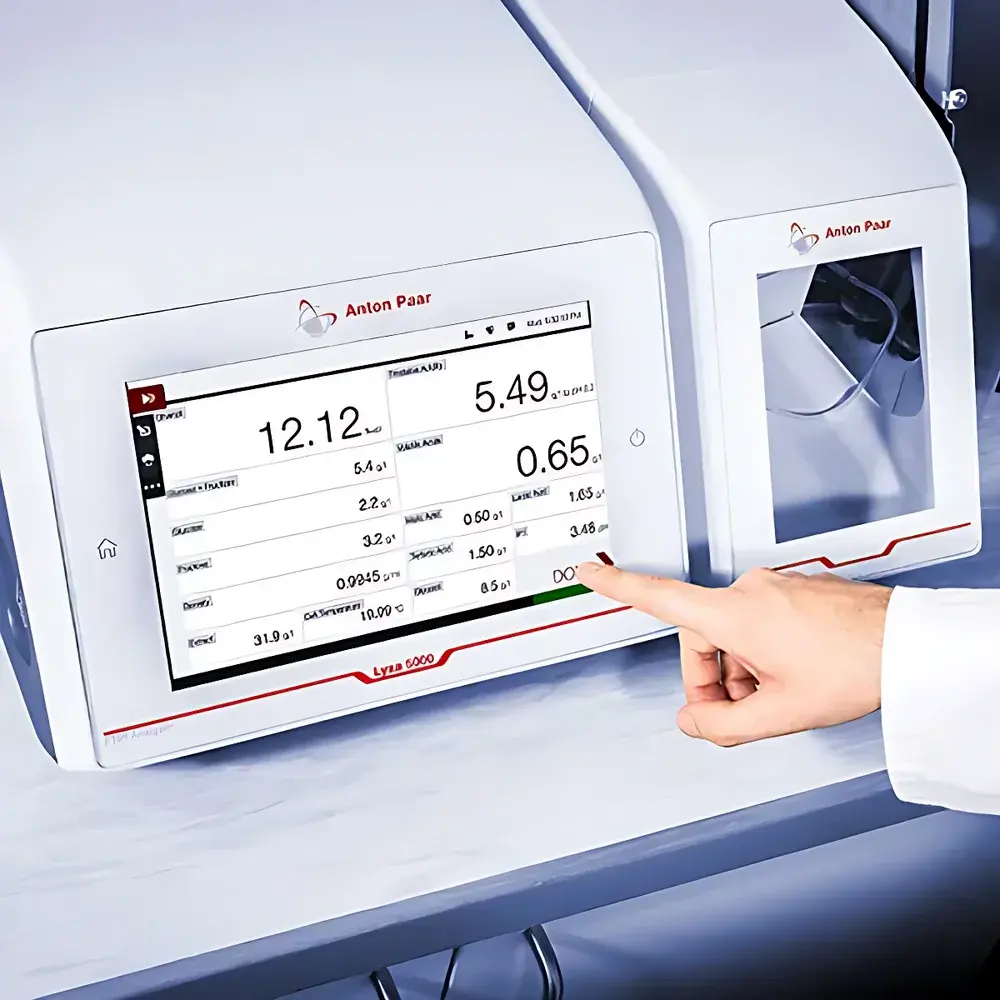
| Interface | 10.1-inch capacitive touchscreen |
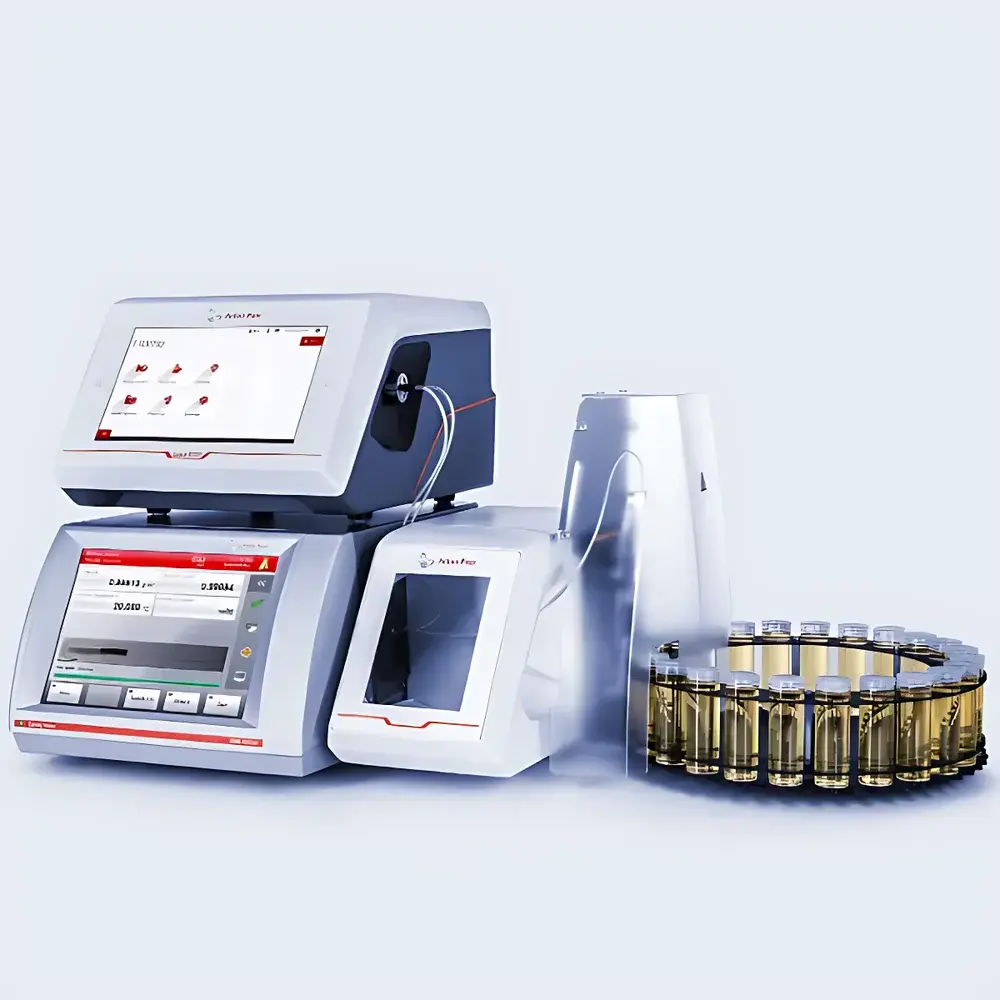
| Automation Compatibility | Xsample 520 (24-position autosampler optional) |
| Data Export | LIMS-compatible, PDF/CSV report generation |
Overview
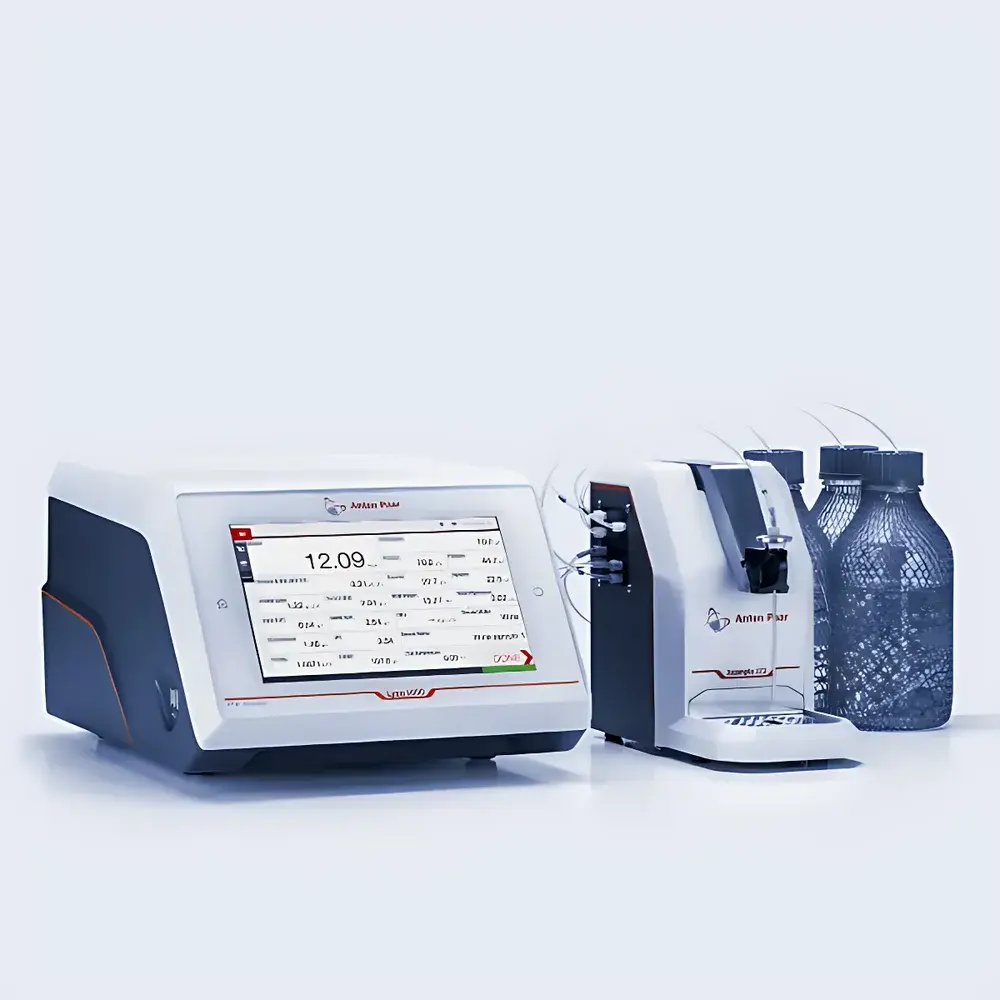
The Anton Paar Lyza 5000 Wine is a dedicated Fourier Transform Infrared (FTIR) spectrometer engineered specifically for quantitative analysis of wine, grape must, and fermenting juice in production, quality control, and research laboratories. It operates on the physical principle of mid-infrared absorption spectroscopy, where molecular vibrational modes—particularly those of C–O, O–H, C=O, and C–H bonds—are excited by broadband IR radiation. The instrument employs a high-stability interferometer and a thermoelectrically cooled DTGS detector to acquire interferograms, which are Fourier-transformed into absorbance spectra. These spectra are then interpreted using chemometric calibration models validated against reference methods (e.g., enzymatic assays, distillation-titration, densimetry), enabling simultaneous quantification of up to 17 physicochemical parameters without sample dilution or reagent addition. Its design prioritizes robustness under routine winery conditions: sealed optical path minimizes humidity and dust ingress; precision temperature-controlled ATR measurement cell ensures thermal stability critical for reproducible ethanol and organic acid quantification; and vibration-damped mechanical architecture supports reliable operation in non-ideal laboratory environments.
Key Features
- Dedicated 12-reflection diamond ATR accessory optimized for turbid, colored, and low-viscosity wine matrices—reducing scattering artifacts and enhancing signal intensity compared to single-bounce or transmission cells.
- Integrated temperature regulation of the ATR cell with ±0.03 °C stability—essential for minimizing thermal drift in ethanol and density-related predictions.
- Self-contained operation via a 10.1-inch high-resolution capacitive touchscreen interface—no external PC required; firmware and chemometric models are embedded and updatable via secure USB or network connection.
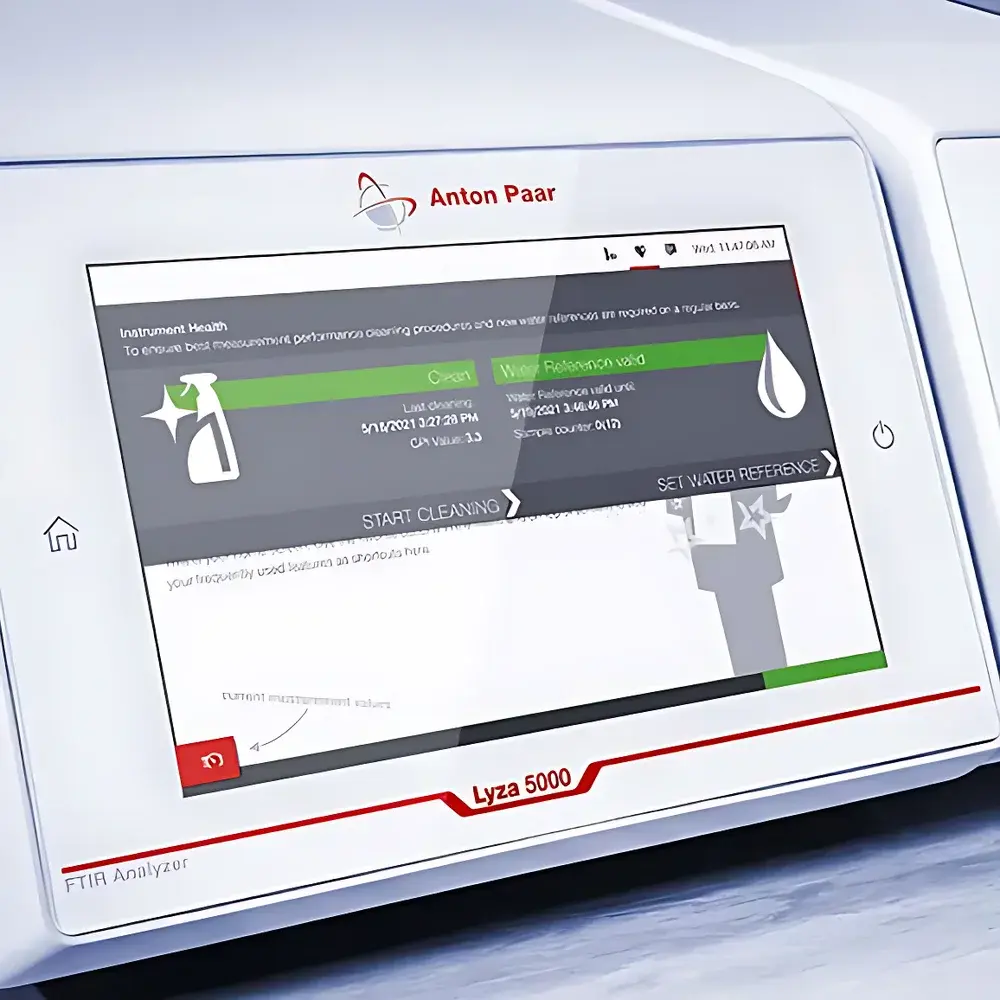
- Guided workflow engine with context-sensitive prompts for calibration verification, system suitability checks, and outlier detection—supporting GLP-compliant documentation and audit-ready traceability.
- Native compatibility with Anton Paar’s ecosystem: seamless integration with DMA M density meters, Alcolyzer Wine systems, and SVM Viscometers for concurrent multi-parameter acquisition and consolidated reporting.
- Minimal maintenance requirements: baseline correction and performance validation executed using only deionized water and binary ethanol/water standards—eliminating dependency on certified reference materials for daily operation.
Sample Compatibility & Compliance
The Lyza 5000 Wine accepts undiluted liquid samples across the full spectrum of enological matrices—including red and white wines (still, sparkling, fortified), grape must (clarified or unclarified), fermenting juice, and dealcoholized fractions. Its ATR geometry tolerates suspended solids and CO₂ microbubbles common in active fermentation, with no requirement for filtration or degassing. Method development follows ISO 21563:2020 (Wine — Determination of alcohol content — FTIR method) and aligns with OIV-OENO 485A-2017 guidelines for infrared wine analysis. Instrument software supports 21 CFR Part 11-compliant user access control, electronic signatures, and immutable audit trails. All factory-installed models are traceably validated against EU Reference Laboratories (e.g., BBA Braunschweig) and undergo annual performance qualification per ISO/IEC 17025:2017 requirements.
Software & Data Management
The embedded Lyza Software Suite provides full spectral acquisition, real-time chemometric prediction, and automated report generation. Calibration models are stored as encrypted, version-controlled objects with metadata including training dataset origin, cross-validation statistics (RMSEC, RMSEP), and uncertainty estimates per analyte. Users may import local validation data to refine model applicability—supported by built-in tools for residual analysis, leverage diagnostics, and bias correction. Data export conforms to ASTM E1957-21 (Standard Practice for Exchange of Analytical Data) and supports direct push to LIMS via HL7 or ASTM E2500-compliant APIs. All raw interferograms and processed spectra are archived in open-format HDF5 containers, ensuring long-term readability independent of proprietary software.
Applications
- Routine alcohol determination (ethanol % v/v) in finished wines and spirits—meeting legal labeling requirements per EU Regulation No. 1308/2013 and TTB standards.
- Simultaneous quantification of total reducing sugars (glucose + fructose), individual monosaccharides, titratable acidity, tartaric acid, volatile acidity (acetic acid), malic acid, lactic acid, glycerol, and extract.
- Monitoring fermentation kinetics via sequential must analysis—tracking sugar depletion, acid metabolism, and ethanol accumulation with sub-hour temporal resolution.
- Verification of chaptalization, de-alcoholization, and blending operations through multivariate fingerprint comparison against reference batches.
- Supporting sensory correlation studies by linking spectral features to mouthfeel descriptors (e.g., perceived viscosity, acidity balance) via partial least squares regression.
FAQ
What reference standards are required for daily operation?
Only deionized water and a two-point ethanol/water standard (e.g., 0% and 12% v/v) are needed for system suitability testing and baseline verification—no certified wine reference materials are mandatory.
Can the Lyza 5000 Wine be used for non-wine applications such as cider or fruit juices?
While chemometric models are pre-validated exclusively for Vitis vinifera-derived matrices, custom model development is supported via the optional ChemStation module—subject to user-provided representative calibration sets and validation per ISO 11095:2021.
Is remote monitoring or troubleshooting possible?
Yes—via optional Anton Paar Remote Service (ARS) subscription, which enables encrypted screen sharing, log file retrieval, and firmware updates under end-user consent and GDPR-compliant data handling protocols.
How is temperature control of the ATR cell maintained during extended measurement sequences?
A closed-loop Peltier system actively regulates the ZnSe prism block temperature within ±0.03 °C over ambient ranges of 15–30 °C, with thermal equilibration time <60 seconds after sample loading.
Does the instrument comply with environmental regulations regarding hazardous substances?
Yes—the Lyza 5000 Wine is RoHS 2011/65/EU and REACH SVHC-compliant; all optical components are lead-free, and the housing meets IEC 60529 IP20 classification for indoor laboratory use.




