
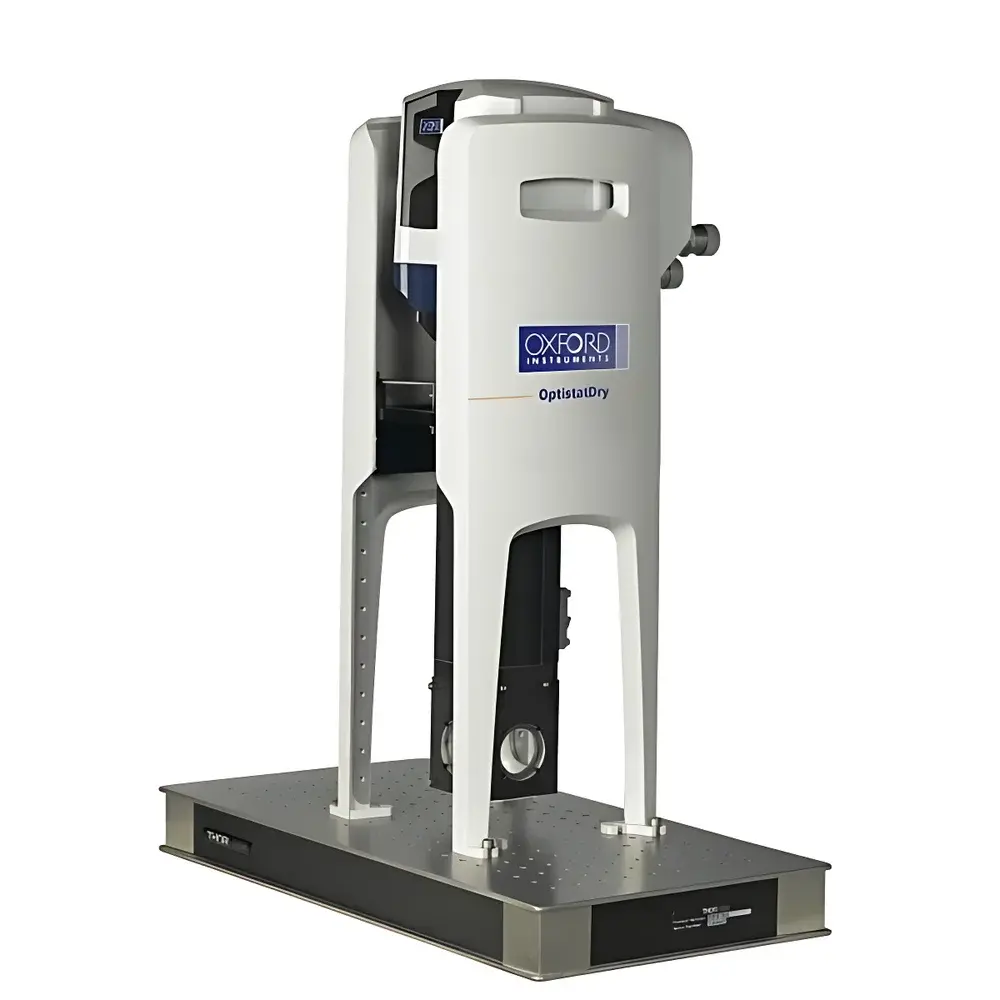
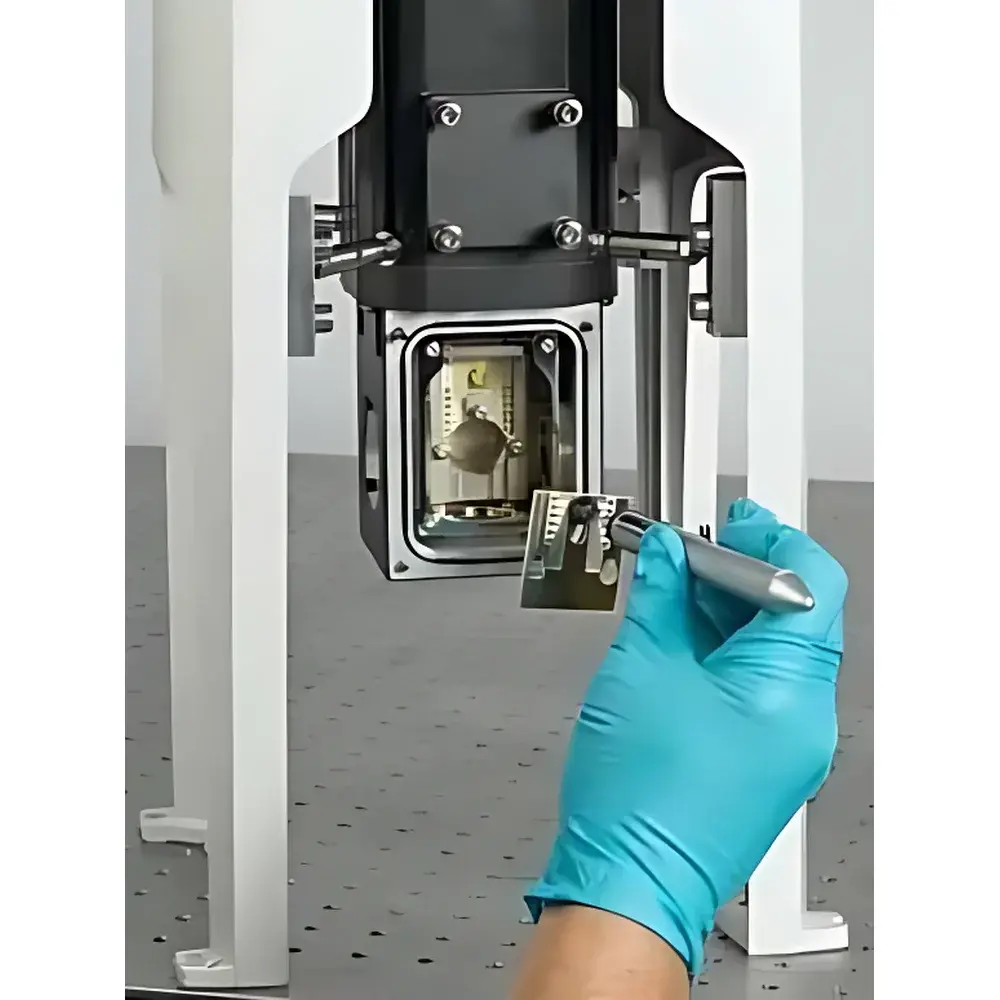
Oxford Instruments Optistat Dry BL4 3K Cryogen-Free Spectroscopy and Electrical Measurement Cryostat
| Brand | Oxford Instruments |
|---|---|
| Origin | United Kingdom |
| Model | Optistat Dry BL4 3K |
| Cooling Base Temperature | <3 K |
| Operating Temperature Range | <3 K to 300 K |
| Optical Numerical Aperture | f/1 |
| Sample Vibration Amplitude | <10 µm |
| Vacuum System | Oil-Free Mechanical Pump Compatible (with Activated Carbon Getter) |
| Sample Exchange | Side-Access Port with Quick-Release Mechanism |
| Optional Features | Low-Vibration Mounting Stand, Rotatable Sample Stage (±5°), Electrical Feedthroughs, Interchangeable Optical Windows (CaF₂, Si, Quartz, Sapphire) |
Overview
The Oxford Instruments Optistat Dry BL4 3K is a cryogen-free, closed-cycle cryostat engineered for high-precision spectroscopic and electrical characterization of solid-state materials under ultra-low-temperature conditions. Unlike traditional liquid helium–dependent systems, the Optistat Dry BL4 employs a two-stage pulse tube cryocooler to achieve a base temperature of <3 K without consumable cryogens—eliminating operational complexity, supply-chain dependency, and helium-related safety or regulatory constraints. Its design integrates fundamental thermodynamic efficiency with optical and electromechanical integrity: the sample space resides within a high-vacuum, radiation-shielded chamber maintained at pressures below 10⁻⁵ mbar, enabling long-term thermal stability (<±5 mK over 24 h) and minimal thermal drift during extended measurements. The system is purpose-built for synchrotron beamlines, confocal Raman microscopes, magneto-optical Kerr effect (MOKE) setups, and low-temperature transport experiments requiring simultaneous optical access and electrical connectivity.
Key Features
- Cryogen-free operation: Achieves stable <3 K base temperature using a Gifford-McMahon–type pulse tube refrigerator; no liquid helium handling, storage, or refills required.
- Optimized optical architecture: f/1 numerical aperture light path with interchangeable windows (CaF₂ for UV–VIS, Si for IR, quartz for broad-band transmission, sapphire for high-strength applications); rear window tilt adjustment (±2°) minimizes specular reflection artifacts in reflectance and ellipsometry configurations.
- Low-vibration mechanical design: Sample stage vibration amplitude maintained below 10 µm RMS across the full temperature range; optional active/passive damping mounts decouple cryocooler-induced microphonics from optical tables and interferometric instruments.
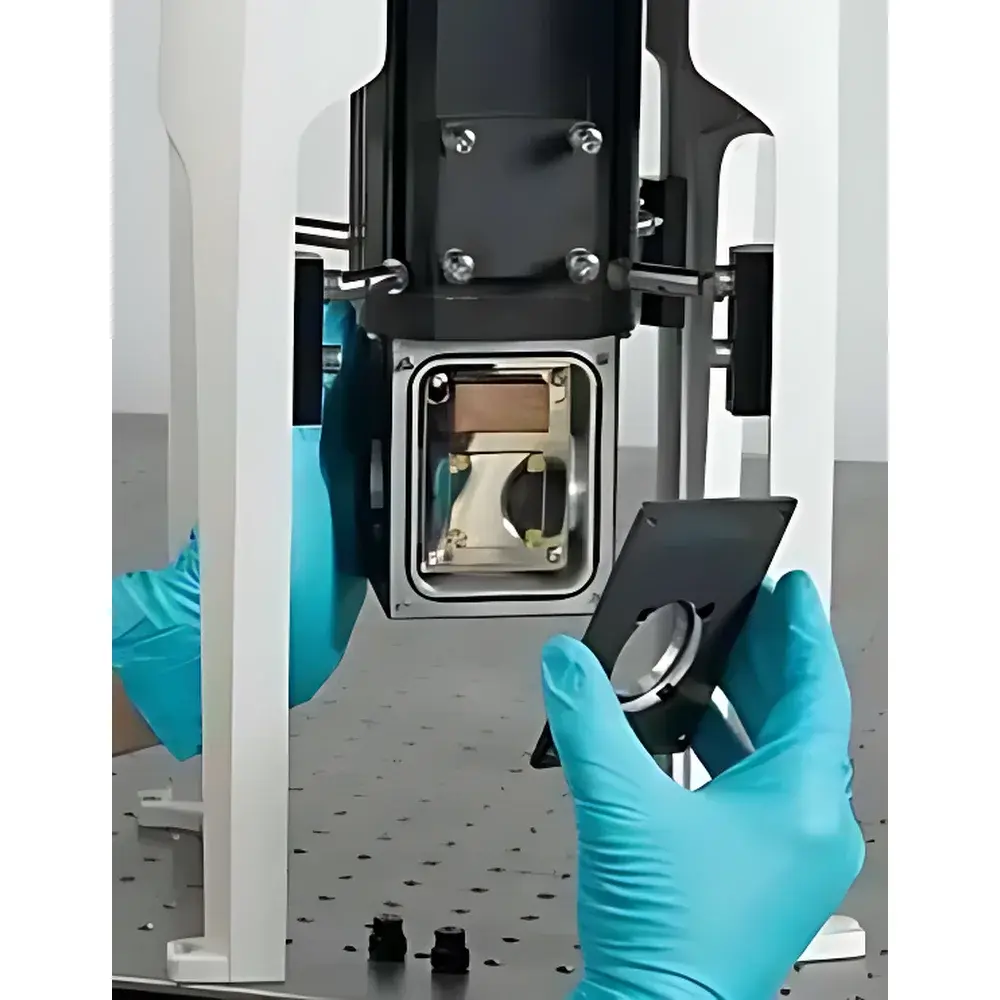
- Modular sample interface: Side-access sample exchange port enables rapid loading/unloading without breaking vacuum or warming the cold stage—typical sample swap time <90 seconds.
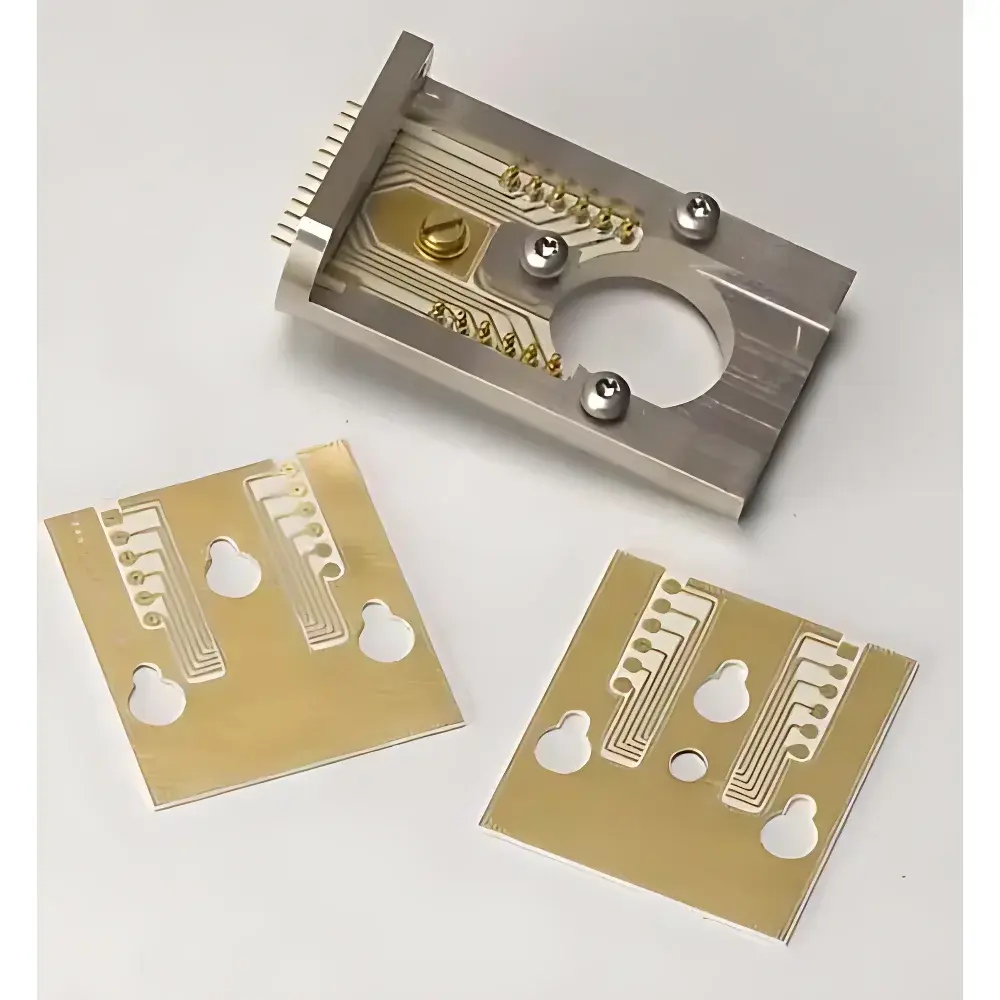
- Electrical measurement readiness: Integrated 16-pin low-noise feedthroughs (optional 32-pin or coaxial variants); gold-plated copper sample holder with four-terminal sensing capability; compatibility with standard probe stations and lock-in amplifiers.
- Vacuum integrity & maintenance: Activated carbon getter system allows use of oil-free dry scroll pumps; eliminates hydrocarbon contamination risks critical for surface-sensitive techniques (e.g., ARPES, XPS-compatible sample transfer).
Sample Compatibility & Compliance
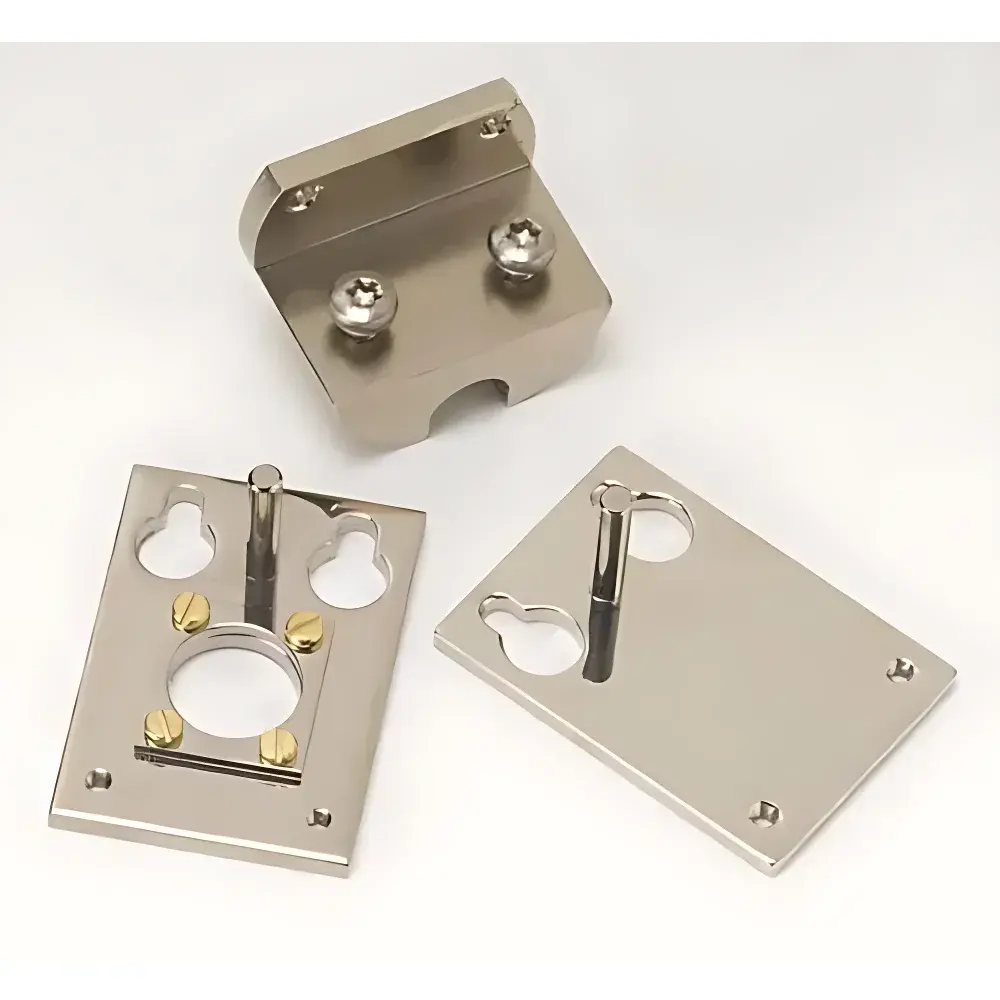
The Optistat Dry BL4 accommodates samples up to Ø25 mm × 5 mm thick on standard holders, with custom mounting solutions available for wafer-level, thin-film, or single-crystal geometries. Its modular architecture supports ISO-standard flange interfaces (CF-35, CF-63), enabling direct integration into UHV chambers or beamline end-stations. The system complies with CE marking requirements for electromagnetic compatibility (EMC Directive 2014/30/EU) and low-voltage safety (LVD Directive 2014/35/EU). While not certified for medical or industrial process control, its thermal stability and vacuum performance meet GLP-aligned validation criteria for academic and industrial R&D laboratories performing ASTM E2278 (low-temperature resistivity), ISO 11357-3 (DSC calibration), and IEC 60751 (Pt100 sensor traceability) protocols.
Software & Data Management
Temperature control is managed via Oxford Instruments’ Intelligent Supervisory System (ISS), a Windows-based platform supporting PID tuning, ramp/soak profiles, and real-time logging at 10 Hz resolution. ISS exports timestamped data in CSV and HDF5 formats, compatible with MATLAB, Python (NumPy/Pandas), and LabVIEW environments. Audit trails—including setpoint changes, heater power logs, and vacuum pressure history—are retained locally with configurable retention policies. For regulated environments, optional ISS-Part11 add-on provides electronic signature support, user role management, and 21 CFR Part 11–compliant data integrity features including immutable records and change tracking.
Applications
- Low-temperature photoluminescence (PL) and cathodoluminescence (CL) spectroscopy of quantum dots, 2D materials, and perovskites.
- Angle-resolved photoemission spectroscopy (ARPES) sample staging with sub-microradian angular reproducibility.
- Four-probe DC and AC transport measurements (Hall effect, magnetoresistance) under magnetic fields up to 12 T when coupled with split-pair magnets.
- In situ magneto-optical Kerr rotation (MOKE) and Faraday rotation studies of chiral spin textures.
- Time-resolved terahertz spectroscopy (THz-TDS) with fiber-coupled emitter/detector integration.
- Calibration reference for primary thermometry standards (e.g., RuO₂ sensors, carbon glass resistors) in metrology labs.
FAQ
Does the Optistat Dry BL4 require liquid nitrogen or any cryogenic liquid?
No. It operates exclusively on electrical power and dry vacuum pumping—no LN₂, LHe, or other cryogens are involved at any stage.
Can the system be upgraded to include magnetic field capabilities?
Yes. The BL4 chassis is mechanically and thermally compatible with Oxford Instruments’ Teslatron PT platform; retrofit kits for superconducting solenoids (up to 12 T) and vector magnets are available.
What is the typical cooldown time from 300 K to 3.5 K?
Approximately 14–16 hours under standard vacuum conditions (<10⁻⁵ mbar); pre-cooling the outer radiation shield with LN₂ reduces this to ~8 hours.
Is remote monitoring supported over Ethernet or USB?
Yes. ISS supports TCP/IP communication via Ethernet; all parameters—including temperature, pressure, cooler status, and heater output—are accessible through Modbus TCP and RESTful API endpoints.
How is thermal anchoring of electrical leads achieved to minimize heat leak?
All electrical feedthroughs utilize low-thermal-conductivity ceramic insulators and staged thermal anchoring at 50 K and 4 K stages; lead wires are twisted and soldered to OFHC copper braids bonded directly to cold stages.



