
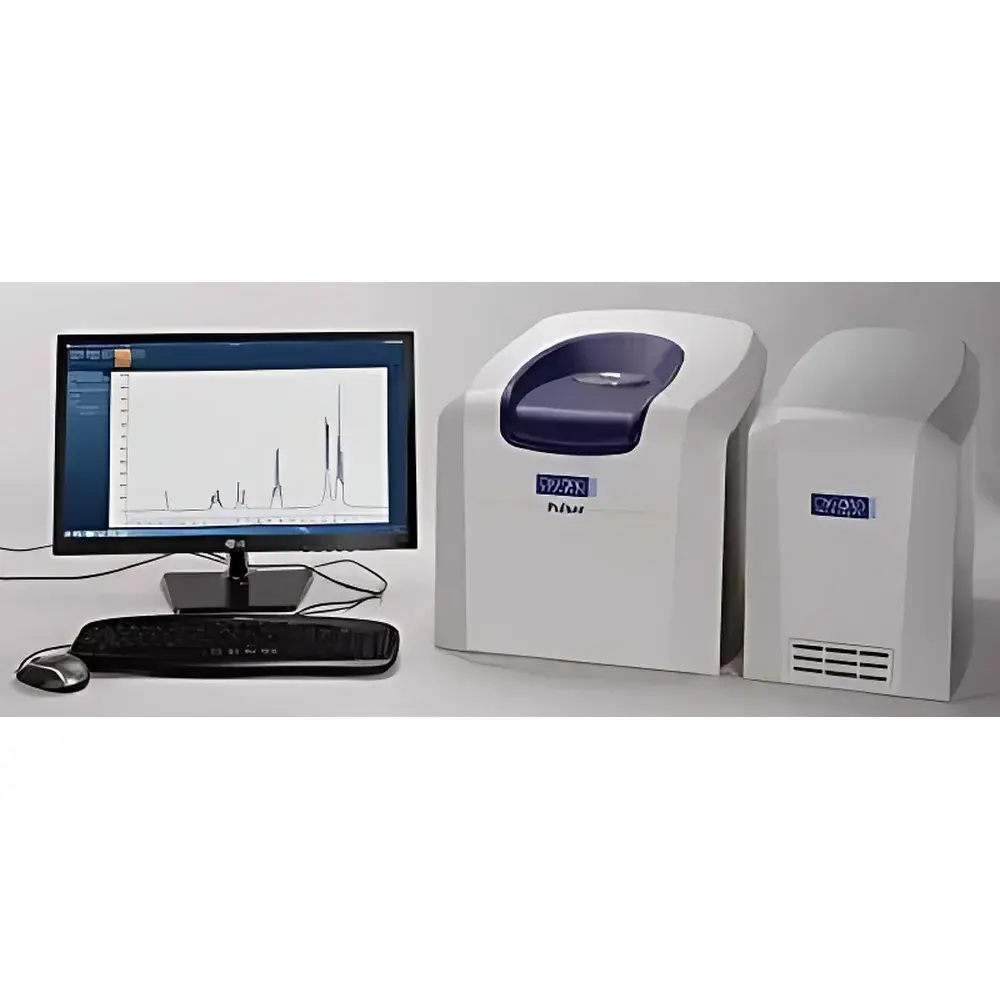
Oxford Instruments PULSAR Benchtop High-Resolution Nuclear Magnetic Resonance (NMR) Spectrometer
| Brand | Oxford Instruments |
|---|---|
| Origin | United Kingdom |
| Manufacturer Type | Authorized Distributor |
| Origin Category | Imported |
| Model | PULSAR |
| Instrument Type | Low-Field NMR Analyzer |
| Sample Compatibility | Solid and Liquid Samples |
| Sensitivity | SNR = 25:1 at 2.6 ppm for 1% ethylbenzene, single-scan |
| Resolution | 1.8 Hz (0.03 ppm) |
| Operating Frequency | 60 MHz |
| Magnet Type | Permanent Magnet |
| Cryogen-Free Operation | Yes |
Overview
The Oxford Instruments PULSAR is a compact, cryogen-free benchtop nuclear magnetic resonance (NMR) spectrometer engineered for high-resolution ¹H NMR analysis at a fixed Larmor frequency of 60 MHz. Unlike conventional superconducting NMR systems requiring liquid helium and nitrogen infrastructure, the PULSAR employs a stable, temperature-compensated permanent magnet system—eliminating cryogenic dependency while delivering spectral resolution comparable to legacy 200 MHz superconducting instruments under optimized conditions. Its design adheres to fundamental NMR principles: spin polarization in a static magnetic field (B₀), radiofrequency (RF) excitation at the resonant frequency, and time-domain signal acquisition (FID) followed by Fourier transformation to yield frequency-domain spectra. The instrument supports quantitative and qualitative structural elucidation of organic molecules, polymers, and small-molecule pharmaceuticals—making it suitable for routine analytical workflows where footprint, operational cost, and ease of use are critical constraints.
Key Features
- Cryogen-free operation: No liquid helium or liquid nitrogen required—reducing total cost of ownership and enabling deployment in teaching labs, QC environments, and non-dedicated NMR spaces.
- High spectral fidelity: Achieves a resolution of 1.8 Hz (0.03 ppm) under standard shimming protocols, sufficient for distinguishing closely spaced proton signals in complex mixtures and conformationally flexible molecules.
- Robust signal-to-noise performance: Delivers SNR ≥ 25:1 for a 1% ethylbenzene reference sample in a single transient acquisition at 2.6 ppm—enabling rapid, reproducible quantification without signal averaging.
- Integrated RF probe: Optimized ¹H-tuned broadband probe with automatic tuning/matching (ATM) and variable temperature capability (optional) for enhanced experimental flexibility.
- Compact benchtop form factor: Occupies < 0.5 m² floor space; includes integrated console, magnet, and gradient system—no external chiller or cryoplant needed.
- Compliance-ready architecture: Designed to support audit trails, user access control, and electronic signatures in alignment with GLP and GMP documentation requirements.
Sample Compatibility & Compliance
The PULSAR accommodates standard 5 mm outer diameter NMR tubes for liquid-phase analysis and optional solid-state accessories (e.g., rotor kits for MAS-compatible static probes) for semi-solid or gel-phase samples. It supports routine analysis of organic solvents, polymer solutions, crude reaction mixtures, and formulated pharmaceutical intermediates. All hardware and firmware comply with IEC 61000-6-3 (EMC emissions) and IEC 61010-1 (safety for laboratory equipment). Data acquisition and processing modules are compatible with 21 CFR Part 11-compliant software configurations when deployed with Oxford’s optional NMR LabSuite™ Enterprise edition—including electronic signature enforcement, role-based permissions, and immutable audit logs.
Software & Data Management
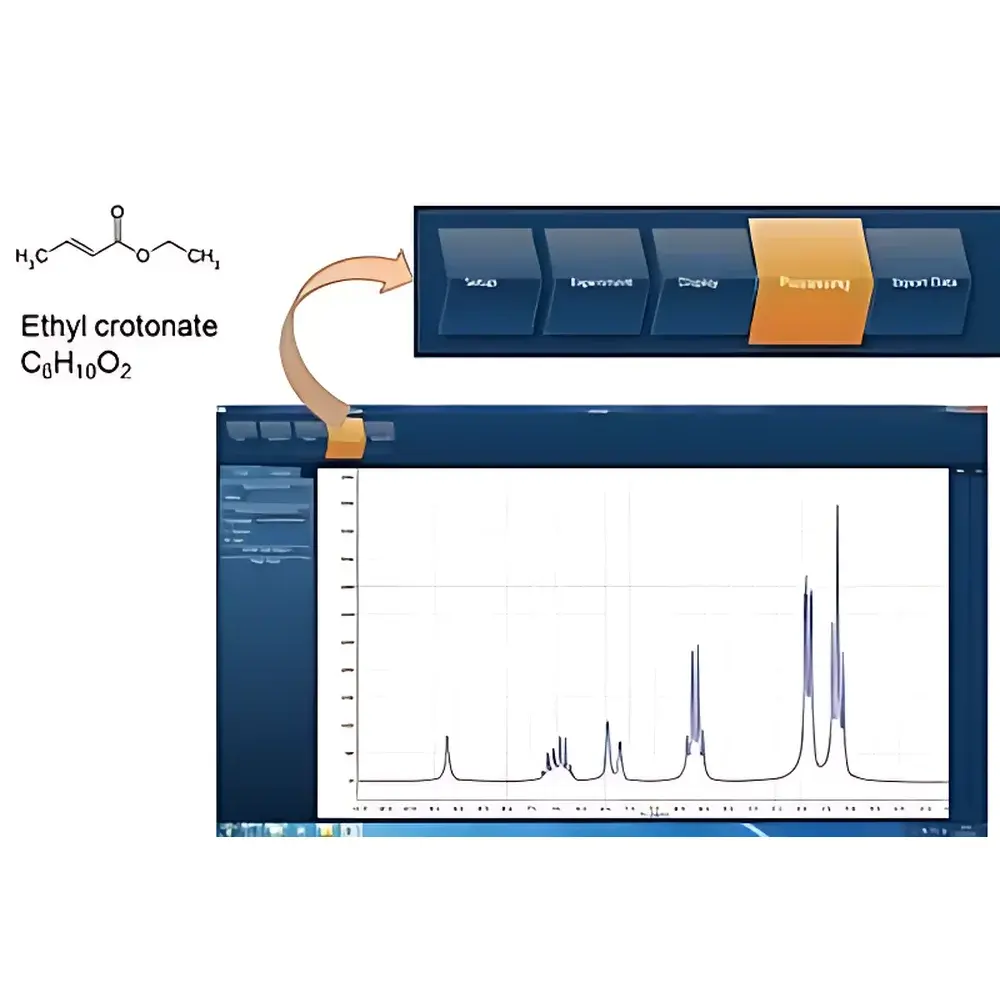
Controlled via Oxford’s proprietary NMR LabSuite™ software, the PULSAR provides intuitive pulse sequence selection (including 1D ¹H, inversion recovery, T₂ relaxation, and diffusion-ordered spectroscopy [DOSY]), real-time FID visualization, and automated phasing/baseline correction. Processed spectra export in universally supported formats (JCAMP-DX, MNova, Bruker TopSpin-compatible .fid). Raw FID data are stored in HDF5 format with embedded metadata (pulse sequence parameters, shim values, temperature, operator ID), ensuring traceability and FAIR (Findable, Accessible, Interoperable, Reusable) data principles. Integration with LIMS platforms is supported through RESTful API endpoints for automated result ingestion into enterprise QA/QC databases.
Applications
- Undergraduate and graduate chemistry education: Hands-on instruction in NMR theory, chemical shift interpretation, spin-spin coupling, and integration-based quantification.
- Organic synthesis monitoring: Reaction progress tracking, impurity profiling, and identity confirmation of synthetic intermediates and final products.
- Pharmaceutical development: Structural verification of active pharmaceutical ingredients (APIs), excipient compatibility screening, and polymorph characterization via relaxation time mapping.
- Polymer science: Molecular weight estimation (via end-group analysis), tacticity assessment, and crosslink density evaluation using T₂ relaxation distributions.
- Industrial quality assurance: Rapid batch release testing for petrochemical feedstocks, lubricant oxidation state analysis, and solvent purity verification per ASTM D7260 and ISO 17025-accredited procedures.
FAQ
Does the PULSAR require cryogens or external cooling systems?
No—the permanent magnet operates at ambient temperature with passive thermal stabilization; no liquid nitrogen, liquid helium, or chilled water circuits are necessary.
Can the PULSAR perform 2D NMR experiments?
Yes—when equipped with optional gradient hardware and advanced pulse sequence licenses, it supports COSY, HSQC, and TOCSY for molecular connectivity analysis.
Is method transfer possible from high-field NMR instruments?
Yes—spectral referencing, chemical shift calibration, and integration protocols are standardized across field strengths; Oxford provides method migration guides aligned with ICH Q5C and USP <731>.
What maintenance is required?
Annual shimming validation and RF probe performance checks are recommended; magnet stability is verified via built-in field-frequency lock and drift compensation algorithms.
Is regulatory documentation available for audit purposes?
Yes—Oxford supplies IQ/OQ documentation packages, 21 CFR Part 11 readiness reports, and ISO/IEC 17025 traceability statements upon request.
Related Products





