
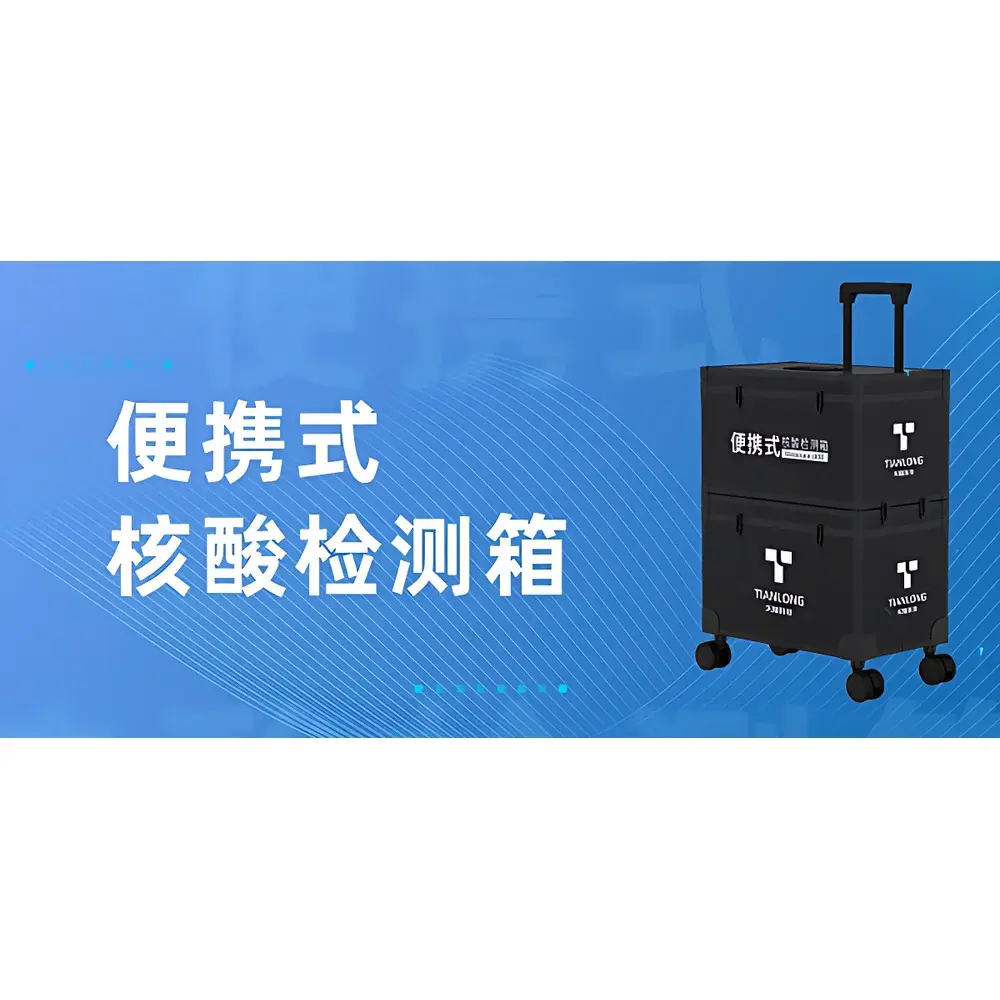
TIANLONG iGenecase 1600 Portable Nucleic Acid Detection System
| Brand | TIANLONG |
|---|---|
| Origin | Shaanxi, China |
| Manufacturer Type | Manufacturer |
| Product Category | Domestic |
| Model | iGenecase 1600 |
| Instrument Type | Magnetic Bead-Based Purification |
| Automation Level | Dedicated Fully Automatic |
| Batch Sample Capacity | 24 |
| Sample Volume Range | 200–500 µL |
| Sample Processing Time per Batch | 10 minutes |
Overview
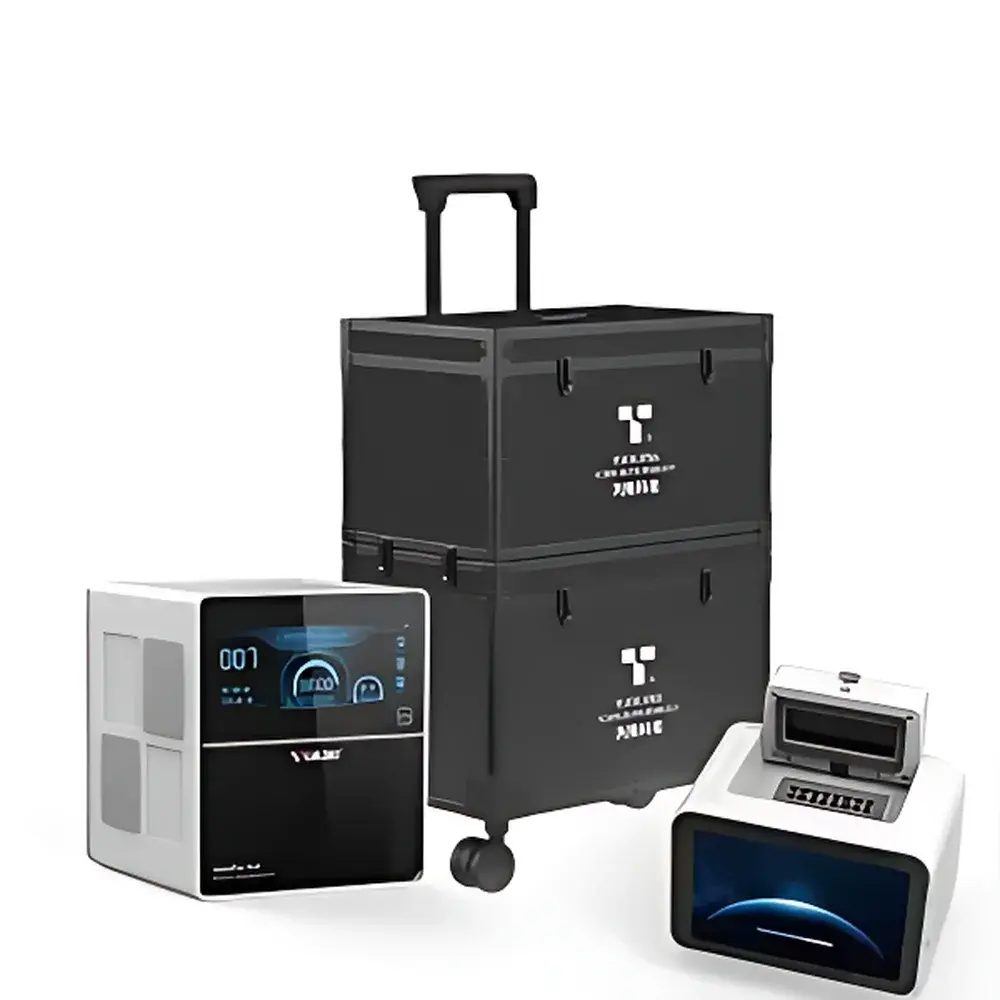
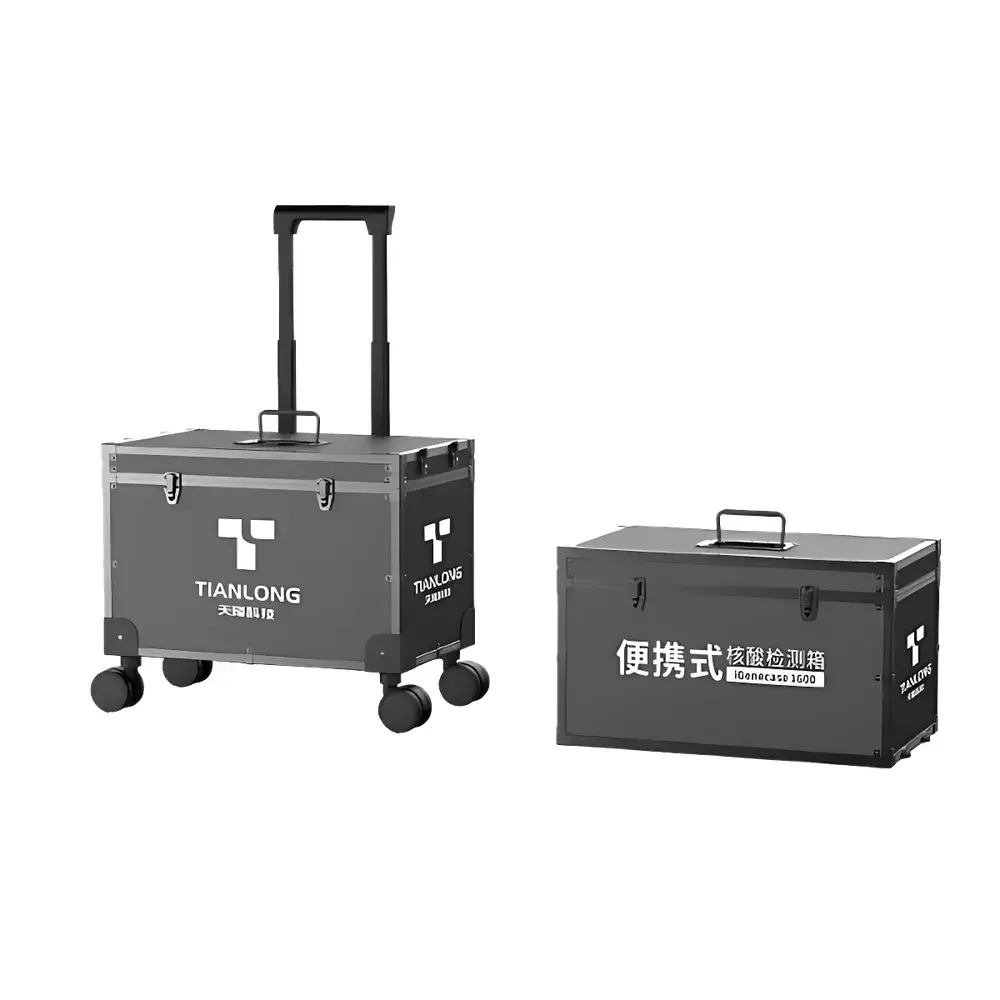
The TIANLONG iGenecase 1600 Portable Nucleic Acid Detection System is an integrated, field-deployable molecular diagnostics platform engineered for rapid, reliable nucleic acid isolation and real-time fluorescence-based quantitative PCR (qPCR) analysis. Designed around a dual-instrument architecture—comprising the GeneFlex 16 fully automated magnetic bead-based nucleic acid extractor and the Gentier mini portable real-time qPCR instrument—the system operates within a ruggedized, wheeled transport case that consolidates all core instrumentation, power supply (integrated outdoor-grade power bank), consumables, and reagent storage into a single mobile unit. Its modular configuration enables immediate deployment in resource-limited or non-traditional laboratory environments—including field clinics, border checkpoints, mobile testing units, disaster response zones, and point-of-care settings—without requiring fixed infrastructure or external HVAC support. The system implements standardized magnetic bead separation chemistry compliant with ISO 20387:2018 (biobanking) and supports workflows aligned with CLIA-waived and WHO Emergency Use Listing (EUL) requirements for infectious disease detection.
Key Features
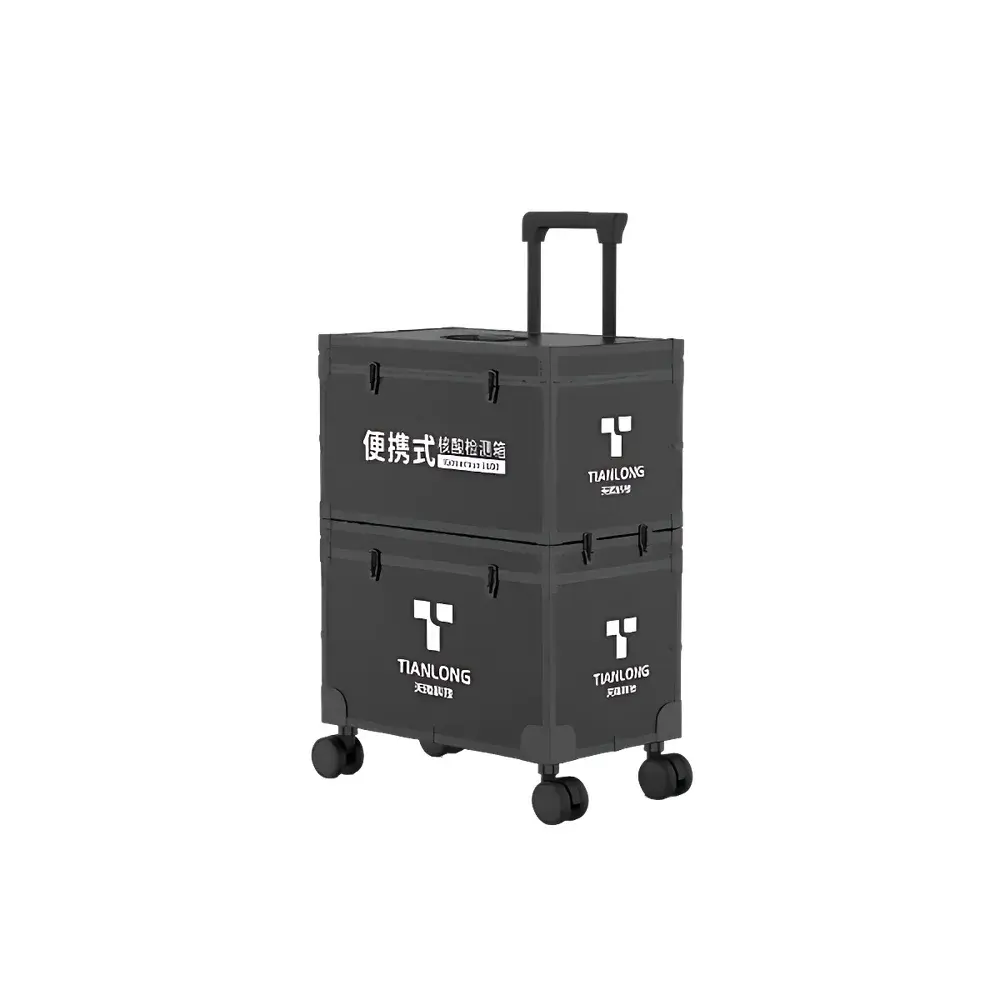
- Integrated dual-platform design: GeneFlex 16 nucleic acid extractor + Gentier mini real-time qPCR instrument housed in a unified, impact-resistant roll-along case (500 × 300 × 755 mm; total weight: 33 kg)
- High-throughput extraction: Processes up to 24 samples per batch in ≤10 minutes using optimized magnetic bead binding, wash, and elution protocols
- Precision thermal control: GeneFlex 16 features dual-zone temperature regulation (30–120 °C) for lysis and elution steps; Gentier mini achieves ±0.1 °C temperature accuracy across all 16 wells
- Optimized optical detection: Gentier mini performs full-channel fluorescence scanning in <1 second per cycle using four excitation/emission channels (FAM/SYBR Green I, HEX/JOE, Texas Red/ROX, Cy5)
- Robust contamination mitigation: Integrated HEPA filtration, internal negative-pressure chamber, UV-C sterilization (254 nm), sealed reagent loading ports, aerosol-resistant pipetting, and onboard surface decontamination protocol
- Intuitive operation: Touchscreen interface with guided workflow navigation—nucleic acid extraction initiated via single tap; qPCR setup completed in three menu selections
Sample Compatibility & Compliance
The iGenecase 1600 accommodates diverse clinical and environmental sample types—including nasopharyngeal swabs, saliva, whole blood (with pre-lysis treatment), sputum, and surface swabs—when used with validated TIANLONG-compatible extraction kits. It accepts standard 0.2 mL transparent single tubes and 8-tube strips for qPCR, while the GeneFlex 16 supports custom 96-well deep-well plates and six-tube strips for upstream processing. All liquid handling and thermal cycling parameters adhere to ASTM E2921-22 (Standard Guide for Evaluating Molecular Diagnostic Assays) and support GLP-compliant data integrity when paired with audit-trail-enabled software. The system’s electromagnetic compatibility (EMC) conforms to IEC 61326-1:2013; safety certification complies with IEC 61010-1:2010 for laboratory equipment.
Software & Data Management
The embedded control software provides end-to-end traceability from sample registration to result export. Each run logs timestamped metadata—including operator ID, lot numbers of reagents and consumables, thermal ramp profiles, fluorescence acquisition curves, Ct values, and pass/fail QC flags. Raw data files (.tdf, .csv) are exportable via USB or Wi-Fi to LIMS-compatible platforms. Audit trail functionality meets FDA 21 CFR Part 11 requirements for electronic records and signatures, including user authentication, immutable event logging, and role-based access control. Software updates are delivered via secure OTA (over-the-air) protocol with cryptographic signature verification.
Applications
- Rapid on-site screening for respiratory pathogens (e.g., SARS-CoV-2, influenza A/B, RSV)
- Surveillance testing in congregate settings (schools, correctional facilities, military bases)
- Outbreak investigation with same-day turnaround in remote or underserved regions
- Environmental monitoring of water or foodborne pathogens (e.g., Salmonella, Listeria)
- Field-based veterinary diagnostics and zoonotic disease surveillance
- Research-grade nucleic acid purification for downstream sequencing library prep (when combined with compatible fragmentation and adapter ligation modules)
FAQ
What sample types are validated for use with the iGenecase 1600?
Clinical specimens including nasopharyngeal swabs, oropharyngeal swabs, saliva, and anterior nasal swabs—processed using TIANLONG-certified magnetic bead kits—are fully validated. Whole blood requires erythrocyte lysis pretreatment per kit instructions.
Does the system support multiplex qPCR assays?
Yes—Gentier mini supports up to four-color multiplex detection using spectrally distinct fluorophores (FAM, HEX, Texas Red, Cy5) with cross-talk compensation algorithms embedded in the analysis engine.
Is the iGenecase 1600 suitable for GMP-regulated environments?
While not classified as GMP manufacturing equipment, its software architecture, audit trail, electronic signature support, and hardware calibration traceability enable compliance with Annex 11 (EU GMP) and 21 CFR Part 11 for quality-controlled testing operations.
How is instrument performance verified onsite?
Built-in calibration routines include thermal uniformity mapping across all 16 qPCR wells, fluorescence intensity linearity checks using NIST-traceable dye standards, and magnetic bead recovery validation using spiked internal controls.
Can the system operate continuously on battery power?
The integrated external power bank sustains ≥4 consecutive extraction-qPCR cycles (24 samples each) without grid connection, assuming ambient temperatures between 15–30 °C and standard reagent viscosity.
Related Products




