
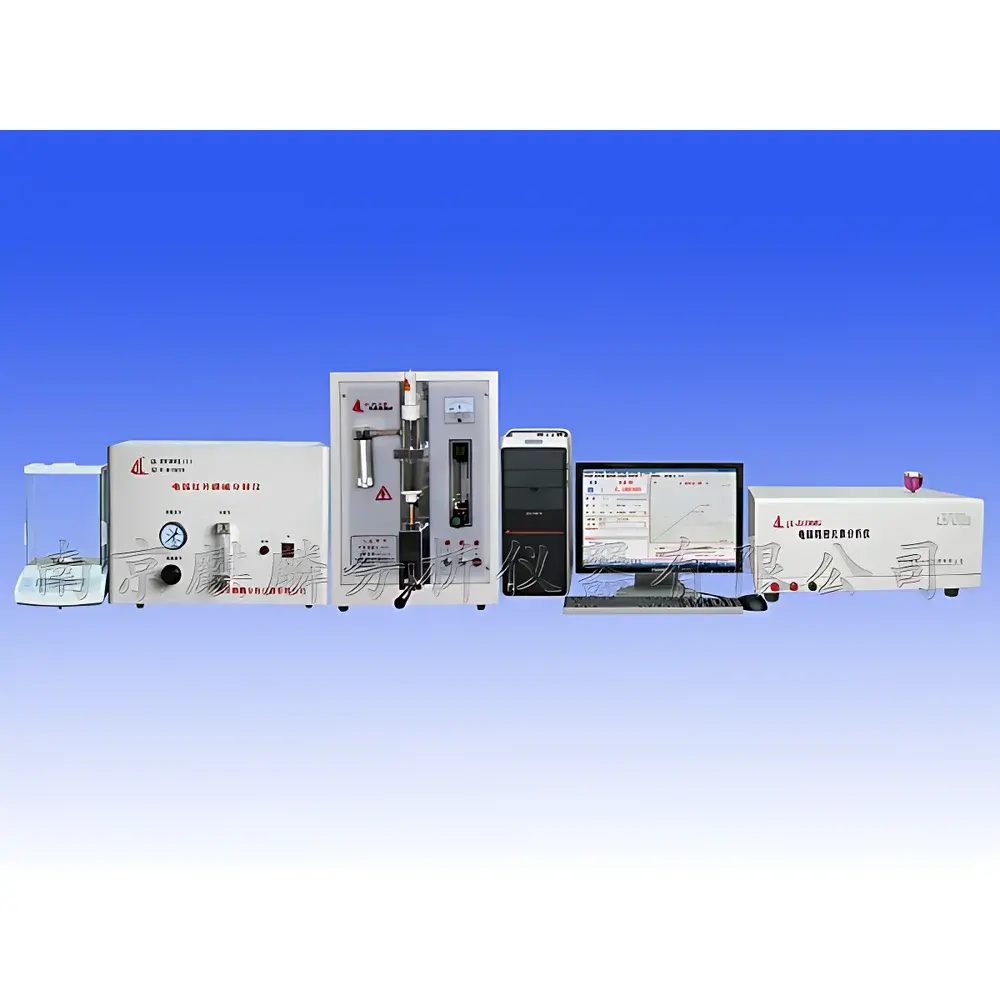
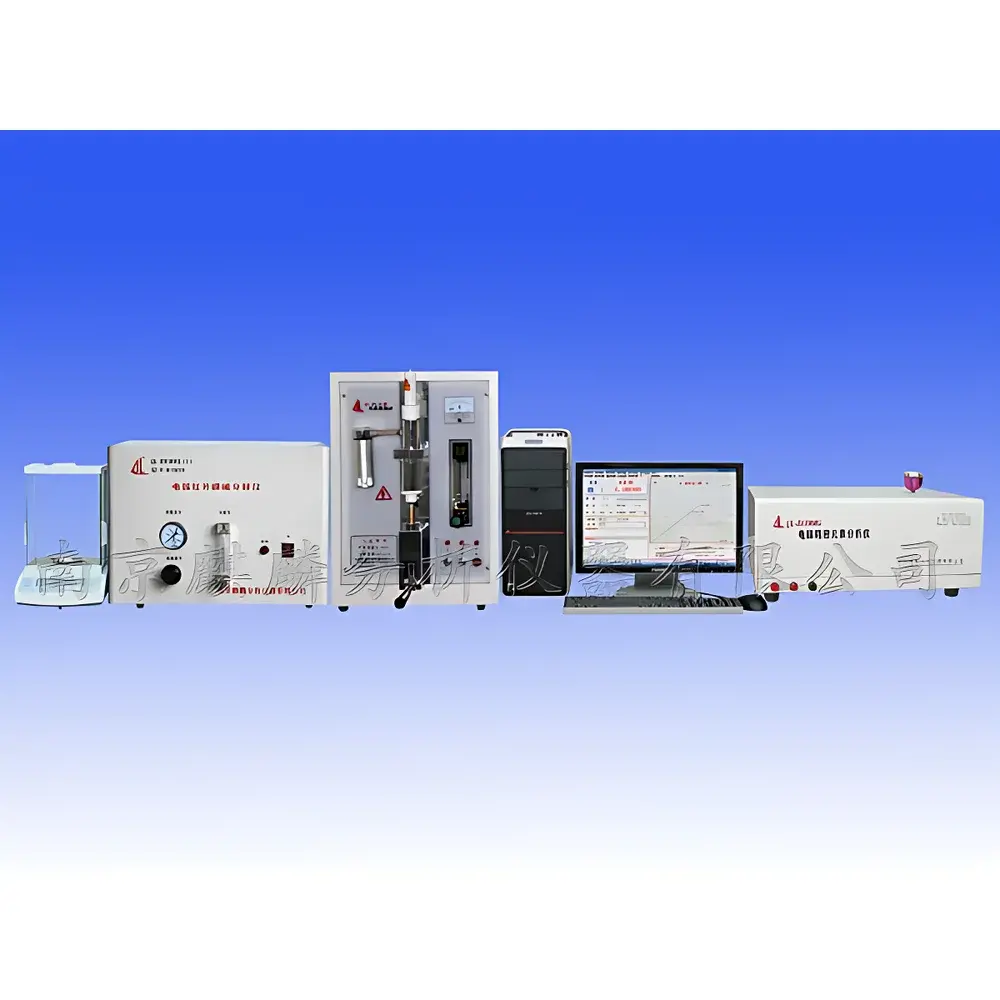
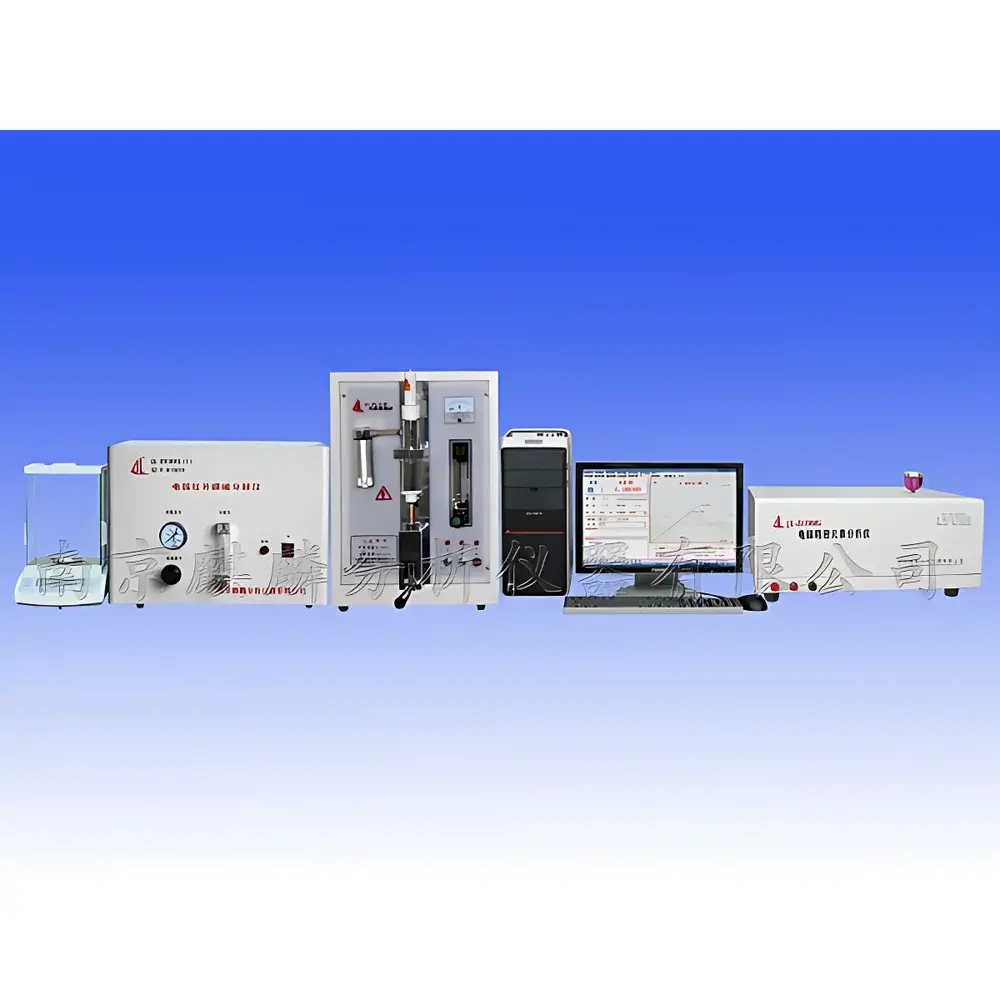
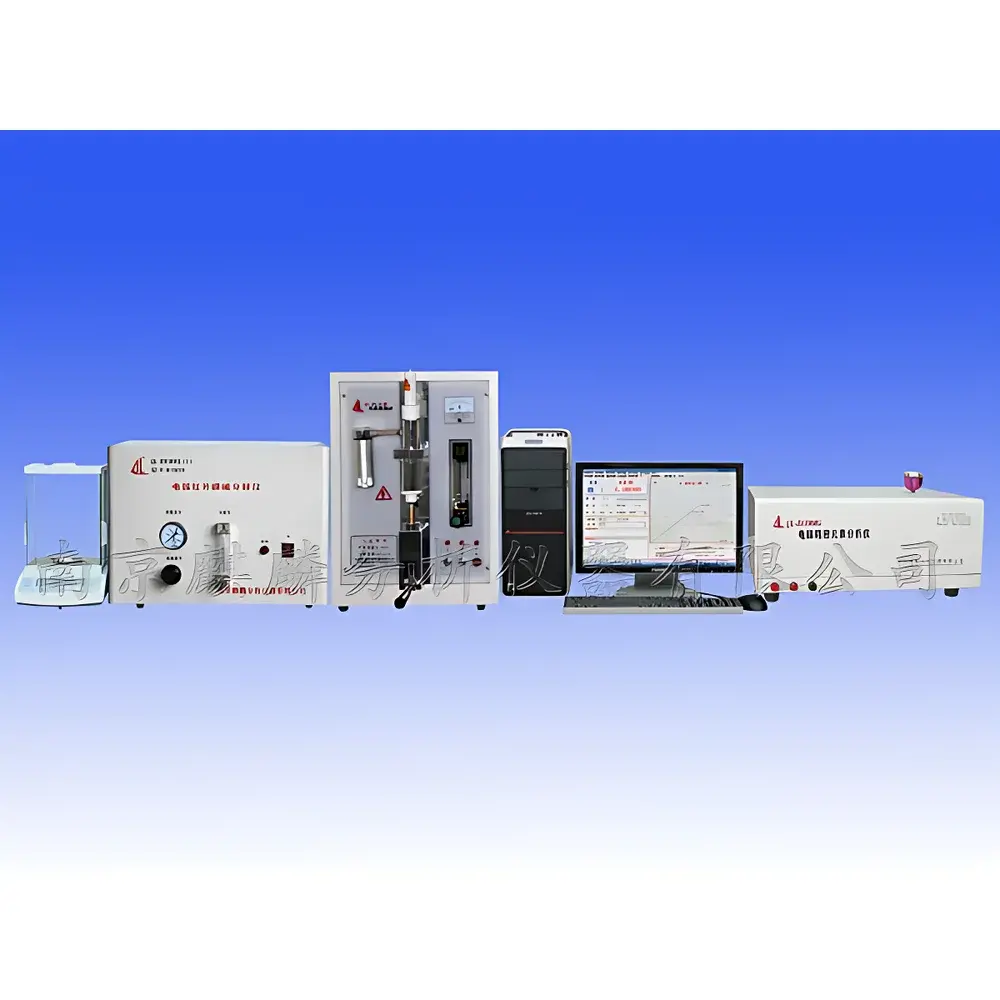
QL-S3000C Multi-Element Analyzer for Ferrous and Non-Ferrous Metals
| Origin | Jiangsu, China |
|---|---|
| Manufacturer Type | Authorized Distributor |
| Origin Category | Domestic (China) |
| Model | QL-S3000C |
| Price | USD 8,100 (FOB Jiangsu) |
| Measurement Principle | IR Absorption (C/S) + Photometric Colorimetry (Multi-Element) |
| Wavelength Range | 400–800 nm (Digitally Tunable via Stepper-Motor-Driven Diffraction Grating) |
| Carbon Range | 0.001–10.00 wt% |
| Sulfur Range | 0.0005–0.5000 wt% |
| Mn | 0.10–15.00 wt% |
| Si | 0.10–5.00 wt% |
| P | 0.005–0.80 wt% |
| Cr | 0.01–25.0 wt% |
| Ni | 0.010–30.0 wt% |
| Mo | 0.101–6.00 wt% |
| Mg | 0.010–0.100 wt% |
| Rare Earths | 0.01–0.100 wt% |
| Analysis Time | ~300 s (IR + Colorimetric modules, sequential) |
| Calibration Curves | 99 programmable regression-based calibration curves |
| Data Output | CSV, TXT, or custom format via USB/RS232 |
| Compliance | Meets requirements of GB/T 223 series (e.g., GB/T 223.3–5:1988, GB/T 223.68–69:1997) |
Overview
The QL-S3000C Multi-Element Analyzer for Ferrous and Non-Ferrous Metals is a dual-mode benchtop elemental analyzer engineered for routine quantitative analysis of carbon, sulfur, and up to 15 additional metallic and semi-metallic elements in solid metal samples. It integrates infrared absorption spectroscopy for high-precision carbon and sulfur determination with computer-controlled photometric colorimetry for simultaneous multi-element analysis—including Mn, Si, P, Cr, Ni, Mo, Mg, Al, Cu, V, W, Ti, and rare earths—using acid-digested solutions prepared externally (off-line dissolution). The instrument operates on standardized wet chemical principles aligned with classical metallurgical testing protocols, delivering trace-to-major-level quantification across alloy systems used in steelmaking, foundry operations, aerospace component manufacturing, and non-ferrous refining. Its architecture supports full traceability under GLP and pre-GMP environments, with hardware and software design facilitating integration into quality control laboratories requiring compliance with ISO/IEC 17025 documentation standards.
Key Features
- Dual detection architecture: Infrared detector module for C/S (based on CO₂ and SO₂ absorption at specific mid-IR wavelengths) coupled with a digitally tunable photometric system using a stepper-motor-driven diffraction grating.
- Wavelength resolution ≤1 nm across 400–800 nm range; automated wavelength selection per element eliminates manual filter changes and reduces operator-induced variability.
- Computer-controlled reagent delivery with precision peristaltic pumps and patented electrode-free titration control for sulfur, minimizing maintenance and improving long-term stability.
- Integrated electronic balance interface supporting不定量称样 (non-fixed sample mass input), enabling automatic weight registration and stoichiometric normalization without manual entry.
- Self-calibrating optical path: Cold-light source with auto-zero and auto-span functions ensures baseline stability across extended operation cycles.
- Modular cuvette holder accommodating interchangeable pathlength cells (10 mm, 20 mm, 50 mm) to optimize sensitivity for low- or high-concentration analytes.
- Onboard data processing engine performs real-time regression fitting against up to 99 user-defined calibration curves, each generated from NIST-traceable standard reference materials (SRMs).
Sample Compatibility & Compliance
The QL-S3000C accepts solid metallic specimens—including carbon steels, stainless steels, cast irons, aluminum alloys, copper alloys, nickel-based superalloys, and titanium grades—following standardized dissolution procedures per ASTM E307, ISO 11575, or GB/T 20123. Sample preparation occurs off-instrument to eliminate cross-contamination and thermal interference, ensuring robustness in high-throughput QC labs. All analytical methods are validated against national and international reference standards: carbon and sulfur results comply with GB/T 223.68–69:1997 (equivalent to ISO 4935 and ASTM E1019); multi-element colorimetric assays align with GB/T 223.3–5:1988 (corresponding to ISO 6429 and ASTM E352). The system supports audit-ready data export formats (CSV, XML) and optional electronic signature functionality compliant with FDA 21 CFR Part 11 when deployed with validated LIMS integration.
Software & Data Management
The embedded Windows-based application provides intuitive Chinese/English bilingual GUI with menu-driven method setup, calibration management, and report generation. Each analysis session logs timestamp, operator ID, sample ID, raw absorbance values, curve-fit residuals, and uncertainty estimates derived from replicate measurements. Data files include metadata headers required for ISO/IEC 17025 clause 7.7 record retention. Export options support direct linkage to laboratory information management systems (LIMS) via ODBC or flat-file batch transfer. Audit trail configuration enables recording of all parameter modifications, calibration events, and result approvals—fully configurable to meet internal QA policies or external accreditation audits.
Applications
- Routine QC testing of incoming raw materials (scrap, ferroalloys, master alloys) in integrated steel mills.
- Final product verification for ASTM A276, ASTM B117, EN 10088, and JIS G4303 grade certifications.
- Process control in heat treatment and casting facilities where rapid turnaround (<5 min/sample) is critical.
- Failure analysis laboratories performing comparative elemental profiling of fractured components.
- Third-party testing labs serving automotive, energy, and infrastructure sectors requiring CNAS or UKAS-aligned reporting.
FAQ
What sample preparation is required prior to analysis?
Solid metal samples must be drilled, milled, or spark-cut to produce homogeneous chips or turnings. Dissolution is performed externally using HCl/HNO₃/HF mixtures (per applicable ASTM or GB method), followed by dilution and matrix-matching before introduction into the colorimetric module.
Can the instrument analyze non-metallic inclusions or slag samples?
No—the QL-S3000C is optimized for dissolved metallic matrices. Slag, ceramics, or refractory materials require alternate digestion protocols and are outside its validated scope.
Is method validation documentation provided?
Yes: The manufacturer supplies a Method Validation Summary Report covering specificity, linearity (R² ≥ 0.999), repeatability (RSD ≤ 1.5% for mid-range concentrations), and recovery studies (95–102%) conducted per ICH Q2(R2) principles.
Does the system support remote diagnostics or firmware updates?
Remote desktop-assisted troubleshooting is supported via secure VPN; firmware updates are delivered as signed .bin packages with version-controlled release notes and rollback capability.
What maintenance intervals are recommended for routine operation?
Daily: Optical path cleaning and blank verification. Monthly: Reagent line flushing and pump tube inspection. Annually: IR detector purge gas validation and grating alignment verification by certified service engineer.




