
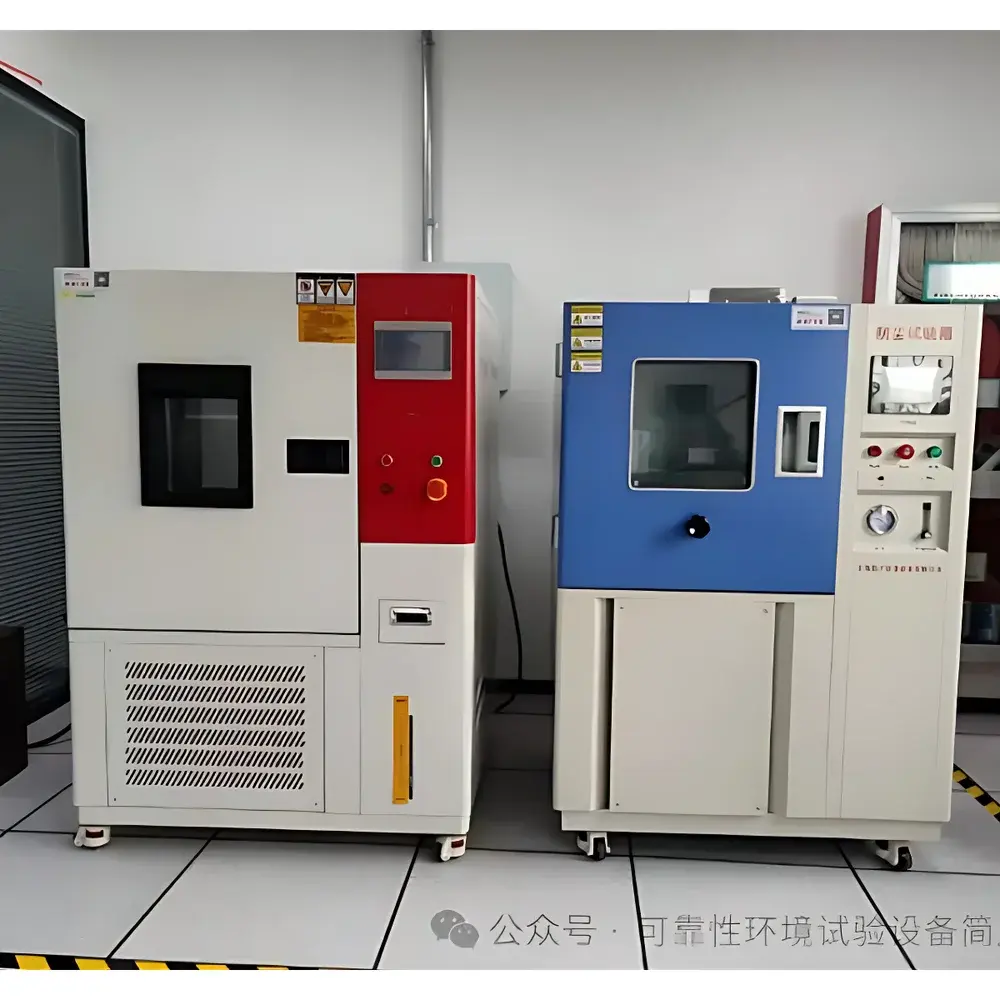
JianHu JH Series Thermal Shock Test Chamber
| Brand | JianHu |
|---|---|
| Origin | Shanghai, China |
| Model | JH Thermal Shock Test Chamber |
| Temperature Range | Consult for High/Low/Temperature Transition Specifications |
| Temperature Stability | ±0.5 °C (typical for industrial-grade dual-zone chambers) |
| Ramp Rate | ≥10 °C/min (typical for air-based two-chamber systems) |
| Configuration | Dual-Chamber (Hot/Cold) with Static Test Zone |
| Compliance | Designed to meet ASTM D5229, ISO 16750-4, MIL-STD-810H Method 503.5, IEC 60068-2-14, GB/T 2423.22 |
Overview
The JianHu JH Series Thermal Shock Test Chamber is an industrial-grade environmental simulation system engineered for rapid, repeatable temperature transitions between extreme high- and low-temperature conditions. Based on the dual-chamber (hot/cold) architecture, it subjects test specimens to controlled thermal shocks without physical movement of the sample—eliminating mechanical stress artifacts and ensuring measurement integrity. The chamber operates on the principle of forced-air thermal transfer between isolated temperature zones, enabling precise execution of standardized thermal shock profiles defined in international reliability testing protocols. It is widely deployed in qualification testing for electronic assemblies, automotive ECUs, aerospace components, semiconductor packaging, and polymer-based materials where thermomechanical fatigue resistance is a critical failure mode.
Key Features
- Dual-zone static-test design: Sample remains stationary in the central test chamber while hot and cold air streams are pneumatically switched via high-speed actuated dampers—ensuring zero vibration coupling and superior positional repeatability.
- Independent high-efficiency refrigeration and heating subsystems: Equipped with cascade refrigeration for sub-zero operation down to –70 °C and electric resistive heating capable of +180 °C (configurable per model), both governed by PID+ fuzzy logic control algorithms.
- Real-time thermal profiling capability: Supports programmable ramp-hold-shock sequences with up to 99 segments per test cycle, including dwell time, transition rate limits, and conditional branching based on internal sensor feedback.
- Robust stainless-steel construction with double-wall vacuum-insulated panels: Minimizes ambient heat leakage and ensures long-term thermal stability under continuous cycling operation.
- Integrated safety interlocks: Includes over-temperature, over-pressure, refrigerant low-pressure, door-open, and phase-failure protection—all compliant with IEC 61000-6-2/6-4 electromagnetic compatibility standards.
Sample Compatibility & Compliance
The JH chamber accommodates standard test specimens up to 500 mm × 500 mm × 500 mm (W×D×H) with optional custom interior configurations. Its design supports mounting fixtures for PCBs, molded housings, battery modules, and optical sensors without compromising airflow uniformity. All operational parameters—including temperature deviation, uniformity (±2 °C across working volume), and recovery time—are validated per IEC 60068-3-5 and verified during factory calibration. The system is configured to support GLP-compliant audit trails when integrated with optional data logging hardware and meets functional requirements for ISO/IEC 17025-accredited laboratories performing environmental qualification per AEC-Q200, JEDEC JESD22-A104, and NASA-HDBK-7005.
Software & Data Management
Control and monitoring are executed via a 10.1″ capacitive touchscreen HMI running embedded Linux with real-time OS kernel. The interface supports multi-language UI (English, Chinese, Japanese, Korean), password-protected user roles (Operator, Engineer, Administrator), and full-cycle data logging at 1 Hz resolution. Export formats include CSV, PDF test reports, and XML metadata compliant with ASTM E2500-18. Optional Ethernet/IP or Modbus TCP connectivity enables integration into MES/SCADA environments. For regulated industries, the optional 21 CFR Part 11-compliant software package provides electronic signatures, audit trail review, and secure user authentication—fully traceable to NIST-traceable calibration records.
Applications
- Thermomechanical stress screening of solder joints and wire bonds in automotive ADAS modules.
- Qualification of conformal coatings and potting compounds under accelerated aging per IPC-CC-830B.
- Validation of hermetic seal integrity in MEMS devices and medical implant housings.
- Material coefficient-of-thermal-expansion (CTE) mismatch evaluation in multilayer ceramic capacitors (MLCCs).
- Reliability assessment of lithium-ion battery cells subjected to repeated charge/discharge cycles under thermal shock conditions.
- Pre-conditioning of optical lenses and infrared detectors prior to spectral performance testing.
FAQ
What is the typical temperature transition time between extremes?
Transition times from +150 °C to –40 °C (or vice versa) range from 15–25 seconds within the working volume, depending on specimen mass and fixture configuration.
Does the system support automated test sequencing across multiple shock cycles?
Yes—the controller supports unattended execution of up to 999 consecutive cycles with configurable pass/fail criteria and automatic logging of thermal excursion deviations.
Can the chamber operate as a standalone high-temperature or low-temperature chamber?
Yes. Independent zone operation is fully supported; either chamber can be used for steady-state thermal soak testing while the other remains idle.
Is third-party calibration documentation included with shipment?
Each unit ships with a factory calibration certificate traceable to CNAS-accredited standards, including temperature uniformity mapping and transition rate verification.
What maintenance intervals are recommended for sustained compliance?
Comprehensive preventive maintenance is advised every 12 months or after 2,000 thermal shock cycles—covering refrigerant charge verification, damper actuator calibration, and sensor linearity validation.



