
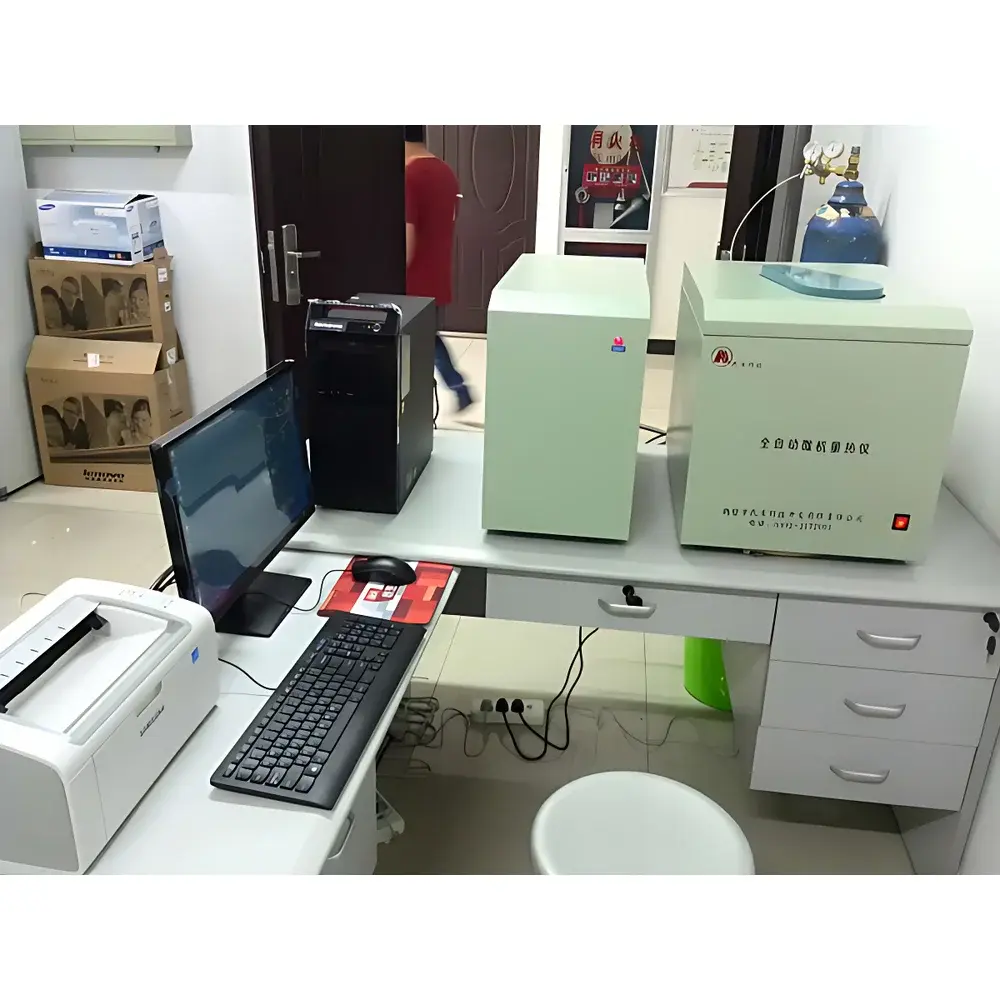
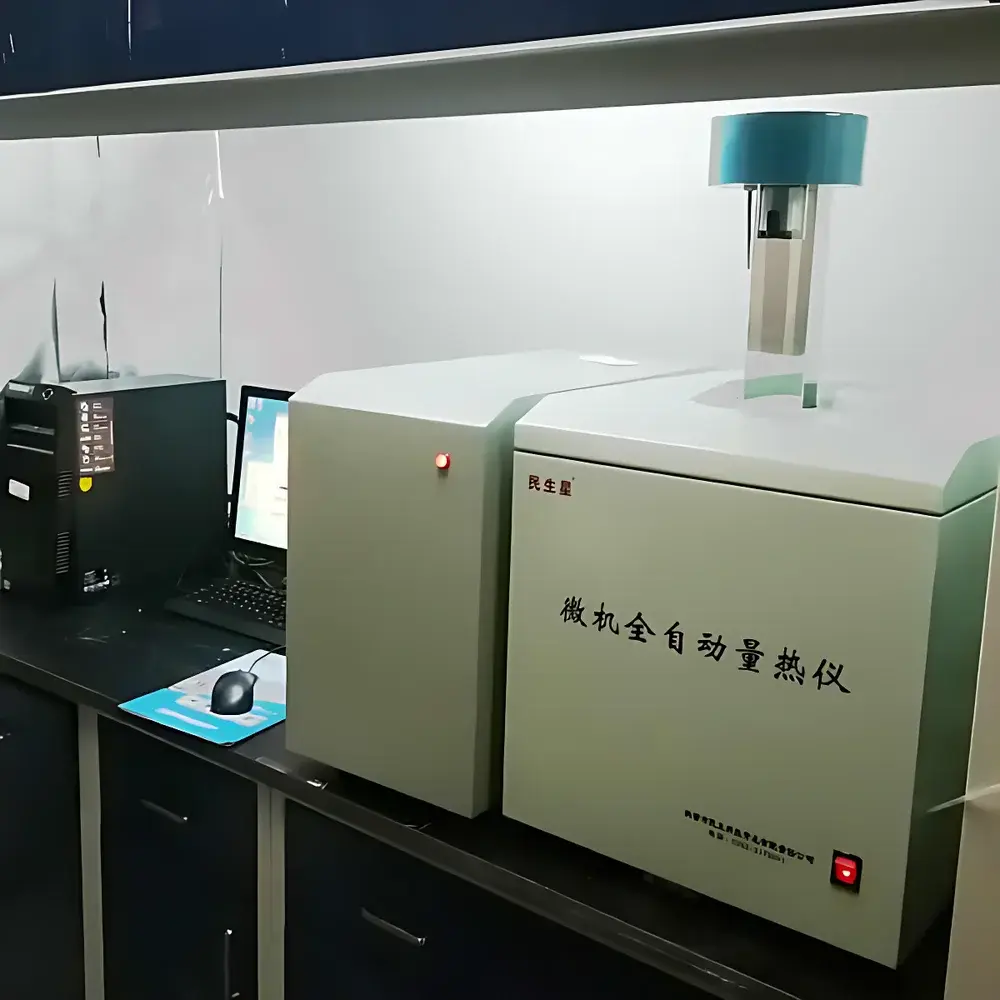
MingShen Science MLR-8000 Automated Oxygen Bomb Calorimeter with Dual-Temperature Control and Microcomputer Management
| Key | Brand: MingShen Science |
|---|---|
| Origin | Henan, China |
| Model | MLR-8000 |
| Temperature Range | 0–40 °C |
| Temperature Resolution | 0.0001 K |
| Precision | ≤0.1% RSD |
| Single-Sample Test Duration | ≤15 min (GB/T 213 compliant) |
| Heat Capacity | 10,500 J/K |
| Outer Water Jacket Volume | 30 L |
| Inner Water Bucket Volume | 2.1 L |
| Oxygen Pressure Range | 2.8–3.0 MPa |
| Ignition Voltage | 24 V DC |
| Power Consumption | <500 W |
| Dimensions (Main Unit) | 500×460×600 mm |
| Weight | 45 kg |
Overview
The MingShen Science MLR-8000 is a fully automated isoperibol oxygen bomb calorimeter engineered for high-reproducibility determination of gross calorific value (GCV) in solid and liquid fuels—primarily coal, petroleum coke, biomass, foodstuffs, and chemical feedstocks—according to ISO 1928, ASTM D5865, and GB/T 213. It operates on the principle of isoperibol calorimetry: the temperature rise of a precisely calibrated inner water bucket is measured following controlled combustion of a sample inside a sealed, high-pressure oxygen bomb. The instrument maintains thermal equilibrium between inner and outer water jackets via an integrated dual-mode (heating/cooling) temperature regulation system, ensuring compliance with the critical ±0.1 K stability requirement for outer jacket temperature relative to ambient during measurement. Unlike adiabatic systems, the MLR-8000’s isoperibol architecture eliminates active jacket temperature tracking, instead relying on rigorous heat capacity calibration and real-time correction algorithms to compensate for heat exchange with the environment—delivering metrological traceability without mechanical complexity.
Key Features
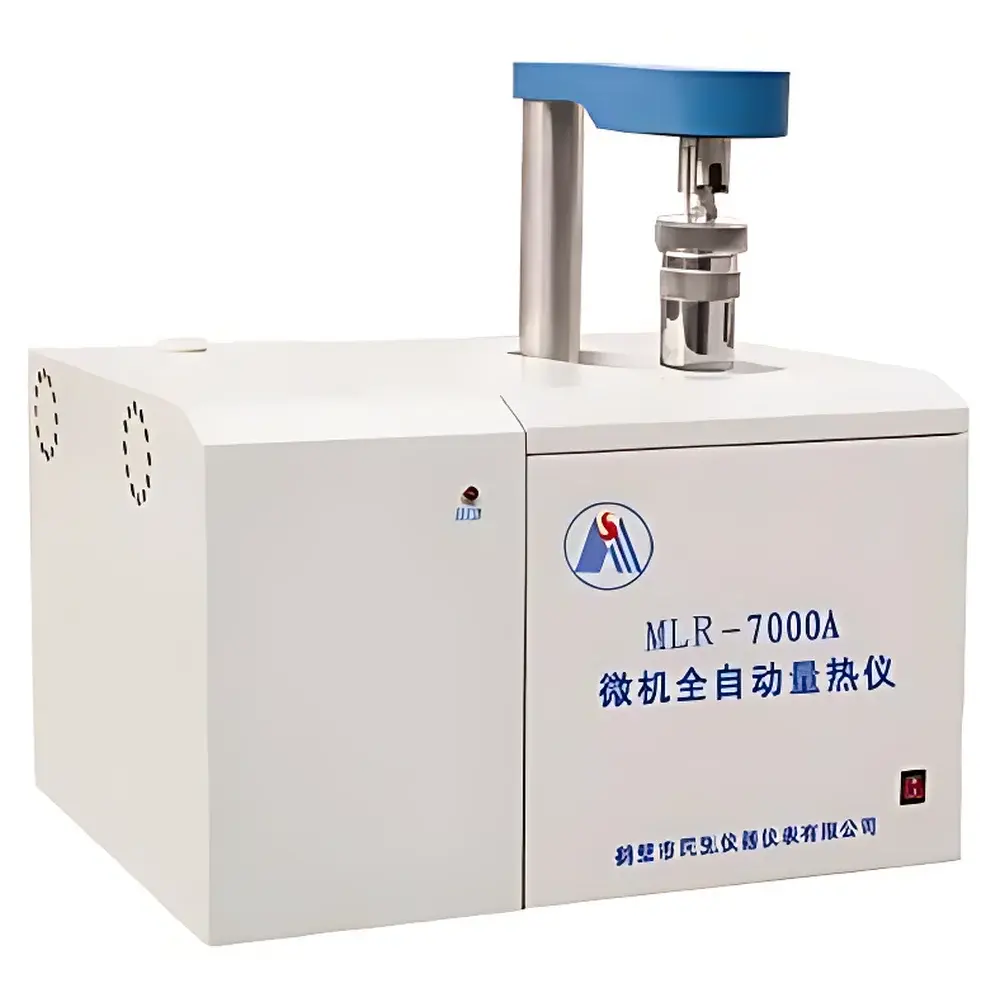
- Automated oxygen bomb handling: motorized lift mechanism enables precise, repeatable positioning of the bomb into the inner bucket; synchronized with充氧 (oxygen charging) and venting cycles at 2.8–3.0 MPa.
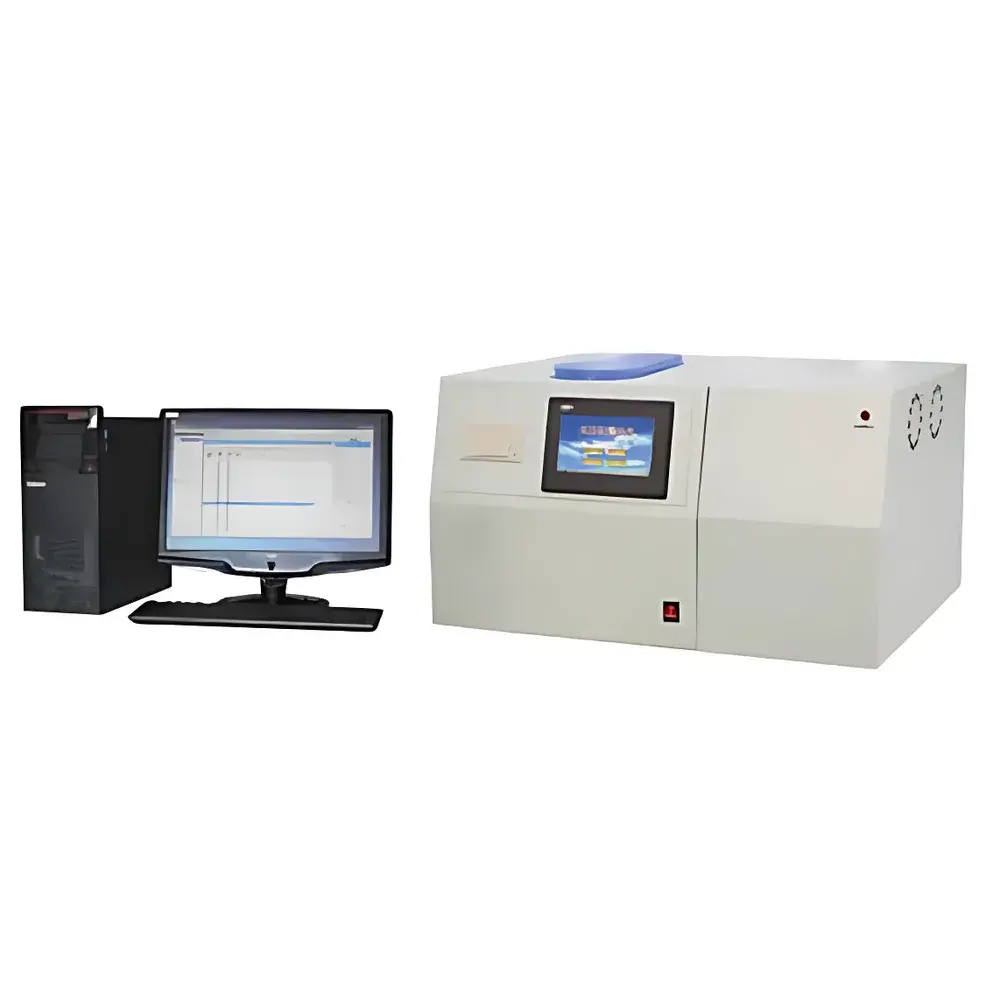
- Dual-control interface: native 7-inch resistive touchscreen OS for standalone operation, plus Windows-based PC software for remote monitoring, multi-instrument control, and audit-ready data management.
- Thermal stabilization architecture: independent refrigeration and heating modules maintain outer jacket temperature within ±0.1 K of setpoint—even under ambient fluctuations up to ±5 °C—ensuring adherence to GB/T 213’s “constant temperature difference” criterion.
- Self-calibrating thermal mass: built-in volumetric water-level sensor and programmable fill/drain logic guarantee consistent inner bucket mass (2.1 L ±0.5 mL), eliminating manual refilling between tests.
- Comprehensive ignition & safety logic: 24 V DC low-voltage ignition circuit with automatic continuity check; overpressure venting, flame-retardant insulation, and 20 MPa hydrostatically tested bomb body (certified for ≤2 years service post-test).
- High-resolution thermometry: platinum resistance thermometer (Pt100) with 0.0001 K digital resolution and NIST-traceable linearity across 0–40 °C range.
Sample Compatibility & Compliance
The MLR-8000 accepts samples ranging from 0.9–1.1 g of finely ground material (<200 µm), including bituminous and anthracite coals, petroleum coke, sewage sludge, wood pellets, and food matrices. Sample preparation follows ISO 1928:2020 and GB/T 213–2008 protocols—requiring homogenization, moisture equilibration, and crucible loading with standardized ignition aids (e.g., iron wire or cotton thread). All hardware components—including oxygen bomb seals, insulating sleeves, and stirrer assemblies—meet IEC 61000-4 electromagnetic compatibility standards. Software complies with FDA 21 CFR Part 11 requirements for electronic records: full user authentication, immutable audit trails, electronic signatures, and role-based access control. Calibration verification uses certified benzoic acid (NIST SRM 39j or equivalent), with thermal capacity recalibration recommended quarterly or after ≥5 °C ambient shift.
Software & Data Management
The embedded Windows 10 IoT Enterprise platform hosts proprietary calorimetry software supporting concurrent control of up to four instruments. Data acquisition includes real-time temperature logging (10 Hz sampling), automatic endpoint detection based on Newtonian cooling curve analysis, and integrated calculation of GCV (J/g), net calorific value (NCV), and moisture-corrected results. Historical datasets are indexed by sample ID, operator, date/time, and calibration batch—enabling rapid retrieval of parallel duplicates, QC charts, and trending reports. Export formats include CSV, PDF (with digital signature), and XML for LIMS integration. System validation tools include built-in self-tests (stirring, ignition, oxygen pressurization, lift actuation), automated benzoic acid back-calibration workflows, and configurable tolerance thresholds for precision (≤0.1% RSD) and reproducibility (≤0.2% RSD per GB/T 213).
Applications
- Coal quality assurance in power generation and coking plants—verifying contractual GCV specifications and sulfur-adjusted energy content.
- Research laboratories evaluating alternative fuels (e.g., torrefied biomass, RDF, tire-derived fuel) against ASTM D5865 and EN 14918 benchmarks.
- Food science applications quantifying metabolizable energy (Atwater factors) per AOAC 963.16 and ISO 9831.
- Chemical manufacturing QC for exothermic reaction enthalpy profiling of catalysts and polymer precursors.
- Educational use in thermodynamics and fuel engineering curricula, where robustness, intuitive operation, and GLP-aligned documentation are essential.
FAQ
What standards does the MLR-8000 comply with for calorific value testing?
It conforms to GB/T 213–2008, ISO 1928:2020, ASTM D5865–22, and EN 14918:2010 for solid biofuels.
How often must the heat capacity be recalibrated?
Every 90 days or when ambient temperature shifts exceed ±5 °C—verified using certified benzoic acid (±100 J/g uncertainty).
Can the instrument operate without a connected PC?
Yes—the integrated 7-inch touchscreen supports full test execution, result display, and thermal capacity calibration offline.
What maintenance intervals are recommended for the oxygen bomb?
Hydrostatic testing every 2 years at 20 MPa; seal replacement after each 50 firings or upon visible compression set or carbon scoring.
Does the software support 21 CFR Part 11 compliance?
Yes—audit trail logging, electronic signatures, and role-based permissions are enabled by default and validated during IQ/OQ.
How is temperature drift compensated during long-duration testing?
Via continuous inner/outer jacket ΔT monitoring and adaptive correction coefficients derived from pre-test thermal equilibrium profiling.



