
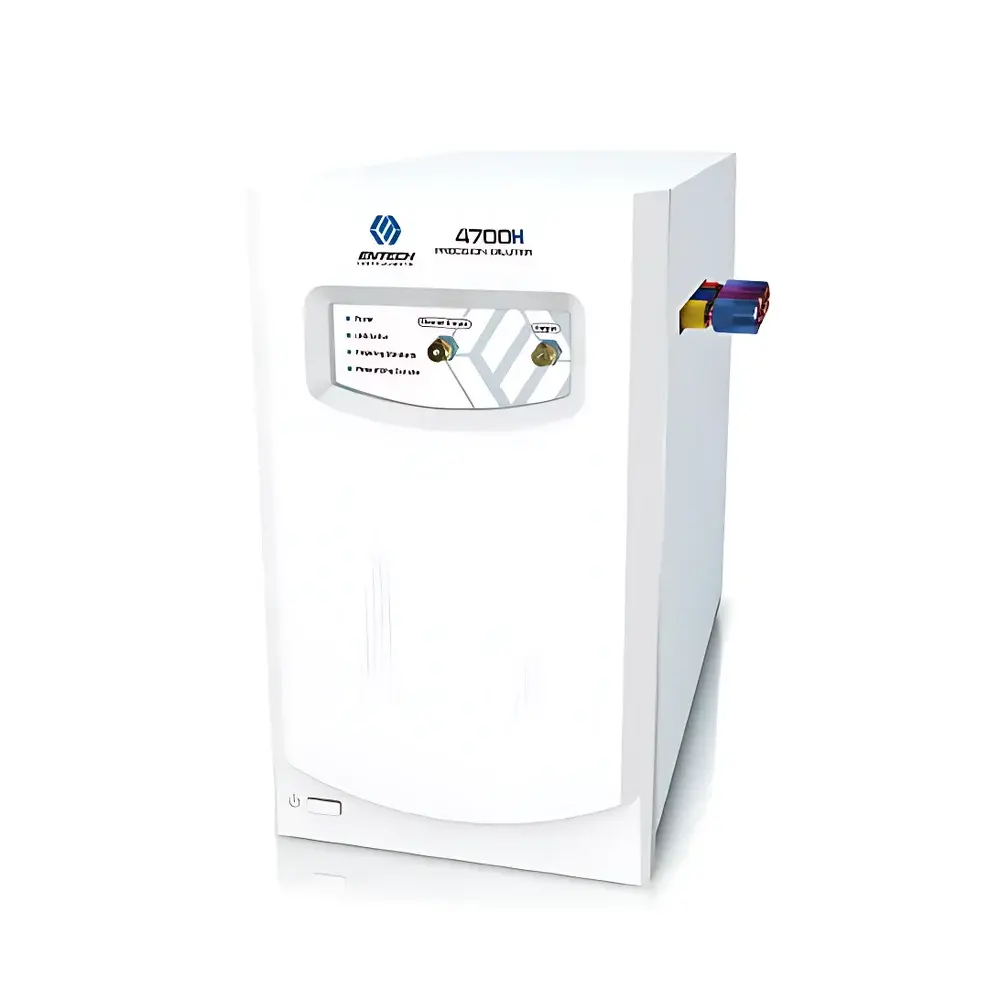
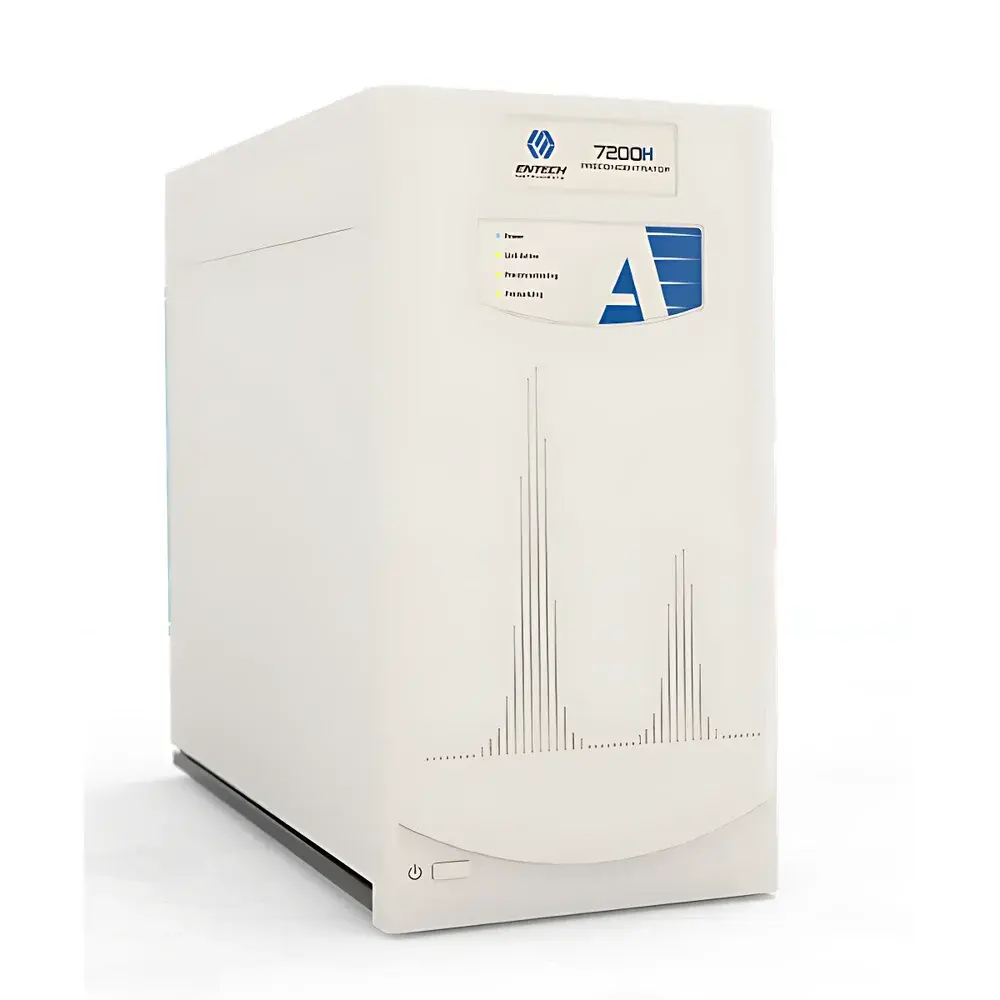
ENTECH 7200H+4700H Hydrogen Fuel Impurity Preconcentration System
| Brand | ENTECH |
|---|---|
| Model | 7200H+4700H |
| Detection Limit | Sub-ppt (parts-per-quadrillion) for Sulfur Compounds, Formaldehyde, and Halogenated Organics |
| Cryogenic Trap | Liquid Nitrogen–Cooled Single-Stage Fused-Silica Cold Trap |
| Sample Introduction | Electronic Volume Control (EVC) with Matrix-Independent Quantitation |
| Sample Line Treatment | Deactivated Fused-Silica Tubing (SilcoNert® or Equivalent) |
| Compliance | ASTM D7652, GB/T 37244–2018, GB/T 44243–2024, T/CECA-G 0180–2022 |
Overview
The ENTECH 7200H+4700H Hydrogen Fuel Impurity Preconcentration System is a fully integrated, cryogenically enhanced sample introduction platform engineered for ultra-trace analysis of critical impurities in high-purity hydrogen fuel streams. Designed specifically to meet the stringent requirements of proton exchange membrane fuel cell (PEMFC) applications, this system couples ENTECH’s industry-proven 7200H automated preconcentrator with the 4700H high-efficiency cold trap module to deliver reproducible, matrix-independent enrichment of volatile sulfur compounds (e.g., H2S, COS, CH3SH, CS2), halogenated organics (e.g., CH3Cl, CH2Cl2), formaldehyde, and other reactive trace analytes at sub-ppt (parts-per-quadrillion) levels. The system operates on the principle of cryofocusing—using liquid nitrogen–cooled fused-silica traps to selectively condense target volatiles while allowing bulk hydrogen gas to pass through. This enables subsequent thermal desorption into a gas chromatograph (GC) equipped with sulfur-specific detection (e.g., SCD or PFPD) or mass spectrometry (MS), ensuring compliance with international hydrogen quality standards.
Key Features
- Single-stage liquid nitrogen–cooled cold trap with optimized thermal mass and rapid cooldown kinetics, minimizing LN2 consumption by up to 40% compared to conventional dual-stage designs.
- Fused-silica sample pathway throughout—entire flow path from inlet valve to trap is chemically deactivated (e.g., SilcoNert® or equivalent), eliminating adsorption artifacts for highly reactive species including mercaptans, sulfides, and aldehydes.
- Electronic Volume Control (EVC) technology provides precise, pressure- and temperature-compensated sample quantitation across diverse carrier matrices—including H2, N2, He, and synthetic air—without calibration drift or flow-dependent bias.
- Modular architecture allows seamless integration with third-party GC systems and detectors; supports both split and splitless injection modes with programmable trap desorption profiles.
- Automated method sequencing with full audit trail logging, supporting GLP/GMP-aligned operation and FDA 21 CFR Part 11–compliant data integrity when paired with validated LIMS or chromatography data systems (CDS).
Sample Compatibility & Compliance
The 7200H+4700H system is validated for direct analysis of gaseous hydrogen fuel per ISO 14687-2:2019, GB/T 37244–2018 (equivalent to SAE J2719), and GB/T 44243–2024. It satisfies all methodological prerequisites for ASTM D7652 (determination of trace sulfur species in hydrogen fuel), including mandatory cold trap efficiency verification, breakthrough testing, and recovery validation for C1–C3 sulfur compounds. The system also fulfills the preconcentration requirements outlined in T/CECA-G 0180–2022 for simultaneous determination of sulfur compounds, formaldehyde, and organic halides via GC-SCD/MS. All hardware components conform to IEC 61000-6-2/6-4 electromagnetic compatibility standards and are rated for continuous operation in Class 1, Division 2 hazardous locations when installed per NEC Article 500 guidelines.
Software & Data Management
Control and method development are executed via ENTECH’s proprietary PC-based software suite, compatible with Windows 10/11 64-bit environments. The interface supports full parameter scripting—including trap temperature ramp rates, EVC volume setpoints, purge durations, and desorption hold times—with version-controlled method libraries and user-level access permissions. Raw acquisition files export in standard .CDF format for post-run processing in OpenLab CDS, Chromeleon, or MassHunter. Audit trails record all operator actions, method modifications, and system events with time/date stamps and user IDs. When deployed in regulated laboratories, the system supports electronic signatures, 21 CFR Part 11–compliant electronic records, and configurable retention policies aligned with ALCOA+ principles.
Applications
- Quality assurance testing of hydrogen fuel at production facilities, refueling stations, and third-party certification labs.
- Method development and validation for ISO/IEC 17025-accredited hydrogen purity testing programs.
- Investigation of catalyst poisoning mechanisms in PEMFC stack testing by correlating impurity profiles with voltage decay and impedance spectroscopy data.
- Monitoring of hydrogen purification unit performance (e.g., palladium membrane diffusion, pressure swing adsorption) through longitudinal impurity trend analysis.
- Supporting regulatory submissions to national hydrogen safety authorities, including CNIS (China), H2USA, and the European Clean Hydrogen Partnership.
FAQ
What hydrogen purity grades can this system validate?
The system is designed to verify compliance with ISO 14687 Grade A (≤0.004 ppm H2S, ≤0.004 ppm total sulfur, ≤0.005 ppm formaldehyde) and Grade B specifications, as well as China’s GB/T 37244–2018 Class 1 and Class 2 limits.
Is liquid nitrogen the only available cryogen?
Yes—the 4700H cold trap is optimized exclusively for liquid nitrogen cooling to ensure consistent trap temperatures below –160 °C, which is essential for quantitative retention of low-boiling sulfur species such as H2S and COS.
Can the system handle high-pressure hydrogen samples directly?
It requires upstream pressure regulation to ≤100 psig; optional high-pressure inlet modules (e.g., ENTECH 7100HP) are available for direct sampling from 350–700 bar storage vessels when integrated with appropriate pressure-reduction manifolds.
How is system performance verified between analyses?
Built-in automated performance checks include trap efficiency tests using certified sulfur permeation tubes, blank monitoring via zero-air purges, and daily calibration verification using multi-component standard gas mixtures traceable to NIST SRMs.
Does the system support unattended overnight operation?
Yes—fully automated batch processing for up to 100 samples is supported, with real-time status monitoring, email/SMS alerts for LN2 level depletion or valve fault conditions, and automatic shutdown upon critical error detection.





