
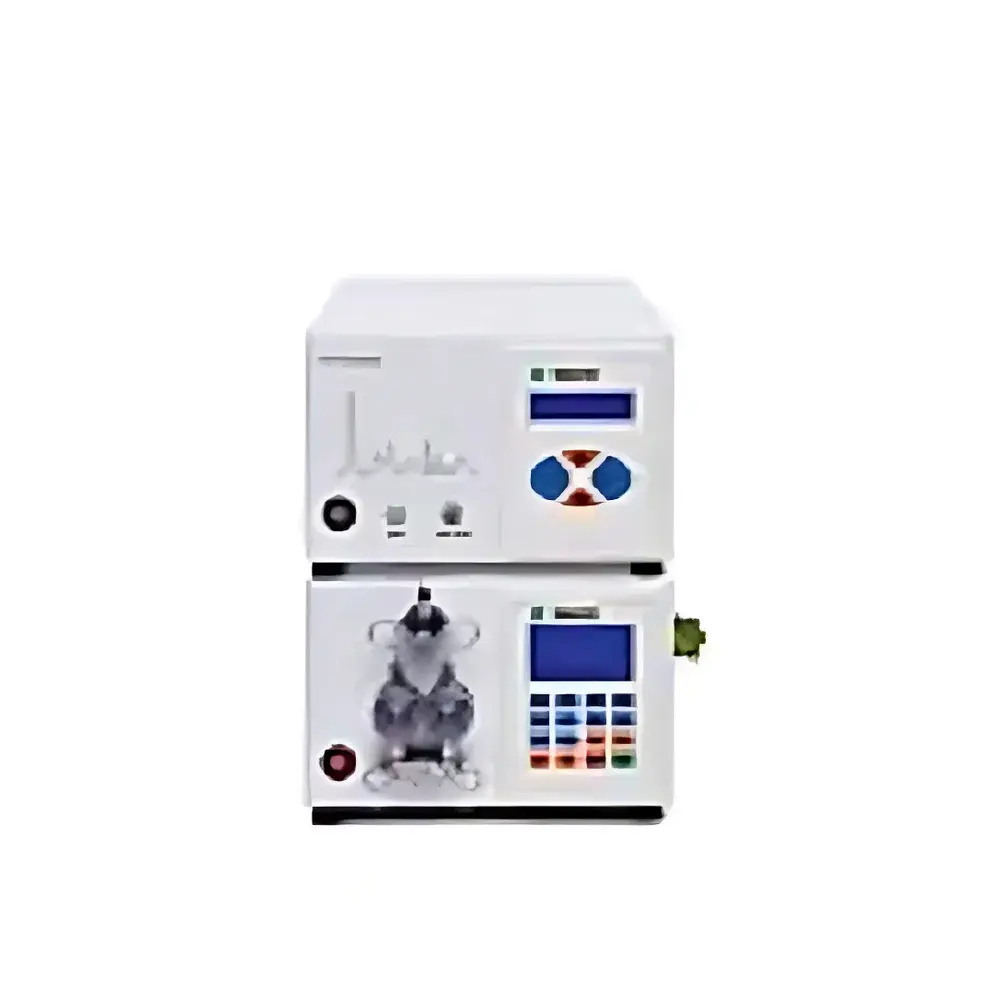
Tongtian S500 Six-Wavelength Medium-Pressure Preparative Liquid Chromatography System
| Brand | Tongtian |
|---|---|
| Model | S500 |
| Origin | Shanghai, China |
| Instrument Type | Medium-Pressure Preparative LC System |
| Flow Rate Range | 1–200 mL/min |
| Flow Accuracy | ≤ ±2% |
| Flow Precision (RSD) | ≤ 1% |
| Maximum Operating Pressure | 20 MPa |
| Wavelength Options | 254 nm, 280 nm, 313 nm, 365 nm, plus two additional user-selectable wavelengths within ±1 nm tolerance |
| Wavelength Reproducibility | 0.2 nm |
| Baseline Noise | 1 × 10⁻⁵ AU |
| Data Acquisition Rate | 20 Hz |
| Sample Cell Volume | 70 µL |
| Optical Path Length | 3 mm |
| Standard Loop Volume | 10 mL (optional: 2 mL, 5 mL, 20 mL) |
| Pump Type | Dual-head piston pump with inert wetted materials |
| Detector Light Source | Deuterium (D₂) lamp |
| Compliance | Designed for GLP-compliant laboratory environments |
Overview
The Tongtian S500 Six-Wavelength Medium-Pressure Preparative Liquid Chromatography System is an engineered solution for scalable purification of natural products, peptides, oligonucleotides, and other labile biomolecules in academic, pharmaceutical, and biotechnology research laboratories. Built upon medium-pressure liquid chromatography (MPLC) principles—operating between standard gravity-driven column chromatography and high-performance liquid chromatography (HPLC)—the S500 delivers robust separation performance at pressures up to 20 MPa, enabling faster elution kinetics and higher resolution than low-pressure systems without requiring ultra-high-pressure instrumentation or consumables. Its dual-piston constant-flow pumping architecture ensures stable hydraulic delivery across the full 1–200 mL/min range, critical for maintaining consistent retention times and peak shape during gradient or isocratic preparative runs. The system integrates a six-wavelength UV-Vis detector with selectable fixed wavelengths (254 nm, 280 nm, 313 nm, 365 nm) plus two programmable channels calibrated to ±1 nm accuracy, allowing simultaneous monitoring of multiple chromophores—including aromatic amino acids, nucleic acid bases, and conjugated plant secondary metabolites—without hardware reconfiguration.
Key Features
- Dual-head medium-pressure piston pump with chemically inert fluid path (e.g., PEEK, sapphire, and ceramic components), minimizing sample adsorption and metal ion leaching—critical for protein and nucleic acid applications.
- Six-channel UV-Vis detection with deuterium lamp source, offering real-time spectral flexibility for method development and multi-analyte tracking.
- High-precision flow control: ≤1% RSD over extended operation, supporting reproducible fraction collection and method transfer between scales.
- Integrated V-541 medium-pressure injection valve with conversion adapters for seamless compatibility with commercial and custom-packed columns (ID 10–50 mm, length up to 500 mm).
- Modular design accommodating optional accessories including fraction collectors, pH/conductivity monitors, and automated fraction-triggering logic based on threshold absorbance or time windows.
- Full-system pressure monitoring with digital readout and safety interlocks preventing operation beyond 20 MPa nominal limit.
Sample Compatibility & Compliance
The S500 is optimized for samples sensitive to oxidation, shear stress, or metal contamination. Its wetted surfaces are constructed from biocompatible polymers and corrosion-resistant alloys compliant with ISO 10993-1 for short-term contact with biological materials. Column packing compatibility includes silica-based reversed-phase (C4, C8, C18), ion-exchange (SAX, SCX), size-exclusion (SEC), and specialty media such as immobilized metal affinity chromatography (IMAC) resins. The system meets essential functional requirements for Good Laboratory Practice (GLP) workflows: electronic signatures, user access levels, audit trail generation, and raw data integrity—all enforceable through its embedded chromatography workstation software when configured with validated firmware. While not pre-certified for GMP manufacturing, it supports qualification protocols (IQ/OQ/PQ) aligned with ASTM E2500 and ICH Q5A/Q5B guidance for early-stage biopurification process development.
Software & Data Management
The bundled chromatography data system provides intuitive method building, real-time chromatogram visualization, peak integration using tangent skim or valley-to-valley algorithms, and customizable reporting templates exportable to PDF, CSV, or XML formats. All detector signals—including six wavelength traces—are timestamped and stored with metadata (flow rate, pressure, gradient profile, injection volume). Data files conform to open AIA/ANDI standards, enabling interoperability with third-party analysis platforms such as Chromeleon, Empower, or Python-based chromatographic libraries (e.g., PyChromat). Audit trails record operator ID, parameter changes, and manual interventions with immutable timestamps—fully traceable for regulatory review under FDA 21 CFR Part 11 when deployed on validated Windows OS environments with domain authentication.
Applications
- Purification of plant-derived alkaloids, flavonoids, and terpenoids under mild solvent conditions (e.g., methanol/water or ethanol/water gradients).
- Desalting and buffer exchange of synthetic peptides prior to lyophilization or analytical characterization.
- Removal of endotoxins and host-cell proteins from recombinant antibody fragments using mixed-mode or hydrophobic interaction chromatography.
- Fractionation of crude fermentation broths containing polyketide antibiotics or nonribosomal peptides.
- Method scouting for downstream HPLC or UPLC analysis—leveraging identical stationary phases and mobile phase chemistries to ensure retention time correlation.
FAQ
What is the maximum column internal diameter supported by the S500 system?
The system accommodates columns with internal diameters from 10 mm to 50 mm, with recommended maximum bed volumes of 120 mL for optimal resolution and flow uniformity.
Can the six-wavelength detector operate in simultaneous multi-wavelength mode?
Yes—the detector acquires absorbance data concurrently across all six configured wavelengths at 20 Hz, enabling real-time ratio analysis (e.g., A260/A280) and co-elution verification.
Is the system compatible with volatile mobile phases such as trifluoroacetic acid (TFA) or formic acid?
All wetted components are rated for continuous exposure to TFA ≤0.1% and formic acid ≤5%, provided stainless steel components are avoided in favor of PEEK or titanium alternatives.
Does the S500 support gradient elution programming?
Yes—up to three solvent channels can be proportionally mixed via built-in gradient programmer, with linear, step, or concave gradient profiles definable down to 0.1% increments.
How is system suitability verified prior to use?
Built-in diagnostics include flow accuracy verification using gravimetric measurement, pressure sensor calibration routines, and baseline noise assessment per USP guidelines for UV detectors.
Related Products






