
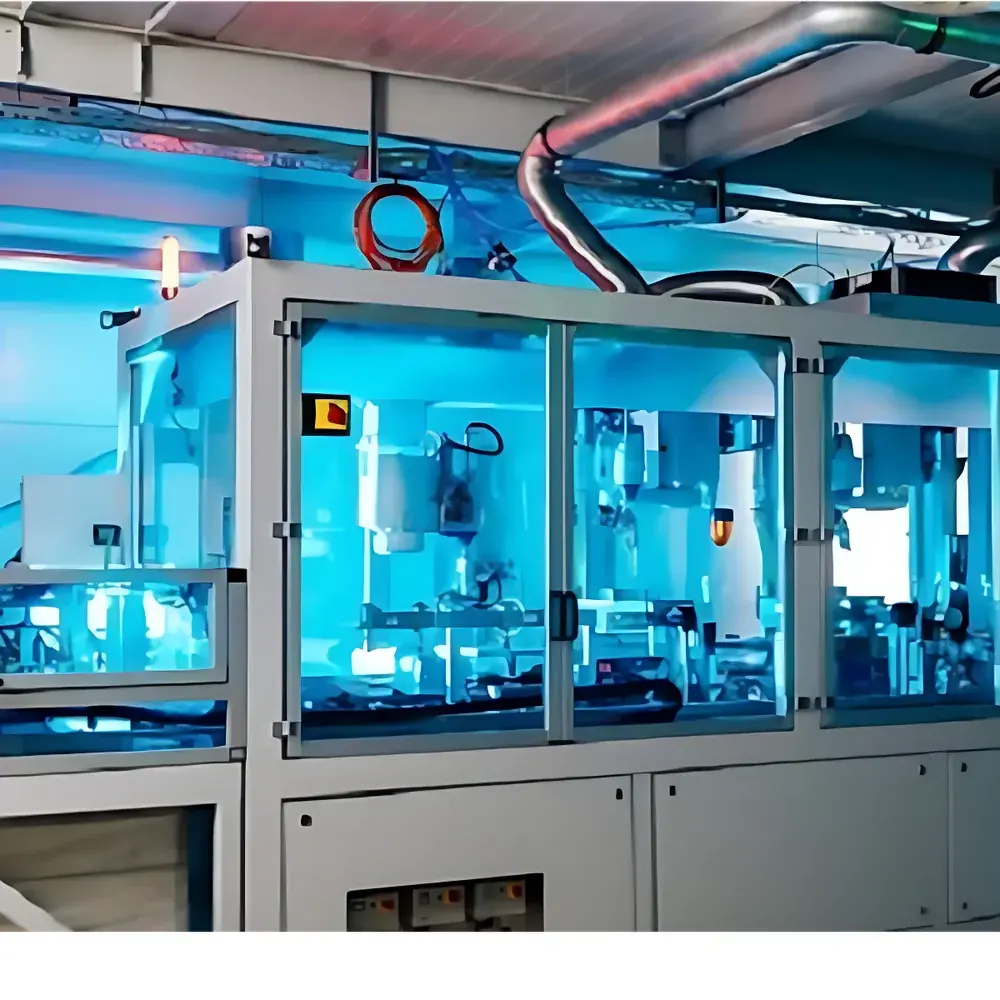
RoboCut Automated Plantlet Micropropagation Robotic Workstation by Zealquest
| Brand | Zealquest |
|---|---|
| Origin | Germany |
| Model | RoboCut |
| Type | Fully Automated Micropropagation Robotic System |
| Compliance | CE-marked, ISO 13485-aligned design principles for controlled-environment bioprocessing equipment |
| Application Domain | Commercial tissue culture laboratories, vertical farming R&D centers, and high-throughput plant breeding facilities |
Overview
The RoboCut Automated Plantlet Micropropagation Robotic Workstation is an industrial-grade, closed-loop automation platform engineered specifically for aseptic micropropagation in commercial plant tissue culture operations. Unlike conventional semi-automated or manual transfer systems, RoboCut implements a complete end-to-end robotic workflow—from sterile container opening and visual assessment of explants, to AI-guided laser sectioning along morphologically optimal meristematic junctions, and precision placement of excised plantlets onto fresh solid or semi-solid media. Its core measurement and control paradigm integrates real-time 3D stereoscopic imaging with convolutional neural networks trained on >50,000 annotated images across 12 major horticultural species (e.g., Phalaenopsis, Strawberry, Blueberry, Poplar), enabling autonomous decision-making under Class A/B cleanroom conditions (ISO 14644-1). The system operates without human intervention inside a fully enclosed laminar-flow biosafety enclosure, eliminating operator-induced contamination—a leading cause of batch failure in GMP-aligned propagation facilities.
Key Features
- Fully integrated robotic arm (6-axis, ±0.05 mm repeatability) with vacuum-gripper end-effector optimized for fragile plantlet handling
- High-resolution 3D structured-light imaging module (12 MP dual-camera array, 10 µm depth resolution) synchronized with AI inference engine
- Ultrafast pulsed diode laser (1064 nm, pulse width <100 ns) calibrated for minimal thermal damage and maximal callus induction at cut surfaces
- Automated sterilization cycle: UV-C (254 nm, 30 mJ/cm²) + hydrogen peroxide vapor (H₂O₂, 300 ppm, 90 min) between batches
- Modular media tray handling system compatible with standard Magenta boxes, glass jars (100–500 mL), and disposable bioreactor vessels
- Embedded audit trail logging compliant with ALCOA+ principles (Attributable, Legible, Contemporaneous, Original, Accurate, Complete, Consistent, Enduring, Available)
Sample Compatibility & Compliance
RoboCut supports monocot and dicot species exhibiting axillary bud proliferation, adventitious shoot formation, or somatic embryogenesis—particularly those with high contamination sensitivity (e.g., Camellia sinensis, Rhododendron spp., Actinidia deliciosa). It accommodates explant sizes from 3 mm to 25 mm in length and stem diameters between 0.5–3.2 mm. All wetted components are constructed from electropolished 316L stainless steel and USP Class VI-certified polymers. The workstation meets CE Directive 2006/42/EC (Machinery), EN ISO 13849-1:2015 (Safety-related parts of control systems), and incorporates design elements aligned with FDA Guidance for Industry: “Process Validation: General Principles and Practices” (2011) for consistency in biological manufacturing environments.
Software & Data Management
The RoboCut Control Suite (v4.2+) runs on a deterministic Linux RT kernel and provides role-based access control (RBAC) with multi-level user permissions (Operator, Technician, QA Manager, Administrator). All image data, laser parameters, placement coordinates, and environmental logs (temperature, humidity, pressure differential) are timestamped and stored locally on encrypted SSD storage with optional TLS 1.3–secured cloud backup to private AWS S3 buckets. The software supports export of raw datasets in HDF5 format for third-party analysis and includes built-in statistical process control (SPC) dashboards tracking key performance indicators: contamination rate per 1000 transfers, average cutting accuracy deviation (µm), and plantlet viability at Day 7 post-transfer. Full 21 CFR Part 11 compliance is achievable via optional e-signature module with PKI certificate integration.
Applications
- High-volume production of disease-free elite clones for nurseries and seed potato certification programs
- Accelerated breeding cycles in woody perennial crops requiring long juvenile phases (e.g., apple rootstocks, walnut genotypes)
- Standardized explant preparation for CRISPR/Cas9 editing workflows where positional fidelity affects editing efficiency
- Bioreactor inoculation support for liquid-phase micropropagation systems (e.g., temporary immersion systems – TIS)
- GLP-compliant germplasm preservation workflows requiring traceable, reproducible subculturing protocols
FAQ
Does RoboCut require modification of existing culture media formulations?
No. RoboCut is media-agnostic and validated with standard MS, WPM, and DKW basal media containing gelling agents (agar, gellan gum) and common growth regulators (BAP, NAA, TDZ).
Can the system handle hyperhydric or vitrified shoots?
Yes—the 3D vision system classifies tissue water content via multispectral reflectance analysis and adjusts laser dwell time and gripper suction pressure accordingly.
What level of cleanroom infrastructure is required for installation?
RoboCut operates as a self-contained Class A isolator; it only requires connection to standard lab utilities (230 V AC, compressed air ≥6 bar, ambient temperature 20–25°C) and does not necessitate dedicated HVAC upgrades.
Is remote diagnostics supported?
Yes. Secure SSH tunneling enables OEM-level remote monitoring and firmware updates under customer-defined firewall policies, with all telemetry anonymized per GDPR Annex II requirements.





