
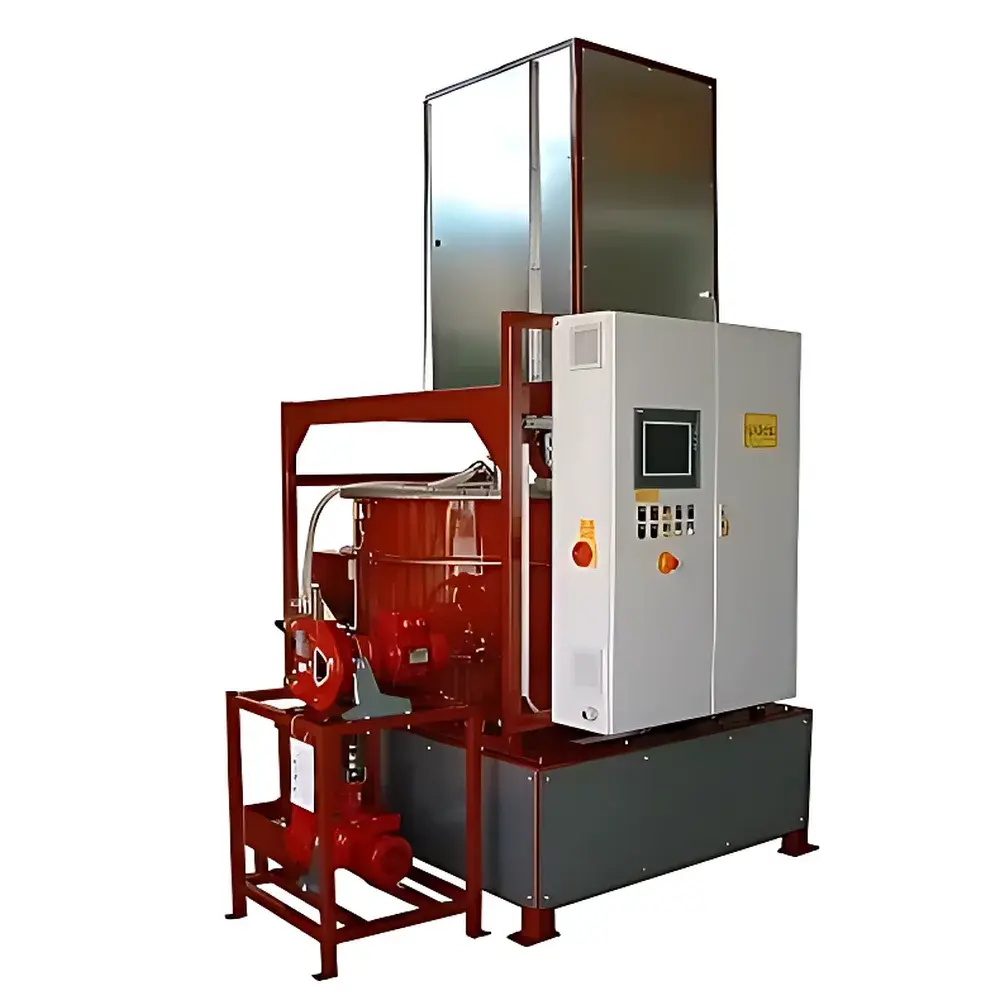
Niklas W.N.5/200 Industrial-Scale Seed Coating and Pelleting Machine
| Brand | Niklas |
|---|---|
| Origin | Germany |
| Model | W.N.5/200 |
| Batch Capacity | 75–270 L |
| Throughput | 30 t/h |
| Control System | Integrated PLC with Weight & Time-Based Dosing |
| Liquid Dosing | Precision Metering Pumps + 20 L Weighing System |
| Powder Dosing | Synchronized Volumetric Feeders |
| Spray Nozzle | Fine-Mist Parabolic Distribution System |
| Compliance | Designed for ISO 9001-aligned seed treatment facilities, compatible with GLP/GMP documentation workflows |
Overview
The Niklas W.N.5/200 is an industrial-scale seed coating and pelleting machine engineered for high-precision, repeatable application of liquid formulations (e.g., pesticides, fungicides, biostimulants) and dry particulates (e.g., clay-based pelleting agents, micronutrients, polymers) onto agricultural seeds. It operates on a continuous-flow, batch-controlled principle combining mechanical agitation, gravimetric dosing, and targeted fluid dynamics to achieve uniform surface coverage across diverse seed morphologies — from small, spherical cereals (e.g., wheat, rice) to irregular, high-aspect-ratio legumes (e.g., soybean, lentil) and fragile horticultural varieties (e.g., lettuce, carrot). The core process relies on controlled rotational motion within a conical mixing chamber, where seeds follow a defined elliptical trajectory under centrifugal force, enabling consistent exposure to atomized spray zones and sequential powder dispersion. This architecture ensures minimal mechanical stress while maximizing contact time between active ingredients and seed surfaces — a critical requirement for regulatory-compliant seed treatment in EU, North American, and APAC markets.
Key Features
- Conical rotating mixer with adjustable speed (0–60 rpm) and programmable agitation profile to accommodate both free-flowing and cohesive seed types.
- Parabolic spray nozzle system positioned at the apex of the seed trajectory, delivering fine-mist liquid application directly onto the dynamic seed parabola for optimal droplet adhesion and reduced overspray.
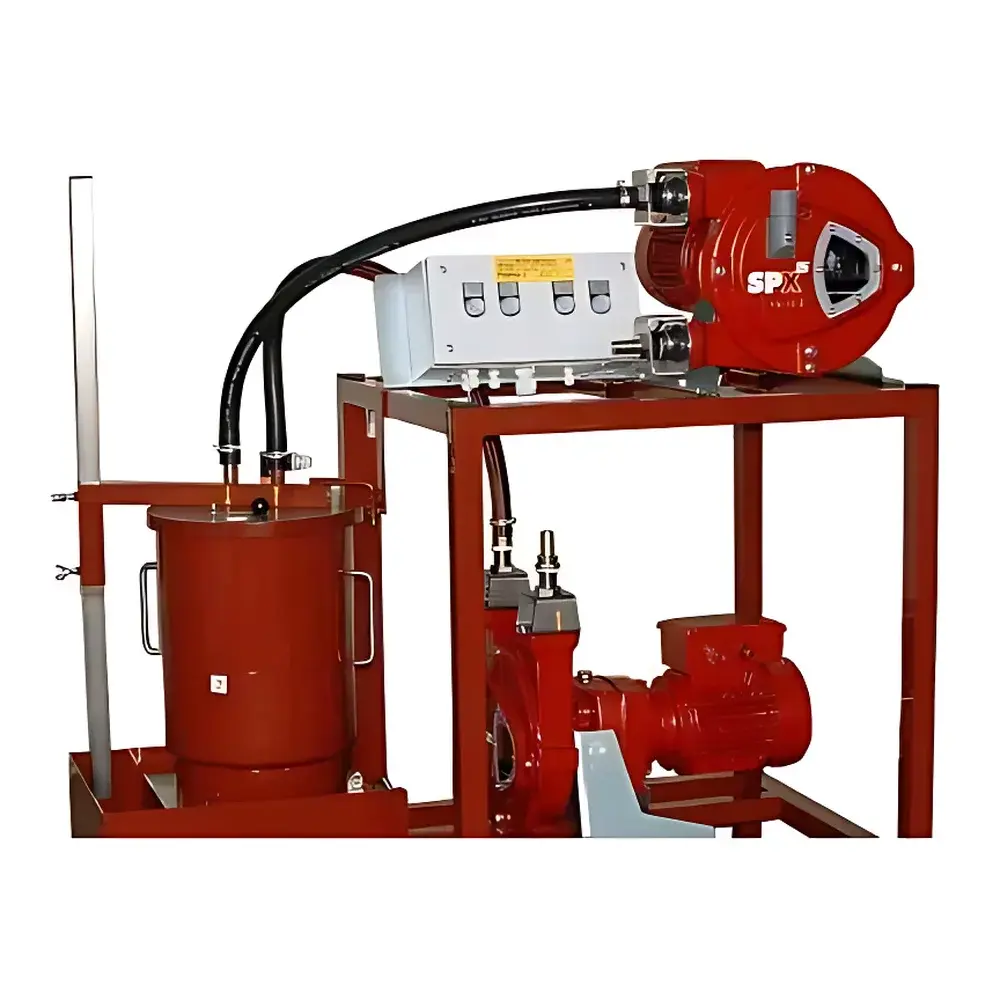
- Dual-dosing architecture: independent, synchronized control of liquid (via peristaltic or diaphragm metering pumps) and powder (via screw feeders with load-cell feedback), each calibrated against real-time weight loss from integrated 20 L weighing platform.
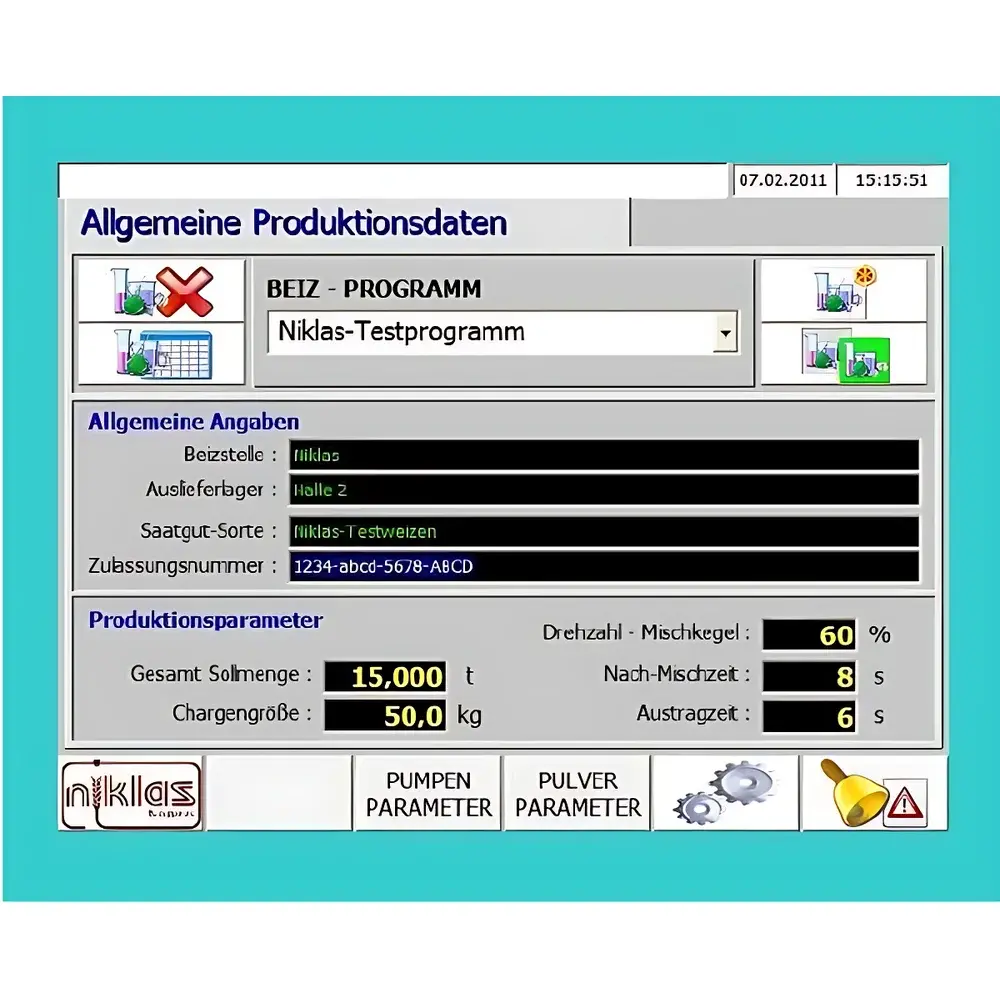
- PLC-based HMI interface with recipe management — supports up to 99 stored treatment protocols, including seed type, chemical concentration, dosage rate (mL/kg or g/kg), dwell time, and post-coating curing parameters.
- Modular pump station: corrosion-resistant wetted parts (EPDM/PVDF), lift capability ≥30 m head pressure, and compatibility with viscous slurries (up to 5,000 cP) and abrasive powders.
- Full traceability framework: automated logging of batch ID, operator login, start/stop timestamps, actual vs. target dosages, and weight deviation alerts — exportable as CSV for QA review or integration into enterprise LIMS.
Sample Compatibility & Compliance
The W.N.5/200 accommodates seeds ranging from 0.5 mm (e.g., tobacco, petunia) to 15 mm (e.g., maize, sunflower), including coated, primed, pelleted, and pelleted + film-coated substrates. Its design adheres to EN 15948:2011 (machinery for seed treatment), incorporates CE marking per Machinery Directive 2006/42/EC, and supports validation under ISO/IEC 17025 for accredited seed testing laboratories. The system’s closed-loop dosing and audit-trail functionality align with Good Agricultural Practice (GAP), EU Regulation (EC) No 1107/2009, and U.S. EPA Pesticide Registration requirements. Optional 21 CFR Part 11-compliant electronic signatures and data integrity modules are available for regulated commercial seed producers operating under GMP frameworks.
Software & Data Management
The embedded Siemens SIMATIC S7-1200 PLC drives deterministic real-time control of all motion and dosing axes. The 10.1″ touchscreen HMI runs TIA Portal v18 firmware, offering intuitive recipe selection, live process visualization (including real-time weight curves and pump RPM feedback), and alarm management with configurable thresholds. All operational data — including batch weight, cumulative liquid/powder dispensed, cycle duration, and error codes — are timestamped and archived locally on industrial-grade SD card storage (min. 10-year retention). Export interfaces include USB 2.0, Ethernet/IP, and optional OPC UA server for seamless integration with MES or ERP systems (e.g., SAP S/4HANA, Oracle Manufacturing Cloud). Raw logs comply with ALCOA+ principles (Attributable, Legible, Contemporaneous, Original, Accurate, Complete, Consistent, Enduring, Available).
Applications
- Commercial seed conditioning for hybrid corn, soybean, and cotton producers requiring EPA-registered fungicide/insecticide coatings.
- R&D-scale formulation development in agrochemical labs evaluating novel polymer binders, biofilm enhancers, or microbial inoculant carriers.
- Organic-certified seed pelleting using natural clays, starches, and humic acid matrices under EC 834/2007 compliance.
- Pre-sowing priming operations integrating osmotic agents (e.g., KNO₃, PEG) with subsequent protective film coatings.
- Phytosanitary treatment for international seed shipments meeting ISPM 15 and national phytosanitary certificate requirements.
FAQ
What seed throughput rates does the W.N.5/200 support in continuous operation?
The machine achieves a nominal throughput of 30 metric tons per hour under optimized conditions (e.g., medium-density cereal seeds, standard coating viscosity, 2–3% additive load). Actual output varies with seed bulk density, coating viscosity, and required dwell time.
Can the system handle highly abrasive pelleting materials such as diatomaceous earth or talc?
Yes — feed screws and metering chambers are lined with tungsten-carbide-coated surfaces; powder feeders include wear-compensation algorithms that auto-adjust volumetric displacement based on real-time mass loss calibration.
Is remote diagnostics and firmware updates supported?
Standard Ethernet connectivity enables secure remote access via VPN-configured industrial firewalls; firmware updates require authenticated USB media and undergo checksum verification prior to installation.
Does the W.N.5/200 meet explosion protection requirements for dust-laden environments?
The base configuration complies with ATEX Category 3D (Zone 22) for combustible dust; optional ATEX Zone 21-rated variants (with pressurized enclosures and intrinsically safe I/O) are available upon request.
How is calibration traceability maintained for the 20 L weighing system?
The load cells are factory-calibrated against NIST-traceable standards (±0.05% full scale); internal self-check routines run at startup and every 4 hours, with drift compensation activated if deviation exceeds ±0.1%. Calibration certificates are generated automatically per batch log.





