
Caleva MCC Miniature Coating and Drying System
| Brand | Caleva |
|---|---|
| Origin | United Kingdom |
| Model | MCC |
| Power Supply | 230 V AC, 50 Hz |
| Weight | 20 kg |
| Dimensions (W × D × H) | 490 × 560 × 400 mm |
| Temperature Range | 25–60 °C |
| Compressed Air Requirement | 0.3–0.6 MPa, 3.6 m³/h |
| Enclosure IP Rating | IP31 |
| Product Contact Materials | ASTM F86-compliant 316 stainless steel, FDA-listed plastics, borosilicate glass |
| Non-Contact Housing | Polyurethane-coated 304 stainless steel |
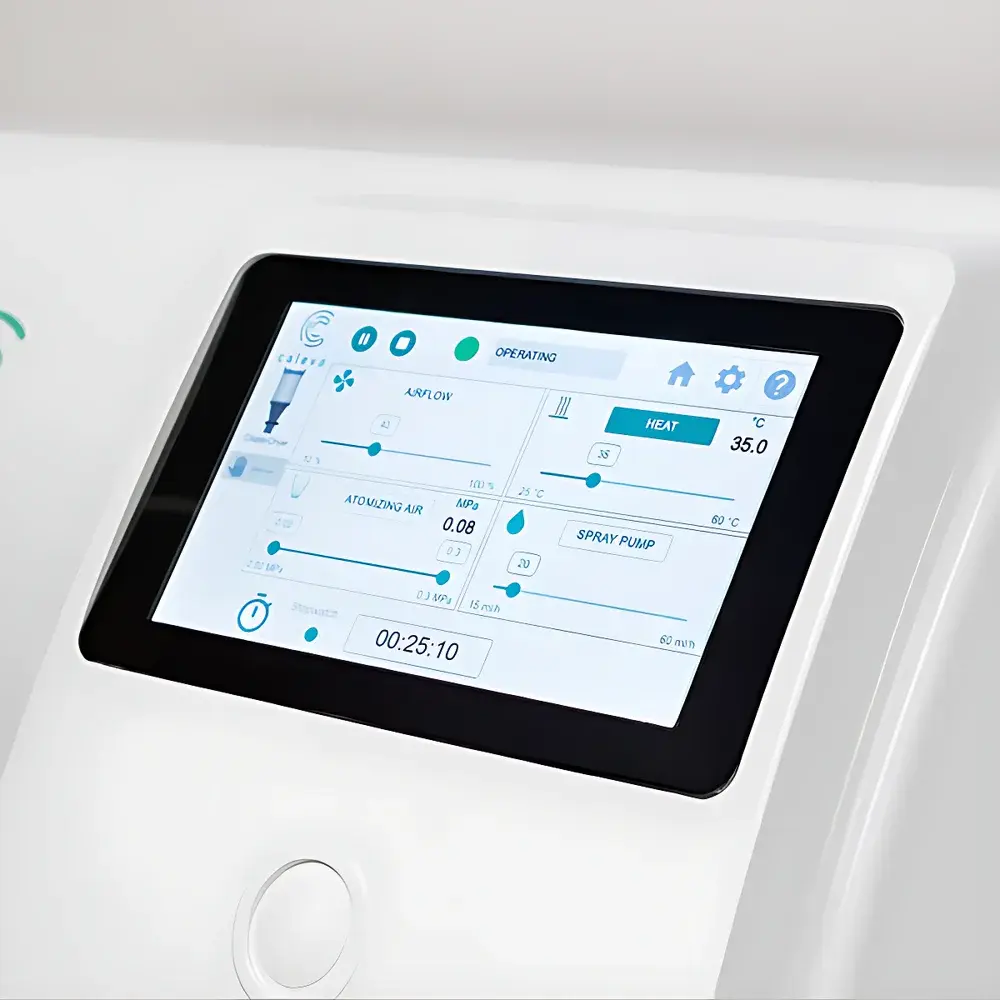
| Touchscreen Interface | 7-inch capacitive LCD with intuitive slider-based parameter control |
| Peristaltic Pump Flow Rate | 15–60 mL/h |
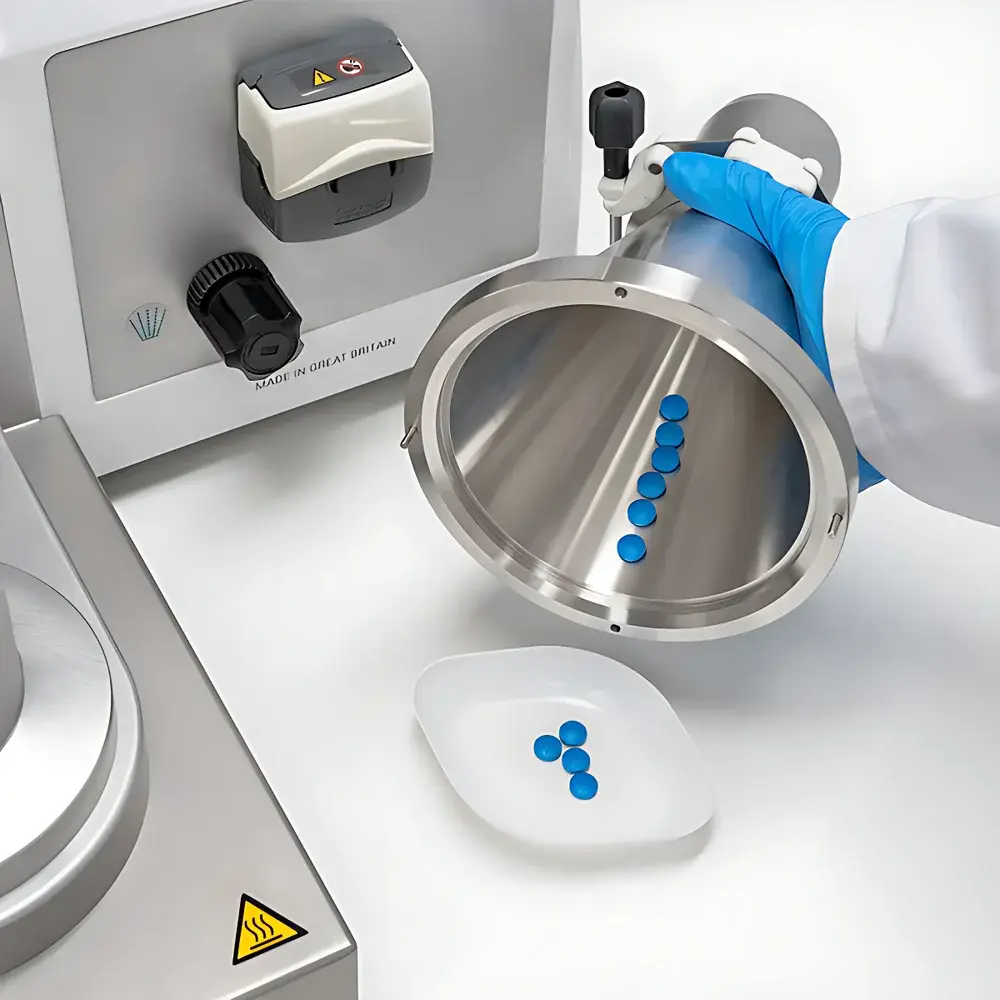
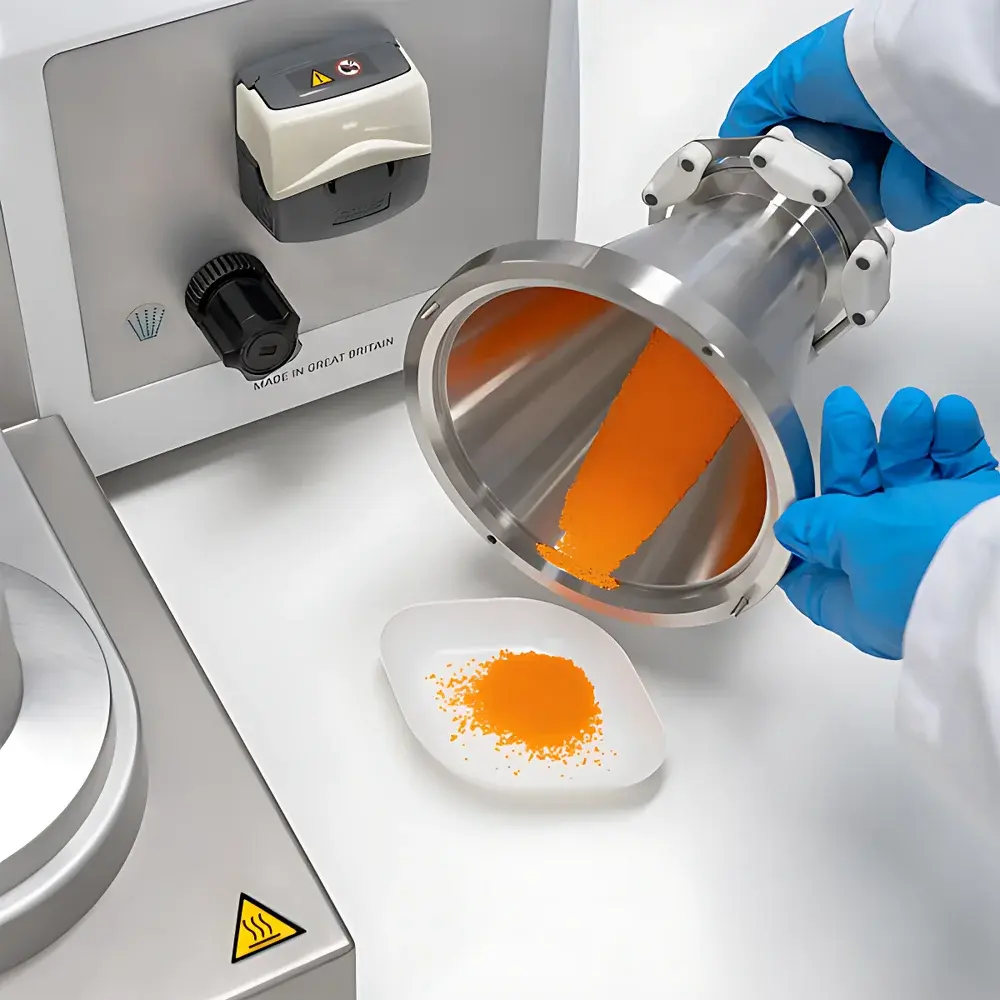
| Coating Capacity | 1 tablet to 150 tablets (~50 g), 1 capsule to batch of capsules, 1 g to ~60 g microspheres (≥400 µm) |
| Typical Coating Duration | 15–30 min |
| Compliance | CE-marked, designed per IEC 61000-6-2/6-4 and EN 61000-6-3 |
| Software | MCC v1.01 with real-time logging, parameter recall, and audit-ready event history |
Overview
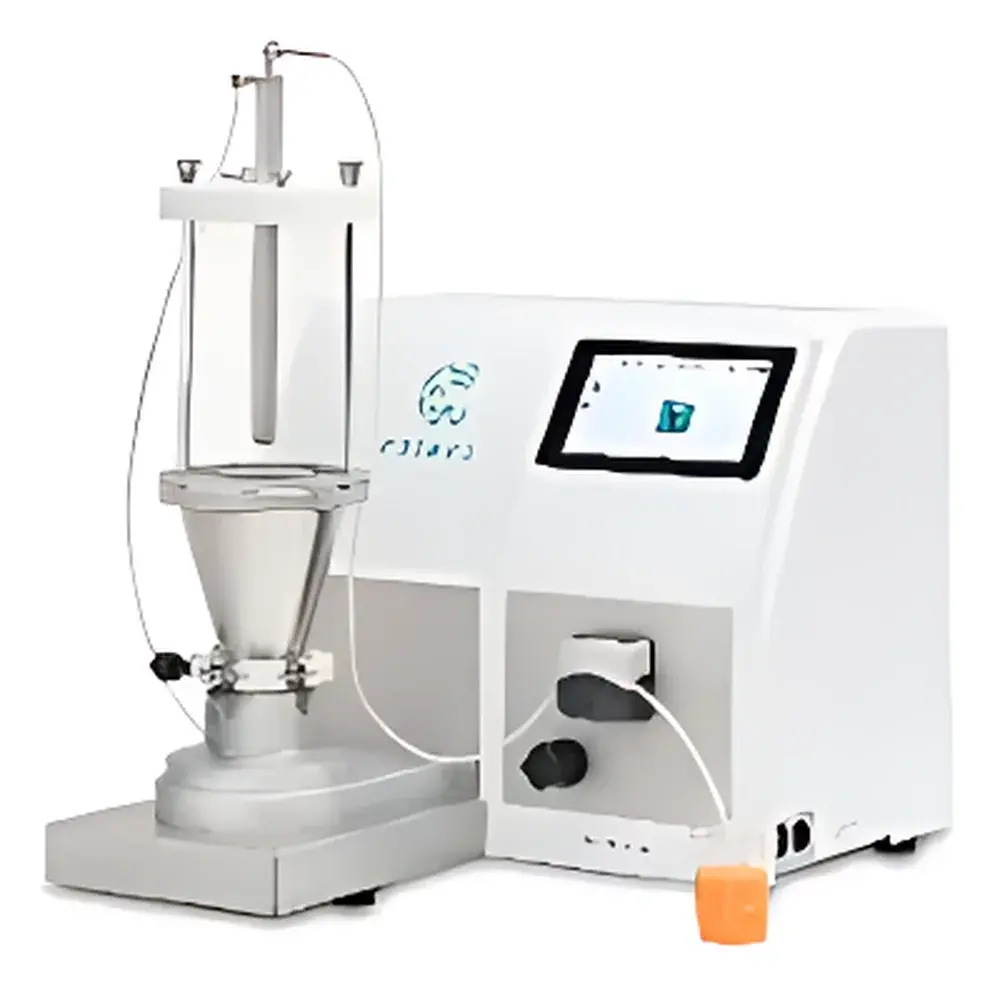
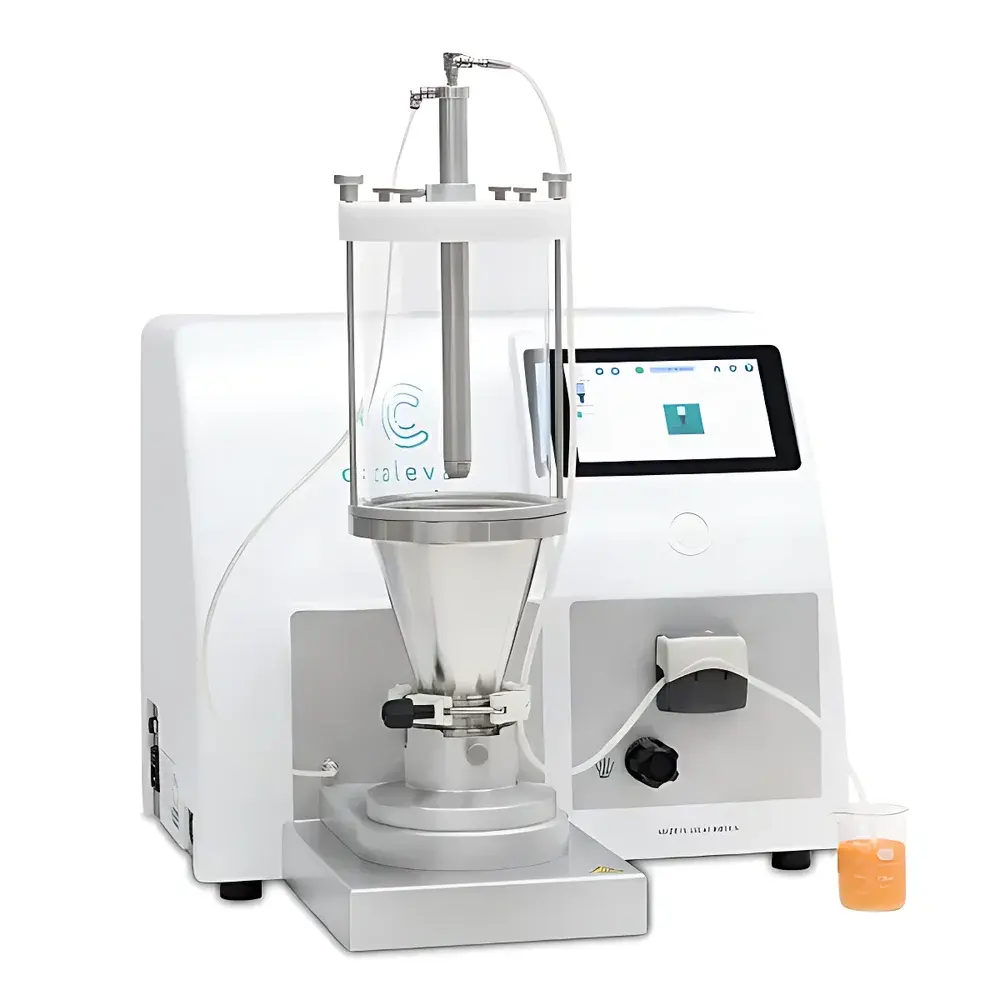
The Caleva MCC Miniature Coating and Drying System is an engineered solution for precision film coating and solvent-based drying of ultra-low-volume pharmaceutical dosage forms. Unlike conventional fluidized-bed or pan coaters requiring minimum batches of 300–500 g, the MCC operates reliably at single-unit scale—enabling coating of one tablet, one capsule, or as little as 1 g of microspheres (≥400 µm). Its core architecture integrates a vertically oriented spray chamber with adjustable top-mounted nozzle, dual-zone airflow (upward fluidization + downward drying), and closed-loop thermal management—delivering consistent film uniformity, minimal mechanical stress, and high reproducibility across developmental batches. Designed explicitly for early-stage formulation R&D, academic research, and feasibility studies in controlled-release, taste-masking, enteric, or functional coatings, the MCC bridges the gap between theoretical design and scalable manufacturing—without compromising regulatory traceability or process understanding.
Key Features
- Ultra-low sample capacity: Validated operation from 1 tablet/capsule to 150 tablets (~50 g) or 1–60 g of microspheres
- 7-inch capacitive touchscreen interface with real-time slider controls for temperature, airflow, nozzle pressure, and pump speed
- Adjustable-height top-spray nozzle optimized for droplet trajectory and film coverage on irregular geometries
- Fluidized-bed dynamics driven by a low-noise, brushless DC fan—ensuring gentle particle motion without attrition or chipping
- Integrated peristaltic pump with flow range 15–60 mL/h and rapid priming function for immediate solution delivery to nozzle
- Automated safety interlock: System halts if compressed air pressure falls outside 0.3–0.6 MPa range, preventing incomplete coating or solvent accumulation
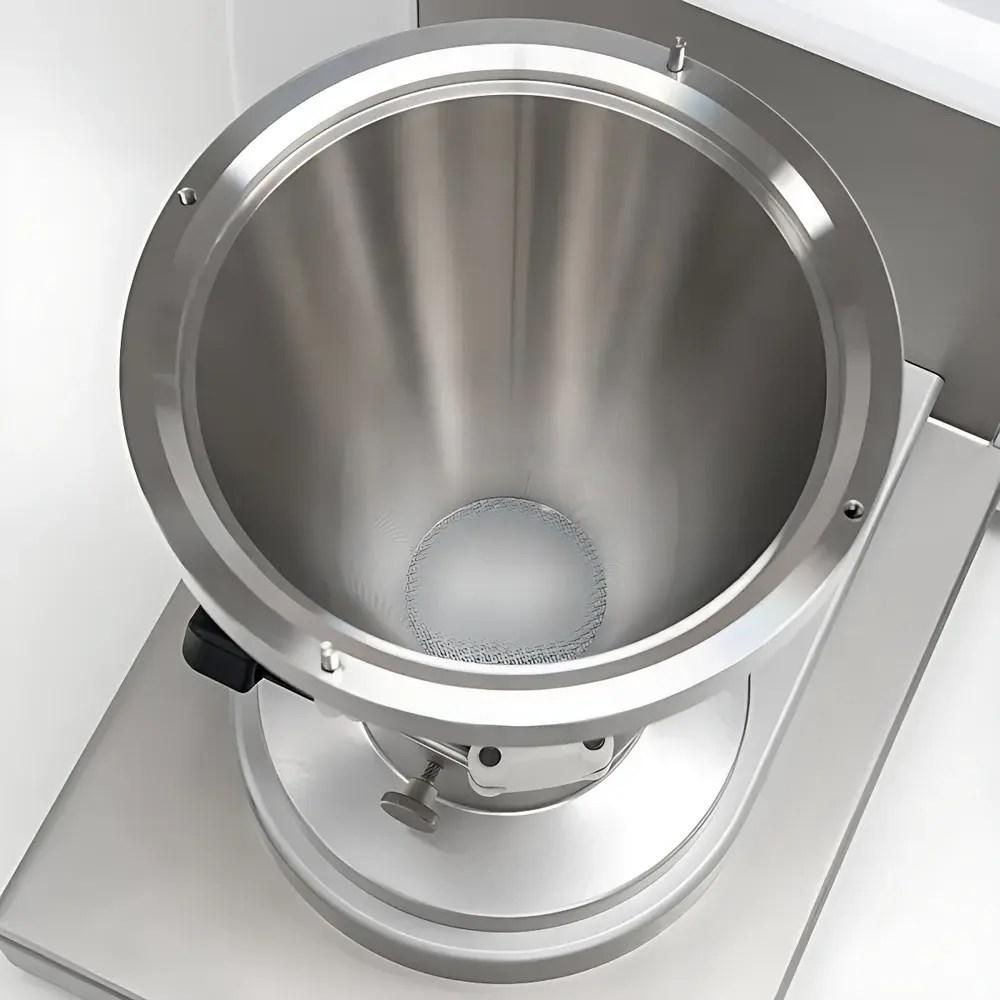
- Transparent borosilicate glass spray chamber enabling full visual monitoring of coating progression and particle behavior
- IP31-rated enclosure with polyurethane-finished 304 stainless steel chassis and 316 stainless steel product-contact surfaces compliant with USP and FDA 21 CFR Part 11 data integrity requirements
Sample Compatibility & Compliance
The MCC accommodates diverse solid oral dosage forms—including immediate-release tablets, gelatin capsules, sugar-coated pellets, and implantable medical devices intended for parenteral administration. Its ≥400 µm lower particle size threshold supports development of catalyst carriers, food-grade encapsulates, and functional excipient granules. All wetted components meet FDA 21 CFR Part 177.2420 and ISO 10993-5 biocompatibility standards. The system complies with CE marking directives (2014/30/EU EMC, 2014/35/EU LVD), conforms to EN ISO 14971:2019 for risk management, and supports IQ/OQ documentation packages aligned with EU GMP Annex 15 and USP Analytical Instrument Qualification guidelines. Optional GLP/GMP-compliant audit trails and electronic signature modules are available upon request.
Software & Data Management
MCC v1.01 firmware provides timestamped parameter logging (temperature, airflow, pump rate, duration), user-defined method storage (up to 50 protocols), and exportable CSV reports compatible with LIMS integration. Event history includes operator ID, start/stop timestamps, alarm triggers (e.g., air pressure deviation), and manual overrides—all retained for ≥12 months. Software architecture follows ALCOA+ principles (Attributable, Legible, Contemporaneous, Original, Accurate, Complete, Consistent, Enduring, Available) to satisfy FDA 21 CFR Part 11 and EU Annex 11 requirements. No cloud connectivity is embedded; all data reside locally on internal flash memory with password-protected access levels.
Applications
- Early-phase formulation screening: Rapid evaluation of polymer viscosity, plasticizer ratio, and solvent blend effects on film integrity
- Taste-masking optimization for pediatric suspensions and orally disintegrating tablets (ODTs)
- Enteric coating development using pH-sensitive polymers (e.g., Eudragit L/S) under controlled humidity conditions
- Catalyst immobilization on ceramic or silica microspheres for heterogeneous reaction studies
- Encapsulation of probiotics or heat-labile nutraceuticals in gastro-resistant matrices
- Academic teaching: Hands-on demonstration of mass transfer kinetics, solvent evaporation profiles, and fluidization thresholds
FAQ
What is the smallest viable batch size the MCC can coat reliably?
Single tablets, capsules, or 1 g of microspheres (≥400 µm) have been validated per ICH Q5C stability protocols.
Does the MCC support solvent-based or aqueous coating systems?
Both—system compatibility has been verified with ethanol/water mixtures, acetone, isopropanol, and purified water formulations.
Can the MCC be qualified for GMP environments?
Yes—full IQ/OQ documentation, calibration certificates, and 21 CFR Part 11-compliant software options are available through Caleva’s Regulatory Support Services.
Is cleaning validation supported?
Yes—the system includes a dedicated cleaning protocol in the operator manual, with swab sampling points identified for residue testing per USP .
How does the MCC ensure coating uniformity at sub-gram scales?
Through synchronized airflow modulation, nozzle height adjustment, and real-time thermal feedback—minimizing edge effects and ensuring radial symmetry in film deposition.





