
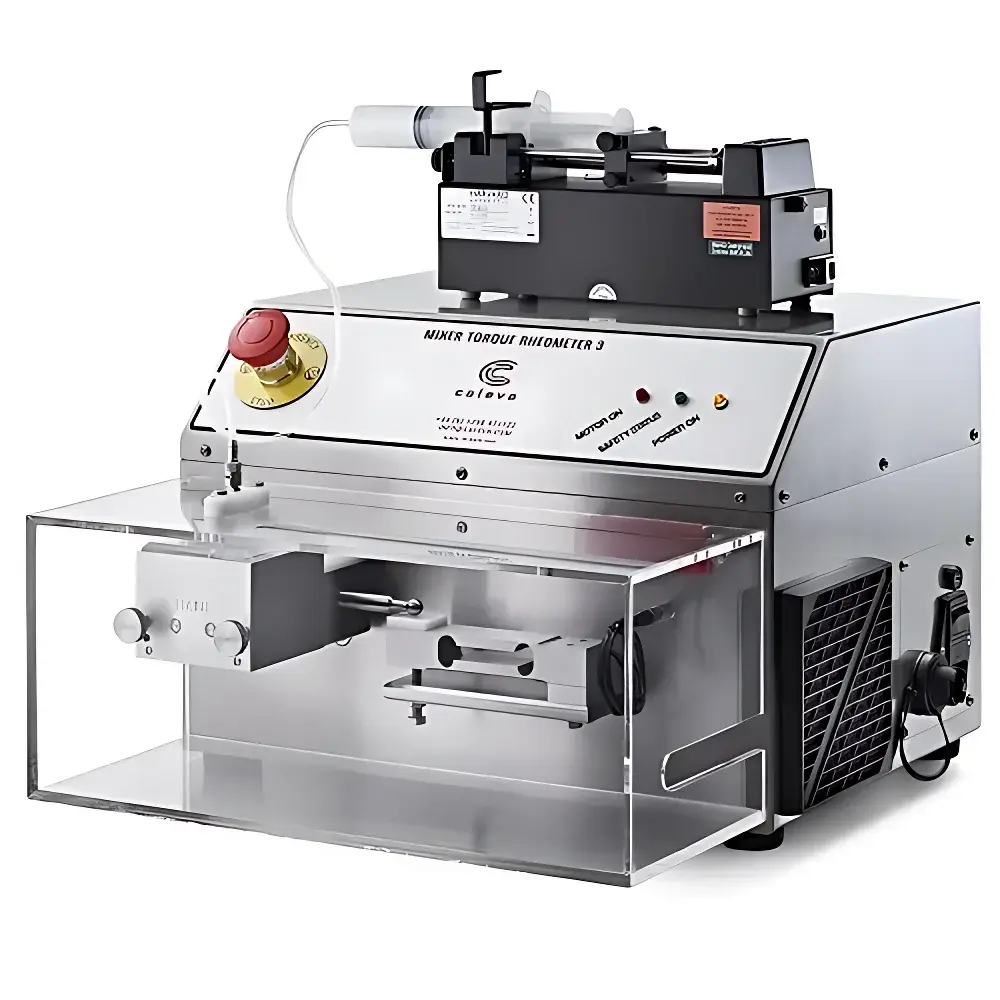
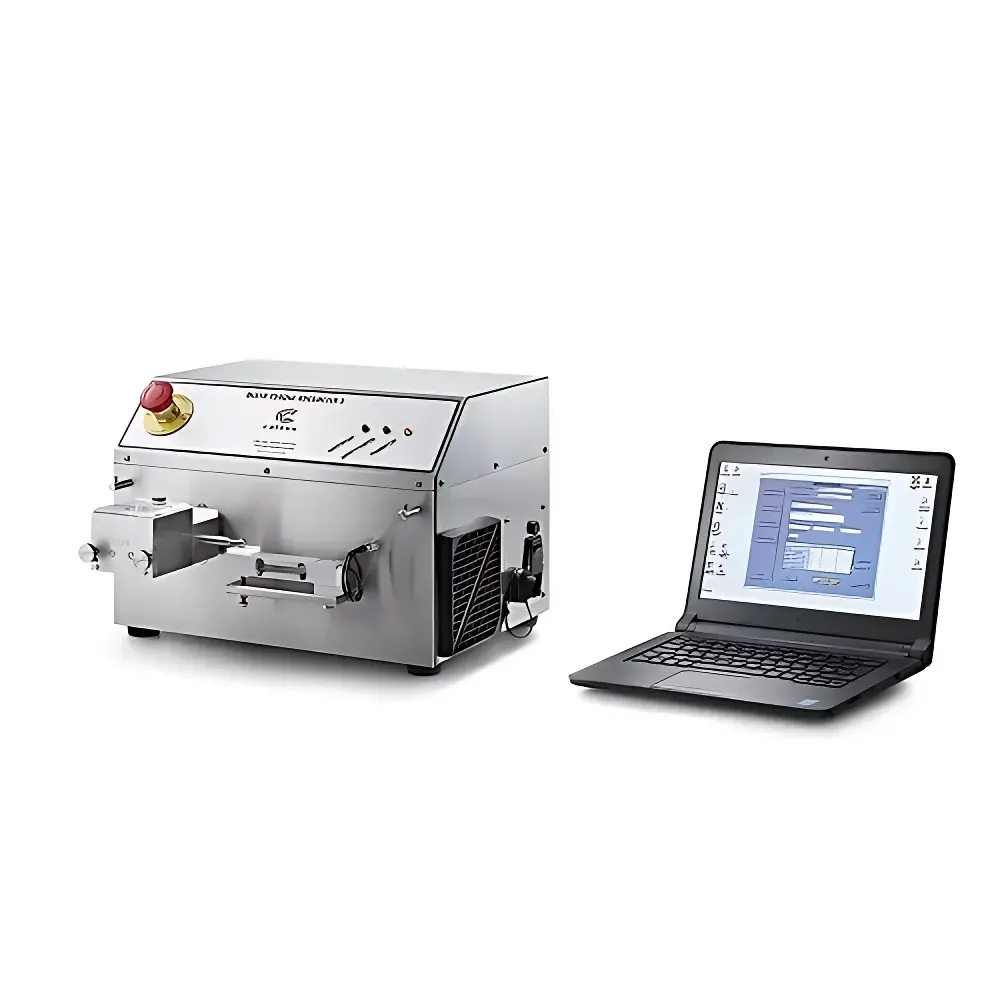
Caleva MTR3 Wet Granulation Torque Rheometer
| Brand | Caleva |
|---|---|
| Origin | United Kingdom |
| Model | MTR3 |
| Maximum Batch Volume | 20 L |
| Speed Range | 0–1500 rpm |
| Temperature Control | Ambient only |
| Power Supply | Single-phase, 110–240 V AC |
| Dimensions (W × D) | ~400 × 500 mm |
| Weight | ~35 kg |
| Software Interface | PC-based via RS-232 or USB |
| Compliance Options | 21 CFR Part 11 software upgrade available |
Overview
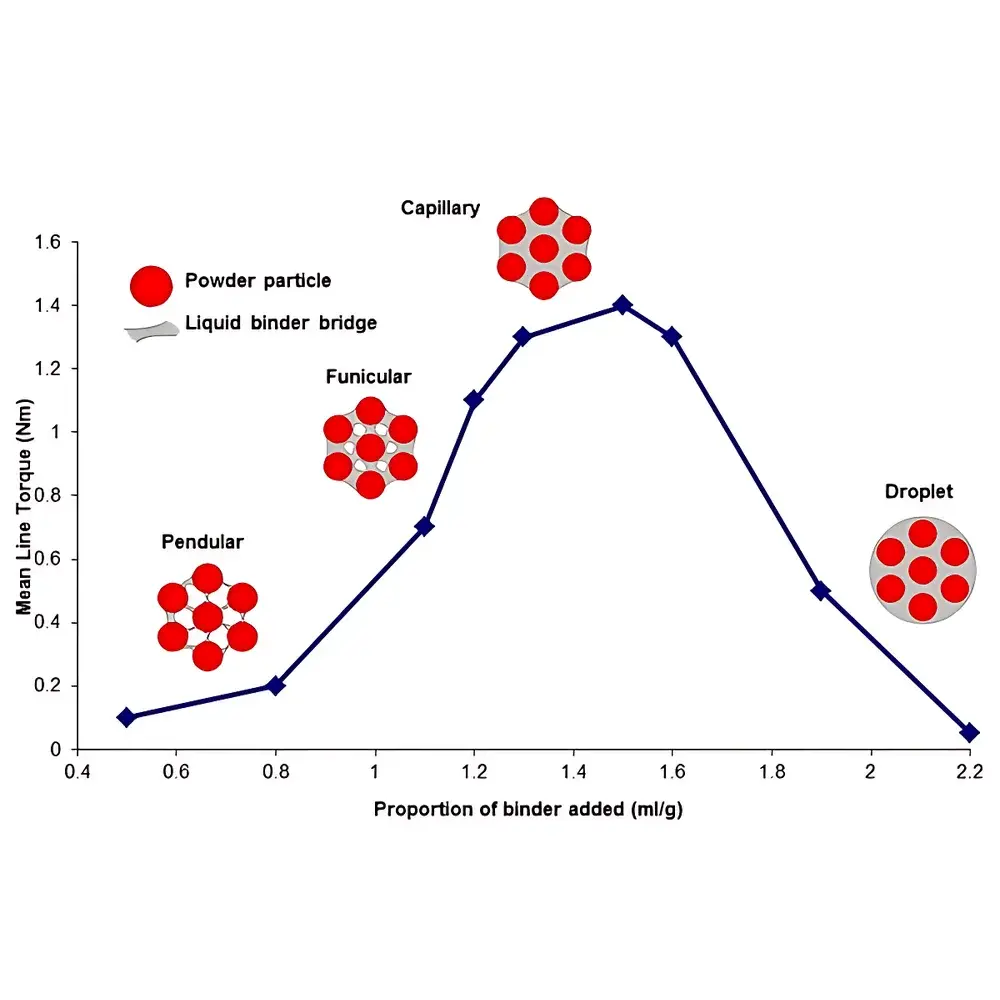
The Caleva MTR3 Wet Granulation Torque Rheometer is a purpose-built laboratory-scale instrument engineered for quantitative rheological characterization of high-shear wet granulation processes. Unlike conventional mixers, the MTR3 integrates a precision torque transducer directly into the impeller drive shaft, enabling real-time, high-resolution measurement of mechanical resistance during powder–binder interaction. This principle—rooted in rotational rheometry under controlled shear conditions—provides a direct proxy for granule growth kinetics, binder distribution efficiency, and mass consistency development. The system operates on the fundamental premise that torque evolution over time reflects changes in bulk rheology: initial powder deaeration, liquid saturation, nucleation, coalescence, and densification. As such, the MTR3 serves not as a generic stirrer but as a process-analytical tool aligned with Quality by Design (QbD) frameworks in pharmaceutical solid dosage development.
Key Features
- High-fidelity torque sensing (±0.5% full scale) synchronized with rotational speed and time stamping at 10 Hz sampling rate
- Modular impeller and bowl configuration supporting interchangeable geometries—including standard 20 L vessel, optional 10 L half-vessel, and dedicated low-volume tooling for ≤100 g formulations
- PC-controlled operation via intuitive graphical interface; all parameters (speed ramp profiles, dwell times, trigger thresholds) programmable prior to run
- Integrated data acquisition engine with automatic CSV export, timestamped metadata tagging, and baseline drift compensation algorithms
- Expandable architecture: supports optional temperature-controlled jacketed bowl (−10 °C to +80 °C), automated binder dosing module with peristaltic pump and gravimetric feedback, and extrusion head adapter for downstream screw extrusion correlation studies
- Compliance-ready software package available with audit trail, electronic signatures, and 21 CFR Part 11 functionality for regulated environments
Sample Compatibility & Compliance
The MTR3 accommodates a broad spectrum of pharmaceutical excipients—including microcrystalline cellulose, lactose monohydrate, mannitol, starch derivatives, and polymeric binders (e.g., HPMC, PVP, PVA)—as well as active pharmaceutical ingredients (APIs) across varying particle size distributions and flow characteristics. Its design adheres to core principles outlined in ICH Q5A(R2), Q8(R2), and Q9, facilitating risk-based process understanding and control strategy definition. While the base unit operates at ambient temperature, the optional thermal jacket enables ISO 14644-compliant environmental simulation for humidity-sensitive formulations. All hardware components comply with CE marking requirements and meet EMC Directive 2014/30/EU standards. When configured with Part 11 software, the system satisfies FDA expectations for data integrity, including ALCOA+ attributes (Attributable, Legible, Contemporaneous, Original, Accurate, Complete, Consistent, Enduring, Available).
Software & Data Management
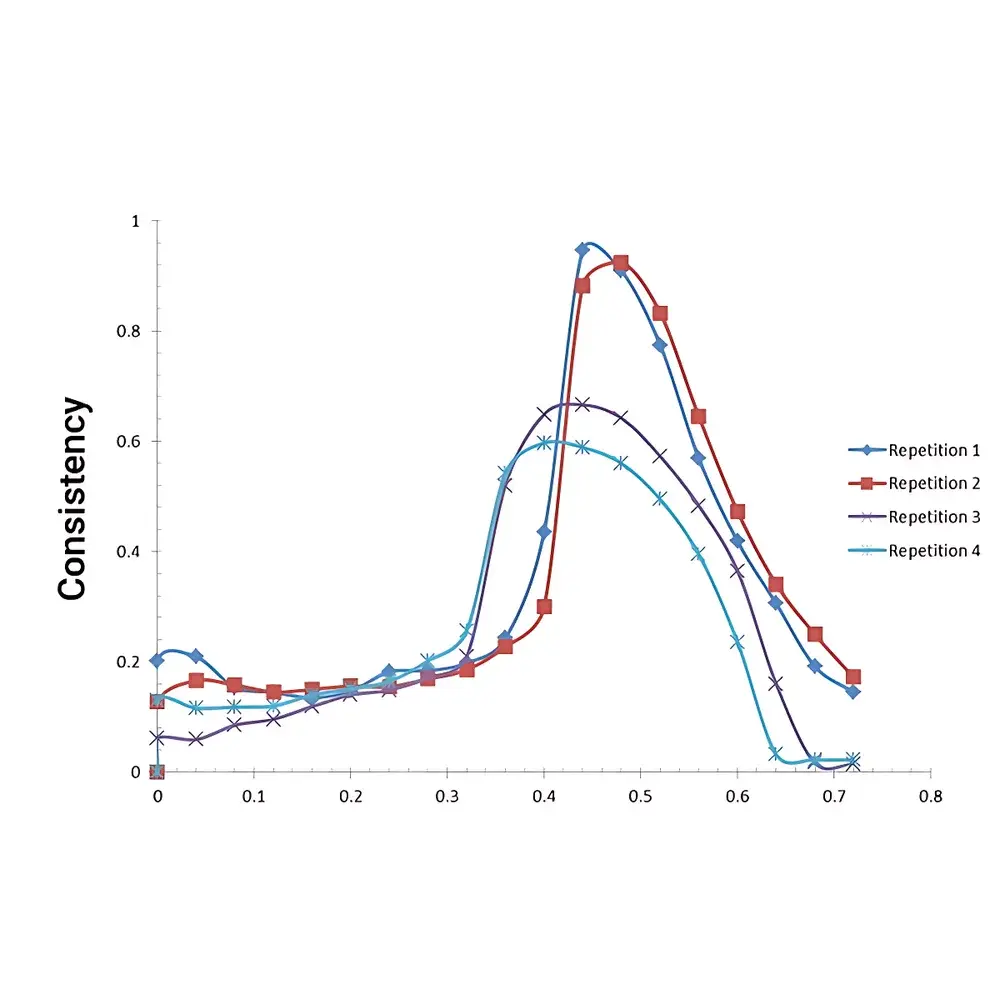
Data acquisition and analysis are performed using Caleva’s proprietary MTR Studio software, a Windows-based application developed in accordance with GAMP 5 guidelines. The software provides real-time torque–time curve visualization, comparative overlay of multiple runs, derivative analysis (dτ/dt) for nucleation onset detection, and customizable report generation. Raw datasets include full sensor metadata: timestamp, RPM, torque (N·m), ambient temperature, and user-defined annotations. Export formats include native .mtr binary files, comma-separated values (.csv), and Excel-compatible templates. For enterprise integration, the software supports OPC UA connectivity for linking to LIMS or MES platforms. Audit trails record all user actions—including parameter edits, file exports, and calibration events—with immutable timestamps and operator IDs. Backup and restore functions ensure continuity during routine maintenance or system migration.
Applications
- Formulation screening: Rapid identification of optimal binder type, concentration, and addition sequence using ≤100 g material—reducing empirical trial-and-error by up to 70% versus traditional tray drying methods
- Process robustness assessment: Quantification of sensitivity to raw material variability (e.g., MCC lot-to-lot density shifts, binder viscosity differences) through controlled perturbation studies
- Scale-up modeling: Generation of dimensionless torque curves (e.g., normalized torque vs. dimensionless time) to inform geometric and dynamic similarity criteria for transfer from lab to pilot-scale granulators
- In-process quality monitoring: Establishment of torque signature thresholds correlating with granule size distribution (GSD), friability, and tablet tensile strength—enabling real-time release testing (RTRT) strategies
- Fundamental research: Investigation of mechanistic relationships between powder rheology (Carr Index, Hausner ratio), liquid saturation degree, and granule bond strength using first-principles modeling inputs
FAQ
What distinguishes the MTR3 from conventional high-shear mixers?
The MTR3 is not a production mixer—it is a measurement platform. Its calibrated torque transducer delivers quantitative, reproducible rheological data rather than qualitative mixing observation.
Can the MTR3 be used for dry granulation or melt granulation studies?
No. The MTR3 is specifically validated for aqueous and solvent-based wet granulation. Dry granulation requires compaction force measurement; melt granulation demands precise thermal control beyond ambient capability.
Is method validation support available for regulatory submissions?
Yes. Caleva provides IQ/OQ documentation templates, system suitability test protocols, and peer-reviewed literature references—including key publications in International Journal of Pharmaceutics and European Journal of Pharmaceutics and Biopharmaceutics.
Does the MTR3 require compressed air or external cooling water?
No. It operates solely on standard single-phase AC power and ambient air convection. Optional thermal control modules use recirculating chillers or heating circulators, which are customer-supplied peripherals.
How frequently does the torque sensor require recalibration?
Annual calibration is recommended per ISO/IEC 17025 guidelines. Caleva offers traceable calibration services with NIST-traceable reference standards and full certificate of calibration.



