
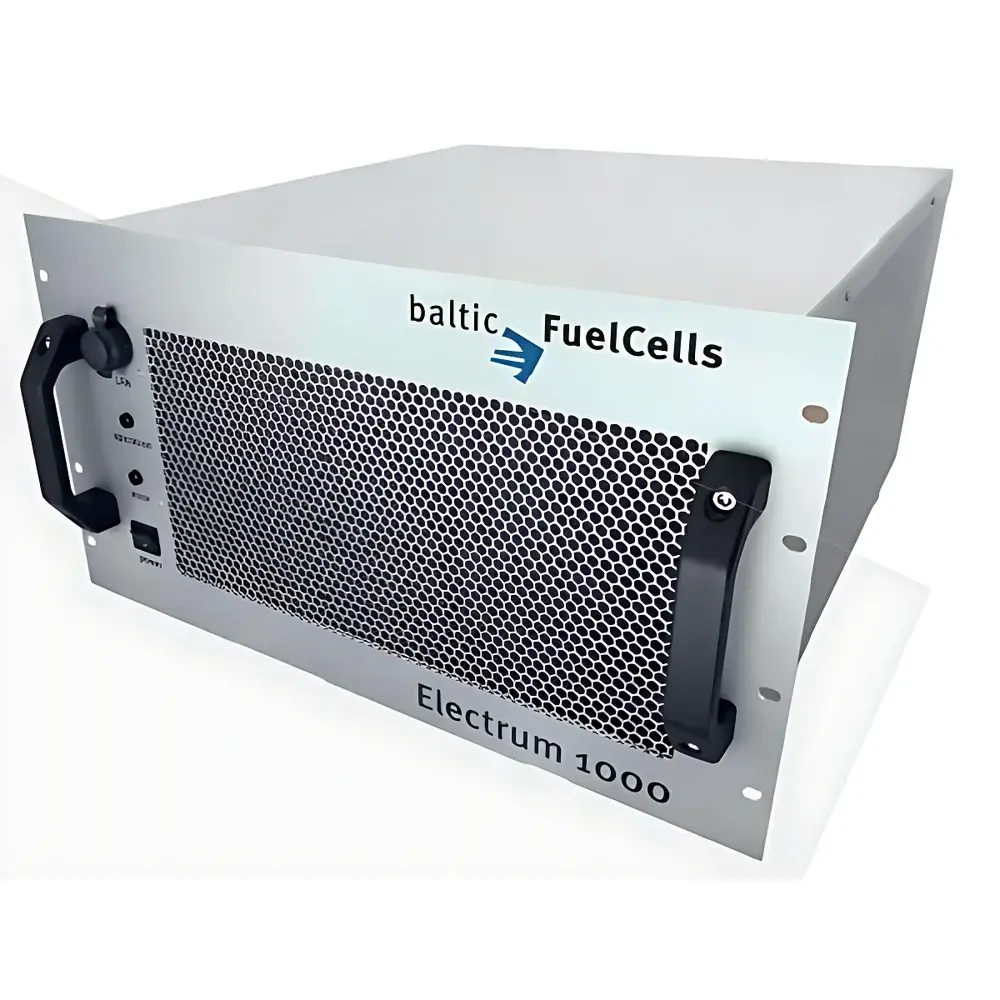
Baltic FuelCells Electrum 1000W PEM Fuel Cell Backup Power System
| Brand | Baltic FuelCells |
|---|---|
| Origin | Germany |
| Model | Electrum 1000W |
| Output Power | 1000 W |
| Output Voltage Options | 24 V DC (20.5–27.5 V), 48 V DC (40.5–55 V), or 110–230 V AC |
| Rated Current | 40 A (24 V), 20 A (48 V), 4.5 A (230 V AC) |
| Operating Temperature | 5–45 °C |
| Hydrogen Consumption | 11 SL/min |
| Hydrogen Inlet Pressure | 2–20 bar |
| Dimensions (W×H×D) | 482 × 244 × 500 mm |
| Net Weight | 15 kg (24 V), 17 kg (48 V), 20 kg (AC inverter variant) |
| Response Time | Instantaneous |
| Enclosure | IP-rated, rack-mountable 19″ chassis |
| Compliance | CE, UL/cUL listed (per IEC 62282-2), EN 60950-1, ISO 14687-2 (hydrogen quality interface) |
Overview
The Baltic FuelCells Electrum 1000W PEM Fuel Cell Backup Power System is a compact, stationary proton exchange membrane (PEM) fuel cell generator engineered for uninterrupted, clean, and silent DC or AC power supply in critical infrastructure applications. Unlike conventional battery-based UPS systems, the Electrum 1000W operates on pure hydrogen gas and ambient air—producing only water and heat as byproducts—making it suitable for indoor deployment under controlled ventilation. Its core electrochemical principle relies on the catalytic oxidation of hydrogen at the anode and reduction of oxygen at the cathode across a Nafion™-type solid polymer electrolyte membrane, enabling high energy conversion efficiency (~45% LHV) and rapid dynamic response (<100 ms load step recovery). Designed for integration into laboratory environments, analytical instrument racks, telecom cabinets, and edge computing nodes, the system delivers stable 1 kW output without combustion, noise, or emissions—meeting stringent indoor air quality and safety requirements for Class 1 Div 2 or ATEX Zone 2-compliant spaces.
Key Features
- Rack-integrated 19″ form factor (482 × 244 × 500 mm) with front-access service panel and rear cable management cutouts
- Fully embedded power management unit (PMU) supporting programmable start/stop schedules, voltage regulation, and state-of-charge monitoring
- Multi-output configuration: selectable 24 V DC, 48 V DC, or 110–230 V AC (pure sine wave, THD <3%) via integrated inverter module
- Real-time hydrogen flow control with mass flow sensor feedback and pressure-regulated inlet (2–20 bar input range)
- Thermally managed stack enclosure with passive convection cooling; no external fans or liquid coolant loops required
- Compliance-ready architecture: pre-certified for CE marking, UL/cUL 1741 SA, and compatible with hydrogen purity standards per ISO 14687-2 (Grade D)
Sample Compatibility & Compliance
The Electrum 1000W is not a sample analysis device but a certified auxiliary power source intended for continuous or standby operation with sensitive analytical instrumentation—including potentiostats, electrochemical workstations, GC detectors, and spectrophotometer control modules—that require stable, low-noise DC bias or regulated AC supply. It complies with electromagnetic compatibility directives (EN 61000-6-3/-4), safety standards (IEC 62282-2 for fuel cell modules, EN 60950-1 for IT equipment), and environmental operating limits (IEC 60068-2-1/2 for temperature/humidity). Hydrogen interface design conforms to CGA V-9 and ISO 13628-6 for safe gas coupling. No consumables or periodic calibration are required; stack lifetime is rated at >20,000 hours under nominal load cycling (per manufacturer’s accelerated life testing protocol).
Software & Data Management
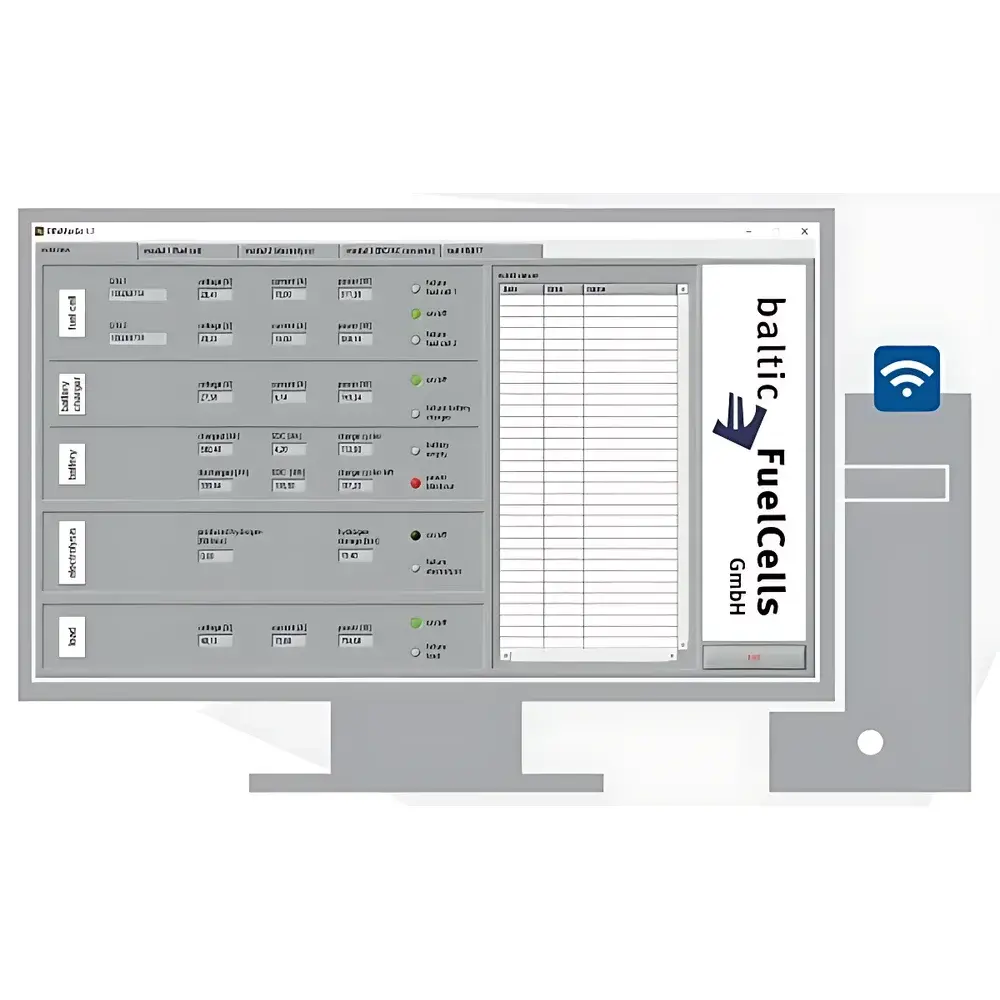
The system includes a web-enabled embedded controller with dual Ethernet (RJ45) and optional RS-485 Modbus RTU interfaces. Remote monitoring and control are implemented via a secure HTTPS-based dashboard supporting TLS 1.2 encryption, role-based user access (admin/operator), and audit-trail logging compliant with FDA 21 CFR Part 11 Annex 11 requirements. Logged parameters include real-time stack voltage/current, hydrogen pressure/flow, coolant temperature, output stability metrics, and fault event timestamps. Data export supports CSV and JSON formats; integration with LabVantage, Siemens Desigo CC, or Schneider EcoStruxure is validated through OPC UA 1.04 drivers. Firmware updates are performed over-the-air with cryptographic signature verification.
Applications
- Uninterruptible power for electrochemical analyzers during grid instability or scheduled maintenance
- Primary off-grid power for remote environmental monitoring stations deploying pH/ORP sensors, dissolved oxygen probes, or ion-selective electrodes
- Backup supply for chromatography data systems (CDS), autosamplers, and detector electronics requiring zero-voltage-drop switchover
- Power conditioning for ultra-low-noise amplifiers used in scanning electrochemical microscopy (SECM) or scanning Kelvin probe force microscopy (SKPFM)
- Hydrogen-powered microgrids in GLP/GMP laboratories where diesel generators are prohibited due to VOC emission constraints
FAQ
What hydrogen purity is required for reliable long-term operation?
ISO 14687-2 Grade D hydrogen (≥99.97% H₂, ≤2 ppm CO, ≤5 ppm H₂O) is mandatory; higher impurity levels may cause irreversible catalyst poisoning.
Can the Electrum 1000W operate in parallel with other units for higher capacity?
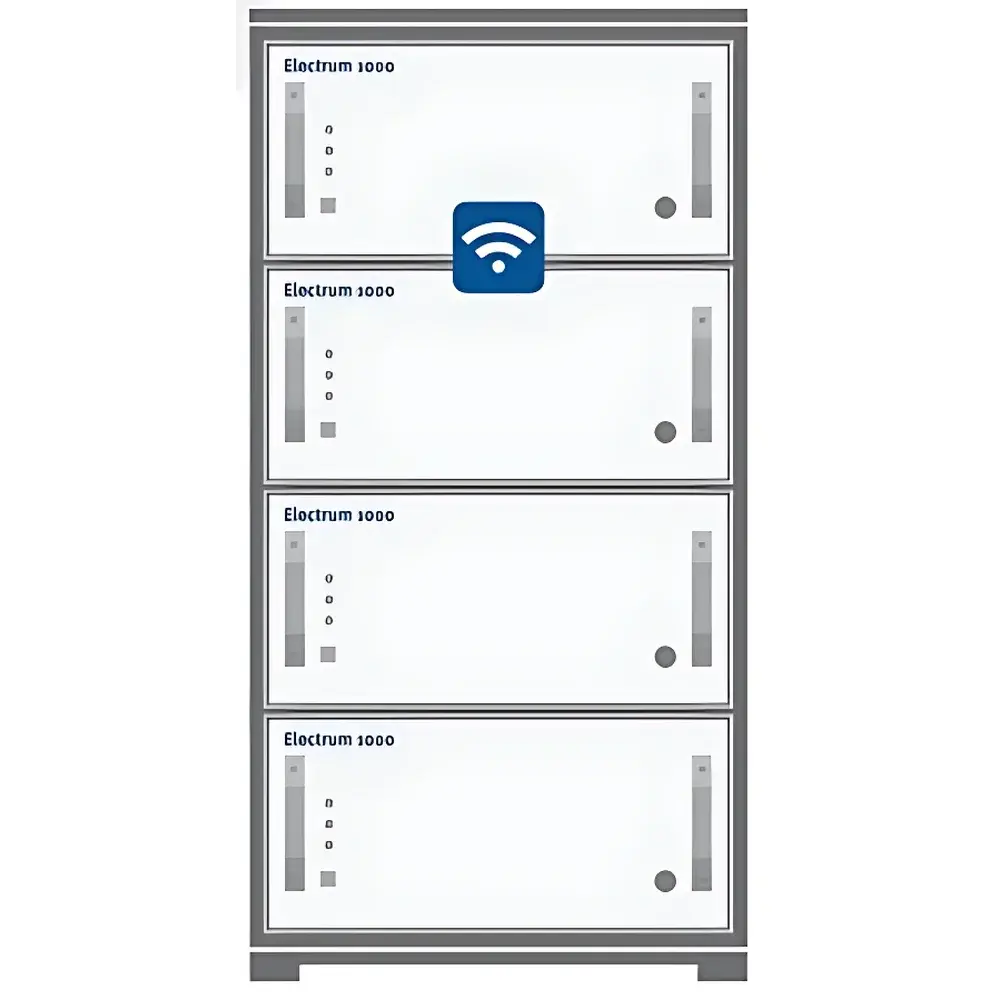
Yes—up to four units can be synchronized via CAN bus for master-slave load sharing and redundant failover, with automatic reconfiguration upon unit failure.
Is hydrogen storage included with the system?
No. The Electrum 1000W requires external hydrogen supply from certified cylinder banks, tube trailers, or on-site electrolyzers meeting ISO 8573-1 Class 2 purity specifications.
Does the system support dry-run protection and automatic shutdown on low hydrogen pressure?
Yes—integrated pressure transducers trigger immediate stack deactivation if inlet pressure falls below 1.8 bar or exceeds 20.5 bar, with latching fault indication until manual reset.
What is the expected stack degradation rate under continuous 100% load?
Based on accelerated stress testing per DOE protocols, voltage decay is ≤0.5 mV/hour at 0.6 V/cell, corresponding to <5% performance loss after 12,000 operational hours.



