
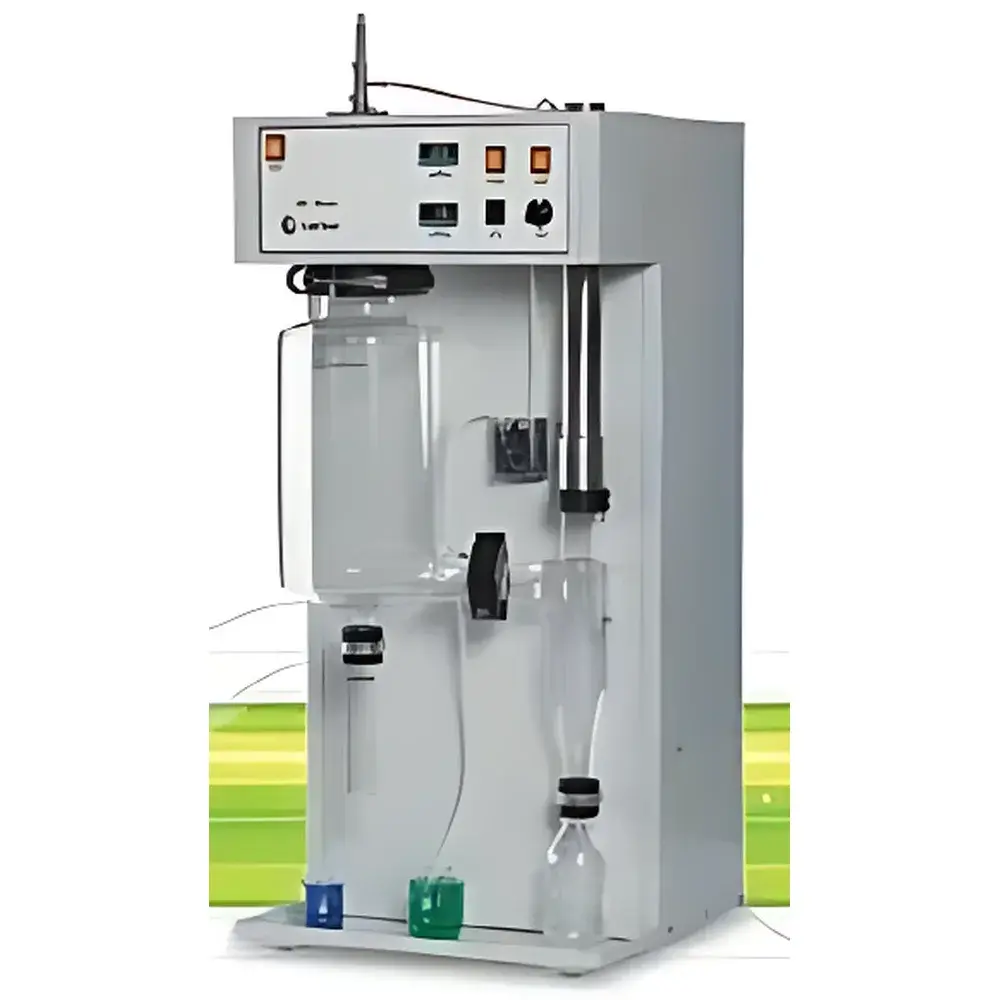
LabPlant SD-Basic Benchtop Spray Dryer
| Brand | LabPlant |
|---|---|
| Origin | United Kingdom |
| Model | SD-Basic |
| Maximum Feed Rate | 1500 mL/h |
| Inlet Air Temperature Range | Ambient to 250 °C (standardly up to 200 °C, upgradeable) |
| Outlet Air Temperature Range | Programmable, monitored in real time |
| Air Flow Rate | 70 m³/h (fixed) |
| Drying Residence Time | 1.0–2.0 s |
| Nozzle Orifice Diameter | 0.5 mm |
| Particle Size Distribution | 0.1–40 µm |
| Minimum Sample Volume | 20 mL |
| Heating Power | 3 kW |
| Dimensions (W×D×H) | 1100 × 500 × 500 mm |
| Weight | 60 kg |
| Electrical Supply | 220 V / 50 Hz |
| Pump Capacity | Up to 32 mL/min (peristaltic) |
Overview
The LabPlant SD-Basic is a compact, entry-level benchtop spray dryer engineered for reproducible, small-scale powder production in academic laboratories, pharmaceutical development units, and R&D facilities conducting formulation screening or process feasibility studies. It operates on the principle of single-stage, concurrent-flow spray drying: liquid feed is atomized through a precision 0.5 mm nozzle into a heated air stream (inlet temperature adjustable from ambient to 250 °C), where rapid solvent evaporation occurs within a controlled residence time of 1.0–2.0 seconds. The resulting dried particles are separated from the exhaust air via an integrated cyclonic collector and recovered in a borosilicate glass collection vessel. Designed as a simplified evolution of the SD-06AG platform, the SD-Basic maintains core engineering integrity while optimizing usability and cost-efficiency—making it particularly suitable for users requiring reliable, GLP-aligned drying performance without full industrial automation.
Key Features
- Fixed 70 m³/h hot air flow rate ensures consistent drying kinetics and simplifies operational calibration across experiments.
- Programmable inlet and real-time monitored outlet temperature control enables precise thermal management—critical for thermolabile actives such as proteins, peptides, and mRNA-lipid complexes.
- Complete all-glass processing train: includes spray chamber, cyclone separator, collection bottle, PTFE seals, and silicone tubing—ensuring chemical compatibility, visual process monitoring, and ease of cleaning.
- Manually cleanable 0.5 mm stainless-steel two-fluid nozzle supports aqueous and organic solvent-based feeds; compatible with optional multi-fluid nozzles for co-precipitation or encapsulation workflows.
- Integrated peristaltic pump with 0–32 mL/min adjustable feed rate allows fine-tuned control over droplet size distribution and final particle morphology.
- 3 kW heating system delivers stable thermal profiles across the full operating range; upgrade path available to extend maximum inlet temperature from 200 °C to 250 °C for low-volatility solvents or high-melting-point excipients.
- Benchtop footprint (1100 × 500 × 500 mm) and 60 kg mass facilitate installation in standard fume hoods or ISO-classified clean benches without structural reinforcement.
Sample Compatibility & Compliance
The SD-Basic accommodates a broad spectrum of feed materials—including aqueous polymer solutions, ethanol-based suspensions, emulsions, and nanostructured colloids—with demonstrated compatibility for APIs, biologics, food-grade ingredients, and ceramic precursors. Its all-glass contact surfaces meet USP Class VI requirements for extractables and leachables profiling. While the instrument itself does not carry CE marking for medical device use, its design adheres to IEC 61000-6-2/6-4 electromagnetic compatibility standards and incorporates safety interlocks compliant with EN 61010-1 for laboratory electrical equipment. Data logging capabilities support adherence to ALCOA+ principles when paired with validated third-party software, and the system’s manual operation mode is routinely accepted in early-phase GMP development under FDA 21 CFR Part 11-compliant documentation practices.
Software & Data Management
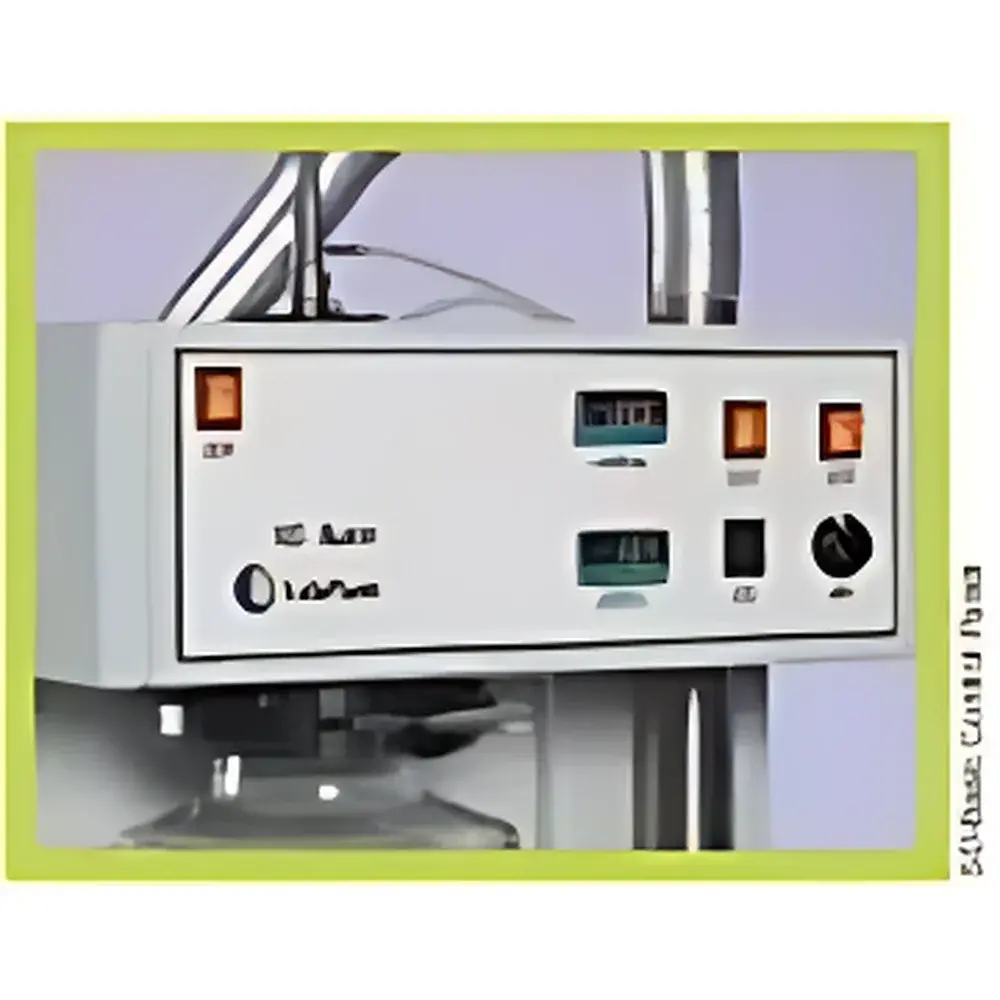
The SD-Basic operates via an intuitive front-panel interface with dual digital displays for inlet and outlet temperatures, pump speed setting, and runtime tracking. While it lacks embedded PC connectivity or proprietary software, its analog/digital signal outputs (4–20 mA or 0–10 V) enable integration with external data acquisition systems (e.g., LabVIEW, DeltaV, or custom SCADA platforms) for time-stamped parameter logging, trend analysis, and audit trail generation. Users may configure automated shutdown sequences based on outlet temperature thresholds or run duration limits—supporting unattended overnight operation under supervised conditions. All operational parameters are manually recorded in lab notebooks or electronic lab notebooks (ELNs) aligned with ISO/IEC 17025 documentation requirements.
Applications
- Pre-formulation studies of amorphous solid dispersions for enhanced bioavailability.
- Rapid screening of excipient compatibility and drying-induced degradation pathways.
- Production of inhalable dry powders with aerodynamic diameters targeting deep lung deposition (MMAD 1–5 µm).
- Encapsulation of probiotics, enzymes, or volatile flavors using maltodextrin or gum arabic matrices.
- Synthesis of nano-ceramic oxides (e.g., SiO₂, TiO₂) via sol-gel precursor drying.
- Scale-down modeling for tech transfer to pilot-scale Niro or Buchi spray dryers.
FAQ
What compressed air specifications are required?
A minimum flow rate of 50 L/min at 6 bar(g) is recommended; standard oil-free laboratory compressors satisfy this requirement. The unit does not include an integrated air compressor.
Can the SD-Basic handle organic solvents?
Yes—when operated in a certified fume hood with explosion-proof lighting and grounded exhaust ducting. Methanol, ethanol, acetone, and dichloromethane have been successfully processed; chlorinated solvents require additional corrosion-resistant nozzle options.
Is particle size distribution tunable?
Yes—primarily via feed concentration, inlet temperature, and pump rate. The 0.5 mm nozzle produces median diameters typically between 5–25 µm; narrower distributions are achievable using narrow-polydispersity feedstocks and optimized drying kinetics.
What maintenance is required?
Daily rinsing of glass components and nozzle; monthly inspection of PTFE seals and peristaltic pump tubing; annual calibration of temperature sensors traceable to NIST standards.
Does LabPlant provide IQ/OQ documentation?
Factory-verified Installation Qualification (IQ) and Operational Qualification (OQ) protocols are available as optional add-ons, supporting regulated environments including pharmaceutical QC labs and contract development organizations.



