Agilent AA3510 Spectroscopy Workstation Software (Upgraded Version, formerly HP 3510)
| Origin | Shanghai, China |
|---|---|
| Manufacturer Type | Authorized Distributor |
| Regional Origin | Domestic (PRC) |
| Model | AA3510 (Spectroscopy Workstation Software) |
| Pricing | Available Upon Request |
| Software Category | Atomic Absorption & UV-Vis Spectroscopy Data Acquisition and Analysis |
Overview
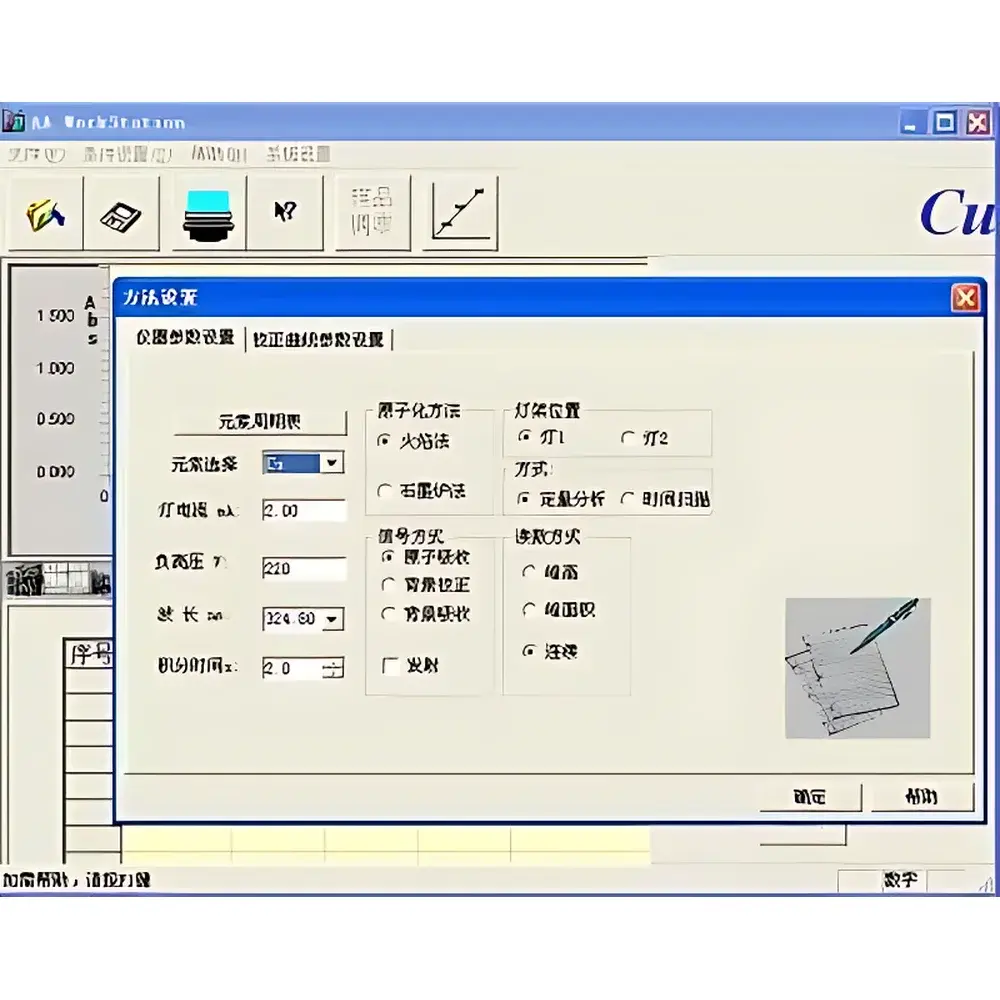
The Agilent AA3510 Spectroscopy Workstation Software (Upgraded Version) is a dedicated data acquisition, processing, and reporting platform engineered for atomic absorption spectrometers (AAS) and complementary UV-Vis spectrophotometric systems. Originally developed as the HP 3510 software suite during the Hewlett-Packard era and subsequently maintained and enhanced under Agilent Technologies’ stewardship, this workstation provides standardized instrument control, quantitative analysis, calibration management, and regulatory-compliant data handling for laboratory environments operating under quality assurance frameworks. It implements fundamental spectroscopic principles—including Beer-Lambert law-based quantitation, multi-point calibration modeling, and wavelength-dependent signal normalization—to ensure traceable, repeatable analytical outcomes across routine QA/QC, environmental testing, pharmaceutical impurity profiling, and metallurgical sample screening applications.
Key Features
- Six built-in calibration algorithms—including linear, quadratic, cubic, logarithmic, exponential, and spline interpolation—enabling optimal curve-fitting for diverse analyte concentration ranges and matrix effects.
- Real-time sample re-read functionality: users may reprocess raw signal data from previously acquired measurements without re-running physical samples, correcting for operator input errors or transient instrumental drift.
- Integrated context-sensitive help system with searchable indexing, procedural wizards, and embedded reference tables for spectral line selection, lamp current optimization, and flame/non-flame atomization parameters.
- Dual-format data export: native binary (.dat) files preserve full metadata (instrument configuration, integration time, background correction mode) while ASCII (.txt) exports support third-party statistical tools and LIMS integration via delimited text ingestion.
- Wavelength validation and calibration utility: performs automated peak search and centroid verification against NIST-traceable hollow cathode lamp emission lines to confirm optical alignment and monochromator accuracy prior to analysis.
- Cross-platform OS compatibility: certified for Windows 98, Windows 2000, Windows NT, and Windows XP (32-bit), with universal printer driver support ensuring consistent report rendering across networked laser, inkjet, and thermal label printers.
Sample Compatibility & Compliance
The AA3510 software interfaces exclusively with Agilent (formerly HP) atomic absorption spectrometers—including the 240FS, 240Z, and legacy 3510/3520 hardware platforms—and maintains backward compatibility with archived method files and calibration records. While not a standalone LIMS, it supports GLP/GMP-aligned workflows through audit-trail-enabled session logging (user ID, timestamp, parameter changes, result overrides), electronic signature readiness, and export formats compatible with validated enterprise LIMS systems. The software adheres to foundational data integrity expectations outlined in FDA 21 CFR Part 11 Annex A (for systems deployed pre-2003), and its structured data model facilitates retrospective validation per ISO/IEC 17025:2017 Clause 7.7 (Control of Records) and ASTM E2500-13 (Standard Guide for Specification, Design, and Verification of Pharmaceutical and Biopharmaceutical Manufacturing Systems).
Software & Data Management
Data acquisition occurs in real time with configurable sampling rates (1–10 Hz), automatic baseline correction, and selectable background compensation modes (D₂, Zeeman, or self-reversal). All analyses generate timestamped project folders containing raw spectra (.dat), processed results (.txt), method definitions (.mth), and instrument configuration snapshots (.cfg). Reporting modules produce consolidated summary tables—including sample ID, measured absorbance, calculated concentration, %RSD across replicates, and calibration fit statistics (r², residual sum of squares)—alongside graphical outputs: calibration curves with confidence bands, time-resolved absorbance traces, and spectral overlays. Export protocols include clipboard copy, direct print-to-PDF, and batch file generation for automated transfer to network shares or FTP repositories.
Applications
This software is routinely deployed in accredited environmental laboratories performing EPA Method 7000B (metals in wastewater), clinical toxicology labs quantifying blood lead (CLIA-waived protocols), food safety facilities validating ICP-AES cross-checks for cadmium in rice, and university research groups conducting kinetic studies of metal-ligand complexation. Its robust handling of multi-element sequential analysis, spike recovery calculations, and standard addition workflows makes it suitable for regulatory submissions requiring documented analytical uncertainty estimation per ISO/IEC 17025 Clause 7.6.
FAQ
Is the AA3510 software compatible with modern Windows operating systems such as Windows 10 or 11?
No—official support is limited to Windows 98, 2000, NT, and XP (32-bit). Virtualization or legacy hardware deployment is required for operation on post-XP platforms.
Does the software support electronic signatures compliant with 21 CFR Part 11?
It provides foundational audit trail capabilities but lacks built-in electronic signature enforcement; additional validation and procedural controls are required for full Part 11 compliance.
Can calibration curves be exported to Excel for independent verification?
Yes—calibration data points, fitted coefficients, and residuals are included in both .txt exports and printable reports, enabling external regression validation.
What file formats are generated during method development?
Method definitions (.mth), raw spectral acquisitions (.dat), processed results (.txt), and instrument configuration archives (.cfg) are all preserved within user-defined project directories.
Is technical support still available for this legacy software?
Agilent no longer provides active development or hotfixes; however, documentation archives, installation media, and basic troubleshooting guidance remain accessible via Agilent’s Legacy Product Support Portal.
Related Products