
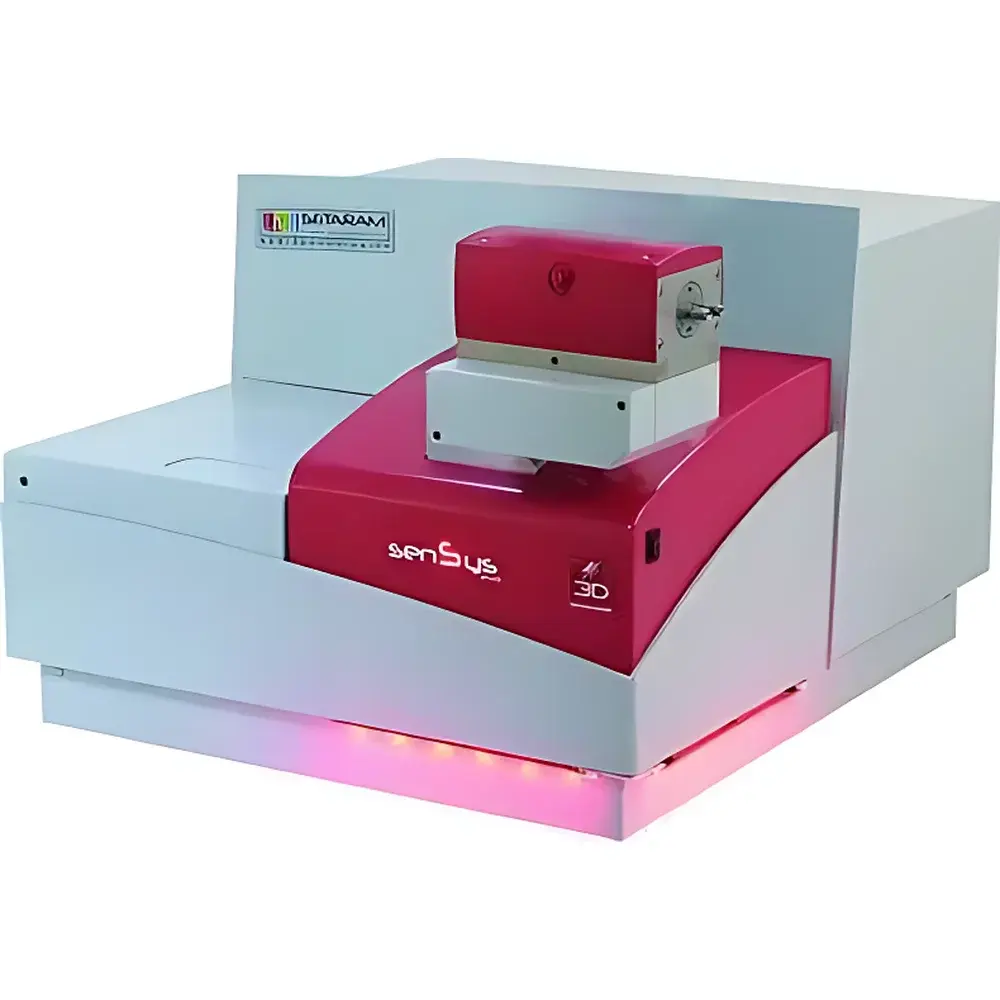
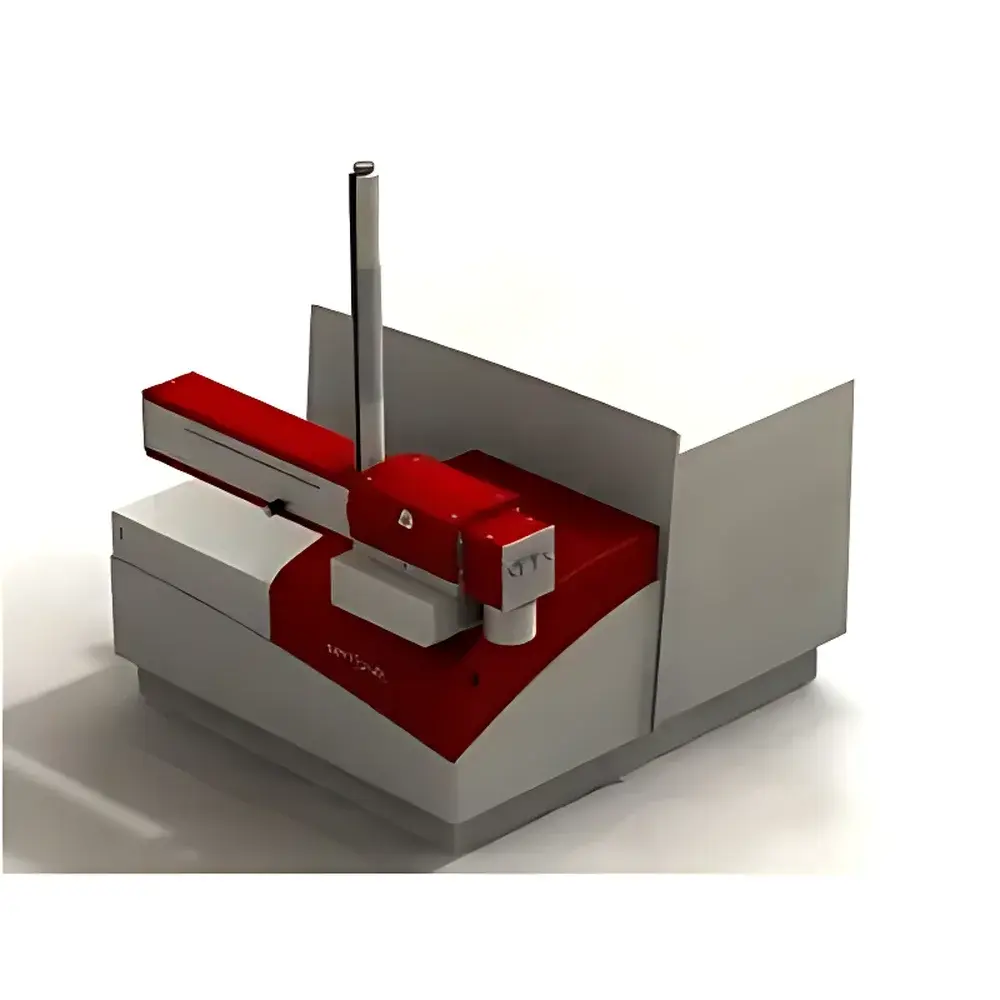
Setaram Sensys Evolution High-Pressure Differential Scanning Calorimeter
| Brand | Setaram |
|---|---|
| Origin | France |
| Model | Sensys Evolution |
| Temperature Range | -120 to +830 °C |
| Temperature Accuracy | ±0.1 °C |
| Heating/Cooling Rate | 0.01–30 K/min |
| Maximum Sample Cell Pressure | 500 bar (at 600 °C) |
| Pressure Monitoring Range | Up to 400 bar (at 600 °C) |
| DSC Detection Limit | 5 µW |
| DSC Resolution | 0.4 µW |
| Sample Volume Capacity | 250 µL (up to 320 µL with extended cell) |
| TG Compatibility | Yes (up to 35 g sample, 0.03 µg resolution) |
| Atmosphere Options | Oxidizing, reducing (H₂, CO), corrosive (H₂S, NH₃), steam, mixed gases (1–99% ratio) |
| Autosampler | 48-position |
| Software | Calisto v5.x (GLP-compliant, audit trail enabled) |
Overview
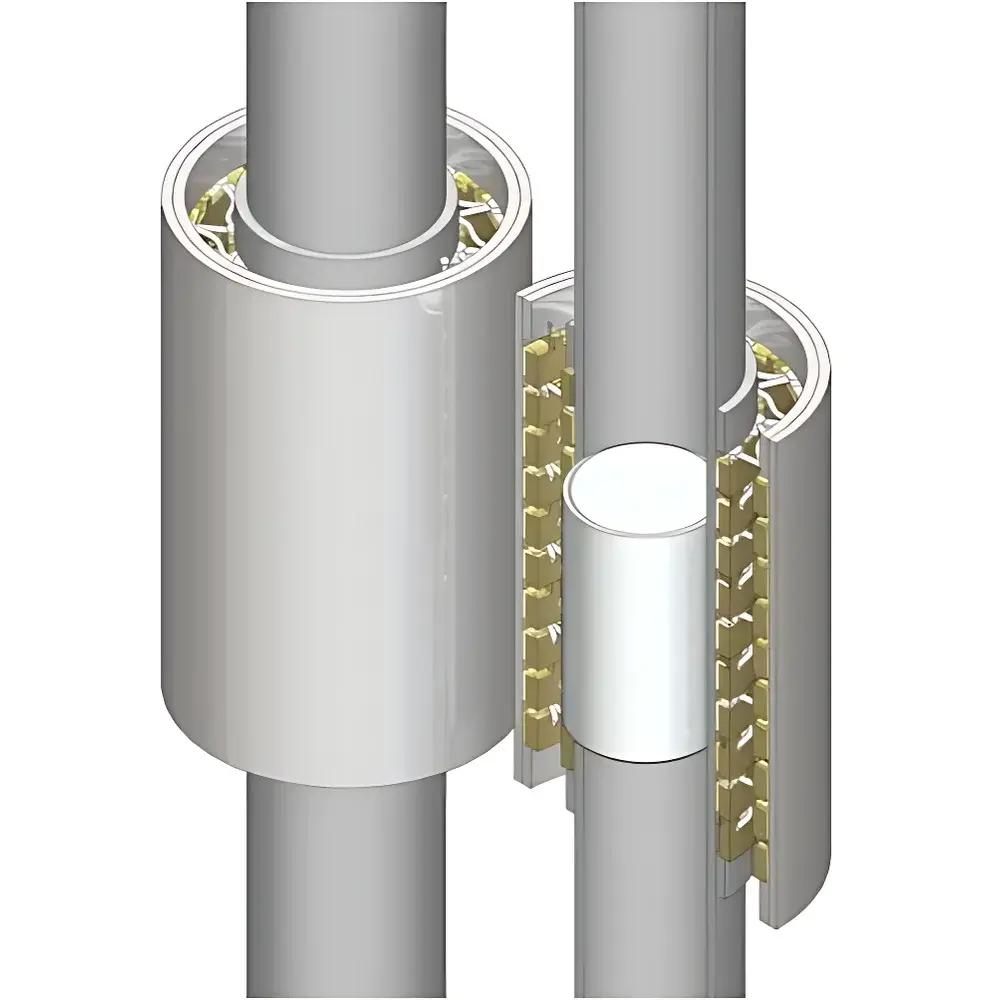
The Setaram Sensys Evolution High-Pressure Differential Scanning Calorimeter is a precision thermal analysis platform engineered for quantitative heat flow measurement under rigorously controlled pressure and temperature conditions. Unlike conventional DSC systems based on planar sensor architectures—typically limited to 20–50% thermal detection efficiency—the Sensys Evolution implements Setaram’s proprietary Calvet-type 3D-sensor calorimetry. This architecture surrounds the sample with thermopile elements in three orthogonal dimensions, enabling >94% capture of total enthalpic output. The Calvet principle, first introduced by French chemist E. Calvet, ensures exceptional signal stability and absolute sensitivity (detection limit: 5 µW), making it suitable for low-energy phenomena including catalytic adsorption/desorption, microbial metabolic heat, solid-state phase transitions under confinement, and reaction kinetics in compressed fluids.
Key Features
- Calvet-based 3D-sensor design delivering superior thermal detection efficiency (>94%) and baseline stability under pressurized operation
- Extended temperature range from –120 °C to +830 °C with accuracy of ±0.1 °C and programmable scan rates from 0.01 to 30 K/min
- High-pressure sample chamber rated to 500 bar at 600 °C; real-time pressure monitoring up to 400 bar with active control capability
- Large-volume sample cell (250 µL standard, expandable to 320 µL) enabling high-mass calorimetry, mixing studies, and heterogeneous reaction calorimetry
- Robust Inconel® crucibles compatible with aggressive atmospheres: H₂, CO, H₂S, NH₃, steam, and mixed gas streams (adjustable 1:99 to 99:1 ratios)
- Fully modular architecture supporting seamless integration with thermogravimetric analysis (TGA), FT-IR, quadrupole mass spectrometry (QMS), and humidity control modules
- 48-position automated sample changer with programmable sequence execution and thermal equilibration protocols
Sample Compatibility & Compliance
The Sensys Evolution accommodates diverse sample forms—including powders, gels, suspensions, metals, polymers, and reactive organometallics—within sealed high-pressure cells. Its open-system compatibility permits true isothermal calorimetry experiments involving gas–solid, liquid–solid, or solid–solid exchange reactions under controlled partial pressures. The instrument meets key regulatory requirements for quality-critical environments: Calisto software supports 21 CFR Part 11 compliance with electronic signatures, full audit trail logging, user access levels, and data integrity safeguards. All thermal calibrations are performed via Joule calibration—eliminating dependence on reference material morphology or operator technique—and are traceable to NIST standards. The system is routinely deployed in GLP/GMP laboratories for thermal safety assessment (e.g., UN Test Series H, ASTM E659), catalyst characterization (ISO 11348), and pharmaceutical polymorph screening (ICH Q5A).
Software & Data Management
Calisto v5.x is a dedicated, Windows-based acquisition and analysis suite designed specifically for high-fidelity calorimetric data handling. It provides synchronized multi-channel acquisition (temperature, pressure, heat flow, mass loss, evolved gas signals), advanced baseline modeling (polynomial, spline, and kinetic deconvolution), and standardized reporting templates aligned with ASTM E1269, ISO 11357, and USP <1163>. Raw data files are stored in vendor-neutral HDF5 format with embedded metadata (user, timestamp, instrument ID, calibration history). Export options include CSV, Excel, and ASCII for third-party statistical packages. The software includes built-in Cp determination routines using both step-heating and modulation methods, as well as reaction onset/peak identification algorithms compliant with ICTAC guidelines.
Applications
- Thermal stability evaluation of energetic materials and battery electrolytes under realistic pressure conditions
- Hydration/dehydration thermodynamics of pharmaceutical hydrates and MOFs under controlled vapor pressure
- Catalyst activation energy profiling during in situ reduction (H₂/CO) or sulfidation (H₂S)
- High-pressure polymer crystallization kinetics and glass transition mapping
- Adsorption enthalpy quantification for CO₂ capture sorbents under flue-gas-relevant partial pressures
- Safety screening of chemical processes per DIERS methodology, including adiabatic temperature rise prediction
- Heat capacity measurements across phase boundaries for metallurgical alloy development
FAQ
What distinguishes Calvet 3D-sensor DSC from conventional heat-flux DSC?
The Calvet geometry captures >94% of total sample heat output via omnidirectional thermopile arrays, whereas planar sensors detect only conductive heat flux across one surface—typically yielding 20–50% efficiency. This results in higher signal-to-noise, superior baseline reproducibility, and direct quantification without empirical correction factors.
Can the Sensys Evolution perform simultaneous TGA-DSC measurements?
Yes—when equipped with the optional integrated thermobalance module, the system operates as a true simultaneous TGA-DSC platform. The top-loading microbalance (0.03 µg resolution) is decoupled from furnace thermal gradients, ensuring mass accuracy independent of temperature ramp rate or atmosphere.
Is humidity-controlled calorimetry supported?
Yes—integration with Setaram’s HUMIDITY CONTROL MODULE enables precise regulation of relative humidity (1–95% RH) within the sample chamber while maintaining full pressure and thermal control, facilitating studies of moisture-induced phase transitions and hygroscopicity.
How is pressure controlled and monitored during operation?
A digital pressure controller manages up to three independent gas lines, allowing dynamic pressure ramping, isobaric holds, and feedback-regulated stabilization. Pressure is measured continuously via a calibrated piezoresistive transducer with 0.1 bar resolution and logged synchronously with thermal data.
Does the system support IQ/OQ/PQ documentation for regulated labs?
Yes—Calisto includes preconfigured qualification templates compliant with ISO/IEC 17025 and GAMP5, covering installation verification, operational performance tests (temperature uniformity, pressure linearity, heat flow repeatability), and periodic performance checks.



