
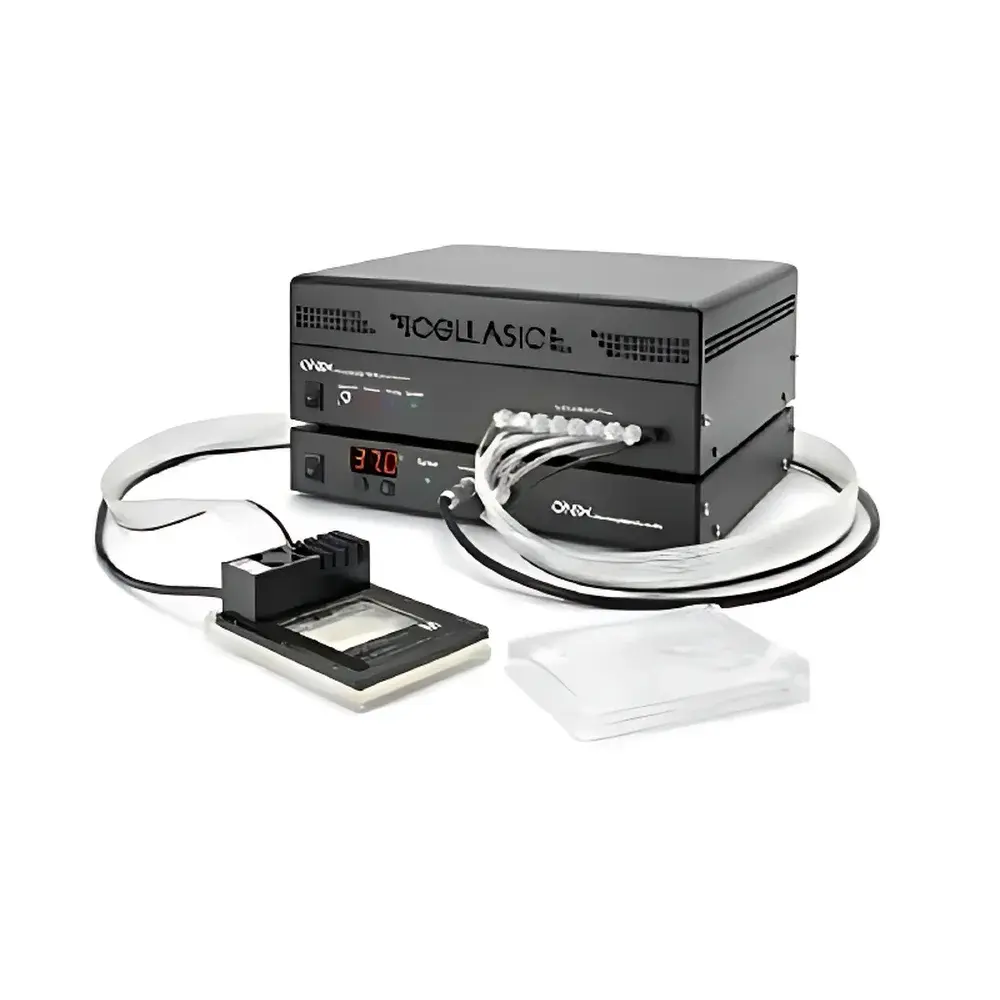
Merck Millipore® CellASIC Microfluidic Cell Culture and Analysis Platform
| Brand | Millipore |
|---|---|
| Origin | USA |
| Manufacturer Type | Authorized Distributor |
| Product Origin | Imported |
| Model | CellASIC |
| Pricing | Available Upon Request |
Overview
The Merck Millipore® CellASIC Microfluidic Cell Culture and Analysis Platform is an integrated, microscope-compatible system engineered for physiologically relevant, dynamic in vitro cell culture and real-time functional analysis. Built upon precision microfluidic architecture, the platform leverages laminar flow control at the micron scale to replicate key biophysical parameters of the native tissue microenvironment—including controlled nutrient perfusion, gradient generation (e.g., chemokine, drug, or oxygen gradients), shear stress modulation, and waste removal—thereby enabling long-term maintenance of primary cells, stem cells, co-cultures, and microbial populations under conditions far closer to in vivo physiology than conventional static or transwell-based systems. Unlike endpoint assays, the CellASIC platform supports continuous, non-invasive observation and quantification over hours to days, making it particularly suited for kinetic studies such as drug response profiling, apoptosis progression, neuronal network dynamics, and host–pathogen interactions.
Key Features
- Modular microfluidic chip design with standardized footprint compatible with inverted and upright research-grade microscopes (including phase contrast, fluorescence, confocal, and time-lapse imaging)
- Precision pneumatic fluidic control enabling programmable media exchange, gradient establishment, and multi-step stimulus protocols without manual intervention
- Chip formats supporting diverse biological models: ONIX chips for adherent mammalian cells; B04A chips for suspension cultures and yeast; Y04C chips for bacterial chemotaxis and biofilm formation
- Integrated temperature stabilization (37 °C ± 0.5 °C) and optional CO2 regulation modules for extended physiological culture fidelity
- Low dead volume (< 1 µL per channel) and minimal sample consumption—ideal for precious primary isolates or compound-limited pharmacological screening
- Robust, single-use PDMS/glass or cyclic olefin copolymer (COC) chips with surface treatments (e.g., collagen, fibronectin, poly-L-lysine) optimized for specific cell adhesion requirements
Sample Compatibility & Compliance
The CellASIC platform accommodates a broad spectrum of eukaryotic and prokaryotic specimens—including human iPSC-derived neurons, endothelial monolayers, tumor spheroids, immune cell subsets, E. coli, S. cerevisiae, and marine phytoplankton—without requiring genetic modification or reporter labeling for basic viability or morphological assessment. Chip surfaces are certified endotoxin-free and compliant with ISO 10993-5 (cytotoxicity) and USP biological reactivity standards. The system architecture supports GLP- and GMP-aligned workflows: audit trails, user access controls, and electronic signature capability are available via optional software licensing aligned with FDA 21 CFR Part 11 requirements when deployed with validated LIMS integration.
Software & Data Management
The CellASIC Control Software provides intuitive graphical protocol builder for multi-phase perfusion sequences (e.g., baseline → drug pulse → washout → recovery), synchronized with external hardware triggers (shutters, filter wheels, stage controllers). Time-lapse image acquisition metadata—including flow rate, pressure, timestamp, and environmental logs—is embedded directly into TIFF/OME-TIFF headers. Raw data export supports HDF5 and NIS-Elements ND2 formats for downstream analysis in Fiji/ImageJ, MATLAB, Python (scikit-image, napari), or commercial platforms such as Imaris and Huygens. Batch processing pipelines can be scripted using the provided Python SDK for high-content feature extraction (e.g., nuclear translocation kinetics, mitochondrial fragmentation index, lamellipodia persistence).
Applications
- Dynamic cytotoxicity and IC50 profiling under continuous perfusion versus bolus dosing
- Chemotaxis and haptotaxis quantification in immune cell migration assays
- Long-term neuronal activity mapping using calcium-sensitive dyes or genetically encoded indicators
- Real-time monitoring of protein secretion, exosome release, or metabolite flux via on-chip biosensors (compatible with third-party electrochemical or optical sensor integration)
- Microbial community dynamics under spatially resolved nutrient or antibiotic gradients
- 3D co-culture modeling of tumor–stroma interactions with controlled paracrine signaling
FAQ
Can CellASIC chips be reused?
No—CellASIC microfluidic chips are designed for single-use only to ensure sterility, reproducible surface chemistry, and avoidance of carryover contamination between experiments.
Is the system compatible with high-resolution super-resolution microscopy?
Yes—ONIX and B04A chips are fabricated with #1.5 coverslip-grade glass or optically matched COC substrates, supporting TIRF, STORM, and SIM without significant spherical aberration.
What level of training is required to operate the platform?
Basic operation requires familiarity with standard cell culture and microscopy practices; full protocol automation and advanced data analysis benefit from 1–2 days of application-specific training provided by Merck Millipore Field Application Scientists.
Are custom chip designs available?
Yes—Merck Millipore offers collaborative microfluidic design services for academic and industrial partners under NDA, including rapid prototyping via soft lithography and validation support per ISO 13485 guidelines.
Does the platform support perfusion of viscous or serum-rich media?
Yes—the pneumatic actuation system delivers stable flow across viscosities up to 10 cP and handles 10–20% FBS-containing media without clogging, validated using bovine serum albumin (BSA) challenge tests per ISO 8536-4.




