
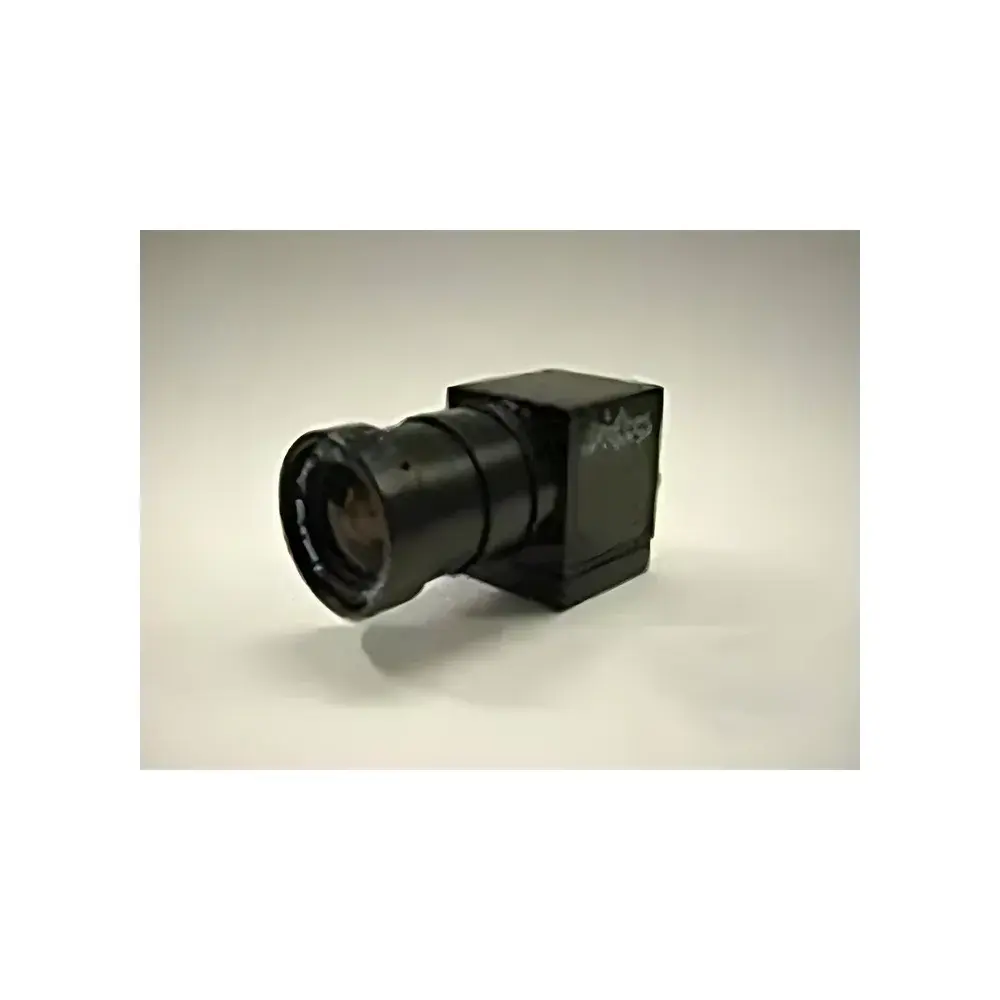
Kissei KinemaTracer 3D Human Motion Analysis System
| Brand | KISSEI |
|---|---|
| Origin | Japan |
| Model | KinemaTracer |
| Camera Type | Compact CCD-based optical motion capture system |
| Connectivity | Gigabit Ethernet (LAN) synchronized acquisition |
| Software Control | PC-hosted proprietary acquisition & analysis suite |
| Deployment Form Factor | Portable, space-efficient modular setup |
| Primary Use Case | Gait and biomechanical motion analysis in clinical, rehabilitation, and sports science environments |
Overview
The Kissei KinemaTracer is a compact, cost-optimized 3D optical motion analysis system engineered for quantitative human movement assessment under real-world conditions. Based on passive marker-based stereophotogrammetry, it employs multiple high-sensitivity CCD cameras to simultaneously capture synchronized video streams. Through real-time detection and triangulation of color-coded reflective or active markers placed on anatomical landmarks, the system reconstructs precise 3D coordinates at frame rates suitable for gait analysis (typically 60–120 Hz, configurable via software). Unlike large-volume Vicon- or OptiTrack-class systems, KinemaTracer utilizes palm-sized, low-power CCD units connected via standard Gigabit Ethernet—eliminating complex cabling, external sync boxes, or dedicated hardware controllers. Its architecture prioritizes clinical practicality: minimal footprint (<1 m² floor space per 3-camera configuration), rapid deployment in outpatient clinics, rehabilitation labs, or treadmill-equipped rooms, and compatibility with both treadmill-based and overground walking protocols up to 4 meters in length.
Key Features
- Modular, portable CCD camera array: Six lightweight, LAN-connected cameras (standard 3- or 6-camera configurations) enable flexible placement for sagittal, frontal, or transverse plane coverage.
- Hardware-level synchronization: Deterministic inter-camera timing achieved via Ethernet-based trigger distribution—no external sync generator required.
- Integrated marker detection engine: Real-time color-segmentation algorithm optimized for high-contrast, multi-hue marker sets; supports automatic labeling based on spatial topology and temporal continuity.
- Comprehensive kinematic pipeline: Outputs full 3D marker trajectories, joint center estimation (Helen Hayes or custom models), segmental angles (flexion/extension, abduction/adduction, rotation), and derived kinematic derivatives (velocity, acceleration, angular velocity, angular acceleration).
- Standardized gait cycle normalization: Automatic heel-strike and toe-off detection via vertical ground reaction force surrogate algorithms (when paired with force plates) or kinematic thresholding; enables phase-normalized averaging across multiple strides.
- Embedded EMG integration: Native support for analog EMG signal acquisition (via optional DAQ module); time-aligned visualization, RMS envelope computation, full-wave rectification, and FFT spectral analysis built into the analysis environment.
Sample Compatibility & Compliance
KinemaTracer is validated for use with adult and pediatric subjects across diverse mobility levels—from unimpaired ambulation to pathological gait patterns including hemiplegia, Parkinsonian gait, cerebral palsy, and post-orthopedic surgical recovery. The system complies with IEC 62304 (medical device software lifecycle), ISO 13485 (quality management for medical devices), and meets essential requirements of the EU MDR Annex I (Class I non-invasive device). Data export formats adhere to ASTM E2932-14 (Standard Guide for Gait Analysis Data Exchange) and support DICOM-SR for PACS integration where applicable. Audit trail functionality—including user login, parameter modification timestamps, and raw data versioning—is enabled to satisfy GLP and clinical trial documentation standards (e.g., FDA 21 CFR Part 11 compliant when deployed with validated IT infrastructure).
Software & Data Management
The KinemaTracer software suite provides centralized database management for longitudinal cohort studies. Each session stores metadata including subject ID, demographic details (DOB, sex), test date, protocol name, examiner ID, and custom keywords. Up to four datasets can be loaded concurrently for side-by-side animation playback, stick-figure overlay, and waveform superposition. Analytical modules include: (1) Gap Index visualization—quantifying compensatory movement strategies by decomposing joint excursion deficits into positive (adaptive) and negative (restrictive) components; (2) Abnormal Gait Radar Chart—classifying deviations across 12 clinically defined gait pathologies (e.g., Trendelenburg, steppage, vaulting) and assigning severity scores relative to age- and speed-matched normative databases; (3) Temporal-spatial factor reporting—automated extraction of stride length, cadence, stance/swing phase duration, double-support time, and step asymmetry metrics. All charts support CSV export, bitmap rendering (PNG/TIFF), and customizable report layouts combining graphs, animations, and summary statistics.
Applications
KinemaTracer serves as a primary tool in multidisciplinary movement labs for objective outcome measurement in physical therapy, neurorehabilitation, orthopedics, and sports performance. Clinically, it supports pre- and post-intervention evaluation of botulinum toxin injections, orthotic prescription efficacy, surgical planning (e.g., selective dorsal rhizotomy), and fall risk stratification via center-of-mass sway quantification. In research contexts, it facilitates biomechanical modeling—when combined with force plate data (via optional Kistler or AMTI interface), inverse dynamics calculations for net joint moments and powers are performed using the DIFFGait plugin (licensed separately). Its portability also enables field-based assessments in community centers or home environments under IRB-approved protocols.
FAQ
What is the minimum number of cameras required for reliable 3D reconstruction?
A minimum of three synchronized CCD cameras is required; however, six cameras are recommended for robust occlusion handling and improved accuracy in multi-plane gait analysis.
Can KinemaTracer integrate with third-party force plates or EMG systems?
Yes—standard analog voltage inputs (±10 V, 16-bit resolution) support direct connection to most commercial force plates and EMG amplifiers; digital synchronization via TTL pulse is supported through optional I/O modules.
Is raw marker trajectory data exportable for external biomechanical modeling?
Yes—CSV and C3D file exports include full 3D coordinates (X/Y/Z), confidence metrics, and frame-accurate timestamps, compatible with OpenSim, MATLAB, Python (SciPy), and Visual3D workflows.
Does the system support automated joint center estimation?
Yes—the software includes both functional and anatomical joint center algorithms (e.g., sphere-fitting for hip/knee, helical axis for ankle), configurable per segment and subject.
How is data security and audit compliance managed?
All user actions, parameter changes, and dataset modifications are logged with ISO 8601 timestamps and operator IDs; encrypted database backups and role-based access control are available in enterprise deployments.



