
CoolLED pE-300 and pE-4000 Series High-Performance LED Microscope Illuminators
| Brand | CoolLED |
|---|---|
| Model | pE-300 Series (pE-300lite / pE-300white / pE-300ultra) & pE-4000 |
| Origin | United Kingdom |
| Light Source Type | Solid-State LED Array |
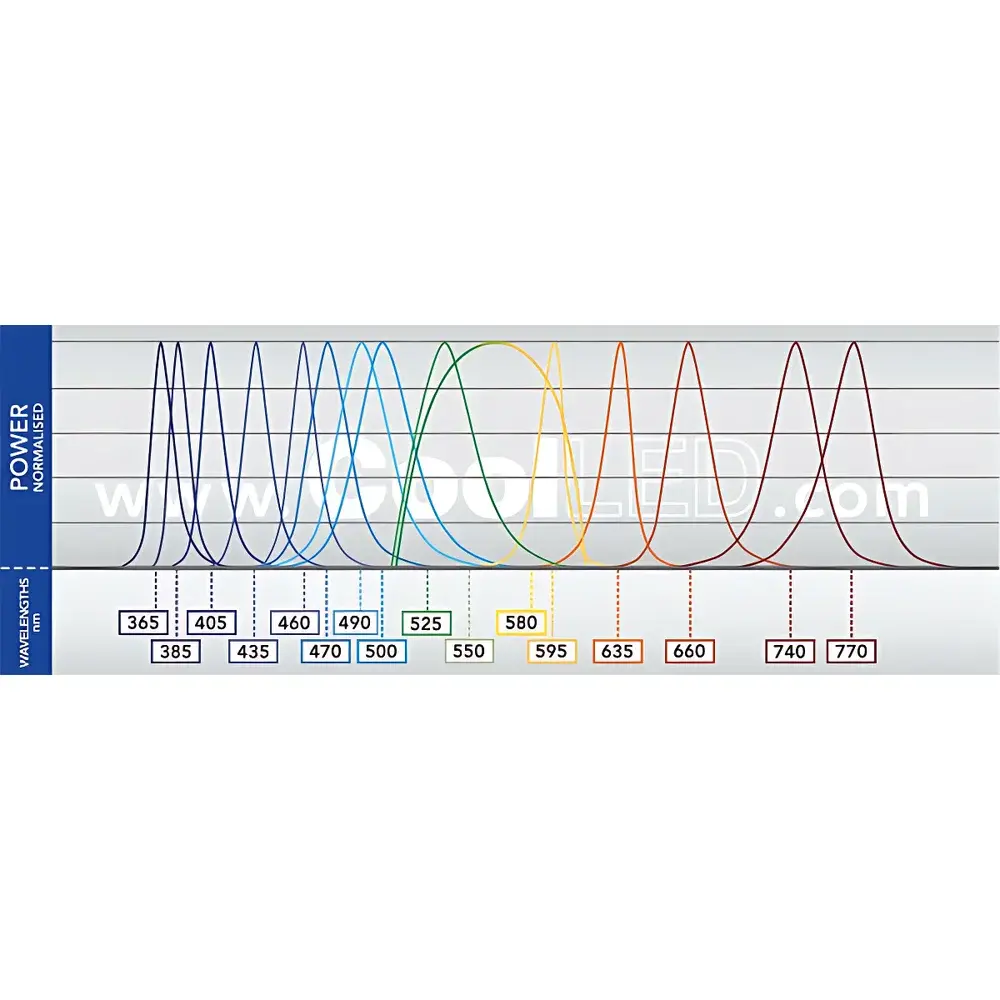
| Wavelength Range | 365–770 nm |
| Channel Configuration | 3-channel (pE-300) or 4-channel × 4-wavelength (pE-4000) |
| Control Interface | USB, TTL (BNC), Analog (0–5 V / 0–10 V) |
| Illumination Mode | Internal (via liquid light guide or direct mount) |
| Compliance | CE, UKCA, RoHS, IEC 61000-6-3/6-4 |
Overview
The CoolLED pE-300 and pE-4000 Series are precision-engineered solid-state LED illumination systems designed for demanding fluorescence microscopy applications in life science research, clinical diagnostics, and electrophysiology. Unlike conventional mercury or xenon arc lamps—whose broad-spectrum output generates excessive heat, UV-induced phototoxicity, and spectral instability—these systems deliver discrete, narrow-band excitation light with nanosecond-level temporal control, exceptional intensity stability (<0.5% RMS drift over 8 hours), and zero warm-up time. The pE-300 family comprises four variants optimized for distinct operational priorities: pE-300lite (cost-effective white-light–equivalent broadband excitation), pE-300white (manual-intensity analog control), pE-300ultra (multi-wavelength independent intensity + TTL-triggered microsecond switching), and the pE-4000—a modular 4-channel platform supporting up to 16 individually addressable LEDs spanning 365 nm (UV) to 770 nm (deep red). All models employ thermally regulated high-power LEDs mounted on low-vibration aluminum chassis, ensuring consistent photon flux across extended acquisition protocols.
Key Features
- Zero-lamp replacement lifecycle: >20,000 hours nominal LED lifetime at rated output, eliminating consumables and downtime associated with arc lamp degradation.
- Multi-wavelength flexibility: pE-4000 integrates four independently controllable channels, each configurable with up to four discrete LEDs (e.g., 365/405/470/515 nm per channel); pE-300ultra supports real-time intensity modulation and sub-10 µs TTL-triggered wavelength switching.
- Hardware synchronization: BNC TTL inputs support external triggering from cameras, shutters, or stimulators; analog voltage control enables seamless integration into automated acquisition pipelines requiring ramped or pulsed illumination profiles.
- Optical coupling compatibility: Supports both direct microscope mounting (C-mount or OEM adapter plates) and liquid light guide interfaces (SMA905 or FC/PC connectors) for flexible light delivery to upright, inverted, or custom optical setups.
- Regulatory-ready architecture: Firmware logs all illumination events (timestamp, channel, intensity, duration) with optional audit trail export—supporting GLP/GMP-aligned workflows and FDA 21 CFR Part 11 compliance when deployed with validated LIMS or imaging software.
Sample Compatibility & Compliance
These illuminators are compatible with all major widefield, confocal, and TIRF microscope platforms—including Olympus IX/XL, Nikon Eclipse Ti/Eclipse Ci-L, Leica DMi8/DM6 B, and Zeiss Axio Observer—via standard mechanical adapters and software SDKs. They support common fluorophores across the UV–VIS–NIR spectrum: DAPI (358 nm ex), FITC (494 nm ex), TRITC (552 nm ex), Cy5 (649 nm ex), and far-red probes such as Cy7 (750 nm ex). All units conform to IEC 61000-6-3 (EMI emission) and IEC 61000-6-4 (immunity) standards, carry CE and UKCA markings, and comply with RoHS Directive 2011/65/EU. No hazardous substances (e.g., mercury, lead, cadmium) are used in construction or operation—aligning with ISO 14001 environmental management principles.
Software & Data Management
CoolLED provides native drivers and SDKs for integration with industry-standard imaging platforms: Olympus CellSens, Leica LAS X, Nikon NIS-Elements, Zeiss ZEN Blue, and open-source frameworks including Micro-Manager 2.0 and Python-based acquisition scripts (PySerial, PyVISA). Illumination parameters—including per-channel intensity (%), exposure duration, TTL gate timing, and analog ramp profiles—are programmatically adjustable via ASCII command protocol over USB virtual COM port. System event logs record every illumination event with microsecond timestamp resolution; log files export in CSV format for traceability in regulatory audits. Optional firmware updates deliver new features—including multi-channel synchronization modes and enhanced thermal compensation algorithms—without hardware modification.
Applications
- Live-cell fluorescence imaging requiring low phototoxicity and high temporal fidelity (e.g., Ca²⁺ dynamics, mitochondrial membrane potential assays).
- Optogenetics experiments demanding precise millisecond-scale light pulses at defined wavelengths (ChR2, Chrimson, ReaChR activation).
- Electrophysiology–imaging hybrid setups where LED illumination must synchronize with patch-clamp amplifier triggers and camera frame acquisition.
- High-content screening (HCS) platforms utilizing multi-color multiplexed staining (e.g., DAPI/FITC/TRITC/Cy5 quadruple labeling) without mechanical filter wheel latency.
- Clinical pathology labs performing standardized fluorescent in situ hybridization (FISH) or immunofluorescence (IF) assays under ISO 15189-accredited quality management systems.
FAQ
Can the pE-4000 drive multiple LEDs simultaneously within one channel?
Yes—each of the four channels supports simultaneous activation of its configured LEDs; intensity is independently adjustable per wavelength using either analog voltage or digital commands.
Is liquid light guide coupling compatible with all pE-300 variants?
Yes—pE-300lite, pE-300white, and pE-300ultra include SMA905 or FC/PC ports for fiber-optic interfacing; pE-4000 offers dual-output ports per channel for redundant or split-light-path configurations.
Does CoolLED provide validation documentation for GxP environments?
Upon request, CoolLED supplies IQ/OQ documentation templates, calibration certificates traceable to NPL (UK National Physical Laboratory), and firmware version verification reports compliant with Annex 11 and ALCOA+ data integrity principles.
How does thermal management affect long-term intensity stability?
Active thermal regulation maintains LED junction temperature within ±0.5 °C across ambient conditions from 15–35 °C, ensuring <0.3% peak-to-peak intensity variation during continuous 12-hour acquisitions.
Are third-party filter cube sets supported without mechanical filter wheels?
Yes—the integrated excitation filter holder accepts standard 25 mm diameter filters and accommodates multi-band dichroics and emission splitters; no motorized wheel is required for sequential multi-color imaging when paired with pE-300ultra or pE-4000’s electronic wavelength selection.



