
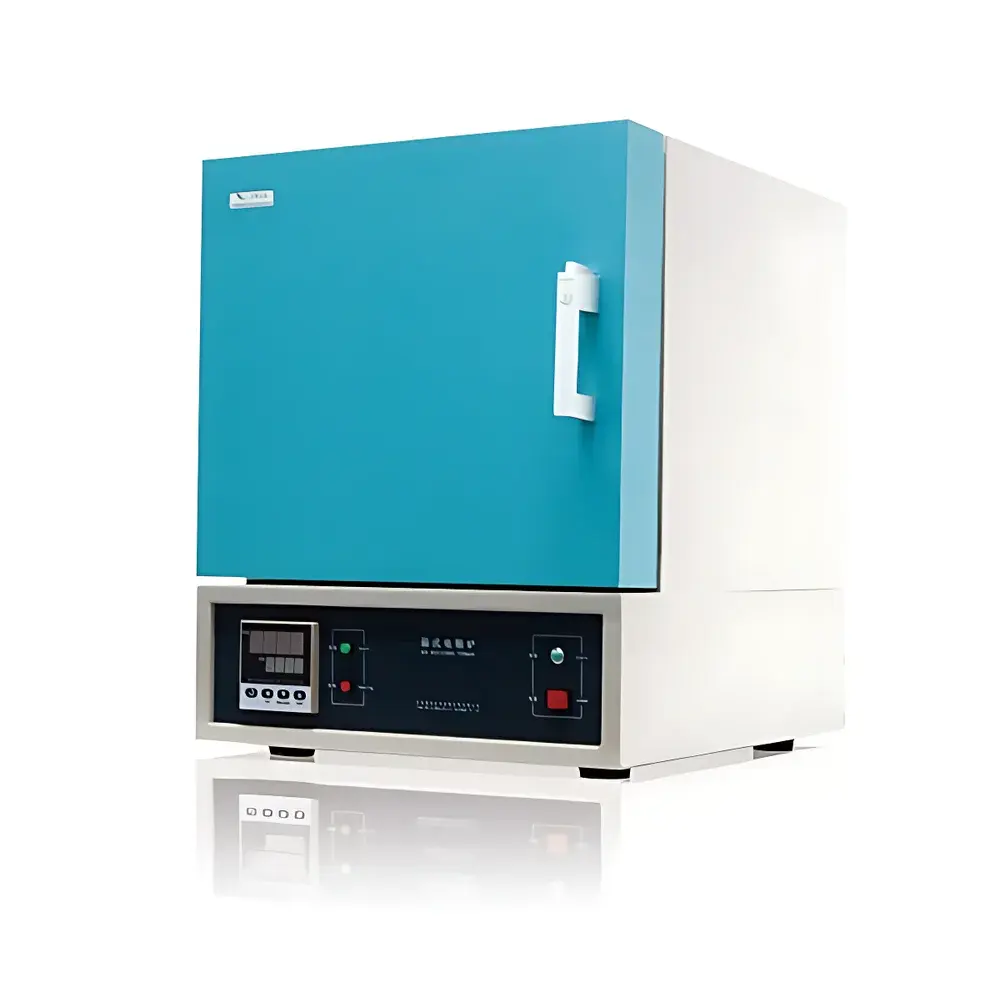
Truelab SX2-10T/TP Series Programmable Box-Type Muffle Furnace
| Brand | Truelab |
|---|---|
| Origin | Shanghai, China |
| Model Variants | SX2-2.5-10T/TP, SX2-4-10T/TP, SX2-8-10T/TP |
| Maximum Temperature | 1000 °C |
| Operating Temperature Range | ≤950 °C |
| Temperature Control Accuracy | ±1 °C |
| Heating Rate | ≤50 °C/min (SX2-2.5 & SX2-8), ≤40 °C/min (SX2-4) |
| Chamber Dimensions (W×D×H) | 200×120×80 mm (2 L), 300×200×120 mm (7.2 L), 400×250×160 mm (16 L) |
| Heating Element | OCr25Al5 Fe-Cr-Al Alloy Wire |
| Power Supply | AC 220 V / 50 Hz (2.5 kW, 4 kW models) |
| Rated Power | 2.5 kW, 4 kW, or 8 kW |
| Insulation | High-Density Ceramic Fiber (Al₂O₃-SiO₂) |
| Control System | PID-Based Programmable Temperature Controller (30-segment or 60-segment ramp-soak profiles) |
| Compliance | JB/T 8195.7–2007 (Indirect Resistance Furnaces), GB/Z 18–2002 (Energy-Efficient Heat Treatment) |
Overview
The Truelab SX2-10T/TP Series is a line of programmable box-type muffle furnaces engineered for precision thermal processing in academic laboratories, materials research centers, and quality control environments. These furnaces operate on the principle of indirect resistance heating—where electrical energy is converted into radiant and convective heat via high-stability Fe-Cr-Al alloy heating elements (OCr25Al5), thermally isolated from the sample chamber by a monolithic ceramic fiber insulation system. Designed for maximum thermal efficiency and operational safety, each unit achieves a rated maximum temperature of 1000 °C with continuous service limited to ≤950 °C to ensure long-term stability of insulation integrity and thermocouple calibration. The furnace architecture integrates structural rigidity, low thermal mass, and rapid thermal response—enabling repeatable heating profiles across diverse applications including ashing, calcination, sintering, annealing, and pre-treatment of ceramic, metallurgical, and geological specimens.
Key Features
- High-efficiency ceramic fiber chamber (Al₂O₃–SiO₂ composition) with density ≥128 kg/m³—reducing thermal inertia and enabling heating rates up to 50 °C/min while lowering standby power consumption by >40% versus traditional brick-lined furnaces.
- Patented multi-point sealing mechanism at the furnace door ensures <0.5 mm gap tolerance under thermal expansion, minimizing ambient air ingress and maintaining uniform internal atmosphere during extended hold cycles.
- Dual-stage overtemperature protection: primary control via K-type thermocouple feedback loop; secondary independent safety cutoff triggered at 1050 °C to prevent uncontrolled thermal excursion.
- Intelligent PID controller with programmable ramp-soak functionality—supporting up to 60 user-defined segments for complex thermal protocols compliant with ASTM E1113, ISO 5660-1, and USP <231> heavy metal testing procedures.
- Auto-shutdown logic activated upon door opening or mains power interruption—preventing unintended operation during maintenance or post-outage recovery without manual reset.
- Robust single-piece welded steel housing with double-layer cooling fins on rear panel, maintaining external surface temperature <55 °C at full load per EN 61000-3-2 harmonic emission standards.
Sample Compatibility & Compliance
The SX2-10T/TP series accommodates a wide range of inert and semi-reactive sample forms—including crucibles (alumina, quartz, stainless steel), petri dishes, powder compacts, and small-scale metallurgical coupons—within volumetric capacities spanning 2 L to 16 L. All variants conform to JB/T 8195.7–2007 requirements for indirect resistance furnaces, including thermal uniformity (±5 °C within working zone at 900 °C), insulation performance (surface temperature rise <35 K above ambient), and electromagnetic compatibility per IEC 61326-1. Optional TP-series controllers include audit-trail logging and password-protected parameter editing—supporting GLP/GMP-aligned workflows and FDA 21 CFR Part 11 readiness when paired with validated data export modules.
Software & Data Management
Furnaces equipped with the TP controller feature an embedded RS485 interface (Modbus RTU protocol) for integration into centralized lab management systems. Real-time temperature, program stage, and fault status are accessible via ASCII command set or third-party SCADA platforms. Local display includes dual-line LCD with backlight, intuitive rotary encoder navigation, and visual alarm indicators for overcurrent, sensor break, and cooling fan failure. All temperature profiles are stored in non-volatile memory with timestamped execution logs—retained for ≥10,000 cycles. Firmware updates are performed via USB port using manufacturer-provided configuration utilities verified against SHA-256 checksums.
Applications
- Residue analysis and total ash determination in food, pharmaceutical, and environmental samples (AOAC 942.05, ISO 2171).
- Thermal decomposition studies of polymers and composites under controlled oxidative or inert atmospheres.
- Pre-sintering of ceramic green bodies and binder burnout prior to final densification.
- Calibration of thermogravimetric analyzers (TGA) and differential scanning calorimeters (DSC) using certified reference materials (e.g., NIST SRM 720).
- Heat treatment of tool steels and aluminum alloys per AMS 2750E pyrometry requirements (Class 2 sensor accuracy).
- ISO/IEC 17025-accredited laboratories performing accredited thermal testing services.
FAQ
What is the difference between the “T” and “TP” suffixes in model numbers?
The “T” denotes standard digital PID control with manual setpoint adjustment; “TP” indicates inclusion of a programmable temperature controller supporting multi-segment ramp-soak profiles.
Can this furnace be used under inert gas purge?
Yes—each unit features two 6-mm diameter gas inlet/outlet ports compatible with nitrogen, argon, or forming gas lines; optional quartz viewing window and gas flow meter kits are available.
Is the furnace suitable for GMP-regulated environments?
When configured with TP-series controller, audit trail logging, and calibrated Class 1 thermocouples, it supports compliance with EU Annex 11 and FDA 21 CFR Part 11 when deployed within validated SOPs.
What maintenance is required for long-term reliability?
Annual verification of thermocouple calibration traceable to NIST standards, inspection of door gasket compression set, and cleaning of heating element terminals with contact-grade antioxidant compound.
Does the furnace support remote monitoring via Ethernet or Wi-Fi?
Native Ethernet/Wi-Fi is not integrated; however, industrial protocol gateways (e.g., Modbus TCP converters) can bridge RS485 output to IP networks for centralized telemetry.



