
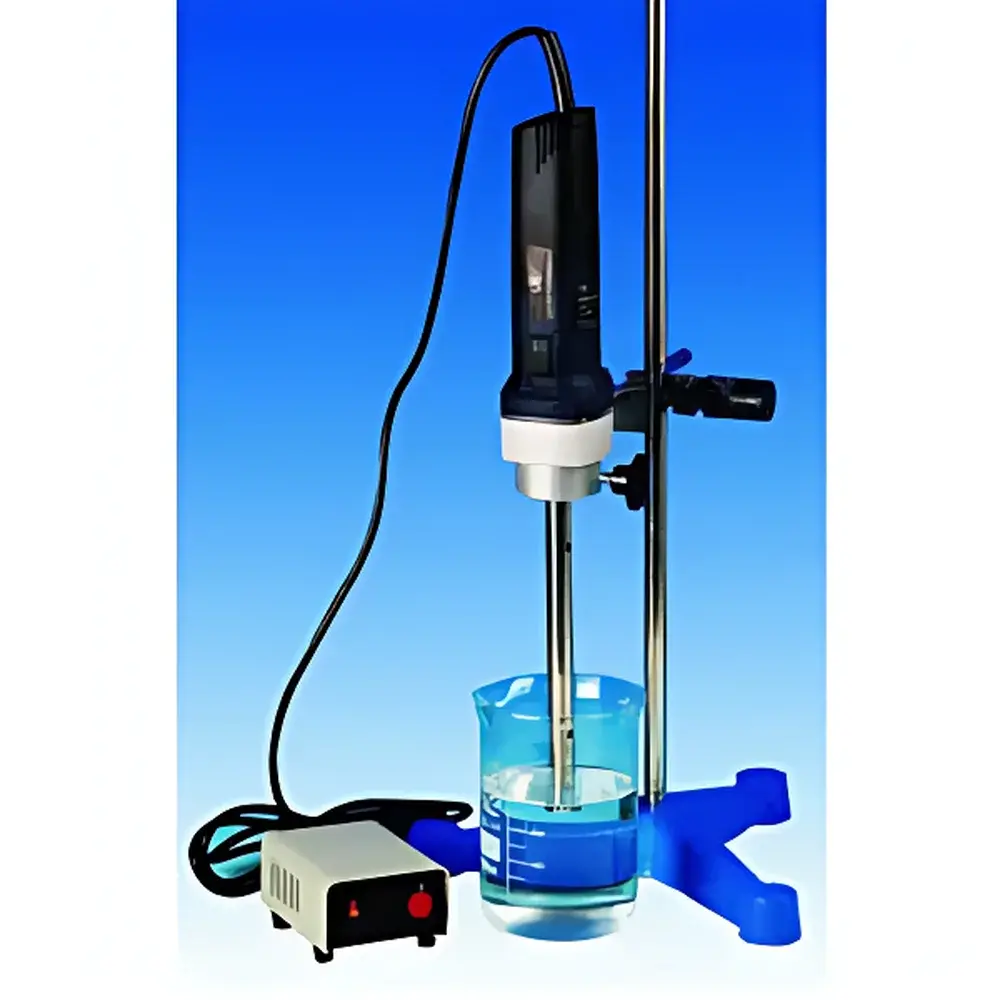
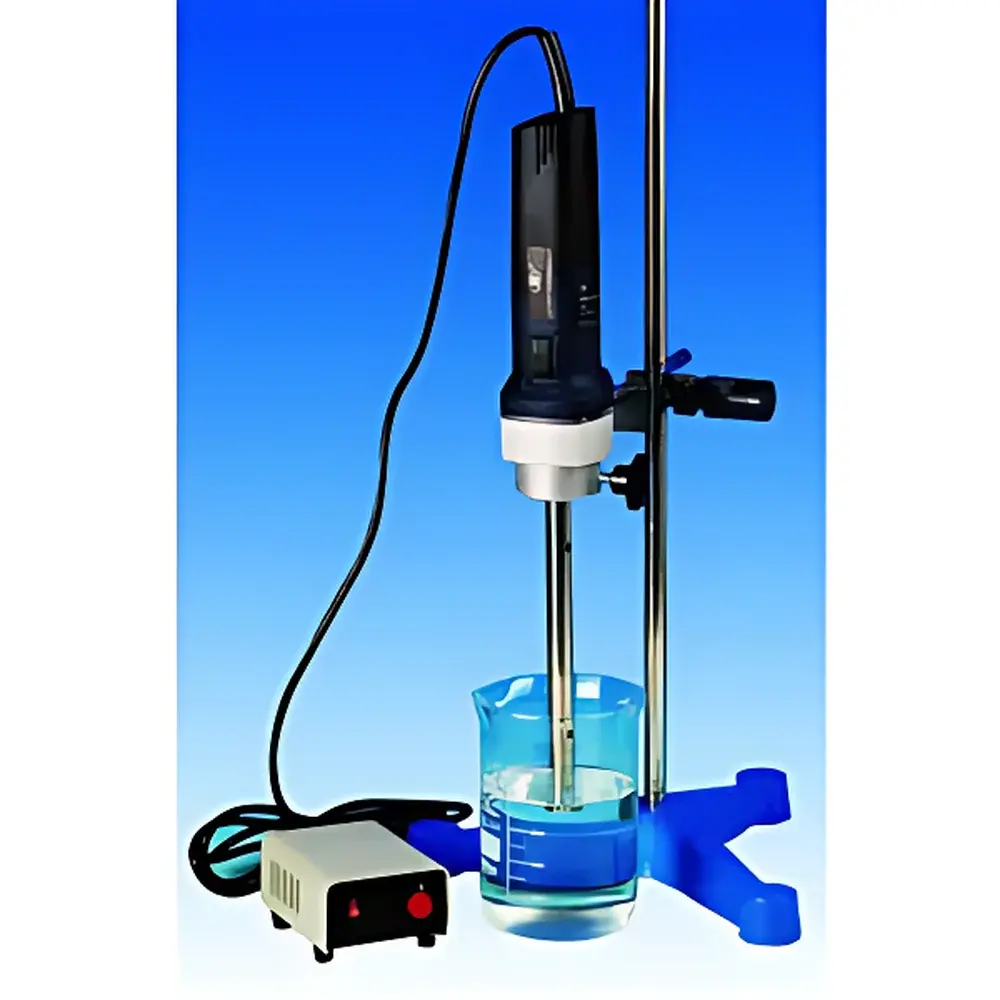
Truelab HFJ-10 / HFJ-18 / HFJ-25 High-Shear Inline Homogenizer
| Brand | Truelab |
|---|---|
| Origin | Tianjin, China |
| Instrument Type | High-Pressure Inline Homogenizer |
| Model | HFJ-10 |
| Dimensions (W×D×H) | 280 × 440 × 260 mm |
| Processing Capacity | 500–5000 mL |
| Rotational Speed Range | HFJ-10: 5000–35,000 rpm |
| HFJ-18 & HFJ-25 | 10,000–31,000 rpm |
| Probe Diameter | Φ10 mm (HFJ-10), Φ18 mm (HFJ-18), Φ25 mm (HFJ-25) |
| Output Power | 200 W (HFJ-10), 550 W (HFJ-18 & HFJ-25) |
Overview
The Truelab HFJ series high-shear inline homogenizers are engineered for laboratory-scale cell disruption, tissue homogenization, emulsification, and dispersion of heterogeneous mixtures. Operating on the principle of rotor-stator high-shear mechanical energy transfer, these instruments generate intense hydrodynamic cavitation and turbulent shear forces within the sample stream. As the rotating rotor passes at high velocity through the precisely machined stator gap, localized pressure differentials cause rapid fluid acceleration, microturbulence, and transient cavitation—resulting in efficient membrane rupture, particle size reduction, and phase stabilization. Designed specifically for small-to-medium volume biological and chemical processing (500–5000 mL), the HFJ series supports reproducible, scalable protocols in molecular biology, food safety testing, pesticide residue analysis, and microbial extraction workflows.
Key Features
- Three interchangeable models (HFJ-10, HFJ-18, HFJ-25) optimized for distinct throughput and shear intensity requirements—enabling method development across sample viscosity, particulate load, and target particle size.
- Rotor-stator probe assemblies fabricated entirely from ASTM A276 Type 316 stainless steel, ensuring corrosion resistance against organic solvents, acidic buffers, and enzymatic reagents while meeting ISO 8573-1 cleanliness standards for reusable lab hardware.
- High-efficiency brushless DC motors deliver stable rotational speeds with ±150 rpm speed control accuracy; HFJ-10 achieves up to 35,000 rpm (tip speed ≈ 18.3 m/s), while HFJ-18 and HFJ-25 operate up to 31,000 rpm (tip speeds ≈ 29.2 m/s and 40.6 m/s respectively) for progressive shear intensities.
- Modular quick-connect probe interface enables tool-free exchange of rotor-stator configurations—supporting standardized cleaning-in-place (CIP) procedures and minimizing cross-contamination risk between sequential samples.
- Optimized stator geometry features a 12° helical edge profile and 0.3 mm radial clearance, enhancing laminar-to-turbulent transition efficiency and delivering uniform energy distribution across the active zone—critical for preserving labile biomolecules during homogenization.
Sample Compatibility & Compliance
The HFJ homogenizers accommodate viscous suspensions (up to 15,000 cP), fibrous plant tissues (e.g., leaf mesophyll, root parenchyma), soft animal tissues (liver, muscle, spleen), bacterial pellets, fungal mycelia, and emulsion precursors. All wetted surfaces comply with USP Class VI biocompatibility requirements and are compatible with common sterilization methods including autoclaving (121°C, 20 min), ethanol immersion, and alkaline detergent cycles. While not certified for GMP manufacturing environments, the system’s design supports GLP-aligned documentation practices—including operator logbooks, maintenance records, and calibration traceability per ISO/IEC 17025 guidelines. It is routinely employed in laboratories conducting analyses compliant with AOAC 2007.01 (pesticide residue), ISO 16140 (microbiological method validation), and USP sterility testing preparation protocols.
Software & Data Management
The HFJ series operates as a stand-alone analog-controlled instrument without embedded firmware or digital connectivity. Speed selection is performed via calibrated rotary dial with tactile feedback and visual LED indicators. For regulatory traceability, users are advised to integrate external process logging—such as USB-connected tachometers or time-stamped video recording—aligned with internal SOPs. When deployed in validated workflows (e.g., FDA 21 CFR Part 11–compliant labs), manual entry of run parameters (probe type, speed, duration, sample ID) into electronic lab notebooks (ELN) such as LabArchives or Benchling satisfies audit trail requirements. Optional third-party speed dataloggers (e.g., Omega HHM100 series) can be interfaced for automated parameter capture.
Applications
- Pre-analytical homogenization of tissue specimens prior to nucleic acid extraction, protein quantification (BCA/Lowry), or ELISA-based pathogen detection.
- Disruption of Gram-negative and Gram-positive bacterial cells for endotoxin release studies and plasmid isolation.
- Preparation of stable oil-in-water emulsions for cosmetic stability testing and food-grade additive formulation.
- Rapid dispersion of nanomaterials (e.g., graphene oxide, metal oxides) in aqueous or organic media for DLS and TEM sample preparation.
- Homogenization of pesticide-spiked crop matrices (lettuce, apple peel, rice grain) in accordance with EN 15662 multi-residue analytical workflows.
FAQ
What is the maximum continuous operating time per cycle?
Recommended duty cycle is ≤3 minutes per homogenization step, followed by ≥2-minute cooling intervals to prevent thermal degradation of heat-sensitive analytes and motor overheating.
Can the HFJ probes be used with corrosive solvents such as chloroform or TFA?
Yes—316 stainless steel construction provides compatibility with halogenated solvents, strong acids (≤20% HCl), and bases (≤1 M NaOH); however, prolonged exposure to hypochlorite or bromine-containing solutions is not recommended.
Is rotor-stator alignment adjustable by the user?
No—rotor and stator are factory-assembled as a matched pair with fixed radial clearance; disassembly voids calibration and compromises shear consistency.
Does Truelab provide IQ/OQ documentation support?
Standard delivery includes a Certificate of Conformance and mechanical calibration report; site-specific IQ/OQ protocol templates are available upon request for integration into quality management systems.
How often should the probe be inspected for wear?
Visual inspection for pitting, scoring, or burring is recommended after every 200 operational hours or prior to critical validation runs; replacement intervals vary by application but typically range from 500–1,200 hours under standard tissue homogenization conditions.



