
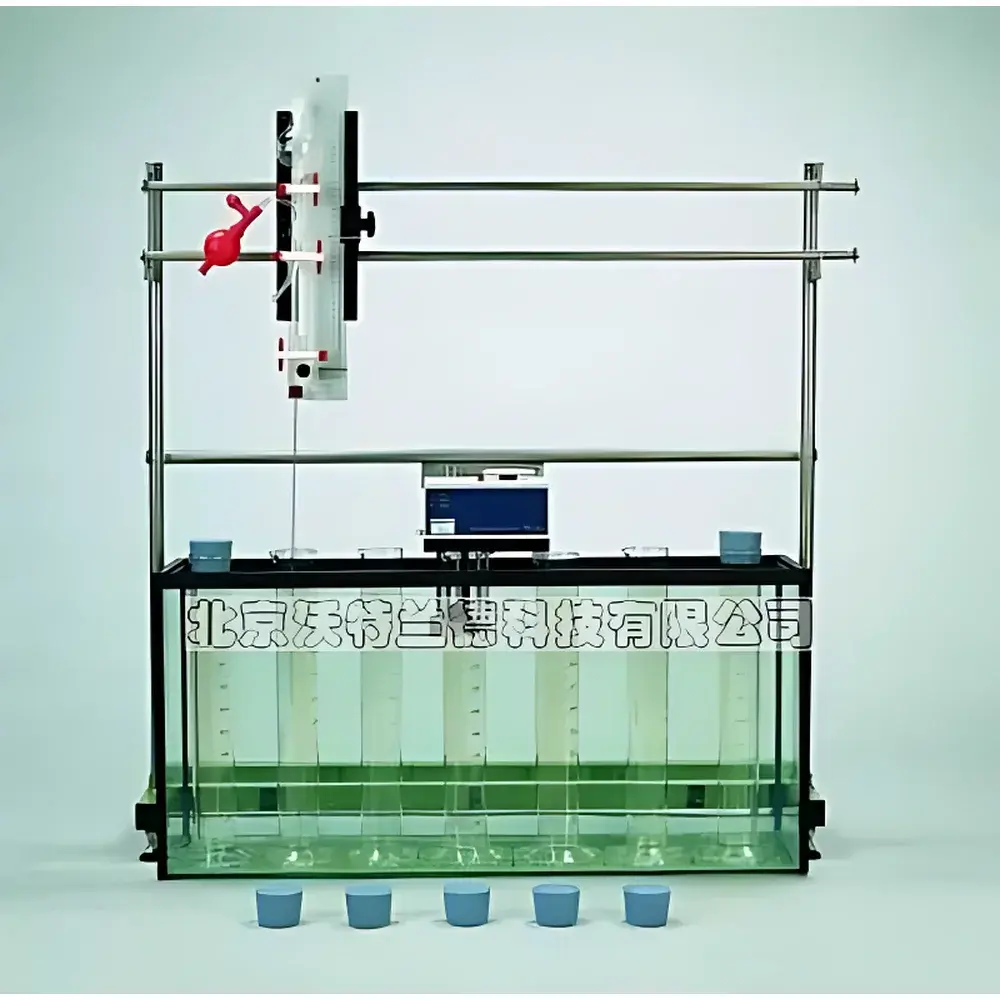
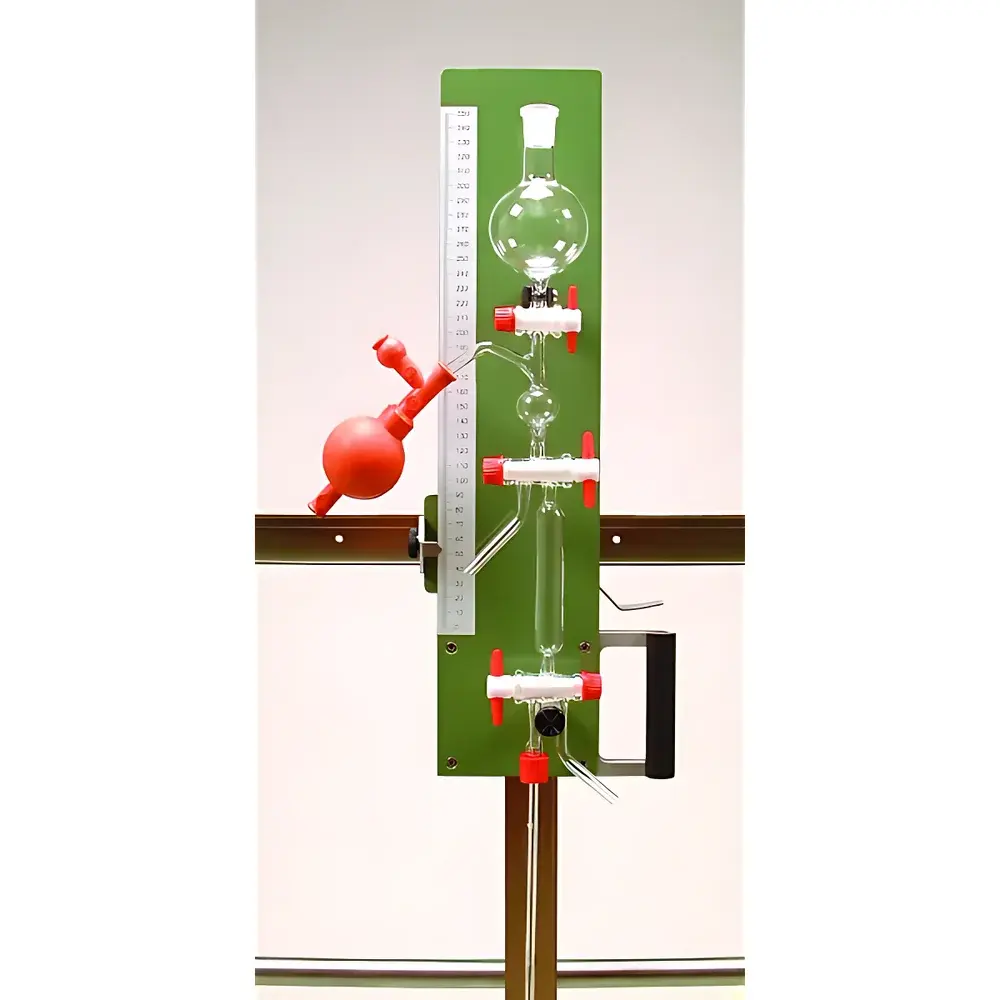
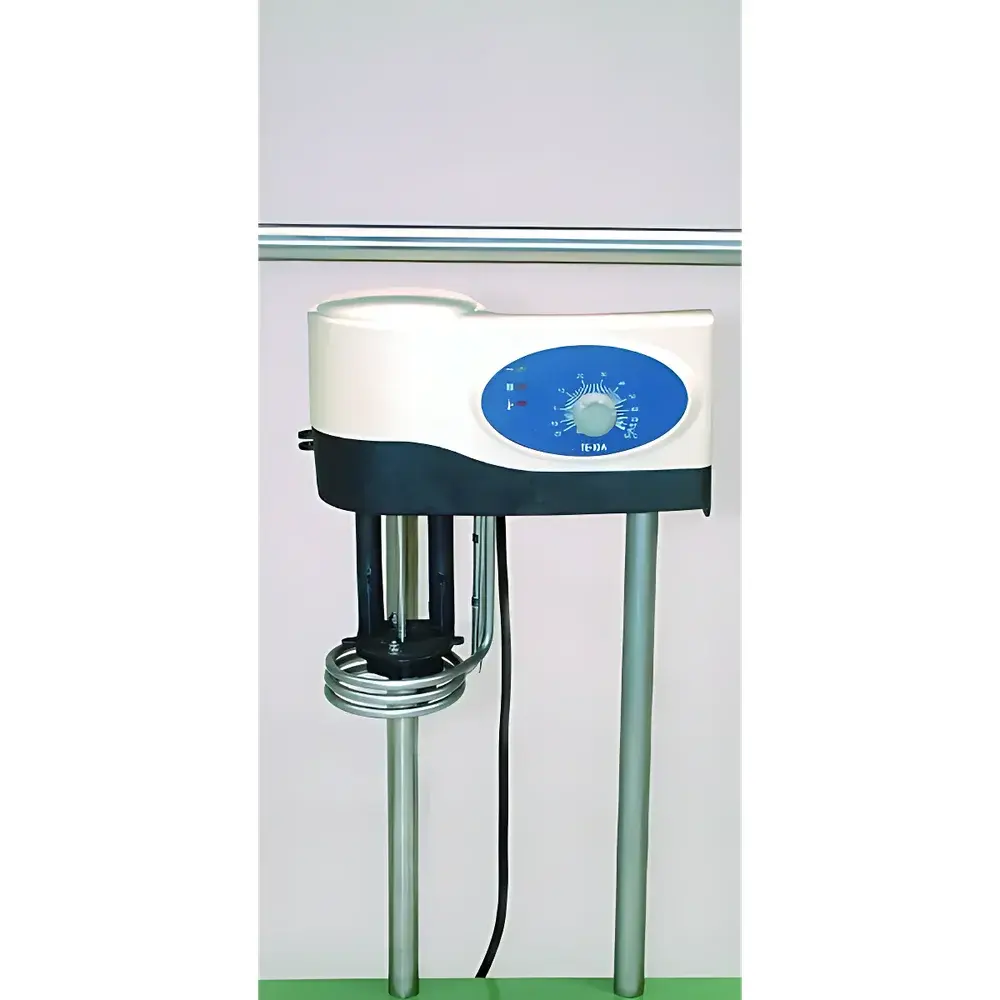
Eijkelkamp 08.16 Sedimentation Pipette Apparatus for Soil Particle Size Analysis
| Brand | Eijkelkamp |
|---|---|
| Model | 08.16 |
| Compliance | NEN 5753, ISO/DIS 11277 |
| Configuration | Desktop (08.16.SA) or Wall-Mounted (08.16.SB) |
| Sample Capacity | 7 simultaneous analyses |
| Maximum Insertion Depth | 340 mm |
| Thermal Control | Integrated heater with thermostat and stirrer |
| Key Components | Glass sedimentation tank, pipette upper/lower assemblies, rubber bulb, glass sample cylinders, silicone stoppers, sodium hexametaphosphate dispersant |
Overview
The Eijkelkamp 08.16 Sedimentation Pipette Apparatus is a precision-engineered laboratory system designed for standardized particle size distribution (PSD) analysis of soil samples via the sedimentation pipette method—also known as the hydrometer or hydrometric method. Rooted in Stokes’ law, this classical gravimetric technique quantifies the relative proportions of sand, silt, and clay fractions by measuring the rate at which suspended particles settle through a liquid medium under controlled temperature and dispersion conditions. As one of the most established analytical approaches in soil science, it remains a reference method for soil texture classification per international standards including ISO 11277 and Dutch NEN 5753. Unlike laser diffraction or dynamic image analysis, the 08.16 relies on time-resolved physical sedimentation—ensuring traceability to first principles and compatibility with long-term historical datasets used in pedological mapping, land-use planning, and environmental impact assessment.
Key Features
- Two modular configurations: 08.16.SA (desktop-mounted) and 08.16.SB (wall-mounted), enabling flexible integration into diverse laboratory layouts while maintaining identical metrological performance.
- Ergonomically optimized working height—designed to minimize operator fatigue during repeated pipetting cycles over extended analysis durations (typically 8–24 h per run).
- Decoupled mechanical architecture: The glass sedimentation tank is physically isolated from the heating unit and magnetic stirrer, eliminating vibration-induced disturbance to settling particles—a critical factor for reproducible <10 µm silt and clay fraction quantification.
- Wear-resistant toothed plastic pulleys integrated into the pipette slide rail system ensure smooth, repeatable vertical positioning of the pipette tip at precise depths (up to 340 mm below suspension surface).
- Integrated thermal management: A thermostatically controlled heating module maintains suspension temperature within ±0.5 °C across the full sedimentation period—essential for accurate application of Stokes’ law corrections.
- Complete standard kit includes calibrated glass sample cylinders, precision pipette assemblies (upper and lower sections), rubber bulbs, silicone stoppers, and certified sodium hexametaphosphate (SHMP) dispersant for consistent clay aggregate breakdown.
Sample Compatibility & Compliance
The 08.16 is validated for use with mineral soils, dredged sediments, and weathered parent materials exhibiting clay contents up to 60% and organic matter content ≤10% (pre-treated via H2O2 oxidation). It supports the full ASTM D422–63 (Reapproved 2022) and ISO 11277:2023 workflows—including pre-treatment, dispersion, sedimentation timing, and density-based mass recovery calculations. All components comply with GLP documentation requirements: glassware meets ISO 4787 volumetric tolerance Class A specifications; temperature sensors are NIST-traceable; and dispersant batches include CoA documentation. The apparatus is routinely employed in accredited soil testing laboratories undergoing ISO/IEC 17025 audits and supports data integrity requirements aligned with FDA 21 CFR Part 11 when paired with compliant electronic lab notebooks (ELN).
Software & Data Management
While the 08.16 operates as a manual benchtop instrument, its procedural rigor enables seamless digital integration. Eijkelkamp provides optional Excel-based calculation templates preconfigured with Stokes’ law correction factors (temperature, specific gravity, viscosity), ISO-compliant reporting formats, and uncertainty propagation worksheets per GUM (JCGM 100:2008). Laboratories may embed the 08.16 workflow into LIMS platforms via standardized CSV output from post-analysis spreadsheets. For audit readiness, all raw time-depth-density observations, calibration logs, and dispersant lot records must be retained for minimum 7 years per ISO 17025 clause 7.5.2.
Applications
- Pedological surveying and soil mapping (e.g., USDA Soil Taxonomy texture class assignment)
- Environmental site assessment—quantifying clay/silt fractions influencing contaminant sorption capacity (e.g., heavy metals, PAHs)
- Agricultural extension services—guiding irrigation scheduling, fertilizer placement, and tillage recommendations based on hydraulic conductivity estimates
- Civil engineering soil classification per USCS (Unified Soil Classification System) and AASHTO M 145
- Research validation—serving as a primary reference method for calibrating rapid field techniques (e.g., laser diffraction, electrical conductivity proxies)
- Regulatory compliance testing for landfill liner specifications and dredged material disposal permits
FAQ
What standards does the 08.16 apparatus explicitly conform to?
It complies with NEN 5753 and ISO/DIS 11277 (now published as ISO 11277:2023), and supports full implementation of ASTM D422–63 and BS 1377-2:2018.
Can the 08.16 be used for sludge or high-organic soils?
Yes—with prior organic matter removal using hydrogen peroxide digestion (ISO 10390 Annex B); however, samples exceeding 15% organic carbon require alternative methods such as laser diffraction with wet dispersion optimization.
Is temperature control mandatory during sedimentation?
Yes—Stokes’ law calculations require precise suspension temperature measurement (±0.2 °C) to correct for dynamic viscosity changes; the integrated thermostat ensures compliance without external bath dependency.
How many samples can be processed simultaneously?
Seven independent sedimentation columns can be monitored concurrently using the standard slide-rail configuration, optimizing throughput for routine soil testing labs.
Does Eijkelkamp supply certified reference materials for method verification?
Yes—traceable NIST SRM 2709a (San Joaquin Soil) and Eijkelkamp CRM-SOIL-01 are available for daily system suitability checks and inter-laboratory comparison exercises.
Related Products







