
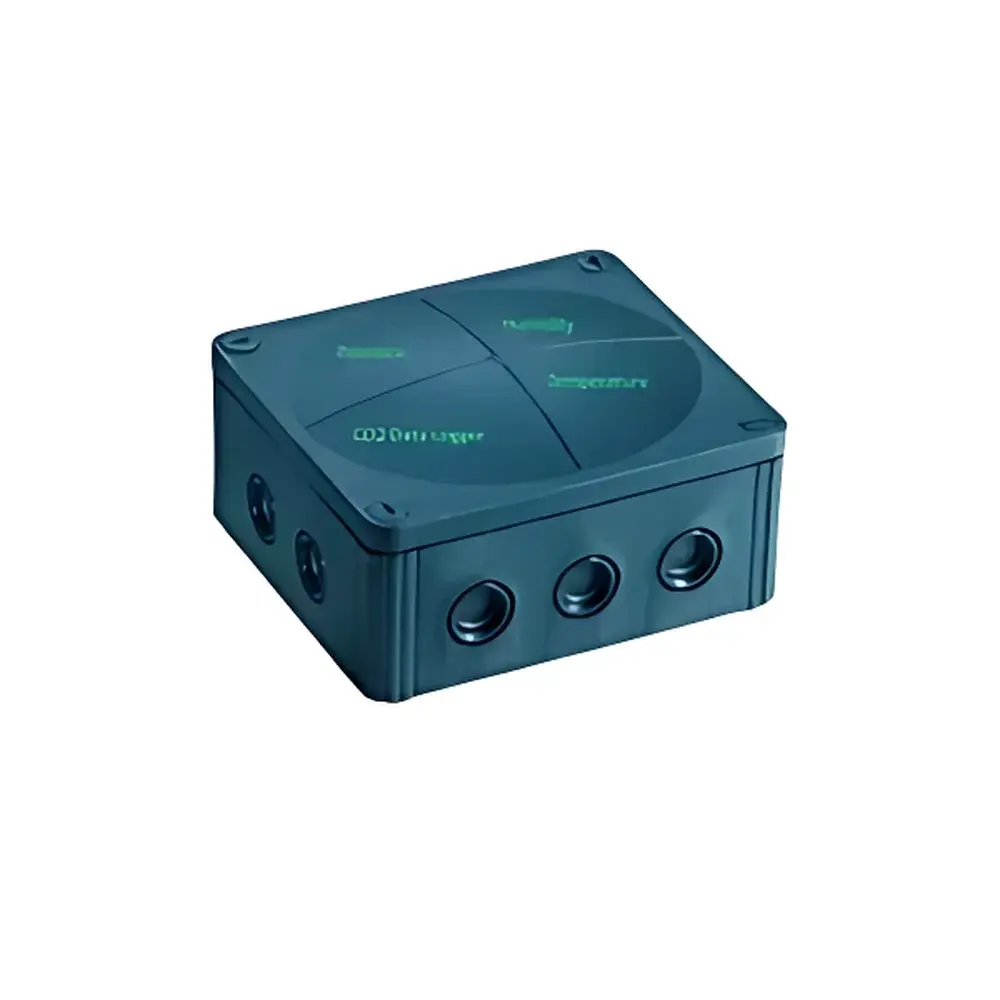
Solinst CO2LOG Cave Carbon Dioxide Monitoring Logger
| Brand | Solinst |
|---|---|
| Origin | United Kingdom |
| Model | CO2LOG |
| Instrument Type | Portable |
| Detection Target | Single-component (CO₂) |
| Measurement Range | 400–10,000 ppm |
| Repeatability | ±1% of reading |
| Resolution | 30 ppm |
| Temperature Range | −20 °C to +70 °C |
| Temperature Accuracy | ±0.5 °C |
| Atmospheric Pressure Range | 300–1100 hPa |
| Pressure Accuracy | ±1.0 hPa |
| Relative Humidity Range | 0–100 %RH |
| RH Accuracy | ±3 %RH @ 25 °C |
| IP Rating | IP54 |
| Dimensions | 80 mm × 140 mm × 160 mm |
| Weight | 900 g |
| Data Storage | Removable micro-SD card (Excel-formatted .csv files) |
| Sampling Intervals | 30 min or 60 min |
| Battery Life | >12 months (at 1-hr interval, typical field conditions) |
| Wireless Option | Optional integrated radio module (up to 3 km line-of-sight range) |
| Inlet Airflow | Integrated low-power micro-fan for active sample aspiration |
Overview
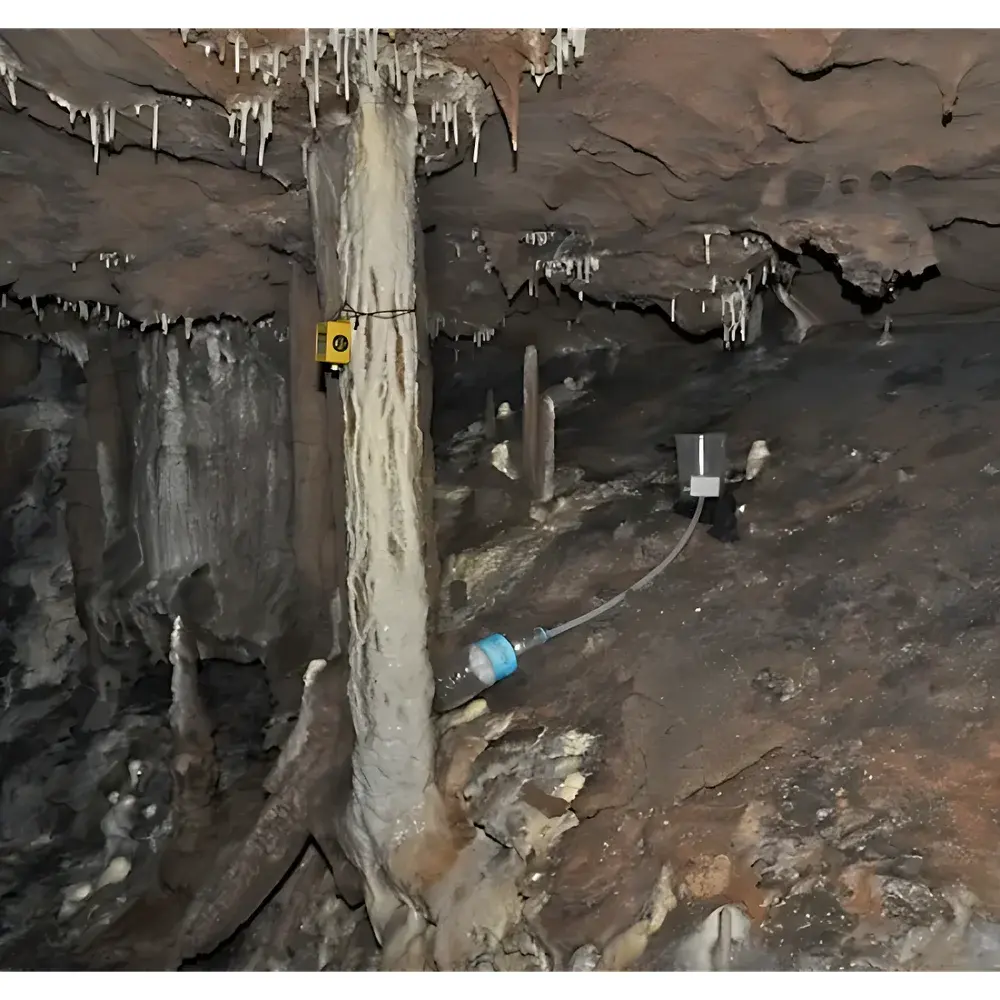
The Solinst CO2LOG is a purpose-engineered portable environmental logger designed for long-term, unattended carbon dioxide (CO₂) concentration monitoring in subterranean and semi-confined environments—particularly caves, karst systems, mines, and soil-atmosphere interface zones. It operates on the principle of non-dispersive infrared (NDIR) absorption spectroscopy, a mature, stable, and interference-resistant method for quantitative CO₂ detection. Unlike generic handheld gas meters, the CO2LOG integrates synchronized measurements of ambient temperature, relative humidity, and barometric pressure—parameters essential for correcting CO₂ partial pressure, interpreting ventilation dynamics, and modeling CO₂ fluxes in geophysical and speleological contexts. Its ruggedized enclosure, IP54-rated ingress protection, and extended battery life support deployment in high-moisture, low-light, and thermally variable cave environments where maintenance access is infrequent or logistically constrained.
Key Features
- NDIR-based CO₂ sensor with factory-calibrated stability across 400–10,000 ppm range; no zero-gas requirement for routine operation
- Simultaneous logging of CO₂, temperature (−20 to +70 °C), relative humidity (0–100 %RH), and atmospheric pressure (300–1100 hPa)
- Dual fixed sampling intervals: programmable at either 30-minute or 60-minute resolution for optimized data density vs. battery longevity
- Integrated micro-fan ensures consistent sample aspiration—critical for minimizing boundary-layer effects and improving response time in stagnant air
- Real-time LED display showing current CO₂ level (ppm), temperature (°C), pressure (hPa), and system time—enabling on-site verification without external software
- Removable micro-SD card stores timestamped data in industry-standard CSV format compatible with Excel, MATLAB, Python (pandas), and GIS platforms
- Optional LoRaWAN- or proprietary RF-based wireless telemetry module (up to 3 km line-of-sight) enables remote data retrieval without physical card extraction
- Modular, tool-free access to SD card and battery compartment; sealed gasket design prevents condensation ingress during prolonged high-RH deployments
Sample Compatibility & Compliance
The CO2LOG is validated for continuous monitoring of ambient air in natural and engineered subsurface environments. It is not intended for industrial stack emissions, confined-space entry safety, or explosive atmospheres (ATEX/IECEx certification not held). Its measurement traceability aligns with ISO 17025-accredited calibration practices applied by Solinst’s UK-based metrology lab. While not certified to GLP or FDA 21 CFR Part 11, its audit-ready data structure—including embedded timestamps, sensor serial numbers, and firmware versioning—supports defensible data integrity in academic research, geological surveying, and environmental impact assessments governed by national cave conservation frameworks (e.g., UK Caving Association guidelines, EU Habitats Directive Annex II monitoring protocols).
Software & Data Management
No proprietary software installation is required. Raw data exports as UTF-8 encoded CSV files with headers: “Timestamp_UTC”, “CO2_ppm”, “Temp_C”, “RH_pct”, “Pressure_hPa”. Timestamps are synchronized to internal RTC (real-time clock) with ±2 sec/month drift. Optional Solinst DataLink utility (Windows/macOS) provides batch file parsing, basic trend visualization, and export to KML for spatial correlation with GPS-referenced cave surveys. All metadata—including battery voltage, SD card write status, and sensor health flags—are embedded in file headers or companion log files. For integration into institutional LIMS or time-series databases, the flat-file architecture supports direct ingestion via SQL bulk import or REST API middleware.
Applications
- Spearheading CO₂-driven cave ventilation studies—quantifying diurnal/seasonal CO₂ accumulation and degassing cycles linked to barometric pumping and biogenic respiration
- Validating geochemical models of carbonate dissolution kinetics by correlating pCO₂ gradients with dripwater chemistry in stalagmite paleoclimate archives
- Monitoring CO₂ buildup in abandoned mine adits to inform public safety risk assessments and remediation scheduling
- Supporting interdisciplinary biospeleology projects—tracking microclimate shifts associated with bat hibernacula occupancy and white-nose syndrome epidemiology
- Calibrating and ground-truthing airborne or drone-mounted CO₂ sensors in complex topography where GPS-denied positioning limits remote sensing accuracy
FAQ
Is the CO2LOG suitable for outdoor atmospheric background monitoring?
Yes—though optimized for caves, its NDIR sensor and environmental compensation algorithms perform reliably in open-air settings; however, direct solar loading or precipitation exposure requires optional weather shield housing.
Can I change the sampling interval in the field?
No—the 30-min and 60-min intervals are hardware-fixed to ensure predictable power budgeting and memory management; configuration occurs only during initial setup via USB-C interface prior to deployment.
Does the device support external power or solar charging?
Not natively—the CO2LOG relies exclusively on two user-replaceable AA lithium primary cells; external power input would compromise IP54 sealing and thermal stability in humid environments.
How is sensor drift managed over multi-month deployments?
The NDIR optical path is hermetically sealed and temperature-compensated; field validation shows <±2% span drift over 12 months under typical cave conditions (15–20 °C, 85–98 %RH); annual recalibration against certified gas standards is recommended for regulatory-grade applications.
Is the wireless module compatible with existing telemetry infrastructure (e.g., LoRaWAN gateways)?
The standard RF module uses Solinst’s proprietary protocol; LoRaWAN-compatible variants are available under OEM agreement but require gateway configuration and network server integration.
Related Products







