Lufft ARS31Pro-UMB Active Road Surface Sensor
| Brand | Lufft |
|---|---|
| Origin | Germany |
| Model | ARS31Pro-UMB |
| Measurement Principle | Peltier-based active cooling/heating with NTC surface temperature sensing |
| Ice Detection Method | Real-time dew/frost point and freezing point calculation independent of de-icing agents |
| Mounting | Flush-mounted, modular electronics unit |
| Output | Binary ice warning + analog/digital surface temperature & state data |
| Communication | UMB (Universal Measurement Bus), RS-485, Modbus RTU, SDI-12 compatible |
| Compliance | EN 13103, WMO Guide to Meteorological Instruments and Methods of Observation (CIMO Guide), ASTM E1972 (Standard Practice for Pavement Condition Monitoring) |
Overview
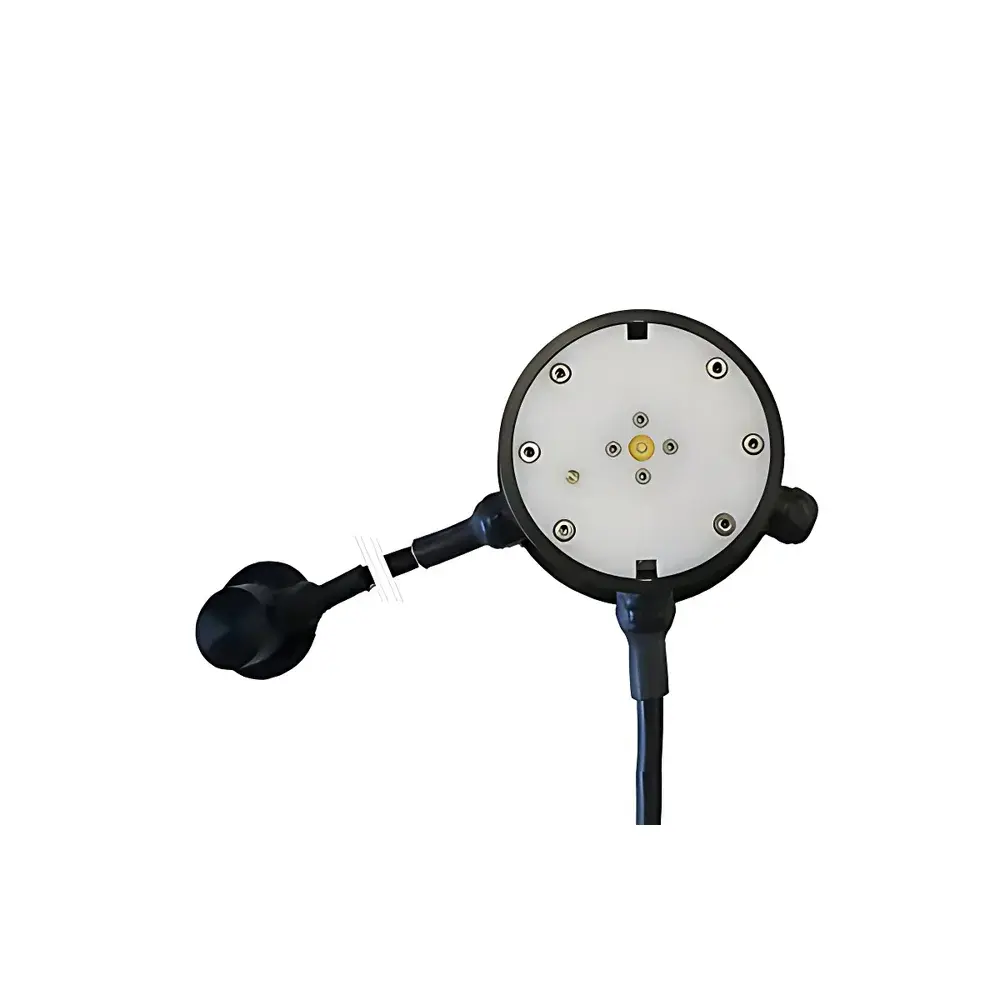
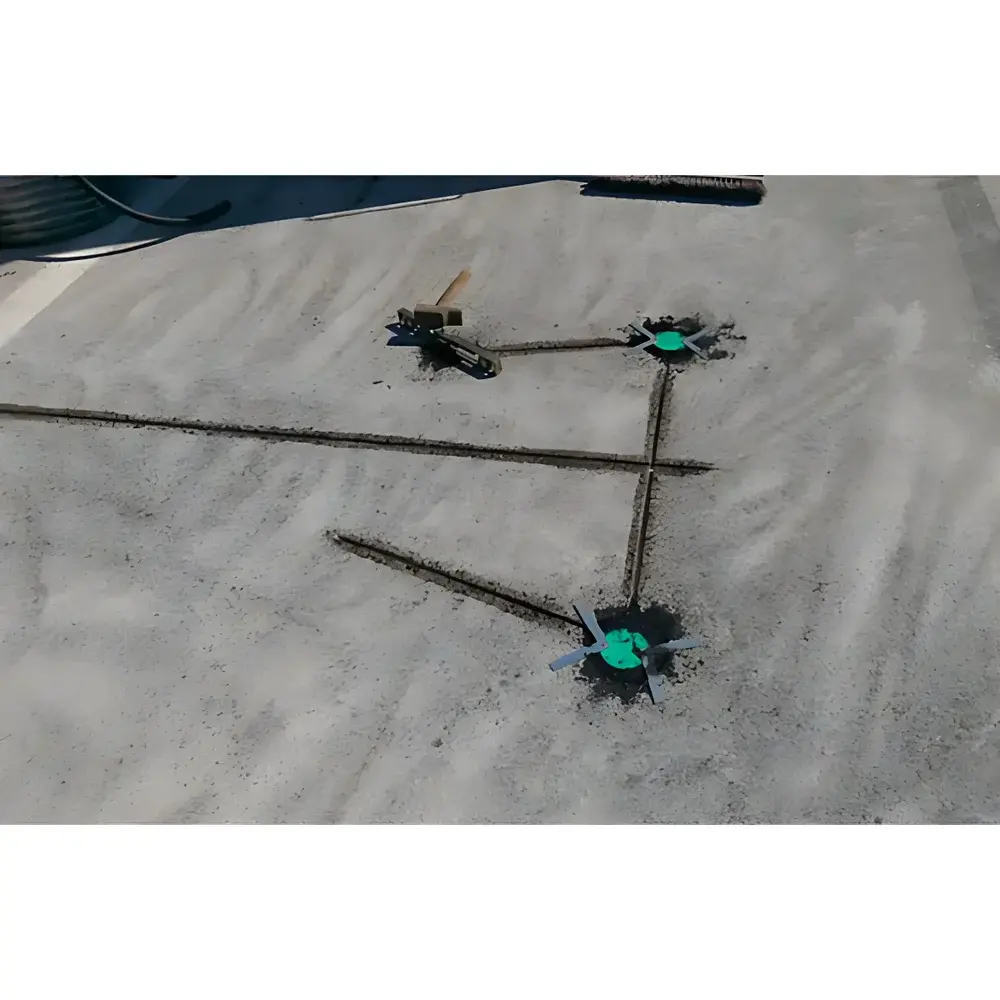
The Lufft ARS31Pro-UMB is a high-reliability, actively controlled road surface sensor engineered for continuous, unattended monitoring of pavement thermal and phase-state conditions. Unlike passive infrared or capacitive sensors, the ARS31Pro-UMB employs a thermoelectric (Peltier) element to dynamically cool and heat its measurement surface—enabling direct determination of the actual freezing point of moisture present on the road. This active thermodynamic approach eliminates reliance on empirical correlations or assumptions about de-icing agent composition (e.g., NaCl, CaCl₂, urea, or organic acetates), delivering physically grounded ice formation thresholds under real-world mixed-contaminant conditions. The sensor operates continuously in ambient temperatures ranging from −40 °C to +70 °C and is designed for permanent flush installation into asphalt, concrete, or composite pavements—ensuring minimal disruption to traffic flow and structural integrity.
Key Features
- Active surface thermodynamics: Integrated Peltier module enables controlled cooling below ambient and precise heating cycles to identify nucleation onset and latent heat release during phase transition.
- True freezing-point detection: Measures the exact temperature at which liquid moisture transitions to solid ice on the pavement surface—regardless of dissolved solutes from de-icing chemicals.
- Modular electronics architecture: Core sensor head remains embedded; only the detachable electronics module requires removal for calibration, firmware updates, or diagnostics—minimizing field downtime.
- Embedded icing algorithm: Onboard processor executes ISO/IEC 17025-aligned logic to evaluate surface temperature, rate of change, humidity-derived dew point, and thermal inertia—generating binary “ice likely” or “ice present” status flags with configurable hysteresis.
- Multi-protocol digital interface: Native UMB (Universal Measurement Bus) support ensures interoperability with Lufft’s own Vaisala, OTT, or third-party meteorological data loggers; also provides RS-485, Modbus RTU, and SDI-12 outputs for integration into SCADA, ITS, or smart city platforms.
- Robust environmental sealing: IP68-rated housing with UV-stabilized polycarbonate lens and corrosion-resistant stainless-steel mounting flange certified for long-term exposure to road salt, tire wear particulates, and freeze-thaw cycling.
Sample Compatibility & Compliance
The ARS31Pro-UMB is validated for use on all standard paved surfaces including hot-mix asphalt (HMA), portland cement concrete (PCC), and polymer-modified overlays. It meets the functional requirements of EN 13103:2021 (“Road weather information systems — Requirements for road surface condition sensors”) and aligns with WMO CIMO Guide Chapter 12 (Surface Weather Observations). Its output structure supports traceable reporting under GLP-compliant road weather monitoring programs and satisfies data integrity prerequisites for ISO/IEC 17025-accredited laboratories performing pavement safety assessments. While not a medical or pharmaceutical device, its deterministic physical measurement principle avoids the statistical uncertainty inherent in indirect proxies—making it suitable for regulatory-grade winter maintenance decision support per EU Directive 2010/40/EU (Intelligent Transport Systems Framework).
Software & Data Management
Raw sensor outputs—including surface temperature (±0.1 °C accuracy), Peltier power consumption, cooling rate (°C/min), and algorithm-derived ice probability index—are accessible via ASCII-formatted UMB telegrams or structured Modbus registers. Lufft’s proprietary meteoIO library (open-source C++ API) enables seamless ingestion into Python-, R-, or MATLAB-based analytics pipelines. All configuration parameters—including alarm thresholds, sampling intervals (1–300 s), and hysteresis settings—are remotely adjustable without physical access. Audit logs record firmware version, calibration timestamp, and last successful self-test—supporting FDA 21 CFR Part 11-compliant environments when deployed within validated ITS infrastructure.
Applications
- Traffic meteorology: Real-time input for dynamic variable message signs (VMS), automated gritting dispatch, and route-specific risk scoring in national highway networks.
- Bridge deck monitoring: Early detection of black ice formation on thermally isolated structures where ambient air temperature fails to reflect surface thermal lag.
- Airport operations: Integration with ATIS (Automated Terminal Information Service) and FAA AC 150/5200-31B-compliant runway condition reporting systems.
- Smart city infrastructure: Aggregated data feeds into municipal digital twins for predictive winter service optimization and climate resilience modeling.
- Academic research: Field validation of numerical pavement heat-transfer models (e.g., KANDY, FROST3D) and laboratory correlation studies involving brine concentration gradients and cryoscopic depression.
FAQ
Does the ARS31Pro-UMB require periodic recalibration?
Yes—Lufft recommends annual traceable calibration against NIST-traceable reference standards in accordance with ISO/IEC 17025. The modular design allows field replacement of the electronics unit with pre-calibrated spares to maintain system uptime.
Can it distinguish between frost, dew, and black ice?
It does not classify visual phenomena; rather, it reports the thermodynamically determined freezing point of surface moisture and flags when that point intersects measured surface temperature—indicating imminent or active phase transition.
Is installation compatible with existing pavement cutting specifications?
Yes—the 120 mm diameter cutout and 80 mm embedment depth conform to ASTM D6433 and EN 12830 for in-pavement sensor retrofits, with epoxy anchoring kits available for both new-build and rehabilitation projects.
How does it handle contamination from tire rubber or oil residues?
The sapphire-coated measurement window resists abrasion and hydrocarbon adhesion; routine cleaning with isopropyl alcohol restores optical and thermal interface integrity without affecting calibration stability.