
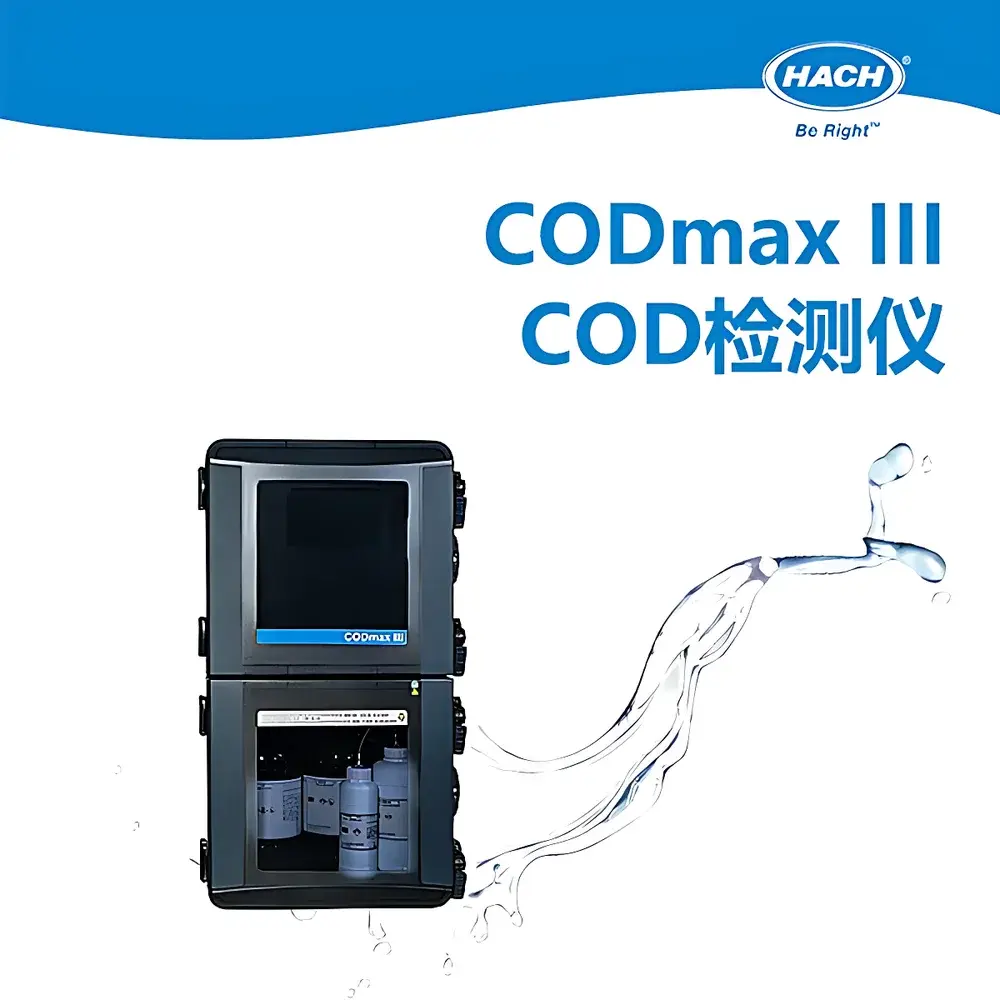
Hach CODmax III Online Chemical Oxygen Demand (COD) Analyzer – Chromium Method
| Brand | Hach |
|---|---|
| Model | CODmax III |
| Type | Online Analyzer |
| Measurement Principle | Potassium Dichromate Digestion Method |
| Range | 10–5000 mg/L COD |
| Accuracy | ±10% |
| Repeatability | ≤5% |
| Detection Limit | 5 mg/L |
| Cycle Time | 2 hours per sample |
| Batch Capacity | 15 samples per run |
| Compliance | Meets Chinese Environmental Monitoring Standard HJ 399-2017 and ISO 6060 |
Overview
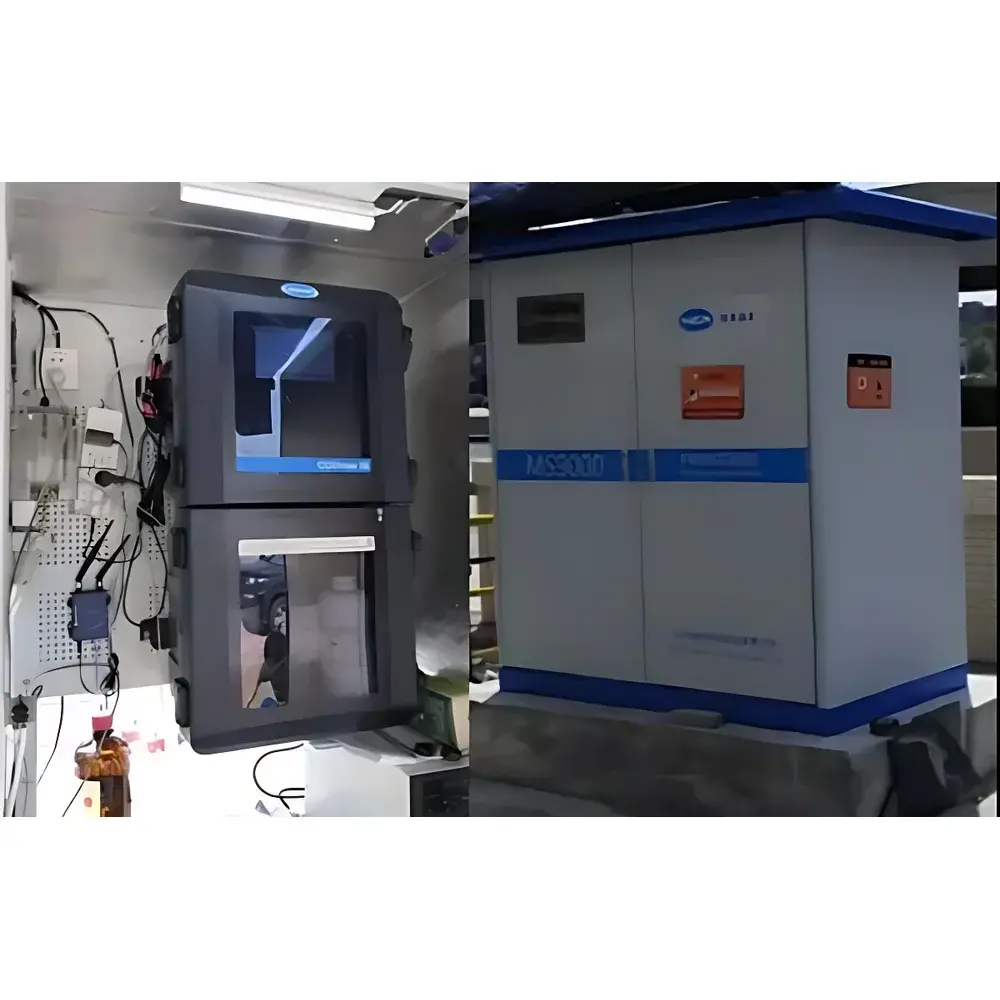
The Hach CODmax III Online Chemical Oxygen Demand (COD) Analyzer is an industrial-grade, fully automated system engineered for continuous, unattended monitoring of organic pollution load in surface water, wastewater effluents, and polluted urban rivers. It operates on the standardized potassium dichromate oxidation method—recognized under ISO 6060 and China’s HJ 399-2017—as a robust alternative to permanganate-based COD (CODMn) assays where high organic content or black-odor conditions render traditional methods inadequate. Unlike portable or benchtop variants, the CODmax III integrates into fixed outdoor monitoring platforms such as the Hach MS9000 Compact Water Quality Monitoring System, enabling real-time data acquisition with minimal operator intervention. Its core measurement architecture combines precise liquid handling, temperature-controlled photometric detection, and multi-stage optical metering to ensure stable performance across wide concentration ranges—from low-level background contamination (10–39.9 mg/L) to heavily polluted matrices exceeding 3000 mg/L COD.
Key Features
- Multi-stage optical metering system with integrated temperature stabilization for absorbance detection, enhancing precision at low concentrations (10–39.9 mg/L)
- Automated standard solution verification (every 24 h) and full calibration (every 7 days), compliant with regulatory requirements for QA/QC traceability
- Hach Prognosys predictive diagnostics and Diagnose self-diagnostic suite for early fault identification, maintenance scheduling, and reduced unplanned downtime
- Anti-fouling operational mode optimized for high-chloride, high-suspended-solid environments—extending service intervals for sampling probes, metering cells, and digestion modules
- Onboard data logging with timestamped audit trail, supporting GLP-compliant record retention and retrospective validation
- Modular design compatible with Hach MS9000 and other third-party telemetry or SCADA systems via Modbus TCP/RTU and 4–20 mA analog outputs
Sample Compatibility & Compliance
The CODmax III is validated for use with raw surface water, municipal wastewater influent/effluent, industrial discharge streams, and black-odor river segments characterized by elevated organic loading and variable turbidity. It meets the analytical performance criteria specified in HJ 399-2017 (China’s standard for COD determination by dichromate method) and aligns with ISO 6060 for international comparability. The instrument supports regulatory reporting frameworks requiring 21 CFR Part 11–compliant electronic records when deployed with Hach’s optional data management software. All internal verification events—including standard solution checks—are logged with metadata (time, result, deviation %, operator ID if applicable), satisfying environmental agency requirements for method validation and long-term data integrity.
Software & Data Management
Data acquisition and system control are managed through Hach’s proprietary Instrument Manager software, which provides remote configuration, real-time status monitoring, and configurable alarm thresholds (e.g., deviation >10% during standard verification triggers SMS/email alert). Raw absorbance values, digestion temperature profiles, reagent consumption logs, and diagnostic codes are stored locally for ≥90 days and exportable in CSV or XML format. When integrated into centralized water quality networks, the CODmax III transmits validated COD values—not raw signals—to supervisory systems, ensuring only auditable, QC-approved results enter compliance databases. Audit trails include user actions, firmware updates, and calibration history, fulfilling GLP/GMP documentation expectations for regulated monitoring programs.
Applications
- Continuous monitoring of urban black-odor rivers and tributaries where CODMn fails due to insufficient oxidant strength
- Effluent compliance tracking at municipal wastewater treatment plant discharge points
- Industrial outfall surveillance for textile, food processing, pharmaceutical, and chemical manufacturing facilities
- Early-warning detection in source water protection zones upstream of drinking water intakes
- Performance verification of constructed wetlands or advanced oxidation processes in pilot-scale remediation projects
FAQ
What is the minimum detectable COD concentration, and how is it verified?
The stated method detection limit is 5 mg/L, determined per HJ 399-2017 protocol using repeated analysis of ultra-low-concentration standards and calculation of standard deviation. Instrumental detection capability is confirmed during factory acceptance testing and re-verified annually during site-specific performance qualification.
Does the CODmax III comply with U.S. EPA or EU regulatory methods?
While not certified under U.S. EPA Method 410.4 or EN ISO 15705, its potassium dichromate oxidation chemistry and performance characteristics are technically equivalent; users deploying it in non-Chinese jurisdictions must perform local method validation per their regulatory authority’s requirements.
How does the anti-fouling mode function in high-chloride environments?
It employs extended rinse cycles, elevated flow velocity during aspiration, and periodic high-pressure air purging of the sample line and digestion chamber—reducing precipitate adhesion and minimizing manual cleaning frequency by up to 60% compared to conventional operation.
Can the CODmax III be operated without integration into the MS9000 platform?
Yes—it supports standalone installation with external power, sheltering, and sample intake infrastructure; however, full environmental certification (IP65, -20°C to +50°C ambient tolerance) and telemetry readiness require Hach-certified enclosures and mounting kits.
Is remote firmware update supported?
Firmware upgrades are performed via secure HTTPS connection using Hach’s authorized service portal; updates include version-controlled release notes, rollback capability, and mandatory pre-update system health check.
Related Products







