
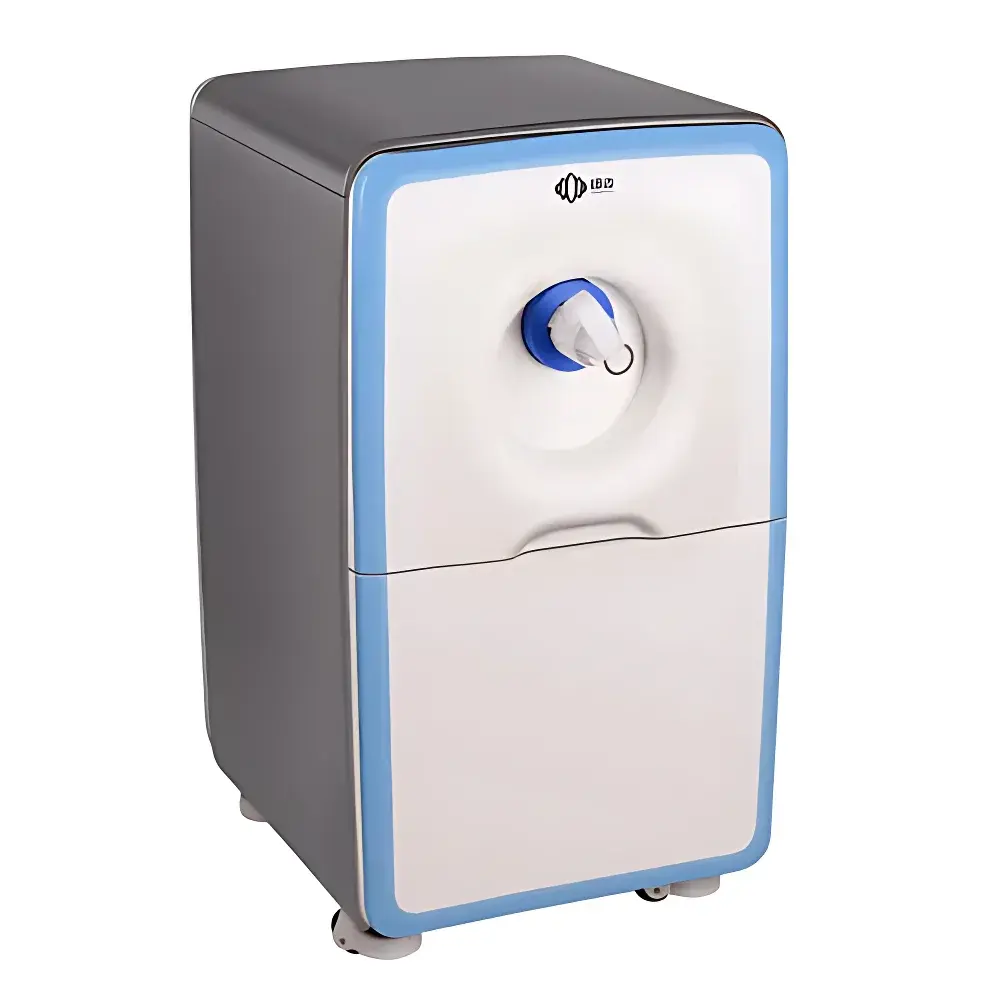
NIUMAG QMR06-060H-PRO Small Animal Body Composition Analyzer
| Brand | NIUMAG |
|---|---|
| Origin | Jiangsu, China |
| Manufacturer Type | Authorized Distributor |
| Product Category | Domestic |
| Model | QMR06-060H-PRO |
| Instrument Type | Research-Grade Small Animal (Mouse/Rat) Analyzer |
| Sample Capacity | Single mouse (up to 50 g) or rat (up to 300 g) |
| Core Functions | In vivo quantification of fat mass, lean body mass, and total body water |
| Magnet System | Permanent magnet (low-field, ~0.06 T) |
| Measurement Time | ≤ 60 s per scan |
| Sample Preparation | Non-invasive, no anesthesia, no euthanasia required |
| Compliance | Designed for GLP-compliant preclinical research environments |
Overview
The NIUMAG QMR06-060H-PRO is a dedicated low-field nuclear magnetic resonance (LF-NMR) analyzer engineered for rapid, non-invasive, and quantitative assessment of body composition in live small laboratory animals. Operating at a static magnetic field strength of approximately 0.06 Tesla, the system leverages time-domain NMR (TD-NMR) principles—specifically transverse relaxation (T₂) decay analysis—to differentiate proton signals originating from adipose tissue (short T₂), lean tissue (intermediate T₂), and free water (long T₂). This physical discrimination enables direct, calibration-free quantification of fat mass, lean body mass, and total body water without reliance on chemical assumptions or reference standards. The instrument is optimized for longitudinal studies in metabolic, nutritional, pharmacological, and genetic research where repeated in vivo measurements are essential. Its permanent magnet architecture ensures operational stability, minimal cryogen dependency, and reduced infrastructure requirements compared to superconducting systems—making it suitable for core facilities, university labs, and contract research organizations conducting high-throughput rodent phenotyping.
Key Features
- Non-invasive, live-animal measurement: No anesthesia, sedation, radiation exposure, or terminal procedures required—enabling repeated assessments on the same subject over time.
- Single-scan acquisition in ≤ 60 seconds: High throughput capability supports daily monitoring of cohorts in obesity, diabetes, or aging studies.
- Permanent magnet system: Field homogeneity optimized for small-bore geometry (60 mm bore diameter); zero helium consumption; stable field drift < 0.1 ppm/hour under ambient temperature control.
- Automated animal positioning: Integrated cradle with adjustable restraint and thermal stabilization (±0.5 °C) minimizes motion artifacts and physiological variability.
- Calibration-free quantification: Pre-validated pulse sequences (CPMG-based) and built-in signal processing algorithms eliminate need for species-specific phantoms or empirical regression models.
- Rugged benchtop design: Compact footprint (W × D × H: 650 × 520 × 480 mm); CE-marked electrical safety; EMI-shielded enclosure compliant with IEC 61326-1.
Sample Compatibility & Compliance
The QMR06-060H-PRO accommodates live mice (15–50 g), rats (100–300 g), and juvenile rabbits (up to 800 g) within its standardized sample tube and cradle assembly. Weight-based auto-scaling adjusts RF excitation and receiver gain to maintain signal-to-noise consistency across size ranges. All hardware and software components conform to ISO/IEC 17025:2017 general requirements for competence of testing and calibration laboratories. Data acquisition workflows support audit trails and user access logs aligned with FDA 21 CFR Part 11 expectations for electronic records in regulated preclinical studies. Instrument validation documentation—including field mapping reports, T₂ repeatability data (CV 0.995 vs. reference DEXA)—is provided with each system.
Software & Data Management
The proprietary QMR-Analysis Suite v4.2 runs on Windows 10/11 (64-bit) and provides full control over acquisition parameters, real-time visualization of FID and CPMG echo trains, and automated post-processing. Each session generates a structured .qmr dataset containing raw time-domain signals, fitted T₂ distributions, compartmental volume fractions, and metadata (animal ID, weight, date/time, operator, protocol ID). Export options include CSV (for statistical packages such as R or SAS), PDF summary reports, and DICOM-SR-compatible structured reports for integration into LIMS or ELN platforms. Role-based user accounts enforce password-protected access levels (Operator, Technician, Administrator), and all data modifications are timestamped and logged in an immutable audit trail. Software updates are delivered via secure HTTPS channel with SHA-256 signature verification.
Applications
- Longitudinal monitoring of diet-induced obesity models: Tracking fat mass accumulation kinetics and lean mass preservation during intervention trials.
- Pharmacodynamic evaluation of anti-obesity therapeutics: Quantifying treatment effects on adipose redistribution and ectopic fat deposition.
- Nutritional intervention studies: Assessing protein-energy balance shifts in malnutrition or sarcopenia models.
- Genetic phenotyping: High-throughput screening of transgenic or knockout strains for metabolic syndrome traits.
- Toxicology endpoints: Detecting early changes in body water homeostasis or muscle catabolism following compound exposure.
- Preclinical validation of imaging biomarkers: Cross-correlation with micro-CT, MRI, or PET for multi-modal phenotyping pipelines.
FAQ
What is the minimum and maximum animal weight supported?
The system is validated for mice (15–50 g) and rats (100–300 g). For animals outside this range, contact technical support for custom cradle and sequence optimization.
Does the instrument require liquid nitrogen or helium cooling?
No. The permanent magnet operates at ambient temperature and requires only standard AC power (220 V ± 10%, 50 Hz) and stable lab environment (18–25 °C, < 60% RH).
How is data traceability ensured for regulatory submissions?
All acquisitions include embedded digital signatures, operator ID, instrument serial number, and calibrated timestamps. Audit logs record every parameter change, file export, or report generation event—fully compliant with ALCOA+ data integrity principles.
Can the system be integrated into automated housing or metabolic cages?
Yes. Optional TTL-triggered acquisition mode allows synchronization with third-party systems (e.g., Promethion, TSE PhenoMaster) via RS-232 or Ethernet TCP/IP interface.
Is method validation support available?
NIUMAG provides IQ/OQ documentation templates, installation qualification checklists, and on-site operational qualification assistance by certified field application scientists.





