
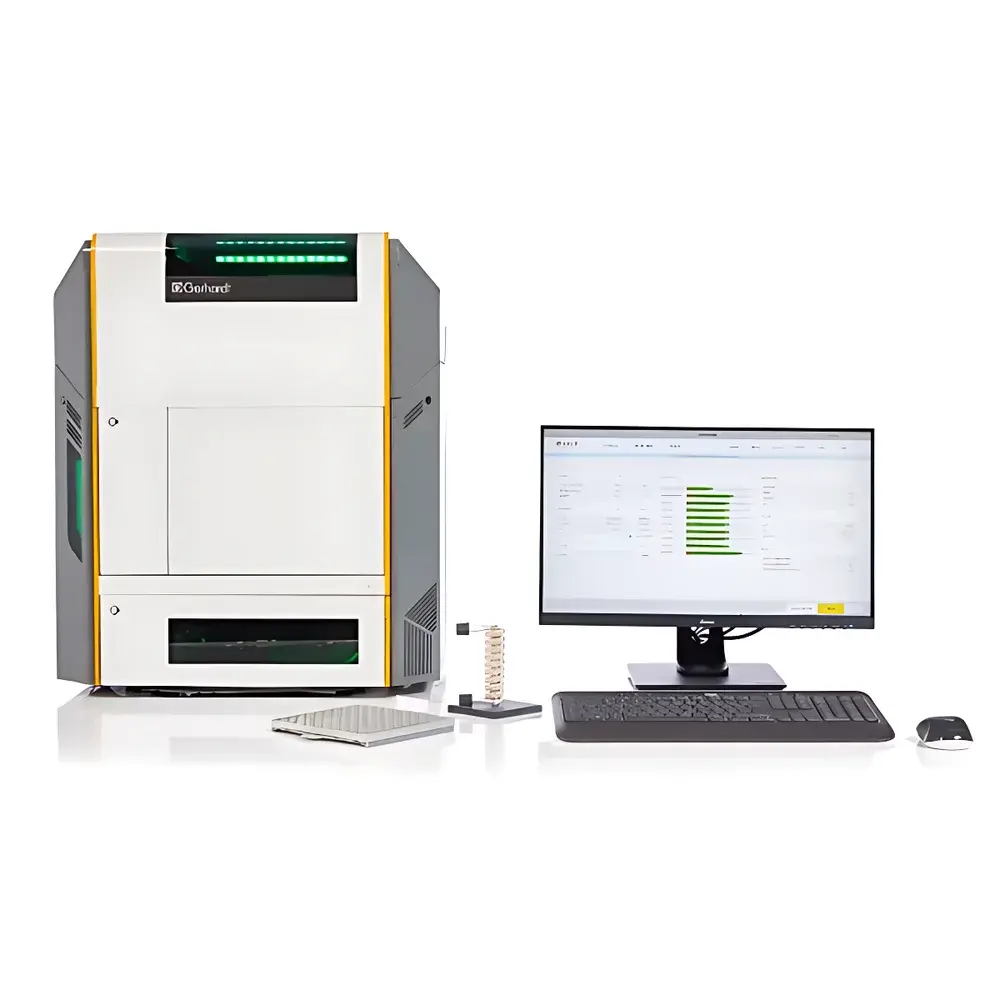
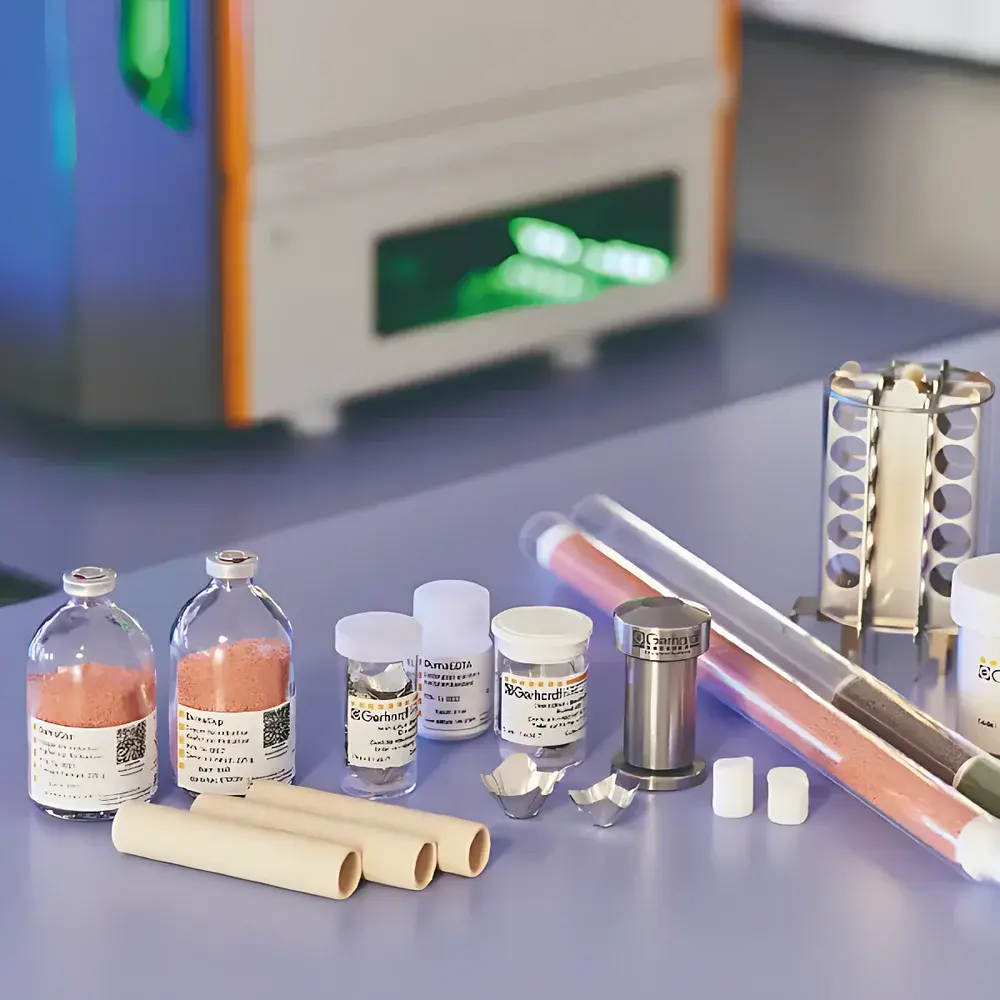
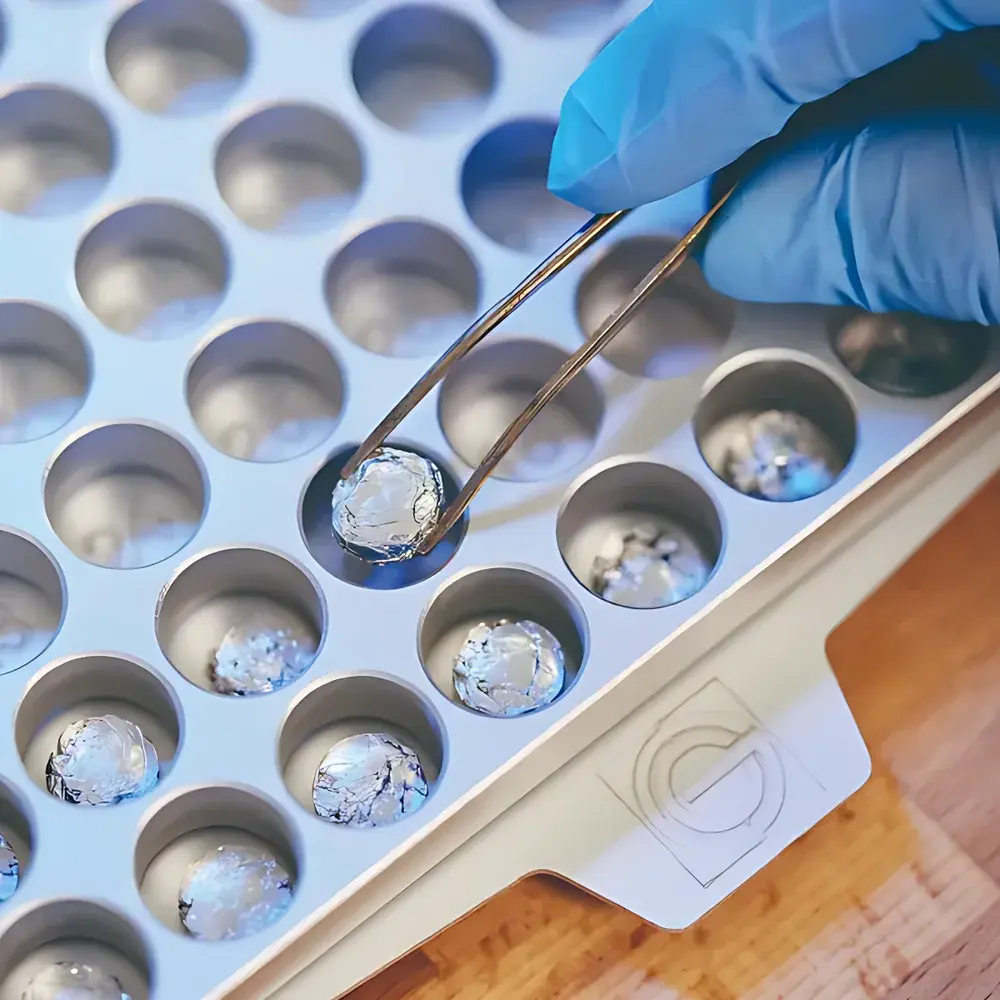
Gerhardt N-Realyzer Dumas Combustion Nitrogen Determinator
| Brand | Gerhardt |
|---|---|
| Origin | Germany |
| Model | N-Realyzer |
| Principle | Dumas Combustion Method |
| Automation Level | Fully Automated |
| Nitrogen Range | 0.003–50 mg N |
| Repeatability | RSD < 0.5% |
| Max Sample Weight | 1 g |
| Recovery Rate | ≥99.5% |
| Power Consumption | 1400 W |
| Dimensions (L×W×H) | 600 × 550 × 722 mm |
Overview
The Gerhardt N-Realyzer is a fully automated elemental analyzer engineered for high-precision total nitrogen and protein determination in accordance with the standardized Dumas combustion method (ISO 1871, AOAC 992.15, ASTM D5142, EN ISO 16634-1/2). It thermally oxidizes organic samples in a high-temperature furnace (up to 1100 °C) under controlled oxygen flow, converting all nitrogen compounds quantitatively into molecular nitrogen (N₂). The resulting gas stream—free of interfering CO₂, H₂O, and SO₂ via integrated catalytic and absorbent traps—is directed to a highly stable, single-gas-path thermal conductivity detector (TCD). This architecture eliminates cross-sensitivity, ensures baseline stability, and delivers rapid, interference-free quantification without chromatographic separation. With analysis times of 2–4 minutes per sample and batch capacity up to 100 positions, the N-Realyzer supports high-throughput routine testing in food, feed, agricultural, pharmaceutical, and environmental laboratories requiring regulatory compliance and audit-ready traceability.
Key Features
- Fully automated operation from sample weighing to report generation—including auto-calibration, blank correction, and system diagnostics
- Optimized combustion chamber design with precise O₂ dosing control per sample, minimizing excess oxygen consumption and reducing helium carrier gas usage by up to 30% versus conventional systems
- Single-path TCD detection system with drift-compensated electronics, delivering robust signal integrity across wide dynamic range (0.003–50 mg N)
- Tool-free maintenance architecture: quick-release furnace access, modular catalyst and desiccant cartridges, and self-aligning ceramic combustion tubes for extended service intervals
- Integrated safety interlocks: real-time pressure monitoring, overtemperature cutoff, automatic gas shutoff on anomaly detection, and fail-safe cooling protocol post-run
- Compliance-ready hardware: built-in event logging, user-access-level management (admin/operator/guest), and full 21 CFR Part 11–compatible audit trail when paired with Gerhardt Analytical Suite software
Sample Compatibility & Compliance
The N-Realyzer accommodates diverse matrices without derivatization or pre-treatment: homogeneous solids (grains, meat, dairy powders), viscous liquids (milk, sauces, fermentation broths), and heterogeneous suspensions (soil extracts, sludge digests). Sample mass is precisely controlled up to 1.0 g, enabling accurate low-N quantification (e.g., purified proteins, plant tissues) and high-N analysis (e.g., ammonium salts, fertilizers) within a single method. All performance specifications—including recovery ≥99.5%, repeatability RSD < 0.5%, and linearity across five orders of magnitude—are verified per ISO/IEC 17025 requirements. The system meets GLP and GMP documentation standards and supports validation protocols aligned with USP , , and .
Software & Data Management
Gerhardt Analytical Suite provides intuitive method setup, real-time run monitoring, and automated calculation of nitrogen content, crude protein (×6.25 or user-defined factor), and % recovery relative to certified reference materials (CRMs). Raw TCD signals, calibration curves, and system status logs are stored in encrypted SQLite databases with immutable timestamps. Export options include CSV, PDF analytical reports, and LIMS-compatible XML (ASTM E1384). Audit trail functionality records all user actions, parameter changes, and instrument events with digital signature capability—fully compliant with FDA 21 CFR Part 11 and EU Annex 11 requirements for electronic records and signatures.
Applications
- Food & Feed: Crude protein verification in cereals, legumes, pet food, and aquafeed per AOAC and ISO methods
- Agriculture: Total nitrogen profiling in soils, composts, manures, and biofertilizers
- Pharmaceuticals: Nitrogen content assay in active pharmaceutical ingredients (APIs) and excipients per USP monographs
- Environmental: Kjeldahl-equivalent nitrogen determination in wastewater sludge and sediment samples
- Research: High-throughput screening of nitrogen metabolism in plant physiology and microbiology studies
FAQ
What combustion temperature does the N-Realyzer use, and how is temperature uniformity ensured?
The furnace operates at a nominal 1100 °C, maintained within ±5 °C across the entire combustion zone via dual-zone PID-controlled heating elements and embedded Pt100 sensors with real-time feedback compensation.
Can the system analyze volatile or halogenated samples without column contamination?
Yes—the integrated quartz wool trap, copper oxide catalyst, and magnesium perchlorate/H₂SO₄ dual-stage scrubbers quantitatively remove halogens, sulfur, and chlorine prior to TCD detection, preventing detector poisoning and ensuring long-term baseline stability.
Is method transfer from Kjeldahl possible without revalidation?
While direct equivalence is matrix-dependent, Gerhardt provides application notes and CRM-based correlation data demonstrating statistical equivalence (paired t-test, p > 0.05) for >95% of common food/feed matrices; formal revalidation per ICH Q2(R2) is recommended for regulated submissions.
How often must the catalyst and desiccant cartridges be replaced?
Under typical usage (60 samples/day), the combustion catalyst lasts ≥10,000 injections and the desiccant cartridge ≥3,000 runs—both monitored automatically via runtime counters and displayed in the software dashboard.
Does the N-Realyzer support remote diagnostics and preventive maintenance alerts?
Yes—via optional Ethernet-connected Gerhardt Remote Service Module (RSM), which enables secure technician access, predictive failure analytics based on sensor drift trends, and scheduled maintenance notifications synchronized with laboratory calendar systems.





