LaVision FlowMaster-STB 4D Particle Tracking Velocimetry (4D-PTV) System
| Brand | LaVision GmbH |
|---|---|
| Origin | Germany |
| Manufacturer Type | Authorized Distributor |
| Origin Category | Imported |
| Model | FlowMaster-STB |
| Measurement Capability | True 3D, three-component (3D3C) volumetric velocity field |
| Measurement Frequency | Low-to-medium temporal resolution (suitable for transient and quasi-steady flows) |
| Velocity Range | 0–1000 m/s |
| Accuracy | ±1% of measured velocity magnitude |
| Measurement Volume | 1 m × 1 m × 1 m (adjustable via optical configuration and seeding density) |
Overview
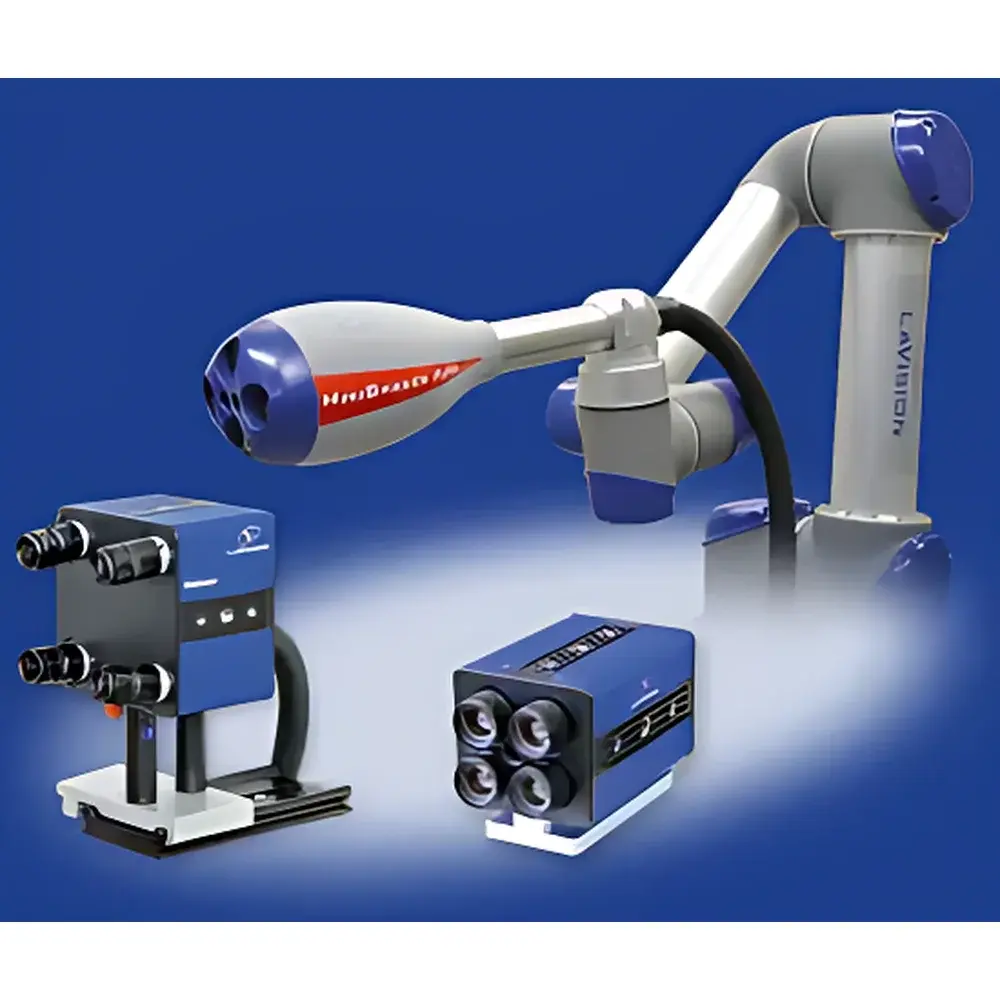
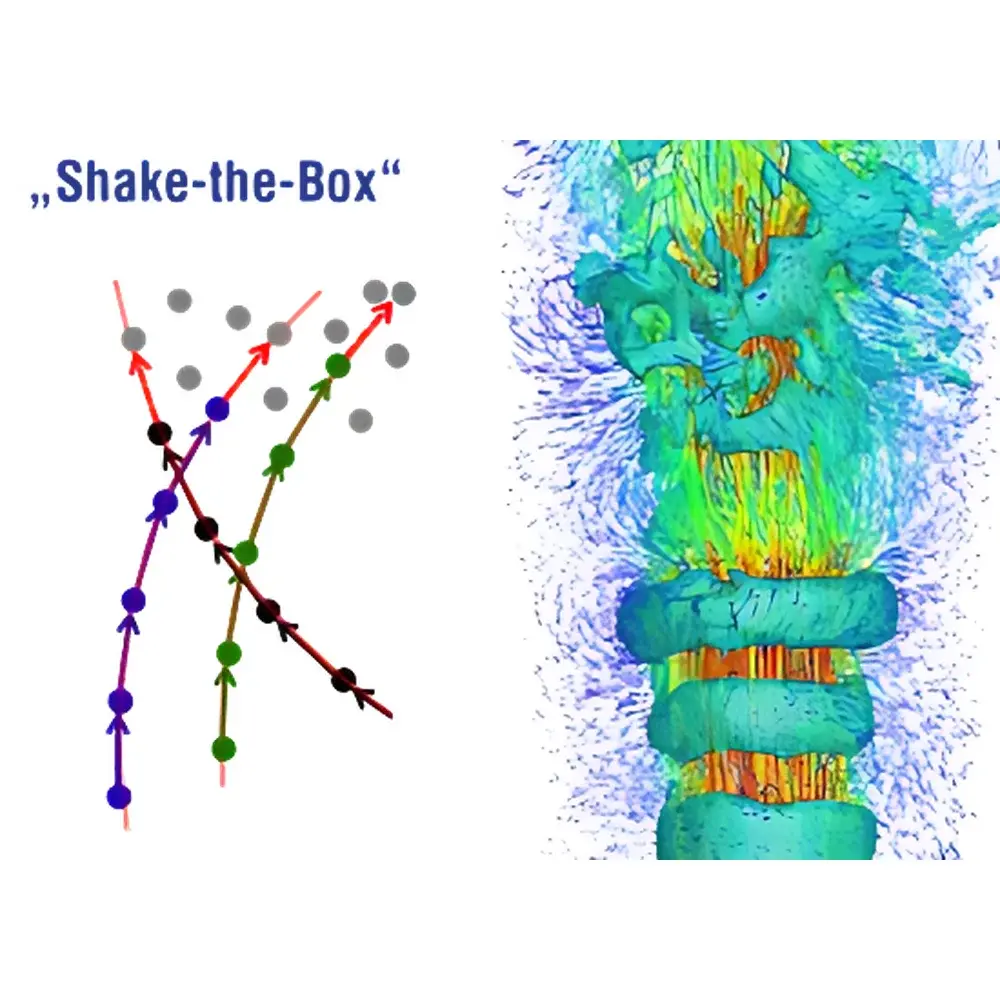
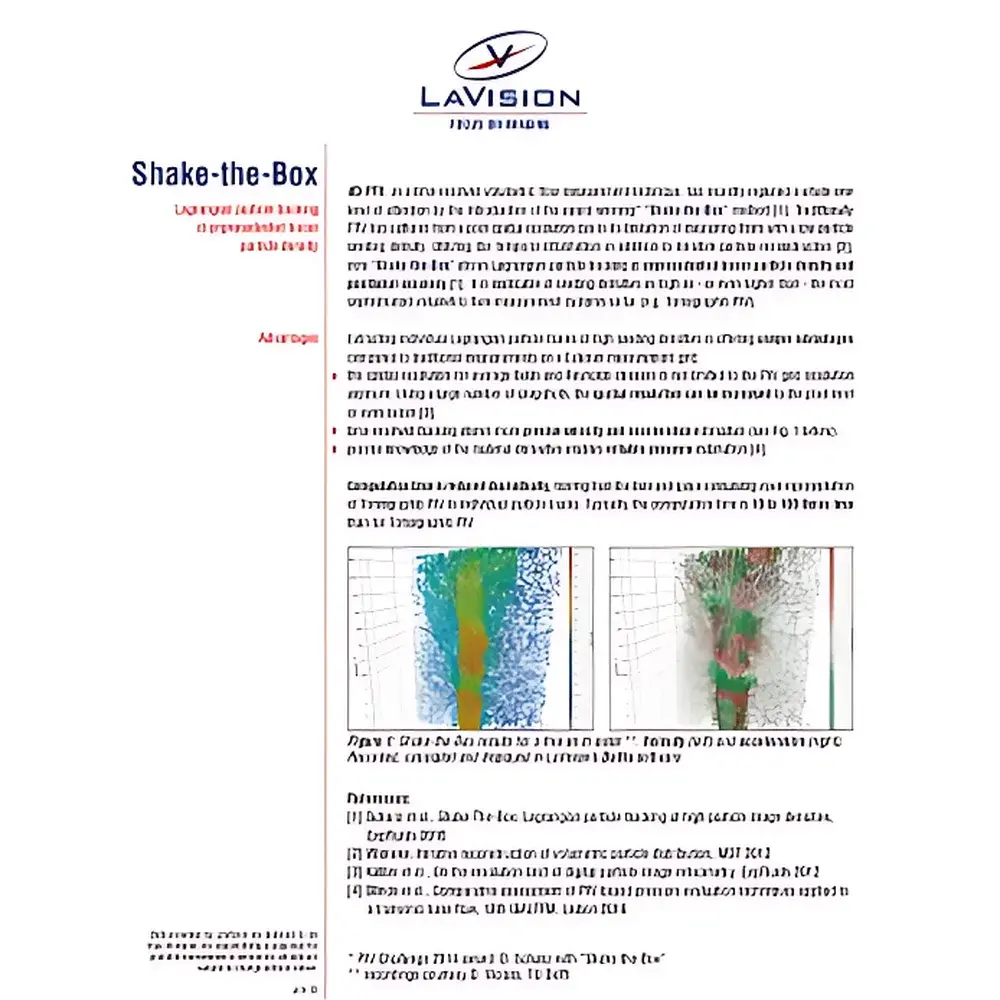
The LaVision FlowMaster-STB 4D Particle Tracking Velocimetry (4D-PTV) System is a high-fidelity, volumetric flow diagnostic platform engineered for Lagrangian trajectory-resolved measurements in complex fluid dynamics environments. Unlike Eulerian interrogation methods such as conventional PIV or even tomographic PIV (Tomo-PIV), the FlowMaster-STB implements the Shake-the-Box (STB) algorithm — a robust, iterative particle reconstruction framework that leverages spatiotemporal continuity of individual tracer particle motion across multiple high-speed camera views. By combining multi-camera stereoscopic imaging (typically 4–8 synchronized CMOS cameras), precise calibration, and physics-informed 4D-PTV reconstruction, the system delivers full 3D3C (three-dimensional, three-component) velocity vectors with Lagrangian pathline fidelity over time. This enables quantitative analysis of turbulent dispersion, vortex dynamics, particle-laden transport, and unsteady coherent structures within volumes up to 1 m³. The system operates on the principle of digital holographic-like particle localization—where each tracked particle is resolved as a discrete point source in space and time—making it especially suited for moderate-to-high seeding densities where traditional Tomo-PIV suffers from peak-locking or ghost particle ambiguities.
Key Features
- Shake-the-Box (STB) algorithm implementation: Enables deterministic, iterative particle identification and trajectory linking without reliance on correlation-based interrogation windows.
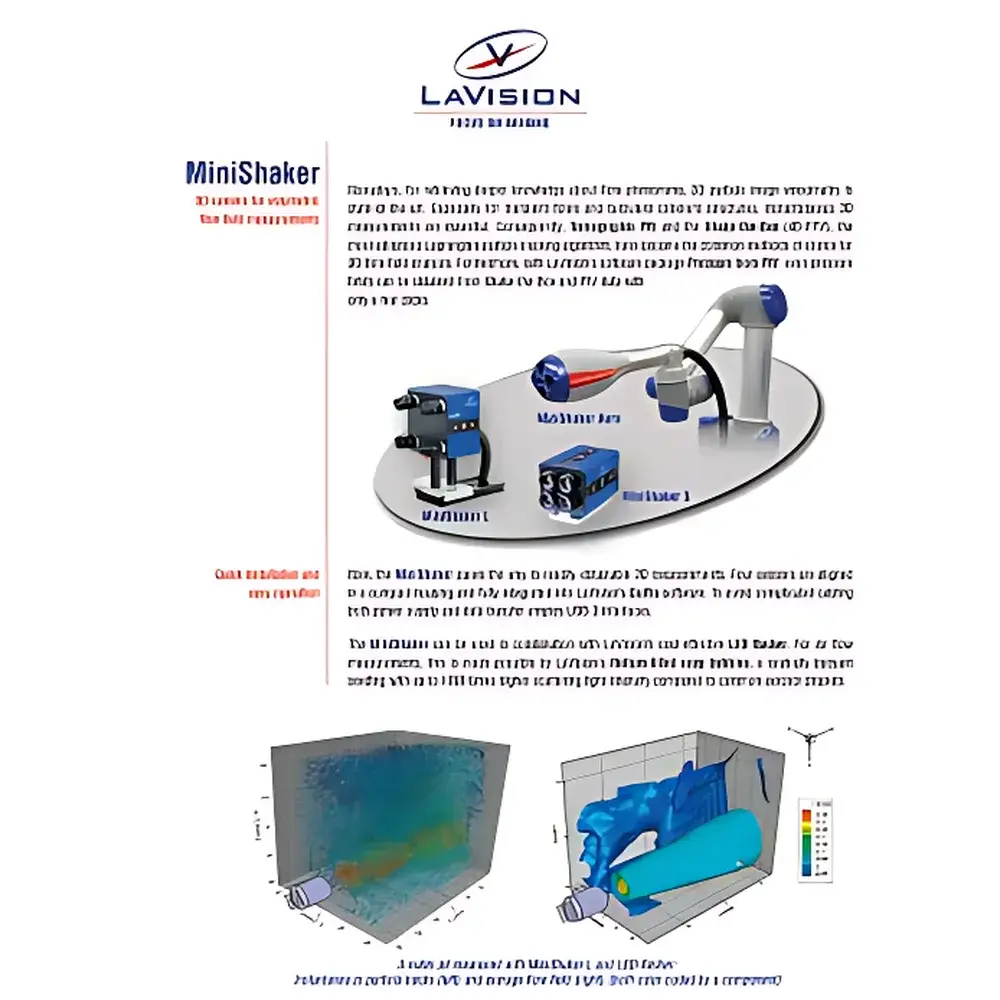
- Modular hardware architecture: Shares identical core components—including high-resolution sCMOS cameras, pulsed Nd:YAG laser systems, and precision calibration rigs—with LaVision’s FlowMaster Tomo-PIV series, ensuring cross-platform compatibility and streamlined lab integration.
- Volumetric measurement volume configurable up to 1 m × 1 m × 1 m, scalable via lens selection, camera baseline optimization, and volumetric calibration procedures per ISO 20457:2018.
- Velocity range coverage from quiescent flow (0 m/s) to high-speed regimes (up to 1000 m/s), validated against NIST-traceable hot-wire anemometry and calibrated jet nozzles.
- Measurement accuracy of ±1% of local velocity magnitude, determined under controlled wind tunnel conditions per ASTM D6892-22 Annex A3 guidelines for PTV uncertainty quantification.
- Support for both continuous and time-resolved acquisition modes, with synchronization capability down to 10 ns jitter for laser pulse triggering and camera exposure control.
Sample Compatibility & Compliance
The FlowMaster-STB is compatible with standard polyamide, hollow glass, or titanium-dioxide-coated seeding particles (1–50 µm diameter), optimized for Mie scattering under pulsed laser illumination (typically 532 nm). It supports aqueous, gaseous, and multiphase flow media—including combustion environments with soot mitigation strategies. All calibration and validation protocols comply with ISO/IEC 17025:2017 requirements for testing laboratories. Data acquisition workflows are designed to support GLP-compliant documentation, including audit trails for camera settings, laser energy logs, and reconstruction parameter history. While not FDA-certified per se, the system meets foundational data integrity criteria outlined in 21 CFR Part 11 when deployed with LaVision’s DaVis software configured for electronic signature and user access control.
Software & Data Management
The system is operated via LaVision’s DaVis 10.2+ software suite, which provides integrated control of hardware synchronization, real-time preprocessing, STB reconstruction, and post-processing visualization. DaVis includes built-in modules for trajectory statistics (Lagrangian acceleration, vorticity derivation, finite-time Lyapunov exponent mapping), ensemble averaging, and export to HDF5, Tecplot PLT, and Paraview-compatible VTK formats. All raw image sequences, intermediate reconstruction files, and metadata are stored with embedded timestamps, instrument configuration snapshots, and versioned processing scripts—ensuring full traceability for peer-reviewed publication or regulatory submission. Batch processing pipelines support automated STB parameter sweeps (e.g., search radius, prediction order, outlier rejection thresholds) for sensitivity analysis and uncertainty propagation studies.
Applications
- Aerodynamic development of UAVs and automotive underhood flows requiring 3D vortex tracking and separation zone quantification.
- Combustion research in gas turbine model combustors, where Lagrangian particle residence time and mixing efficiency govern NOx formation.
- Biomedical fluid mechanics, including pulsatile blood flow in anatomically accurate phantoms and inhaler aerosol deposition studies.
- Environmental hydraulics: sediment transport modeling in flume experiments using neutrally buoyant tracers at Reynolds numbers >10⁵.
- Industrial mixing characterization in stirred-tank reactors, where STB resolves preferential pathways and dead zones inaccessible to planar PIV.
FAQ
How does Shake-the-Box differ fundamentally from Tomographic PIV?
STB reconstructs individual particle trajectories by solving a global optimization problem across time-resolved 3D particle positions, whereas Tomo-PIV reconstructs instantaneous 3D intensity fields via algebraic reconstruction techniques (ART), followed by 3D cross-correlation—introducing inherent spatial smoothing and ambiguity in dense seeding scenarios.
Can the FlowMaster-STB be upgraded from an existing Tomo-PIV setup?
Yes—provided the camera count, synchronization hardware, and DaVis license include the STB module, the same optical train and calibration data can be reused; only software configuration and acquisition parameters require adjustment.
What is the minimum resolvable inter-particle distance in a 1 m³ volume?
Under optimal seeding (10–20 particles per cm³) and 4-camera configuration with 4 MP sensors, the effective spatial resolution is ~0.5–1.0 mm RMS, governed by triangulation uncertainty and particle image sharpness.
Is real-time particle tracking supported?
No—STB is inherently offline due to its iterative, multi-frame global optimization nature; however, near-real-time preview modes are available for rapid parameter tuning prior to full reconstruction.
Does the system support dual-plane or hybrid PIV/PTV operation?
Yes—DaVis allows concurrent acquisition and post-hoc fusion of planar PIV layers with STB-derived 3D trajectories for hybrid Eulerian–Lagrangian analysis.