
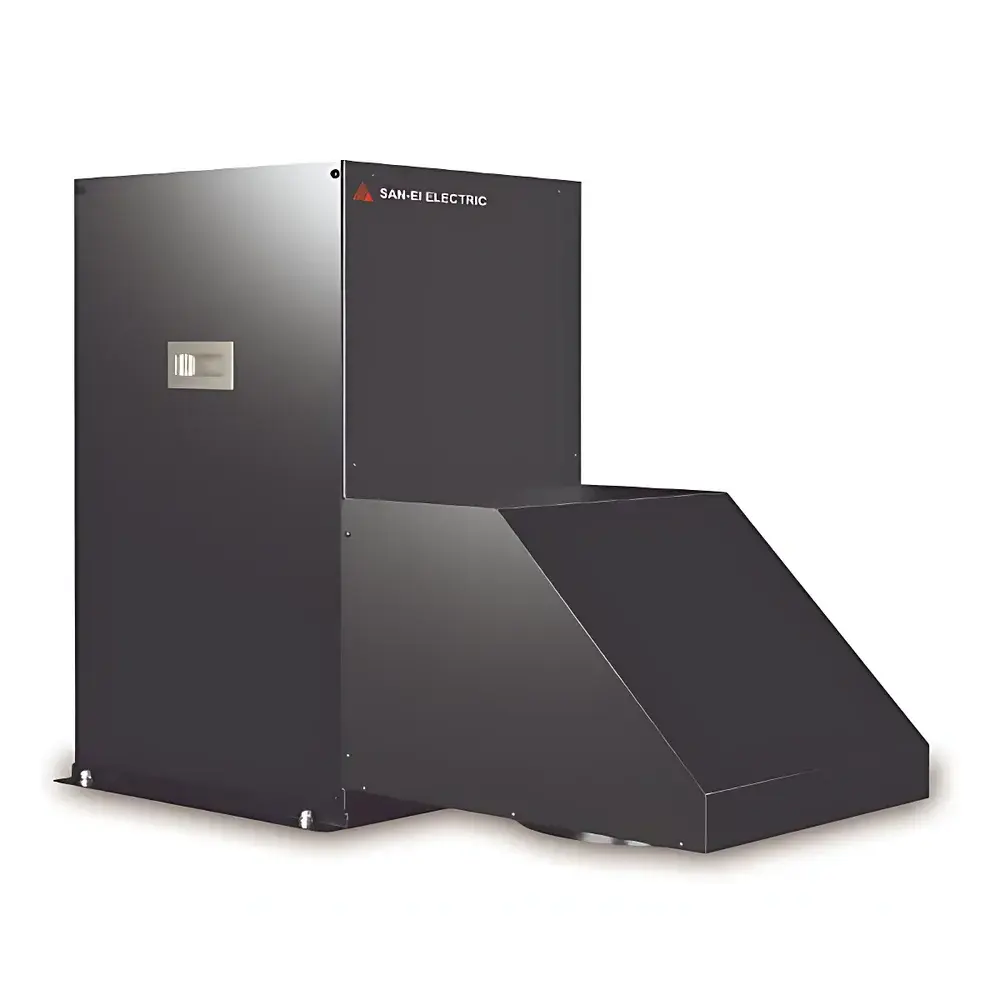
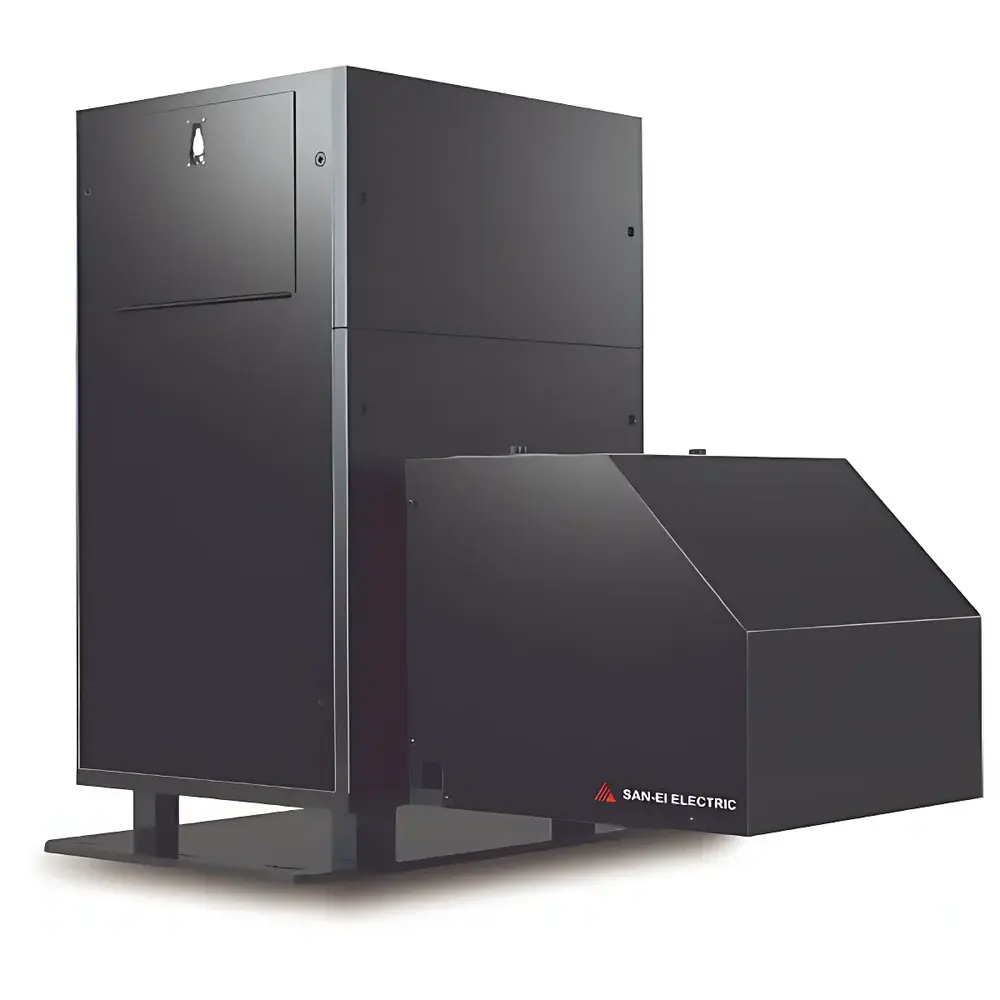
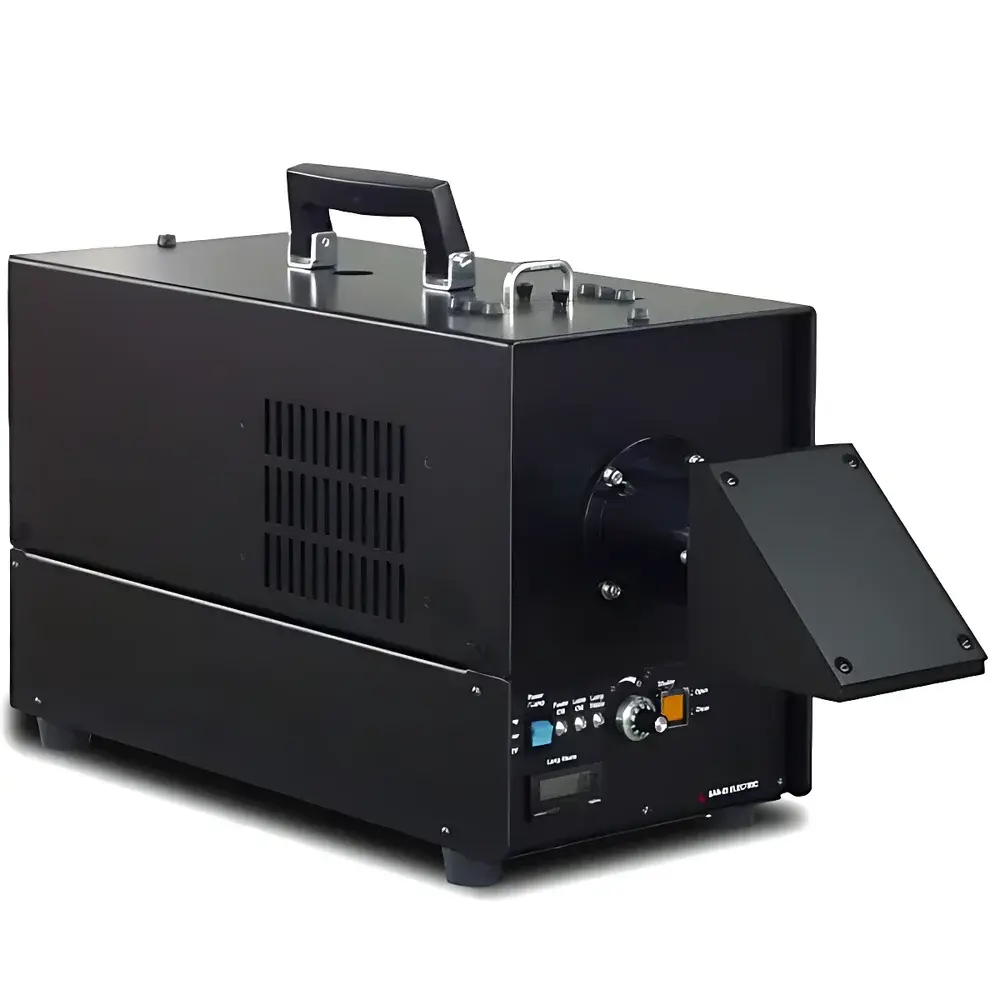
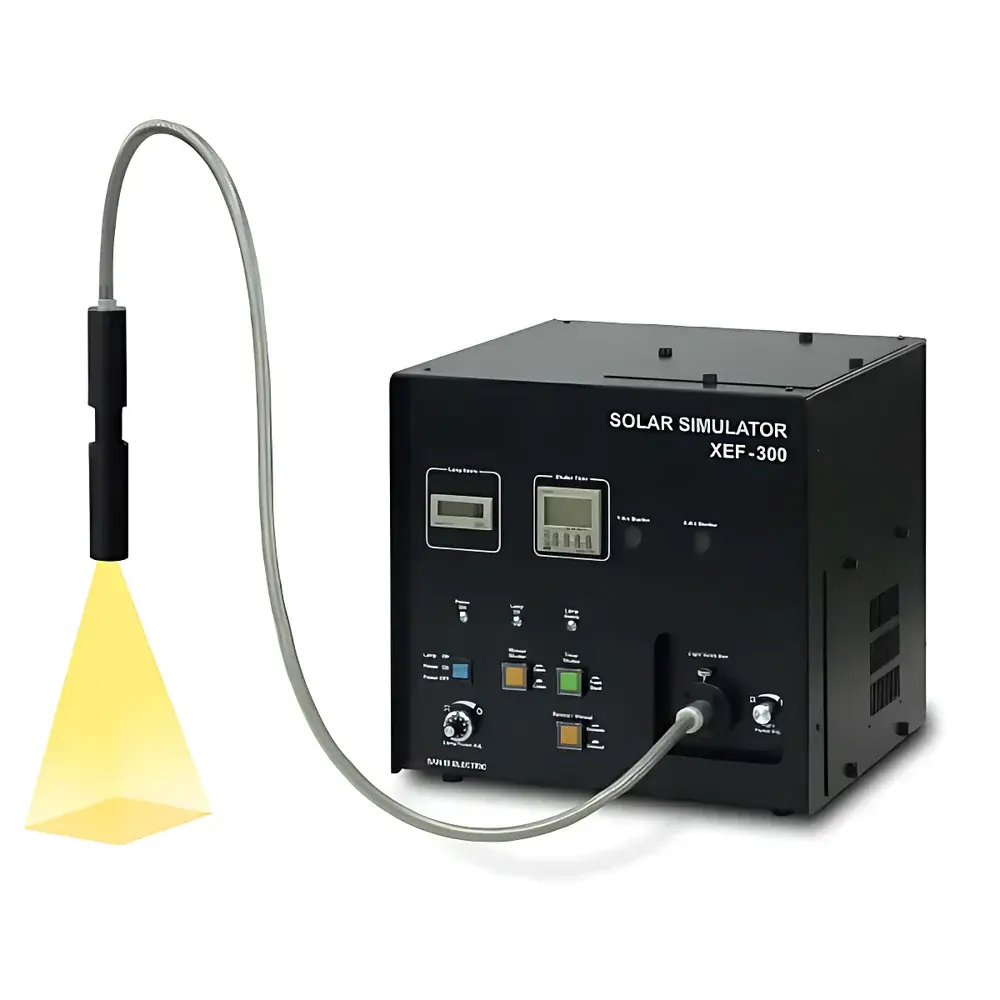
SAN-EI Semi-Automatic Solar Cell IV Tester
| Brand | SAN-EI |
|---|---|
| Origin | Japan |
| Automation Level | Semi-Automatic |
| Effective Test Area | 40 mm × 4 mm to 300 mm × 300 mm |
| Voltage Measurement Accuracy | ±0.015% of reading |
| Current Measurement Accuracy | ±0.15% of reading |
| Measurement Repeatability | ±1% |
| Compatible Wafer Sizes | 100 mm × 100 mm (4″), 150 mm × 150 mm (6″), 175 mm × 175 mm (7″), 200 mm × 200 mm (8″) |
| Light Source Classification | AAA-Class Steady-State Solar Simulator |
| Standard Compliance | IEC 60904-9 Ed. 3 (2020), ASTM E927-22, JIS C 8912 |
Overview
The SAN-EI Semi-Automatic Solar Cell IV Tester is a precision-engineered characterization system designed for laboratory- and pilot-line-scale photovoltaic (PV) device evaluation. It operates on the principle of controlled illumination using a calibrated AAA-class steady-state solar simulator—meeting the stringent spectral match (A), spatial uniformity (A), and temporal stability (A) requirements defined in IEC 60904-9 Ed. 3 (2020) and ASTM E927-22. The instrument performs current–voltage (I–V) curve tracing under standard test conditions (STC: 1000 W/m², AM1.5G spectrum, 25 °C cell temperature), enabling quantitative extraction of key performance parameters including short-circuit current (Isc), open-circuit voltage (Voc), maximum power point (Pmax), fill factor (FF), series resistance (Rs), shunt resistance (Rsh), and power conversion efficiency (η). Its semi-automated architecture balances operational flexibility with measurement consistency—ideal for R&D labs requiring rigorous validation prior to process scaling or certification testing.
Key Features
- AAA-class steady-state solar simulator with real-time irradiance feedback control, ensuring stable light output within ±0.5% over 30 seconds per measurement cycle
- High-accuracy source-measure unit (SMU) based on Keithley instrumentation, delivering voltage resolution down to 10 µV and current resolution down to 10 pA
- Vacuum-assisted sample stage with optional temperature control (±0.1 °C stability), supporting thermal coefficient analysis and temperature-dependent I–V sweeps
- Modular mechanical design accommodating wafer formats from 100 mm × 100 mm (4″) up to 200 mm × 200 mm (8″), with customizable fixtures for non-standard substrates
- Compliance-ready architecture: supports audit trails, user access levels, and electronic signature functionality aligned with GLP and ISO/IEC 17025 documentation practices
Sample Compatibility & Compliance
The system accommodates silicon-based (c-Si, mc-Si), thin-film (CIGS, CdTe, a-Si), perovskite, and organic photovoltaic (OPV) devices. Its effective test area (40 mm × 4 mm to 300 mm × 300 mm) enables full-area characterization of mini-modules and sub-cell arrays. All optical and electrical calibrations are traceable to NIST-certified reference cells and standards. The AAA-class simulator satisfies IEC 60904-9 Ed. 3 Class A requirements for spectral mismatch correction factors (MMF < 0.02), uniformity deviation (< 2% across 2×2 cm²), and temporal instability (< 0.5% over 10 s). Electrical measurements adhere to IEC 60904-1 and IEC 61215-1 for PV device testing, and support data submission for UL 1703, IEC 61215, and IEC 61646 qualification protocols.
Software & Data Management
The proprietary IV analysis software provides both basic and advanced measurement modes. Core functions include automated I–V and P–V curve acquisition, parameter extraction with uncertainty propagation, and batch processing for statistical yield analysis. Extended capabilities cover temperature-coefficient derivation (dVoc/dT, dIsc/dT), low-light (10–200 W/m²) and dark I–V analysis, and spectral response simulation via integrated quantum efficiency (QE) import. Data export supports CSV, XML, and HDF5 formats; metadata embedding includes timestamp, operator ID, ambient conditions, and calibration certificate IDs. Software architecture complies with FDA 21 CFR Part 11 requirements for electronic records and signatures when configured with role-based authentication and audit logging.
Applications
- R&D evaluation of novel absorber materials and interfacial layers under STC and non-STC illumination
- Process development monitoring: comparison of passivation schemes, contact metallization, and anti-reflection coatings
- Quality assurance in cell fabrication lines—grading by efficiency, FF, and Rs/Rsh thresholds
- Stability assessment via repeated I–V cycling under controlled thermal and illumination stress
- Calibration and verification of reference cells used in outdoor PV performance monitoring systems
FAQ
What standards does the solar simulator comply with?
It meets IEC 60904-9 Ed. 3 (2020) AAA classification criteria and ASTM E927-22 for spectral match, uniformity, and temporal stability.
Can the system measure temperature coefficients?
Yes—when equipped with the optional temperature-controlled stage, it supports sequential I–V sweeps across –10 °C to +85 °C with programmable ramp rates.
Is dark I–V measurement supported?
Yes—the system includes configurable bias voltage sweep ranges and current compliance settings for leakage and diode quality analysis under zero illumination.
How is measurement repeatability verified?
Repeatability is validated per IEC 60904-1 using certified reference cells; typical variation is ≤±1% for η and FF across five consecutive measurements under identical conditions.
Does the software support integration with LIMS or MES platforms?
Yes—via standardized RESTful API endpoints and configurable database connectors (ODBC/JDBC), enabling direct ingestion into enterprise laboratory information management systems.




