
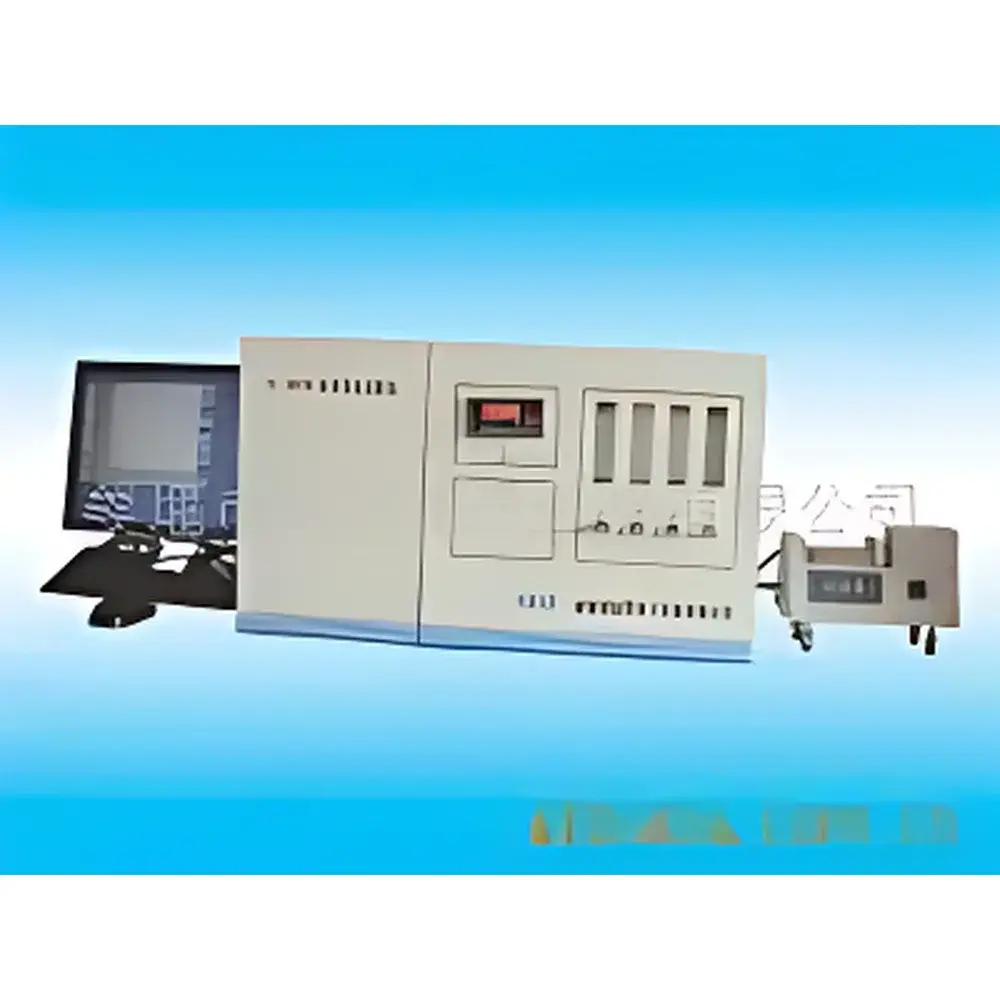
Kyoyuan KY-3000N Chemiluminescence Total Nitrogen Analyzer
| Brand | Kyoyuan |
|---|---|
| Model | KY-3000N |
| Application | Total nitrogen analysis in liquid, solid, and gaseous petroleum & chemical samples |
| Detection Principle | Chemiluminescence detection of NO* (nitric oxide) after high-temperature oxidative pyrolysis |
| Measurement Range | 0.1 mg/L to 5000 ppm (equivalent to ~0.00001–0.5 wt%) |
| LOD | 0.1 mg/L (as N) |
| Repeatability | ≤ ±0.1 mg/L (for X < 1.0 mg/L) |
| Pyrolysis Temp Range | Ambient to 1100 °C |
| Temp Control Accuracy | ±3 °C |
| Gas Requirements | ≥99.98% purity O₂ and Ar |
| Power | 2 kW |
| Dimensions | 680 × 480 × 400 mm |
| Compliance | SH/T 0657, ASTM D4629 |
| Data Acquisition | 24-bit USB interface, signal resolution <1 µV |
| Optional Accessories | Solid/gas sampling modules, light/heavy quartz pyrolysis tubes, certified N standards |
Overview
The Kyoyuan KY-3000N Chemiluminescence Total Nitrogen Analyzer is a dedicated elemental analyzer engineered for precise quantification of total nitrogen content in hydrocarbon-based matrices—including crude oil, refined fuels (gasoline, diesel, jet fuel), distillates, liquefied petroleum gas (LPG), petrochemical feedstocks, and polymer-derived solvents. It operates on the internationally standardized oxidative combustion–chemiluminescence principle: samples are introduced into a high-temperature quartz pyrolysis furnace under controlled oxygen/argon atmosphere, where organic nitrogen compounds are quantitatively converted to nitric oxide (NO). The resulting NO effluent reacts with ozone (O₃) in a reaction chamber to generate excited-state nitrogen dioxide (NO₂*), which emits characteristic near-infrared photons upon relaxation. A photomultiplier tube (PMT) detects this chemiluminescent signal, enabling linear, trace-level nitrogen quantification without spectral interference from sulfur, carbon, or halogens.
Key Features
- High-temperature programmable pyrolysis furnace (ambient to 1100 °C) with ±3 °C thermal stability, supporting robust decomposition of refractory nitrogen species (e.g., porphyrins, quinolines, nitriles).
- 24-bit USB-based data acquisition system with sub-microvolt signal resolution (<1 µV), ensuring high dynamic range and low-noise baseline performance across wide concentration spans.
- Adjustable PMT high-voltage supply for optimized signal-to-noise ratio across low-ppb and high-percentage nitrogen ranges—enabling single-instrument operation from 0.1 mg/L to 5000 ppm.
- Modular sample introduction architecture: standard liquid autosampler compatible with ASTM D4629; optional solid probe for powders/pellets (e.g., catalysts, plastics); and gas loop injector for LPG/CNG analysis.
- Quartz pyrolysis tube variants—light-duty (for volatile liquids) and heavy-duty (for viscous residues or coke-prone feeds)—minimize memory effects and extend maintenance intervals.
- Full compliance with SH/T 0657 (China) and ASTM D4629 (US), including mandatory calibration verification, system suitability testing, and blank subtraction protocols required for regulatory reporting.
Sample Compatibility & Compliance
The KY-3000N accommodates heterogeneous sample forms without derivatization or pre-treatment. Liquid samples (e.g., gasoline, kerosene, lubricants) are injected via syringe or autosampler; solids (e.g., polyethylene pellets, spent hydrotreating catalysts) are weighed into quartz boats and introduced manually; gases (e.g., refinery off-gas, natural gas condensates) are metered through a calibrated loop under pressure control. All configurations maintain stoichiometric oxidation efficiency and quantitative NO yield per ISO 14596 and ASTM D5762. Instrument validation meets GLP-relevant requirements for audit trails, electronic signatures, and raw-data integrity—supporting laboratories operating under ISO/IEC 17025, USP <233>, or FDA 21 CFR Part 11 frameworks when paired with compliant LIMS integration.
Software & Data Management
Bundled Kyoyuan N-Analyze™ software provides full instrument control, real-time chromatogram visualization, peak integration, multi-point calibration curve generation (linear, quadratic, or weighted), and QC flagging per ASTM D6299 repeatability criteria. Raw signal files (.raw) and processed reports (.pdf/.xlsx) are timestamped, digitally signed, and stored with immutable metadata (operator ID, method version, gas pressures, furnace temp logs). Audit trail functionality records all parameter changes, calibration events, and result overrides—fully traceable for internal QA review or external inspection. Data export supports ASTM E1394 and ASTM E1461 formats for seamless import into enterprise ELN or LIMS platforms.
Applications
- Refinery QC: Monitoring nitrogen content in hydrotreater feedstocks and products to prevent catalyst poisoning and meet pipeline specifications (e.g., <10 ppm N in ULSD).
- Fuel certification: Verification of conformance to EN 590, ASTM D975, and GB 17930 limits for automotive diesel, gasoline, and aviation turbine fuels.
- Petrochemical R&D: Quantifying nitrogen impurities in ethylene cracker feedstocks, BTX streams, and synthetic lubricant base oils.
- Plastics & polymers: Measuring residual nitrogen-containing stabilizers or monomer impurities affecting thermal stability and color formation.
- Environmental compliance: Analysis of nitrogen-bearing contaminants in soil extracts, wastewater sludges, and incineration ash leachates per EPA Method 9071B adaptations.
FAQ
What detection principle does the KY-3000N use for nitrogen quantification?
It employs high-temperature oxidative pyrolysis followed by chemiluminescent detection of nitric oxide (NO), per ASTM D4629 and SH/T 0657.
Can the instrument analyze solid or gaseous samples without modification?
No—solid and gas analysis require optional accessories: a solid sampling probe and a pressurized gas loop injector, respectively.
Is the system compliant with FDA 21 CFR Part 11 for electronic records?
Yes, when operated with N-Analyze™ software configured for audit trail logging, electronic signatures, and data immutability controls.
What is the typical calibration frequency for routine QC use?
Daily system suitability checks with mid-range certified standards are recommended; full multi-point calibration every 24–48 hours depending on sample matrix complexity and throughput.
How does the KY-3000N handle sulfur interference during nitrogen measurement?
Sulfur oxides (SOₓ) are removed upstream via selective scrubbing before the chemiluminescence detector; nitrogen-specific NO emission at 1200 nm avoids spectral overlap with SO₂ fluorescence bands.
Related Products




