
LaVision SprayMaster Laser Spray Imaging System
| Brand | LaVision GmbH |
|---|---|
| Origin | Germany |
| Model | SprayMaster |
| Dispersion Method | Dry & Wet |
| Measurement Range | 5–3500 µm |
| Repeatability | <1% |
| Measurement Time | 10–15 s |
Overview
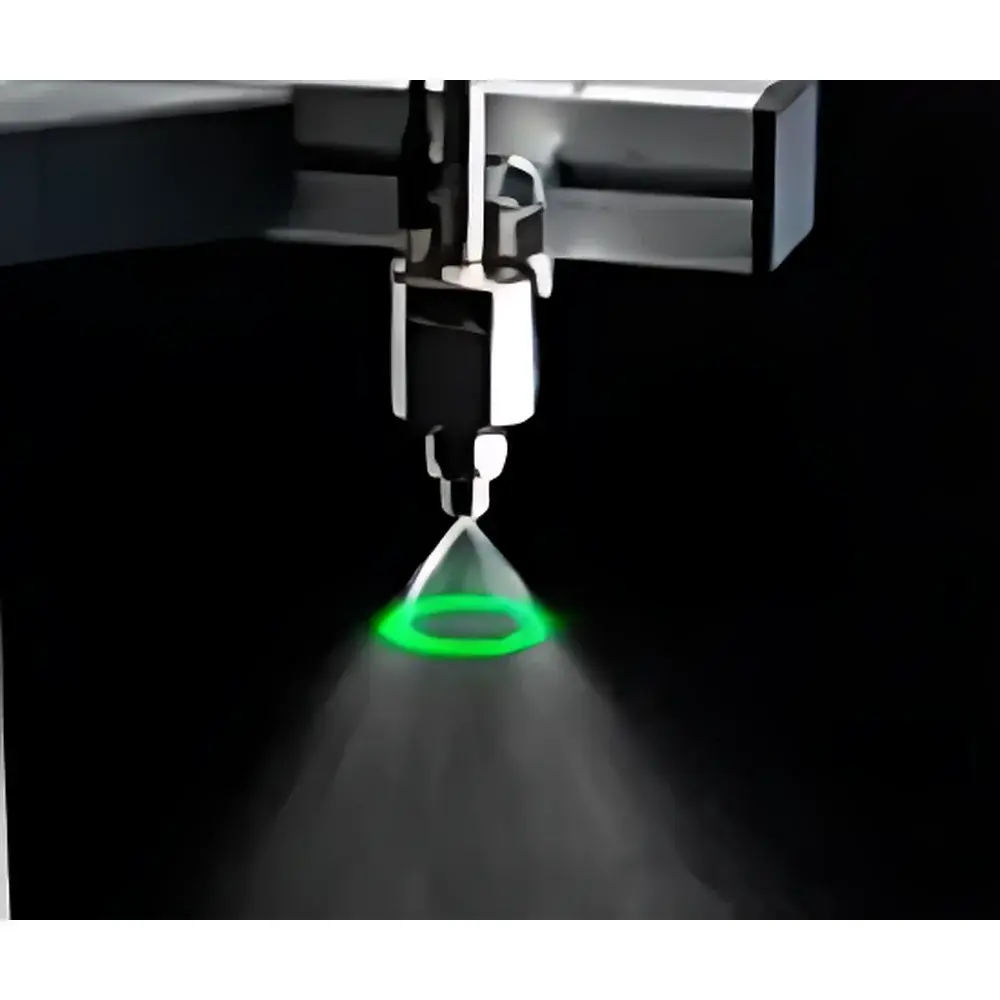
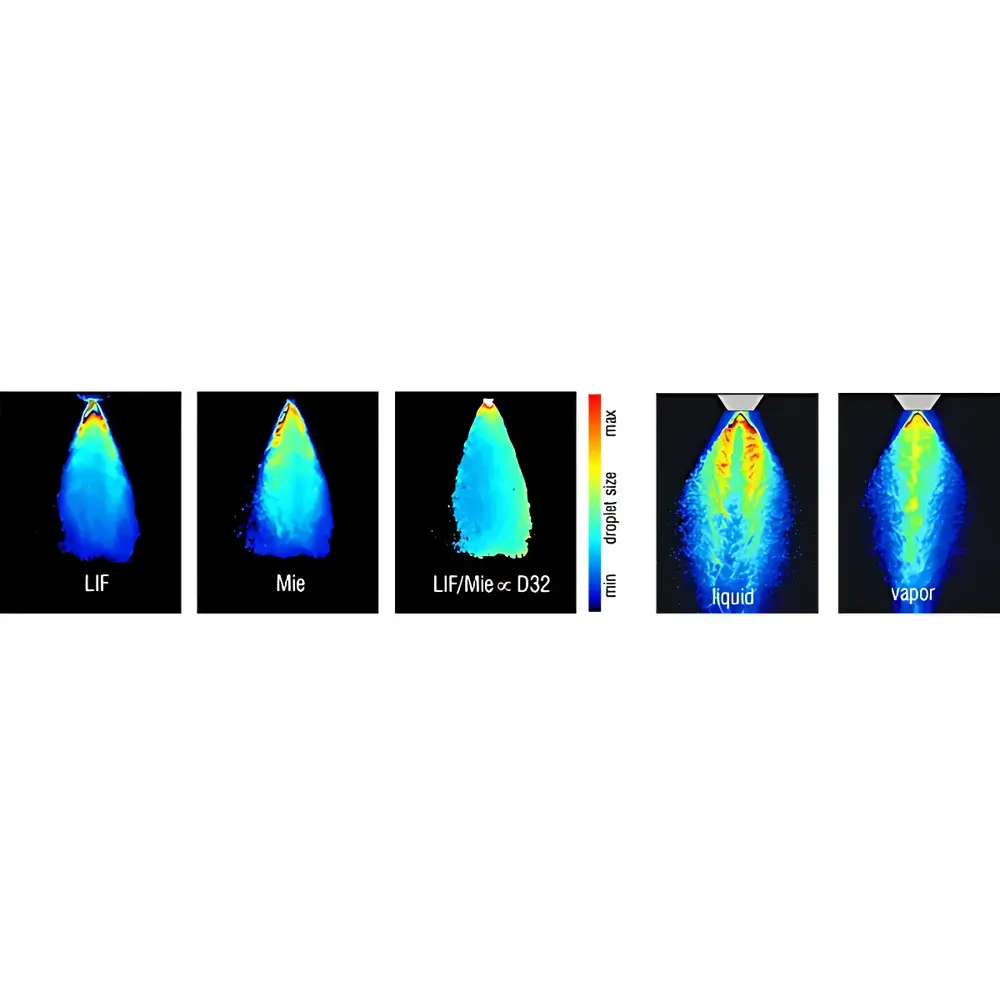
The LaVision SprayMaster Laser Spray Imaging System is a high-resolution, planar diagnostic platform engineered for quantitative, time-resolved characterization of liquid sprays in research and industrial development environments. It employs dual-modal laser sheet imaging—simultaneous Laser-Induced Fluorescence (LIF) and Mie scattering—to extract spatially resolved droplet size distributions across entire spray cross-sections. Unlike conventional ensemble-averaging particle sizing techniques, SprayMaster delivers instantaneous 2D field data by exploiting the physical relationship between LIF signal intensity (proportional to droplet volume/mass) and Mie scattering intensity (proportional to droplet surface area). The pixel-wise LIF/Mie intensity ratio yields the local Sauter Mean Diameter (D32) with sub-millimeter spatial resolution. This principle enables non-intrusive, calibration-free sizing without assumptions about droplet optical properties or refractive index—critical for multi-component, evaporating, or transient sprays encountered in fuel injection, pharmaceutical atomization, and agricultural spray design.
Key Features
- Simultaneous dual-wavelength LIF/Mie imaging using pulsed laser light sheets (typically 532 nm and tunable UV/visible wavelengths)
- Planar global droplet sizing with D32 distribution mapping across full spray cross-sections (up to 100 × 100 mm field-of-view)
- Two-color Tracer-LIF capability for concurrent liquid-phase and vapor-phase visualization in evaporating sprays
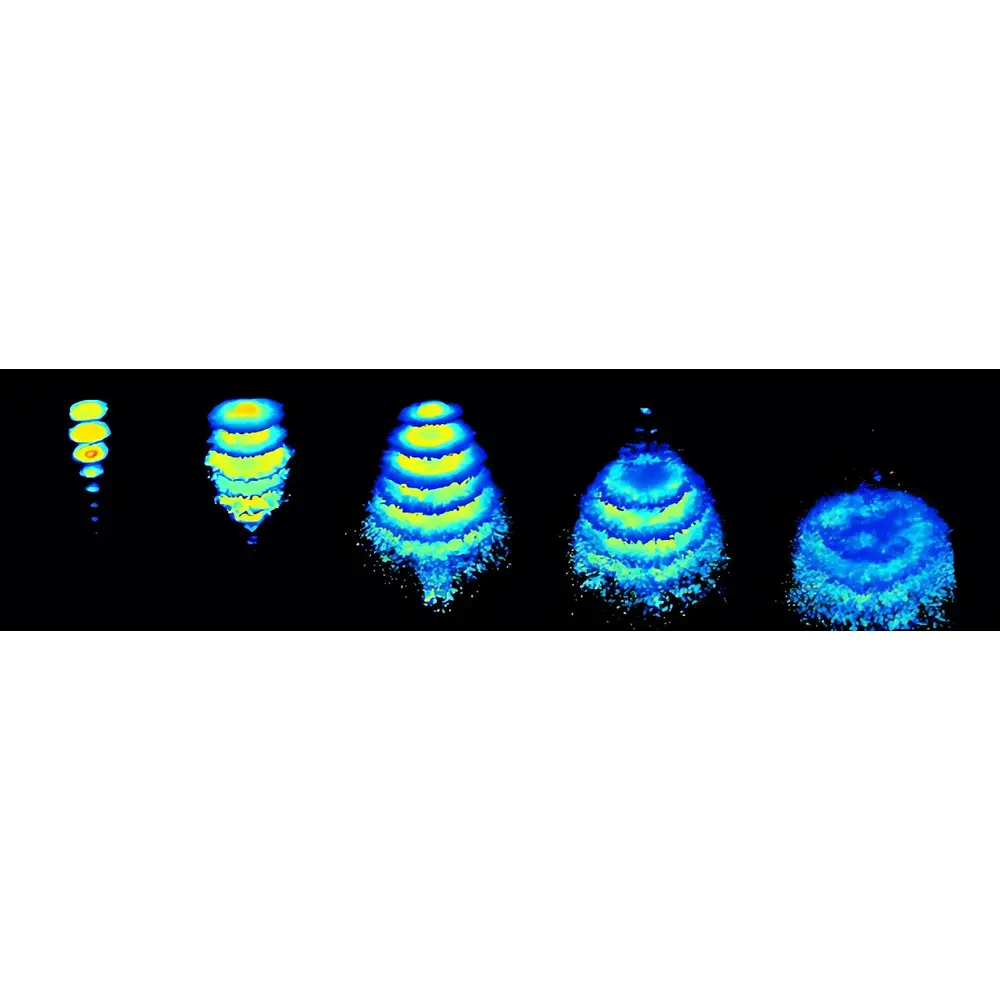
- Integrated phase-scan and space-scan acquisition modes for time-resolved 3D reconstruction of periodic sprays (e.g., GDI, diesel injectors)
- Native compatibility with LaVision’s DaVis acquisition and analysis software for automated sequence programming, synchronization, and post-processing
- Modular optical architecture supporting interchangeable objectives, filters, and intensified CCD/CMOS cameras (e.g., HighSpeedStar, Imager sCMOS)
- Robust mechanical design optimized for vibration-damped optical tables and integration into engine test cells or wind tunnels
Sample Compatibility & Compliance
SprayMaster accommodates a broad range of liquid systems—including hydrocarbons (gasoline, diesel, biofuels), water-based solutions, propellants, and volatile organic compounds—without requiring dilution or carrier gas modification. Its non-contact, line-of-sight measurement approach eliminates sampling bias and preserves native spray dynamics. The system complies with ISO 9001-certified manufacturing protocols at LaVision GmbH’s facility in Göttingen, Germany. Data acquisition workflows support audit-ready documentation aligned with GLP and GMP principles; metadata embedding (timestamp, laser energy, camera gain, trigger delay) ensures traceability. While not a regulatory testing instrument per se, SprayMaster-generated datasets are routinely cited in peer-reviewed publications validating ASTM D7487 (spray pattern evaluation) and ISO 8503-3 (surface profile characterization in coating applications involving atomized deposition).
Software & Data Management
The system operates under LaVision’s DaVis 10+ platform—a modular, scriptable environment supporting real-time preview, batch processing, and advanced image analytics. DaVis provides built-in algorithms for background subtraction, intensity normalization, LIF/Mie ratio calculation, D32 histogram generation, and volumetric reconstruction from multi-angle light-sheet traverses. All raw images and derived metrics are stored in HDF5 format with embedded metadata conforming to the NeXus standard. Export options include CSV, TIFF, and MATLAB-compatible structures. For regulated environments, optional DaVis Audit Trail Extension enforces user authentication, electronic signatures, and immutable change logs compliant with FDA 21 CFR Part 11 requirements.
Applications
- Fuel injector development and validation for gasoline direct injection (GDI), common rail diesel, and alternative fuel systems
- Spray drying process optimization in pharmaceutical and food powder manufacturing
- Atomizer performance benchmarking in aerospace combustion chambers and gas turbine combustors
- Evaporation kinetics modeling of multi-component sprays using 2-color Tracer-LIF
- Validation of CFD multiphase simulation outputs (e.g., ANSYS Fluent, CONVERGE, OpenFOAM)
- Coating spray uniformity assessment in automotive and industrial finishing lines
FAQ
Does SprayMaster require optical access through transparent windows?
Yes—optical access via fused silica or BK7 windows with anti-reflective coatings is mandatory for both illumination and imaging paths. Window thickness and orientation must be specified during system integration to minimize aberration.
Can SprayMaster measure sprays in high-temperature or high-pressure environments?
It can, provided appropriate viewport materials (e.g., sapphire) and thermal shielding are implemented. LaVision offers custom-engineered probe housings rated up to 200 °C and 200 bar for engine and combustor applications.
Is calibration required before each measurement?
No absolute calibration is needed for relative D32 mapping. However, system-level geometric calibration (pixel-to-mm mapping) and laser sheet thickness profiling are performed during initial commissioning and recommissioned after major optical reconfiguration.
How does SprayMaster differ from conventional laser diffraction analyzers?
Unlike point-sampling diffraction instruments (e.g., Malvern Mastersizer), SprayMaster captures spatially resolved, time-gated 2D fields—preserving spray structure, asymmetry, and transient evolution without ensemble averaging or flow interruption.
What camera specifications are recommended for optimal performance?
A minimum of 12-bit dynamic range, 1024 × 1024 pixel resolution, and sub-10 ns gating capability (e.g., LaVision HighSpeedStar 3 or Imager sCMOS) is advised for high-contrast LIF/Mie separation in dense sprays.



