LaVision FlowMaster® PIV/PLIF System
| Brand | LaVision GmbH |
|---|---|
| Origin | Germany |
| Model | FlowMaster® |
| Measurement Capability | 2D & 3D planar velocity fields |
| Velocity Range | 0–2000 m/s |
| Accuracy | <1% RMS error |
| Measurement Area | 400 × 400 mm |
| Laser Pulse Energy | up to 2 × 425 mJ per pulse |
| Camera Resolution Options | 1 MP to 29 MP |
| Temporal Resolution | Single-shot to MHz-rate TR-PIV |
| Correlation Precision | ≤0.1 pixel |
| SNR (Velocity Field) | >45 |
| High-Confidence Vector Yield (>0.1 px error threshold) | >90% |
| Compliance | ASTM E2847, ISO 20486, GLP/GMP-ready data audit trail support in DaVis |
Overview
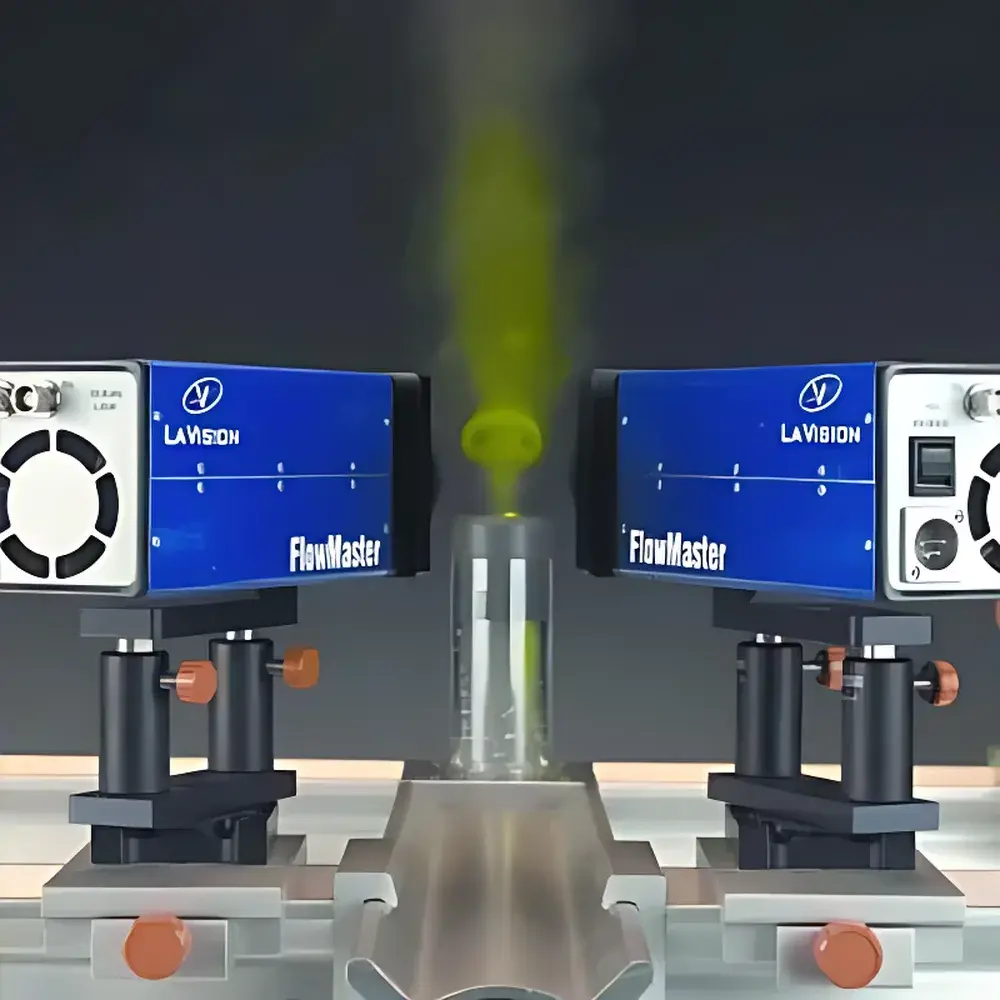
The LaVision FlowMaster® PIV/PLIF System is a high-fidelity, modular laser-based optical diagnostic platform engineered for quantitative, non-intrusive measurement of fluid velocity and scalar fields in research and industrial environments. Built upon the principles of Particle Image Velocimetry (PIV) and Planar Laser-Induced Fluorescence (PLIF), the system captures instantaneous, spatially resolved velocity vectors (2D–3D, 2C–3C) and species concentration or temperature distributions across planar or volumetric domains. Its core architecture leverages dual- or multi-head pulsed Nd:YAG lasers, high-sensitivity scientific CMOS/CCD cameras, and precision optical alignment components—each selected for thermal stability, low noise, and long-term repeatability. Designed and manufactured in Germany, the FlowMaster® integrates rigorous optical engineering with computational fluid dynamics (CFD)-grade validation protocols, enabling traceable measurements under ISO 20486-compliant workflows. It supports both steady-state and transient flow regimes—from laminar microfluidic channels to supersonic combustion chambers—with calibrated uncertainty budgets verified via international benchmarking (e.g., PIV Challenge).
Key Features
- Patented self-calibrating stereo and tomographic PIV algorithms embedded in DaVis software, eliminating manual calibration targets and reducing setup time by >60% while maintaining sub-pixel registration accuracy.
- Modular hardware architecture: interchangeable camera heads (1–29 MP), tunable laser energy (up to 850 mJ total per double-pulse), and synchronized multi-channel timing controller (4 TTL inputs, 16 high-precision TTL outputs, 16 low-jitter outputs).
- DaVis 10.x software platform with native macro scripting (DaVisScript), batch processing pipelines, GPU-accelerated cross-correlation, and real-time vector field validation tools (peak ratio, RMS residual, signal-to-noise mapping).
- Full compatibility with multi-parameter diagnostics: simultaneous PIV + PLIF + thermographic phosphor imaging (TPI) + Mie scattering for droplet sizing—enabled via spectral filtering, delay-gated acquisition, and shared timing master clock.
- FDA 21 CFR Part 11–compliant audit trail, electronic signature support, and version-controlled experiment templates—validated for regulated R&D environments including aerospace propulsion certification and pharmaceutical process development.
- Future-proof design: PCIe-based timing controller, USB3/GigE/10GigE camera interfaces, and open API (C/C++, Python bindings) ensure seamless integration with third-party CFD solvers, LabVIEW control systems, and custom automation frameworks.
Sample Compatibility & Compliance
The FlowMaster® accommodates diverse working media—including air, water, liquid fuels, multiphase sprays, reactive flames, and cryogenic flows—across open test sections, wind tunnels, combustors, microfluidic chips, and vacuum chambers. Optical access requirements are minimized through flexible beam delivery (fiber-coupled or free-space), adjustable laser sheet thickness (10–500 µm), and adaptive Scheimpflug focusing. All configurations comply with IEC 60825-1 (laser safety Class IV), EN 61326-1 (EMC), and ISO 17025–accredited calibration traceability. Validation reports include PIV Challenge 2003–2023 benchmark datasets demonstrating RMS velocity error 45, and >90% high-confidence vector yield—published in Experiments in Fluids and Measurement Science and Technology.
Software & Data Management
DaVis serves as the unified acquisition, processing, and reporting engine. Its workflow-centric interface supports experiment definition (laser delay, camera exposure, ROI selection), automated calibration (self-calibration, mirror correction, lens distortion mapping), and hierarchical data storage (HDF5-based, metadata-rich). Processed results export to standard formats (ASCII, Tecplot, VTK, Paraview-compatible .vtu) with full uncertainty quantification metadata. For regulated use, DaVis implements role-based access control, immutable raw-data archiving, and timestamped audit logs meeting GLP/GMP and FDA 21 CFR Part 11 requirements. Optional modules include machine-learning–assisted outlier detection, ensemble averaging for turbulence statistics (Reynolds stress, vorticity spectra), and direct coupling to OpenFOAM and ANSYS Fluent via field interpolation APIs.
Applications
- Aerospace: Boundary layer transition analysis on turbine blades, jet exhaust mixing, scramjet inlet flow characterization.
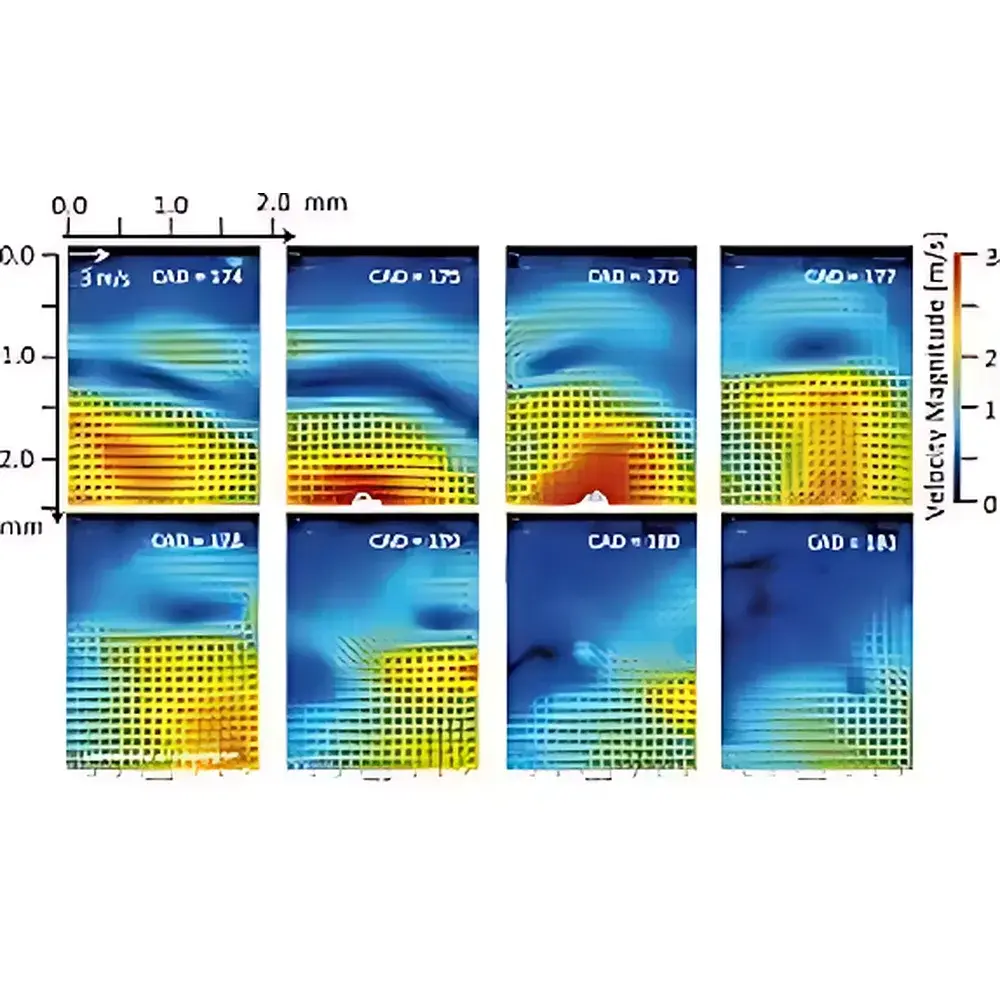
- Automotive: In-cylinder combustion dynamics, spray atomization in GDI engines, HVAC airflow optimization.
- Energy: Swirl-stabilized flame topology in gas turbines, bubble column hydrodynamics, wind turbine wake interaction.
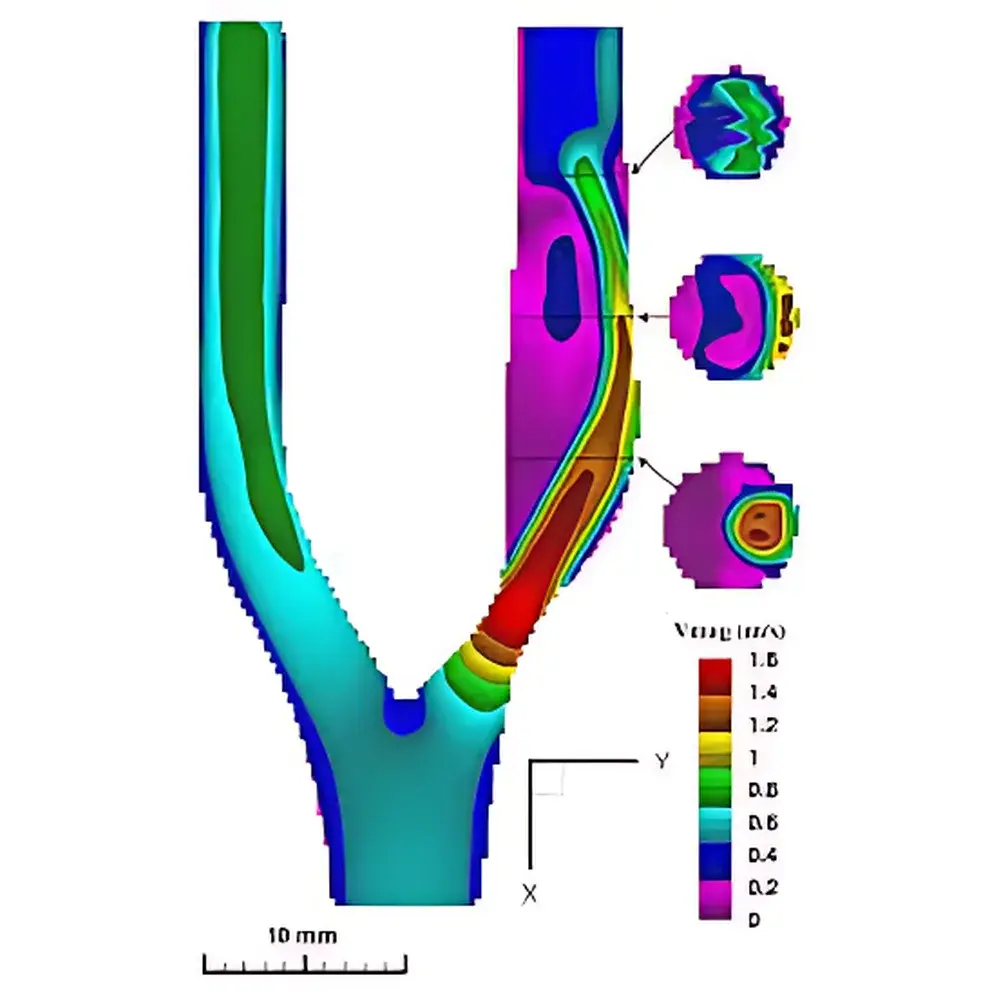
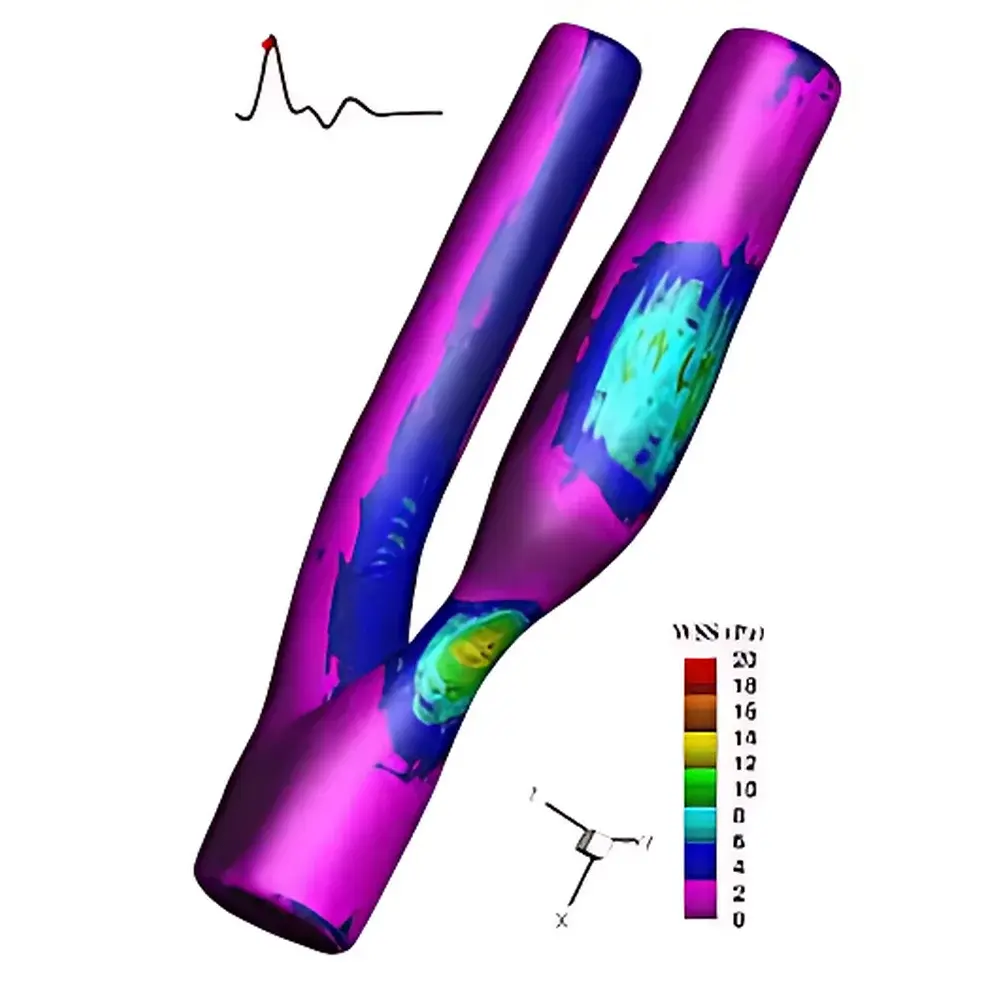
- Biomedical: Hemodynamic shear stress mapping in stented arteries, respiratory airflow in nasal phantoms, microscale cell suspension transport.
- Academic Research: Turbulence closure model validation, Lagrangian coherent structure identification, non-equilibrium plasma flow coupling.
FAQ
What PIV modes does the FlowMaster® support?
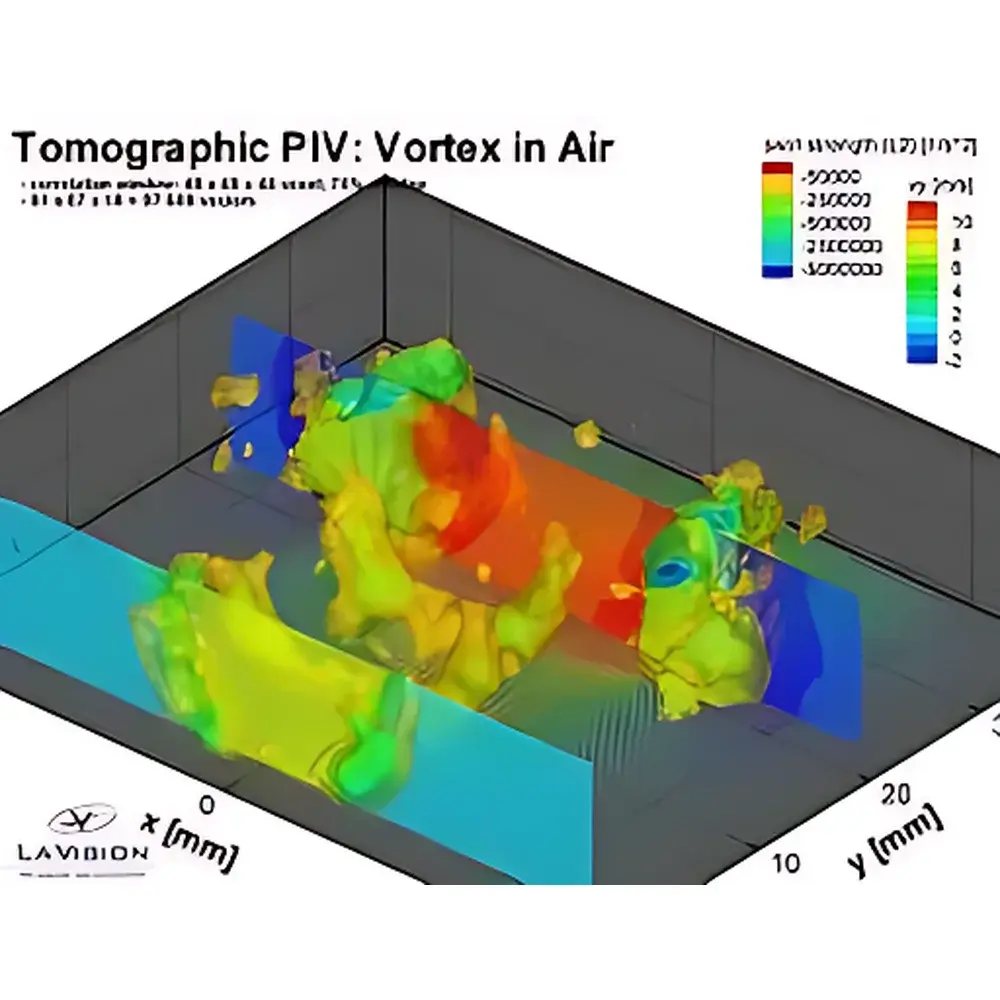
2D-PIV, stereoscopic 3D-PIV, Tomo-PIV (volumetric 3D3C), time-resolved TR-PIV (up to MHz frame rates with burst-mode cameras), Micro-PIV, and hybrid PIV/PLIF/thermography configurations.
Is DaVis software compatible with Windows 11 and 64-bit computing environments?
Yes—DaVis 10.x is natively compiled for Windows 10/11 (64-bit), optimized for multi-core CPUs and NVIDIA CUDA-enabled GPUs, with support for >128 GB RAM workloads.
Can the system be upgraded from 2D to 3D or Tomo-PIV post-purchase?
Yes—hardware modularity allows field-upgradeable additions: second/third/fourth camera heads, Scheimpflug adapters, tomographic reconstruction licenses, and high-energy laser extensions.
How is measurement uncertainty quantified and reported?
DaVis computes pixel-level uncertainty maps using correlation peak width, signal-to-noise ratio, and deformation-based error propagation; final uncertainty budgets follow ISO/IEC Guide 98-3 (GUM) and are exportable with processed vector fields.
Does LaVision provide application-specific validation documentation?
Yes—system-specific validation packages include PIV Challenge benchmark reports, NIST-traceable calibration certificates, and application notes co-published with TU Darmstadt, Stanford CTR, and NASA Glenn Research Center.