
LaVision Endoscope System for In-Cylinder Engine Diagnostics
| Brand | LaVision GmbH |
|---|---|
| Origin | Germany |
| Type | Industrial Laser-Compatible Endoscopic Imaging System |
| Model Series | Endoscopes (VIS/UV, Camera & Illumination Variants) |
| Application Domain | High-Speed Combustion Diagnostics, PIV, LIF, Flame & Spray Visualization in IC Engines and Gas Turbines |
Overview
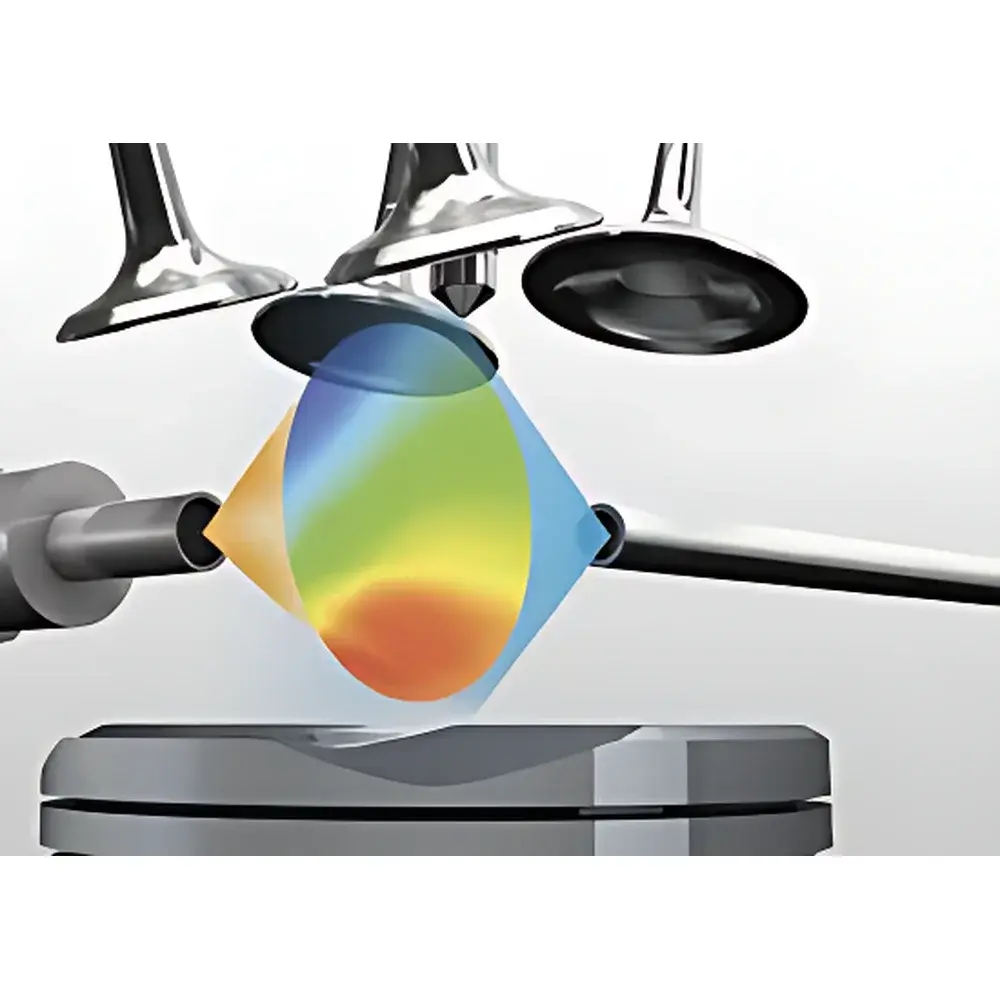
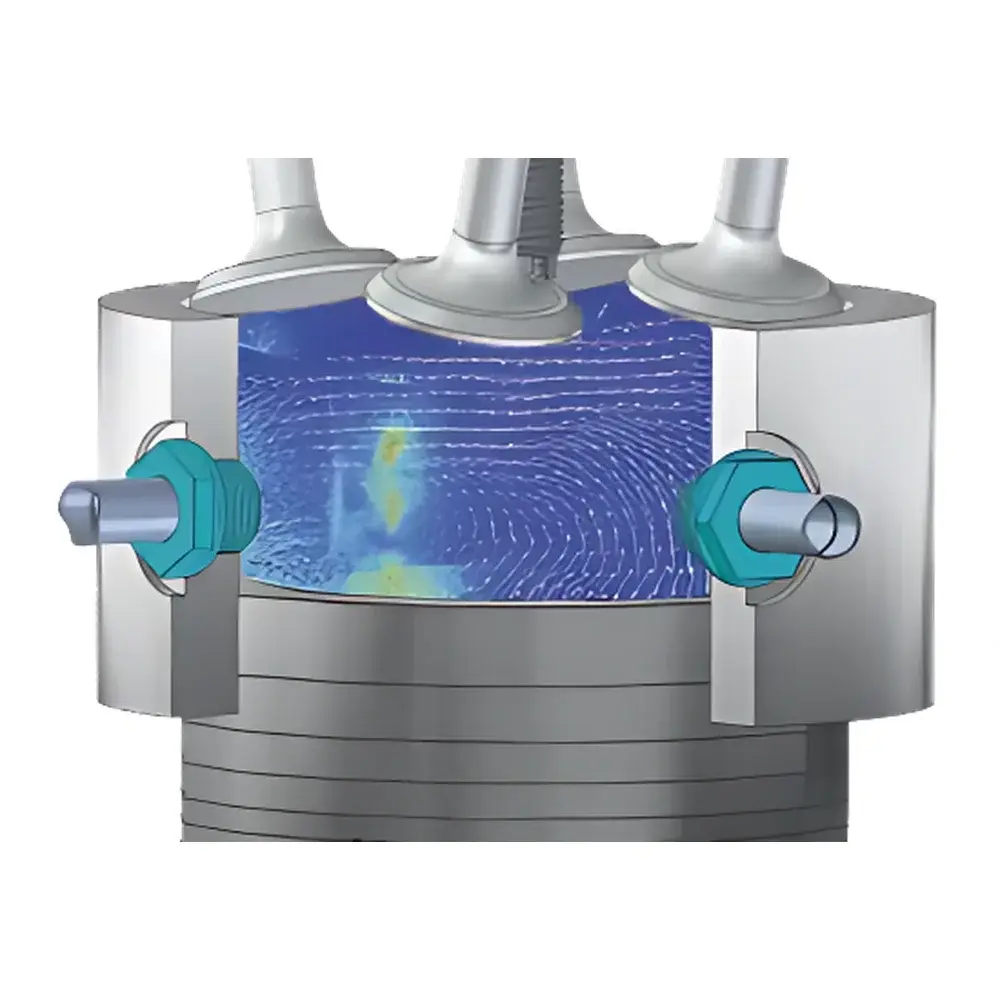
LaVision endoscope systems are precision-engineered optical access solutions designed specifically for non-intrusive, high-fidelity imaging inside confined, high-temperature, and high-pressure environments—most notably internal combustion (IC) engines, gas turbines, and industrial furnaces. These endoscopes operate on the principle of rigid or semi-rigid fiber-optic or lens-based light transmission, enabling optical coupling between external high-speed cameras, laser sources, and the in-cylinder measurement volume. Unlike conventional inspection endoscopes, LaVision’s systems are fully integrated into quantitative laser diagnostic workflows—including Particle Image Velocimetry (PIV), Laser-Induced Fluorescence (LIF), and high-speed chemiluminescence imaging—where optical throughput, spectral fidelity, spatial resolution, and thermal/mechanical stability are critical. Each system is engineered to maintain calibrated optical performance under transient thermal loads (up to 300 °C with optional cooling or sealing inserts) and mechanical vibration typical of engine test benches.
Key Features
- Rigid-body optical architecture with minimal field curvature; planar image correction ensures distortion-free mapping for quantitative PIV analysis.
- Dual-spectrum compatibility: VIS-grade endoscopes use high-transmission fused silica and multi-layer anti-reflection coatings; UV variants employ synthetic quartz lenses and deep-UV optimized coatings (193–400 nm).
- Modular diameter options: 6.5 mm and 8 mm outer diameters accommodate standard spark plug or injector bore ports without engine modification.
- High-efficiency illumination endoscopes support global illumination (LED, xenon, pulsed lasers) and laser light sheet generation—enabling both wide-field spray visualization and thin-sheet PIV/LIF sectioning.
- Pressure-sealed mounting inserts available for cylinder head integration, compliant with ISO 6789 and DIN 75200 mechanical interface standards for engine test cells.
- Direct coupling compatibility with intensified CCD/CMOS cameras (e.g., LaVision Imager sCMOS, PCO.dimax HS4), image intensifiers (e.g., LaVision IRO, Kentech HRI), and dual-head PIV laser systems (e.g., New Wave Pegasus, Quantel Evergreen).
Sample Compatibility & Compliance
LaVision endoscopes are validated for use in gasoline direct injection (GDI), diesel, and alternative-fuel (e.g., hydrogen, ammonia) IC engines operating under full-load, transient, and cold-start conditions. They meet material and safety requirements per DIN EN 15194 (mechanical integrity under cyclic pressure), ISO 13715 (optical calibration traceability), and support GLP-compliant data acquisition when paired with LaVision DaVis software (FDA 21 CFR Part 11 audit trail enabled). All UV optics comply with ISO 17025-accredited spectral transmission certification. Mounting hardware conforms to SAE J249 and VDA 238-100 specifications for engine-integrated optical access.
Software & Data Management
Endoscope integration is fully supported within LaVision’s DaVis 10.5+ platform, which provides synchronized trigger routing, geometric calibration (including endoscope-specific distortion maps), and automated ROI alignment for multi-view PIV or dual-wavelength LIF quantification. Raw image metadata—including exposure timing, laser pulse delay, endoscope ID, and spectral bandpass—is embedded in TIFF/Imaging Data Format (IDF) files. Batch processing pipelines enable automatic contrast normalization across endoscope series and long-term dataset harmonization for engine development databases (e.g., AVL PUMA Open, ETAS INCA).
Applications
- In-cylinder fuel spray structure analysis in GDI engines using Mie scattering with camera endoscopes (6.5 mm, VIS, <1.5 µm resolution at 100 mm working distance).
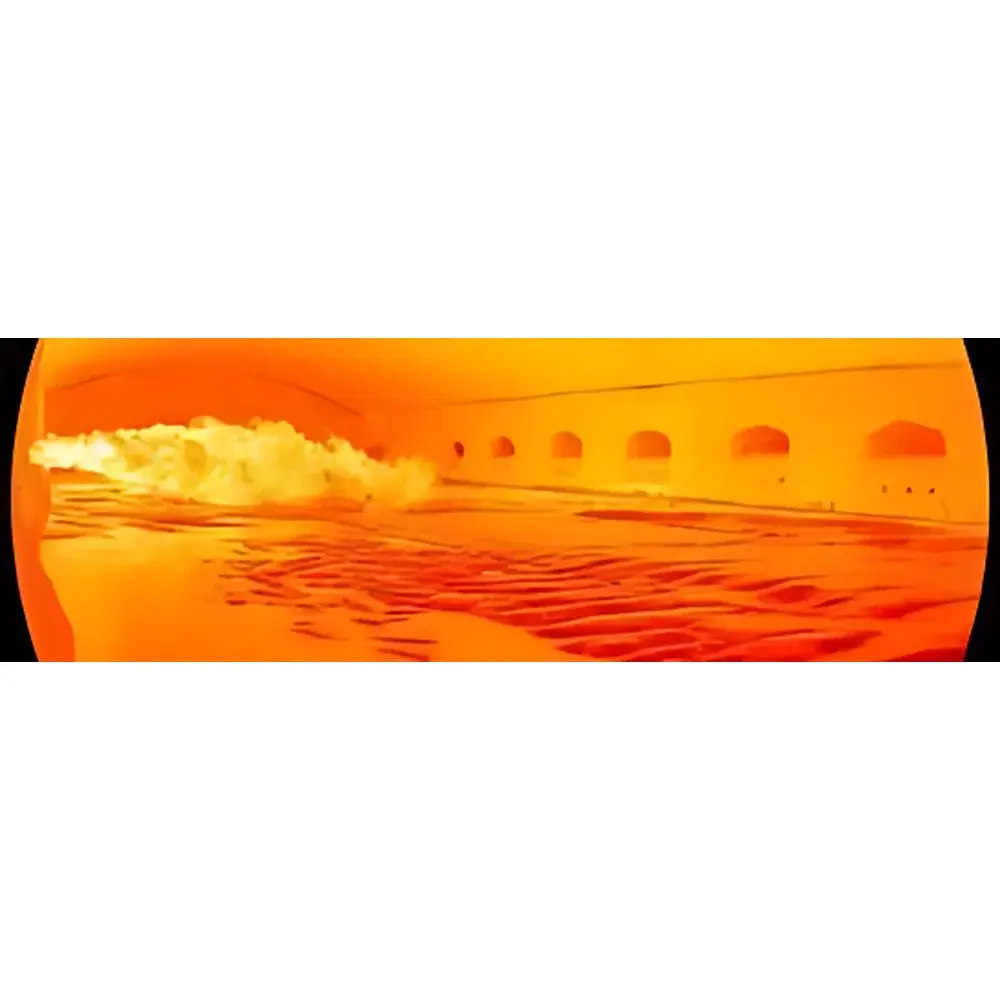
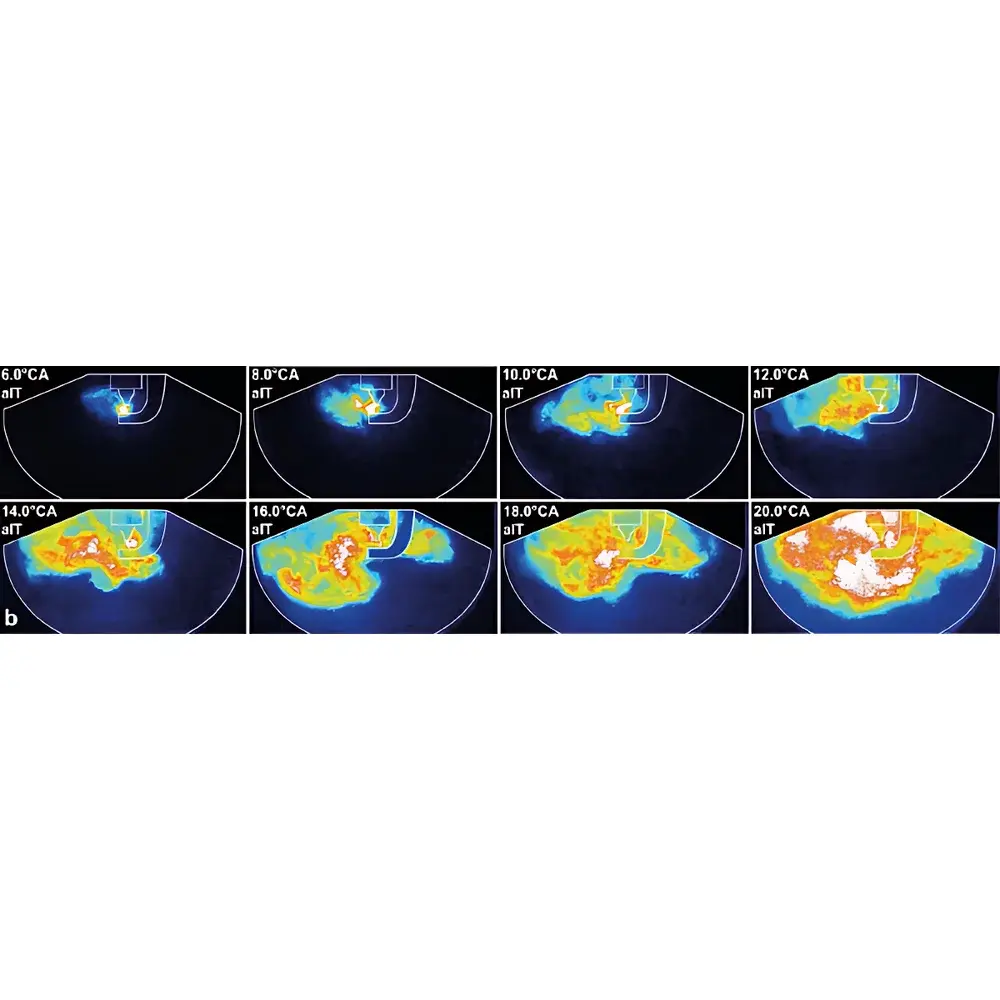
- Early flame kernel propagation tracking via OH* chemiluminescence imaging with UV-high-efficiency endoscopes coupled to gated intensifiers (sub-10 ns gate width).
- Endoscopic PIV in motored and fired cycles—validated against reference LDV data per ASTM D7504 for velocity uncertainty quantification.
- Laser light sheet delivery for acetone-LIF vapor concentration mapping in port-fuel-injected engines.
- Multi-angle flame tomography using synchronized endoscope arrays mounted at 0°, 45°, and 90° relative to piston crown.
FAQ
Can these endoscopes be used with third-party high-speed cameras?
Yes—LaVision endoscopes feature C-mount and F-mount adapters and are optically characterized for use with Phantom v2512, Photron SA-Z, and Vision Research FASTCAM SE models.
What is the maximum operational temperature without active cooling?
Standard VIS endoscopes are rated to 200 °C continuous; UV-quartz variants support up to 250 °C; high-temperature sealed versions (with water-cooled housings) operate continuously at 300 °C.
Is calibration documentation provided for quantitative measurements?
Each unit ships with NIST-traceable optical transfer function (OTF) reports, point-spread function (PSF) maps, and spectral transmission curves measured at 5-nm intervals from 193 nm to 1100 nm.
How is synchronization achieved between laser pulses and camera exposure?
Via TTL/PECL trigger distribution through DaVis hardware sync modules, supporting jitter <200 ps RMS across all endoscope-coupled channels.
Are custom working distances or field-of-view configurations available?
Yes—LaVision offers application-specific optical redesign including telecentric relay optics, extended working distance (>200 mm), and variable FOV lenses (15°–60° diagonal) under engineering services agreement.



