
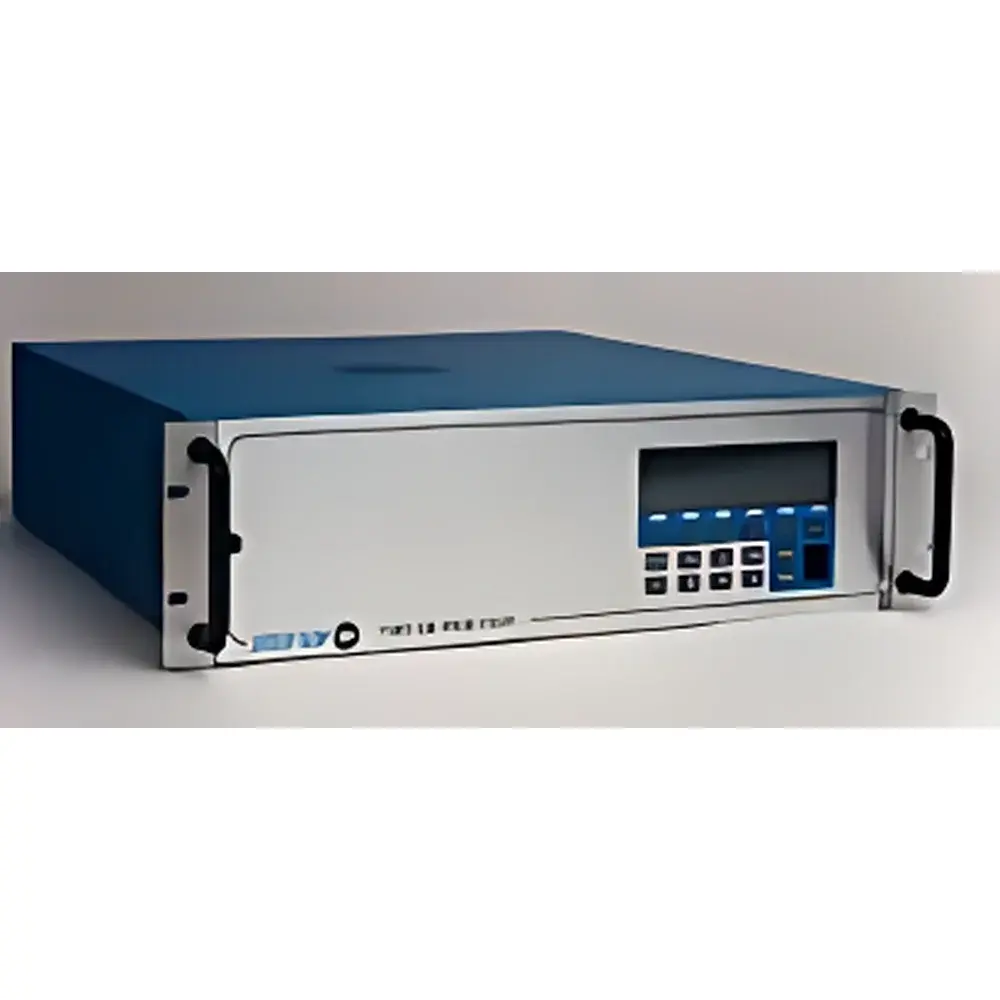
SIGNAL Model 4000VM NOx Analyzer
| Brand | SIGNAL |
|---|---|
| Origin | United Kingdom |
| Model | 4000VM |
| Measurement Principle | Vacuum-heated chemiluminescence detection |
| Output Options | Simultaneous NO/NO₂/NOₓ or switchable NO/NOₓ |
| Range | 0–4 ppm to 0–10 % (auto-ranging) |
| NH₃ Cross-sensitivity | None |
| NO Conversion Source | Carbon-based catalytic converter |
| Zero Reference | Neon lamp (ambient air NO-free calibration) |
| Operating Mode | Vacuum-heated or ambient-temperature non-vacuum (optional) |
| Compliance Ready | ASTM D6522, ISO 7935, EN 14792, US EPA Method 7E |
Overview
The SIGNAL Model 4000VM NOx Analyzer is a high-stability, laboratory-grade and industrial online gas analyzer engineered for precise, continuous measurement of nitrogen oxides (NO, NO₂, and total NOₓ) in complex process and emission streams. It employs vacuum-heated chemiluminescence detection (CLD), a reference-grade analytical technique standardized under ASTM D6522 and EN 14792 for regulatory-grade NOₓ quantification. In this method, nitric oxide (NO) reacts with ozone (O₃) in a reaction chamber under controlled vacuum and elevated temperature (typically 325 °C), generating photons proportional to NO concentration. Total NOₓ is determined by first converting NO₂ to NO via a high-efficiency carbon-based catalytic converter — eliminating interference from ammonia (NH₃), a common challenge in combustion and SCR monitoring applications. The system’s heated vacuum manifold ensures minimal quenching effects and robust performance with hot, humid, or particulate-laden sample gases — making it suitable for direct stack sampling without extensive pre-conditioning.
Key Features
- Vacuum-heated chemiluminescence architecture with integrated ozone generator and photomultiplier tube detector for high signal-to-noise ratio and long-term baseline stability
- Carbon-based NOₓ converter (not stainless steel), delivering <0.1 % NH₃ cross-sensitivity — critical for accurate NOₓ reporting in ammonia-injected exhaust systems (e.g., diesel SCR, biomass boilers)
- Neon lamp zero reference source, eliminating ambient air-derived NO formation during zero calibration and ensuring trace-level accuracy down to 0.1 ppb
- Auto-ranging capability spanning six orders of magnitude: 0–4 ppm to 0–10 % NOₓ, configurable per channel (NO, NO₂, NOₓ) with seamless range switching and linearization
- Dual operational modes: standard vacuum-heated mode for maximum sensitivity and humidity tolerance; optional ambient-temperature non-vacuum mode for dry-gas applications requiring lower power and maintenance
- Embedded microprocessor with intuitive LCD interface, real-time diagnostic status screen, scheduled auto-calibration (span/zero), and full Modbus TCP/RTU and RS-232 remote control support
Sample Compatibility & Compliance
The Model 4000VM accepts sample gas flows from 0.5 to 2.0 L/min at pressures between –10 to +50 kPa(g). Its heated sample line (up to 180 °C) and vacuum-purged reaction chamber enable stable operation with wet, corrosive, or condensable streams — including flue gas, engine exhaust, biogas upgrading lines, and municipal incinerator stacks. When paired with the SIGNAL Model 410 ammonia conversion furnace (optional), the system extends functionality to NH₃ measurement via thermal decomposition to NO. Regulatory compliance is supported through built-in audit trail logging (GLP/GMP-ready), 21 CFR Part 11-compatible user access control (with password levels), and data export in CSV/ASCII formats. Certifications include CE marking for EMC and LVD, and conformity with IEC 61000-6-2/-4 for industrial electromagnetic environments.
Software & Data Management
The analyzer operates with SIGNAL’s proprietary firmware v3.2+, featuring embedded data logging (≥30 days at 1-second resolution), configurable alarm thresholds (high/low, rate-of-change), and event-triggered storage. Optional PC-based SignalView™ software provides real-time visualization, multi-channel trending, report generation (PDF/Excel), and integration with SCADA, DCS, or cloud-based IIoT platforms via OPC UA. All calibration events, diagnostics, and parameter changes are timestamped and logged with operator ID — satisfying QA/QC documentation requirements for ISO 17025-accredited laboratories and EPA Title V monitoring programs.
Applications
- Continuous emissions monitoring systems (CEMS) for coal, gas, and biomass-fired power plants
- Engine test bed and chassis dynamometer exhaust analysis (light- and heavy-duty vehicles)
- SCR and SNCR de-NOₓ system optimization and ammonia slip monitoring
- Chemical process off-gas control (e.g., nitric acid production, adipic acid synthesis)
- Research and development of low-NOₓ burners and aftertreatment catalysts
- Environmental air quality networks requiring regulatory-grade NO₂ speciation
FAQ
What is the difference between vacuum-heated and ambient-temperature operation modes?
Vacuum-heated mode maintains optimal CLD sensitivity and humidity immunity by evacuating the reaction chamber and heating it to 325 °C; ambient mode disables vacuum and heater, reducing power consumption and extending component life for dry, clean gas streams.
Can the 4000VM measure NH₃ directly?
Not natively — but when coupled with the SIGNAL Model 410 thermal converter, NH₃ is catalytically decomposed to NO at 850 °C and quantified via the same CLD detector, enabling dual NOₓ/NH₃ monitoring on a single platform.
How does the carbon converter prevent NH₃ interference?
Unlike stainless-steel converters that catalyze unwanted NH₃ → NO conversion above 650 °C, the carbon catalyst selectively reduces NO₂ to NO below 400 °C without promoting NH₃ oxidation — verified per EN 15267-3 test protocols.
Is 21 CFR Part 11 compliance available?
Yes — with optional firmware upgrade and external authentication server integration, the system supports electronic signatures, role-based access, and immutable audit trails required for FDA-regulated pharmaceutical or biotech exhaust monitoring.
What maintenance intervals are recommended?
Ozone generator cell replacement every 12 months; PMT gain check every 6 months; converter efficiency validation annually or per 5,000 operating hours — all tracked automatically in the onboard maintenance scheduler.







