
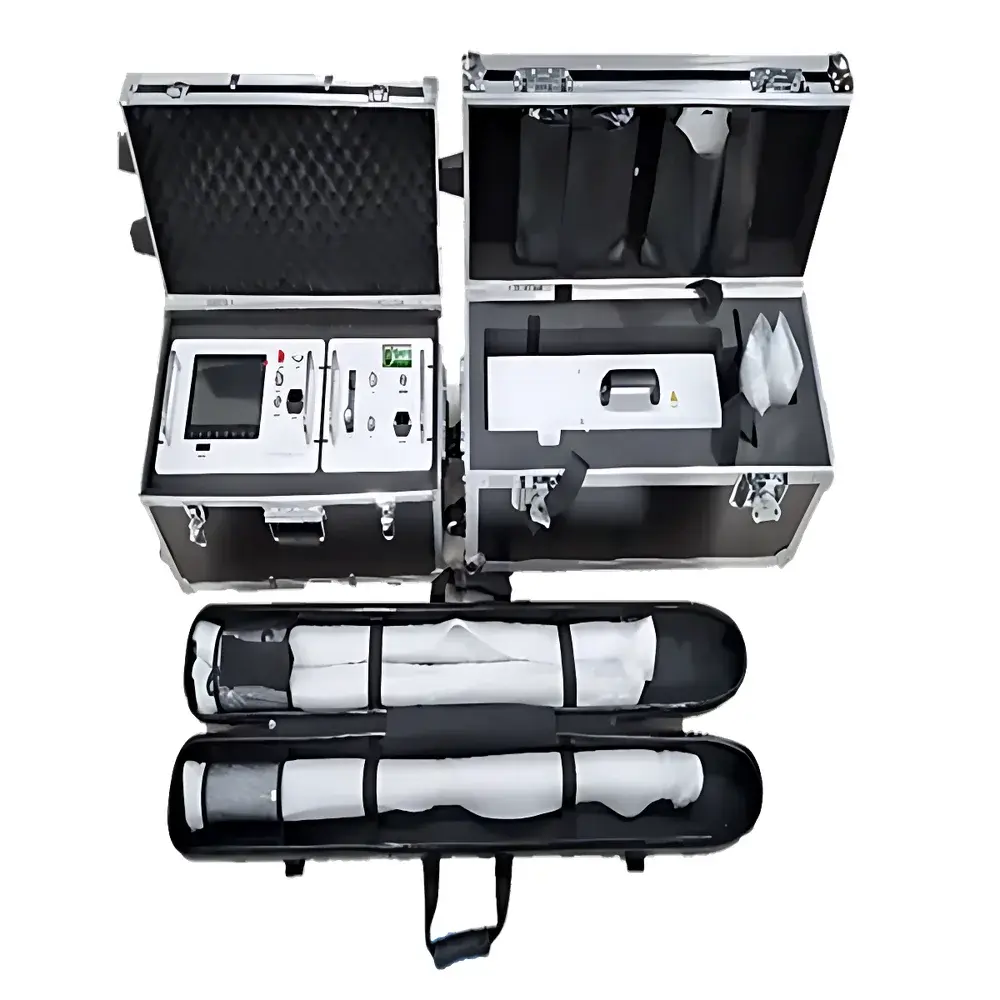
LESHI SE307 Portable Tunable Diode Laser Absorption Spectroscopy (TDLAS) Ammonia Analyzer
| Brand | Leshi |
|---|---|
| Origin | Beijing, China |
| Manufacturer Type | Authorized Distributor |
| Regional Classification | Domestic (China) |
| Model | SE307 |
| Instrument Type | Portable |
| Detection Principle | TDLAS (NH₃-specific 1.53 µm wavelength) |
| Minimum Detectable Concentration | <50 ppb |
| Response Time (T90) | <2 s |
| Optical Path Length | 30 m (multi-pass cell) |
| Wavelength Stability | Real-time peak-locking via integrated NH₃ reference cell |
| Output Interface | Digital RS-485 / USB |
| Data Storage | Internal SD card (≥16 GB) |
| Operating Temperature | −10 °C to +50 °C |
| Power Supply | Rechargeable Li-ion battery (≥8 h continuous operation) |
| Compliance | CE-marked, RoHS-compliant, meets IEC 61000-4 EMC immunity requirements |
Overview
The LESHI SE307 Portable Tunable Diode Laser Absorption Spectroscopy (TDLAS) Ammonia Analyzer is an engineered solution for high-sensitivity, real-time quantification of gaseous ammonia (NH₃) in demanding industrial and environmental monitoring applications. It operates on the fundamental principle of near-infrared TDLAS, utilizing a single-mode distributed feedback (DFB) laser diode tuned precisely to the strongest ro-vibrational absorption line of NH₃ at ~1531.7 nm. This narrow-linewidth (<0.0001 nm) laser source ensures exceptional spectral selectivity—effectively isolating NH₃ absorption from overlapping interferences caused by H₂O, CO₂, NOₓ, SO₂, or particulate scattering. The analyzer incorporates a robust multi-pass optical cell with an effective path length of 30 meters, significantly enhancing detection sensitivity while maintaining compact field-deployable form factor. Unlike electrochemical or metal-oxide semiconductor sensors, TDLAS provides absolute concentration measurement traceable to fundamental spectroscopic constants, eliminating drift-related recalibration cycles and enabling long-term stability under variable ambient conditions.
Key Features
- Real-time, interference-free NH₃ measurement using wavelength-specific TDLAS at 1531.7 nm
- Integrated sealed NH₃ reference cell for continuous absorption peak locking—compensates for thermal drift and laser wavelength drift without external calibration gases
- High-frequency wavelength modulation spectroscopy (WMS-2f) for enhanced signal-to-noise ratio and immunity to low-frequency mechanical vibration and electromagnetic interference
- 30-meter effective optical path length achieved via precision-machined Herriott-type multi-reflection cell, delivering sub-50 ppb detection limit
- Onboard data logging with ≥16 GB SD card storage; timestamped records include raw absorbance, calculated concentration, temperature, pressure, and system diagnostics
- Rechargeable lithium-ion battery supporting ≥8 hours of continuous operation—optimized for stack access, mobile monitoring, and emergency response scenarios
- Intuitive 5.7-inch color TFT display with touch interface for real-time concentration visualization, historical trend review, and parameter configuration
- Digital output via RS-485 Modbus RTU protocol; USB port enables direct data export to PC using standard FAT32-formatted USB flash drives
Sample Compatibility & Compliance
The SE307 is designed for direct in-situ sampling of humid, particulate-laden flue gas streams and ambient air without requiring extensive sample conditioning—provided inlet filtration (5 µm) and optional heated sampling line (up to 180 °C) are deployed where condensation risk exists. Its optical design inherently rejects cross-sensitivity to common combustion byproducts, satisfying key performance criteria outlined in ASTM D6522 (Standard Test Method for Determination of Nitrogen Oxides, Carbon Monoxide, and Oxygen in Emissions from Stationary Sources) and ISO 14956 (Air Quality — Evaluation of Air Quality Measurement Results). While not certified for safety-critical SIL-rated applications, the instrument conforms to CE marking directives (2014/30/EU EMC, 2011/65/EU RoHS), and its firmware architecture supports audit-ready data integrity per GLP-aligned laboratory practices.
Software & Data Management
The SE307 ships with LESHI’s proprietary Windows-based data acquisition and analysis software, providing full configuration control, remote monitoring via USB virtual COM port, and post-processing capabilities including baseline correction, averaging windows, and customizable alarm thresholds. All stored measurements include embedded metadata (GPS coordinates if connected via optional Bluetooth module, local time synchronized via NTP-compatible RTC, sensor temperature, cell pressure). Export formats include CSV and Excel-compatible XLSX, ensuring seamless integration into enterprise LIMS or SCADA systems. Audit trails log all user-initiated actions—including zero/span adjustments, firmware updates, and parameter changes—with timestamps and operator IDs, supporting regulatory readiness for EPA Method 320 and EU BREF document compliance.
Applications
- Ammonia slip monitoring across SCR/SNCR denitrification systems in coal-fired power plants, waste-to-energy facilities, and cement kilns
- Process optimization and catalyst health assessment in fertilizer production and caprolactam synthesis units
- Regulatory compliance monitoring of fixed emission sources per China’s HJ 101-2019 and EU IED Annex VII requirements
- Urban air quality networks tracking agricultural NH₃ emissions and secondary particulate formation potential
- Research-grade validation of open-path DOAS or cavity-enhanced spectrometers in university and national lab settings
- Mobile source emission testing during vehicle exhaust characterization campaigns
FAQ
What is the minimum detectable NH₃ concentration under field conditions?
The SE307 achieves a lower limit of detection (LOD) of 30–50 ppb (3σ) in typical flue gas matrices at atmospheric pressure and 25 °C, validated per ISO 11843-2.
Does the instrument require daily calibration gas exposure?
No. The built-in sealed NH₃ reference cell enables automatic peak position stabilization; only annual verification using certified NH₃ standard gas (e.g., NIST-traceable 10 ppm in N₂) is recommended.
Can the analyzer operate continuously inside a hot stack environment?
The analyzer itself is rated for ambient operation up to +50 °C; for direct stack insertion, a heated sampling probe and conditioned extractive line must be used—SE307 is intended for extracted, filtered, and temperature-stabilized sample streams.
Is the firmware compliant with FDA 21 CFR Part 11 for electronic records?
While the SE307 supports secure user authentication and immutable audit logs, it is not formally validated for Part 11 environments; however, its data structure and export protocols align with ALCOA+ principles for GxP-relevant use cases.
How is optical alignment maintained during transport or field deployment?
The Herriott cell features monolithic kinematic mounting and passive thermal compensation; factory alignment remains stable over >10⁶ thermal cycles—no field realignment tools or procedures are required.







