
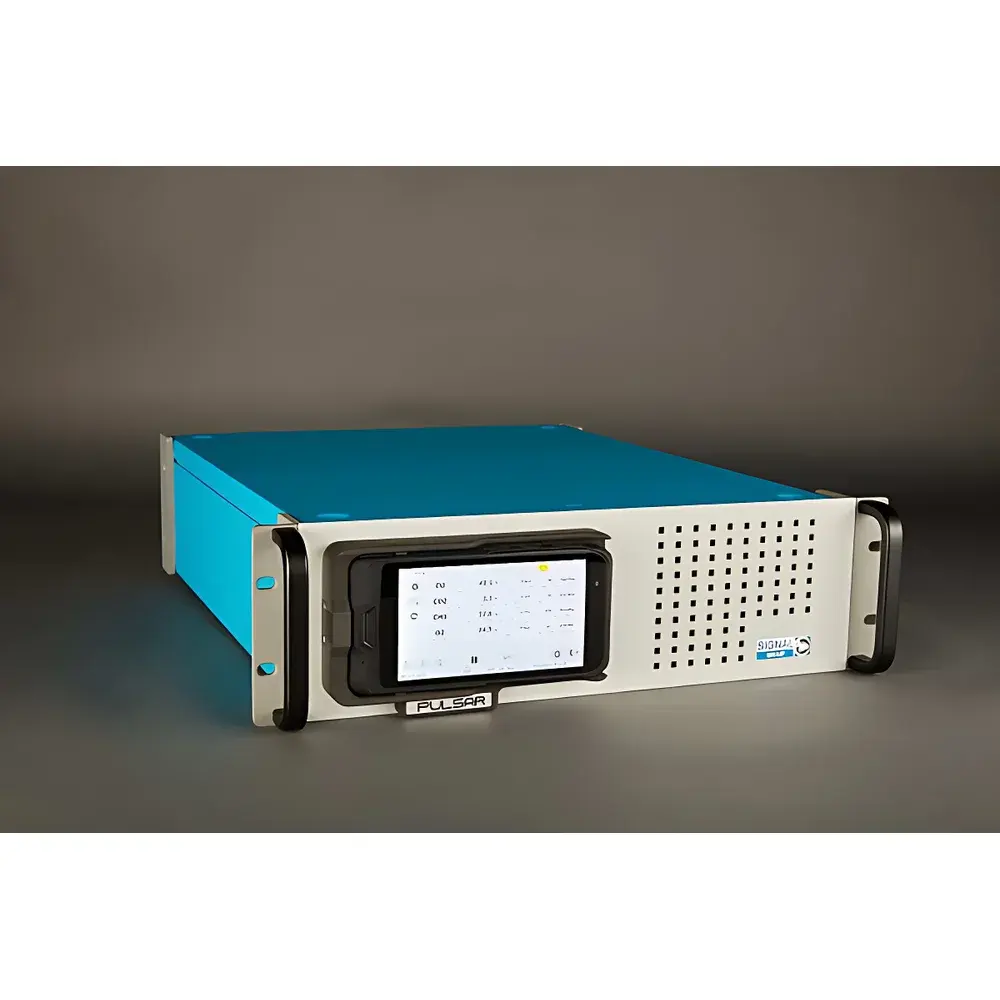
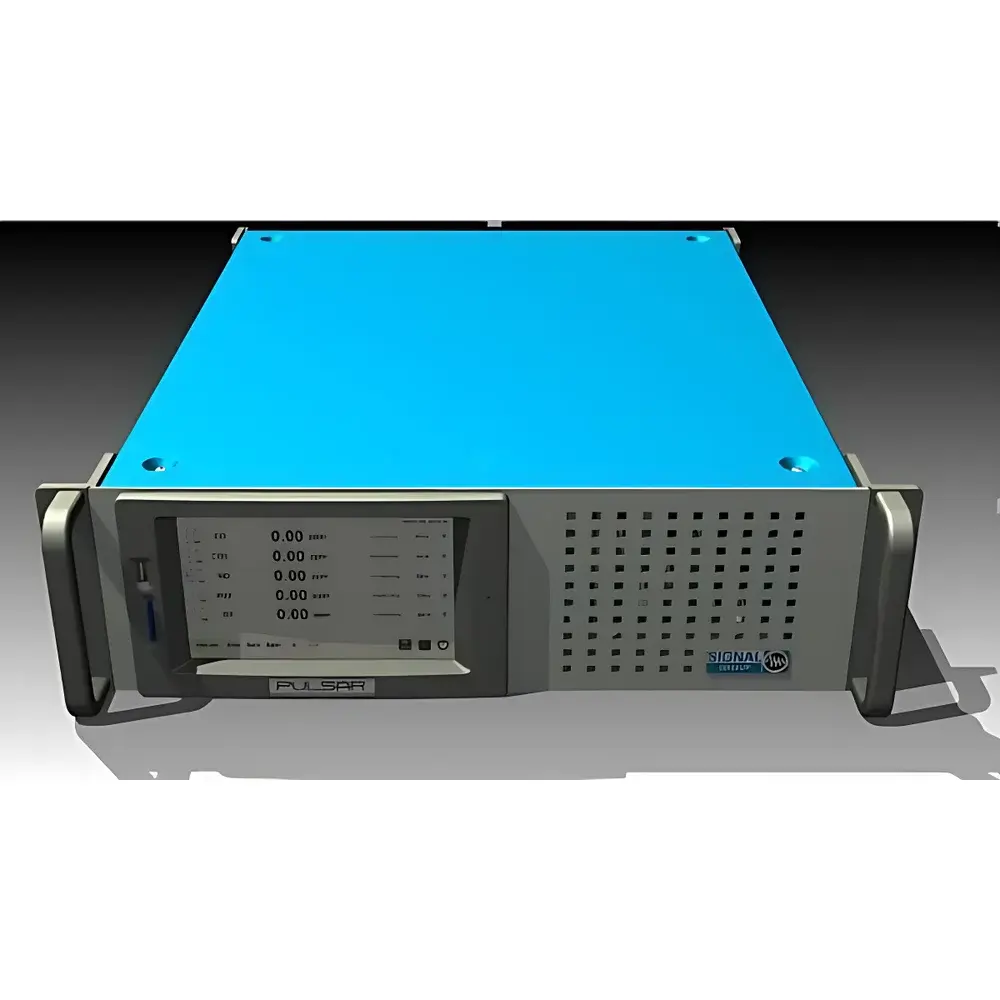
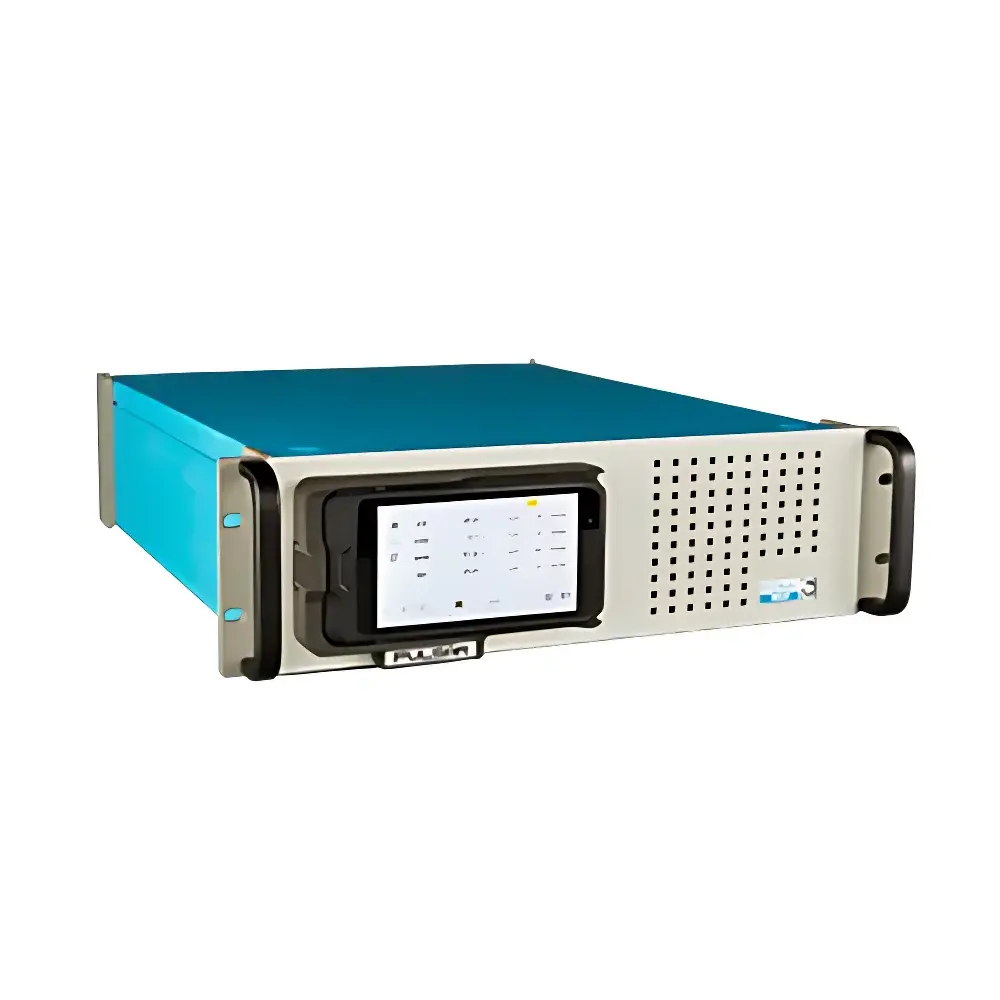
Signal Series 4 PULSAR Infrared Multicomponent Gas Analyzer
| Brand | SIGNAL |
|---|---|
| Origin | United Kingdom |
| Model | S4-PULSAR |
| Principle | Non-Dispersive Infrared (NDIR) with Gas Filter Correlation (GFC) |
| Type | Online Fixed-Mount Analyzer |
| Response Time | Gas- and concentration-dependent (typically < 15 s for major components) |
| Repeatability | ±0.5 ppm or ±1% of full scale (whichever is greater) for CO, CO₂, NO, SO₂, N₂O, CH₄, HCl, O₂ |
| Linearity | Better than ±1% FS |
| Display | 5.7″ color TFT touchscreen |
| Data Storage | Integrated SD card logging (all channels, timestamped) |
| Connectivity | USB host/device port |
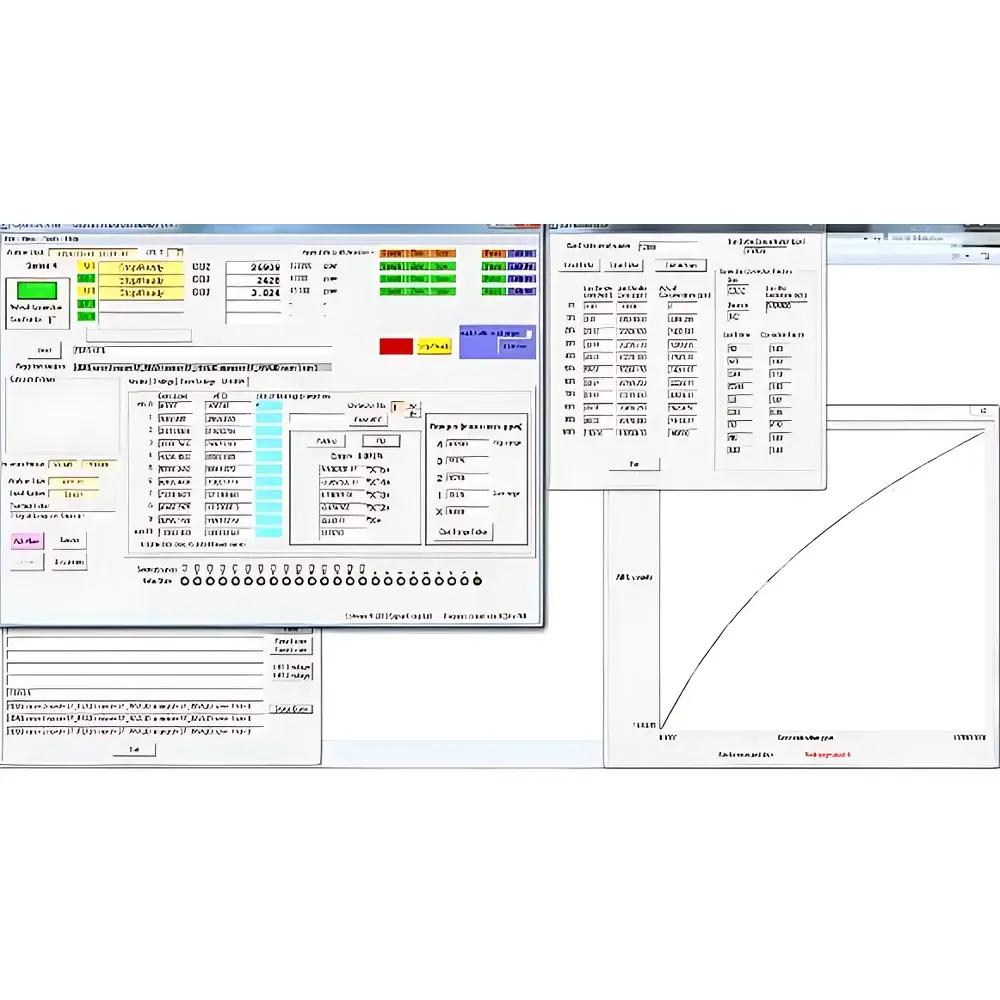
| Software | Free PC-based data acquisition and configuration suite included |
| Compliance | Designed for continuous emissions monitoring (CEM) and laboratory-grade trace gas analysis |
| Sample Compatibility | Dry or humidified gas streams |
Overview
The Signal Series 4 PULSAR is a research-grade, online multicomponent infrared gas analyzer engineered for high-precision, long-term stability in demanding environmental, industrial, and regulatory applications. Developed under funding from the UK Technology Strategy Board (now Innovate UK) and co-engineered by the National Physical Laboratory (NPL), BP plc, and SIGNAL Group, the S4-PULSAR implements Gas Filter Correlation (GFC) — an advanced variant of non-dispersive infrared (NDIR) spectroscopy — to deliver superior selectivity, sensitivity, and immunity to spectral interference. Unlike conventional dual-beam NDIR systems, GFC employs a single sample cell combined with dynamically modulated reference gas filters, eliminating drift caused by differential contamination between sample and reference paths. This architecture inherently suppresses cross-sensitivity — for example, CO₂ and H₂O measurements remain unaffected by high-percentage CO or hydrocarbon backgrounds — making the S4-PULSAR particularly robust in complex, real-world gas matrices.
Key Features
- Gas Filter Correlation (GFC) optical engine delivering enhanced signal-to-noise ratio and reduced baseline drift over conventional NDIR
- Simultaneous quantification of up to five user-selectable gases from a library including O₂, CO, CO₂, NO, NO₂, N₂O, SO₂, HCl, CH₄, and NH₃
- Single-path optical design with no moving parts in the measurement cell — minimizes maintenance and eliminates alignment drift
- Particulate-resistant optical train with integrated purge ports; suitable for flue gas, biogas, ambient air, and process stream monitoring
- High-stability thermoelectrically cooled detectors ensuring consistent performance across ambient temperature fluctuations (10–40 °C operating range)
- Onboard 5.7″ color TFT touchscreen interface with intuitive menu navigation, real-time trend plots, and alarm status visualization
- Integrated SD card slot supporting continuous timestamped logging of all active channels at configurable intervals (1 s to 60 min)
- USB 2.0 interface for firmware updates, configuration backup/restore, and direct data export without external software dependency
Sample Compatibility & Compliance
The S4-PULSAR is designed for continuous operation in fixed-installation environments requiring regulatory-grade data integrity. It accommodates gas streams with dew points up to 40 °C (non-condensing), and optional heated sampling lines or permeation dryers extend compatibility to saturated or corrosive matrices. The analyzer meets the functional requirements of EN 15267-3 (QAL1 certification readiness), ASTM D6522 (for NOₓ in exhaust), and ISO 12039 (for CO, CO₂, SO₂ in stationary source emissions). While not pre-certified, its architecture supports validation under EPA Methods 3A, 6C, 7E, and 10, and its data handling subsystem is compatible with 21 CFR Part 11-compliant audit trail implementation when integrated into validated SCADA or LIMS platforms. All firmware and configuration changes are logged with user ID, timestamp, and parameter delta — enabling GLP/GMP-aligned record retention.
Software & Data Management
The included PC-based Signal Data Acquisition Suite provides full instrument control, calibration management, and post-processing capabilities. Users can define custom calibration curves (linear, quadratic, or multi-point polynomial), configure alarm thresholds per channel (high/low, rate-of-change), and generate compliant PDF reports with embedded metadata (instrument ID, calibration date, operator, uncertainty estimates). Raw data exports support CSV and XML formats, with time stamps traceable to UTC via optional NTP synchronization. The software includes built-in diagnostic tools — such as detector responsivity trending, zero/span drift logs, and optical path transmission monitoring — facilitating predictive maintenance and reducing unscheduled downtime. No subscription fees or runtime licenses apply; the suite is provided royalty-free with each unit.
Applications
- Continuous Emissions Monitoring Systems (CEMS) for thermal power plants, cement kilns, and waste incinerators
- Biogas quality control in anaerobic digestion facilities (CH₄/CO₂/O₂/H₂S optimization)
- Research-grade atmospheric chemistry studies requiring sub-ppm detection limits and inter-species interference rejection
- Calibration verification and reference standard generation in metrology laboratories (traceable to NPL primary standards)
- Process safety monitoring in chemical manufacturing (e.g., SO₂ scrubber efficiency, NOₓ reduction catalyst performance)
- Indoor air quality (IAQ) assessment in smart buildings and cleanrooms where CO₂, NO₂, and VOC proxies must be decoupled from humidity artifacts
FAQ
What gases can the S4-PULSAR measure simultaneously?
It measures up to five user-defined components from a standard list including CO, CO₂, NO, NO₂, N₂O, SO₂, HCl, CH₄, O₂, and NH₃. Custom configurations for other IR-active species are available upon request.
Does the analyzer require periodic zero/span calibration?
Yes — recommended every 7–30 days depending on application severity. Automatic zero calibration using internal N₂ or synthetic air is supported; span calibration uses certified gas standards traceable to NIST or NPL.
Can it operate in high-humidity or dusty environments?
The optical path is sealed and purge-compatible. For sustained operation above 80% RH or in particulate-laden streams, integration with a heated sample probe, Teflon membrane filter, and condensate trap is advised.
Is remote monitoring supported?
The S4-PULSAR does not include native Ethernet or 4G connectivity, but its USB and analog 4–20 mA outputs enable seamless integration into third-party PLCs, SCADA systems, or cloud gateways via standard Modbus RTU or ASCII protocols.
How is measurement uncertainty characterized?
Uncertainty budgets follow ISO/IEC 17025 guidelines and include contributions from detector noise, optical path stability, calibration gas certificate uncertainty, and temperature/pressure compensation residuals — typically ≤ ±2% of reading for CO₂ at 400 ppm, ±3% for NO at 1 ppm.
Related Products







