
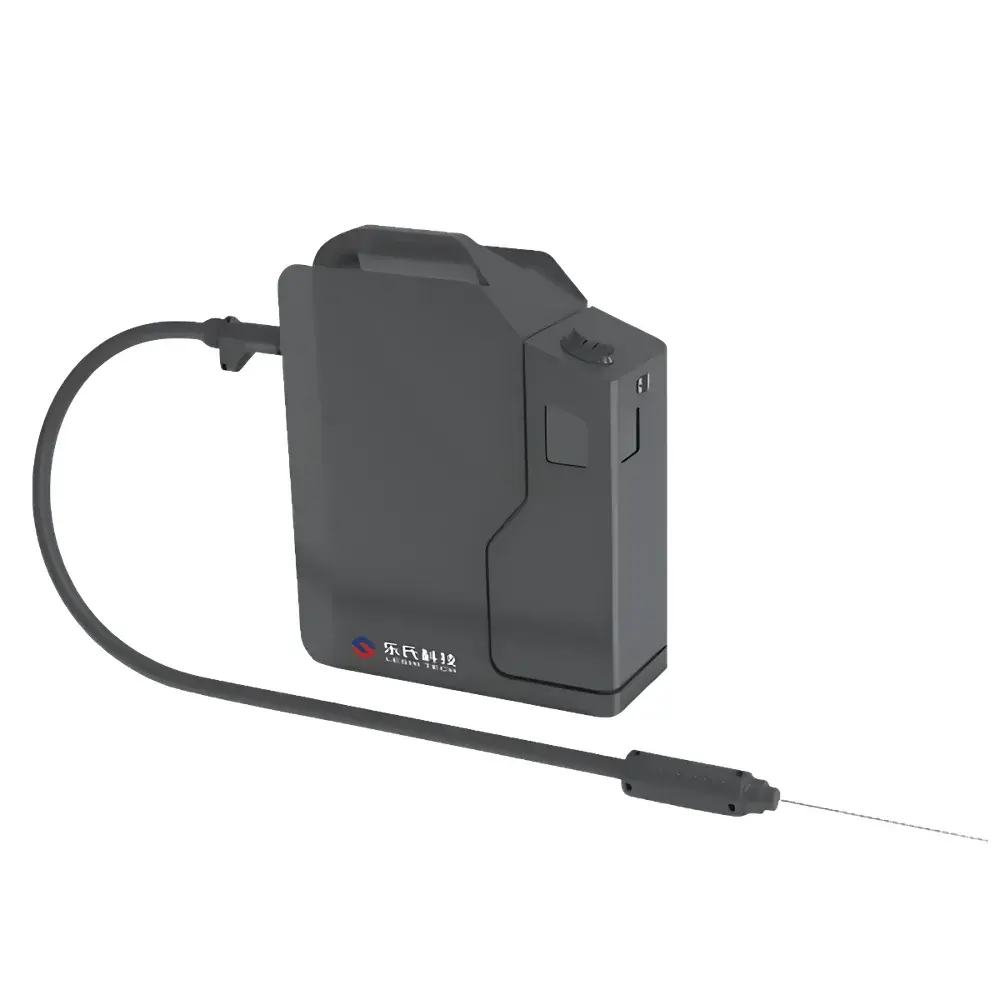
LESHI 3800Plus Portable GC-FID Analyzer for Methane, Non-Methane Hydrocarbons (NMHC), and BTEX
| Brand | Leshi |
|---|---|
| Origin | Beijing, China |
| Model | 3800Plus |
| Detection Principle | Gas Chromatography with Flame Ionization Detection (GC-FID) |
| Compliance | HJ 1012–2018 |
| Power Supply | Integrated rechargeable battery + external DC/AC input |
| Dimensions (incl. internal gas cylinders & battery) | ≤ 420 × 320 × 180 mm |
| Weight | < 12.5 kg |
| Sample Inlet | Built-in diaphragm pump with flow control |
| Column Configuration | Dual-capillary column system with backflush capability |
| Detection Range | Methane (0.1–10,000 ppm), NMHC (0.05–10,000 ppm as propane), BTEX (0.1–500 ppb to ppm, compound-dependent) |
| Analysis Cycle Time | 60–180 s per sample (configurable) |
Overview
The LESHI 3800Plus is a field-deployable, fully integrated gas chromatograph equipped with a flame ionization detector (GC-FID), engineered for real-time, on-site quantification of methane (CH₄), non-methane hydrocarbons (NMHC), and aromatic volatile organic compounds (VOCs), including benzene, toluene, ethylbenzene, and xylenes (BTEX). Unlike benchtop GC systems, the 3800Plus implements a miniaturized, ruggedized chromatographic platform with embedded analytical, power, and carrier gas management modules—all coordinated by a centralized control unit. Its operational principle follows standardized thermal desorption and separation protocols: ambient or stack gas is drawn via an integrated diaphragm pump into a pre-concentration trap (optional) or directly onto dual parallel capillary columns. Selective separation occurs under precisely controlled temperature ramping, followed by detection via FID—a technique offering linear response (>10⁶ dynamic range), high sensitivity (sub-ppb for BTEX), and robustness against matrix interferences common in complex emission streams. The system supports automated column backflushing to minimize carryover, extend column lifetime, and maintain measurement reproducibility across extended field deployments.
Key Features
- Compact, lightweight design (<12.5 kg) constructed from aerospace-grade aluminum alloy housing—optimized for handheld transport and tripod-mounted operation in confined or elevated sampling locations.
- Self-contained gas supply: integrated high-purity hydrogen (H₂) and synthetic air (for FID combustion) cylinders with pressure regulation and leak-tight fittings compliant with ISO 8573-1 Class 2 purity standards.
- Intelligent power architecture: dual-mode operation—rechargeable Li-ion battery pack (≥4.5 h continuous runtime at 25°C) or AC/DC input (100–240 VAC / 12–24 VDC) with automatic switchover and state-of-charge monitoring.
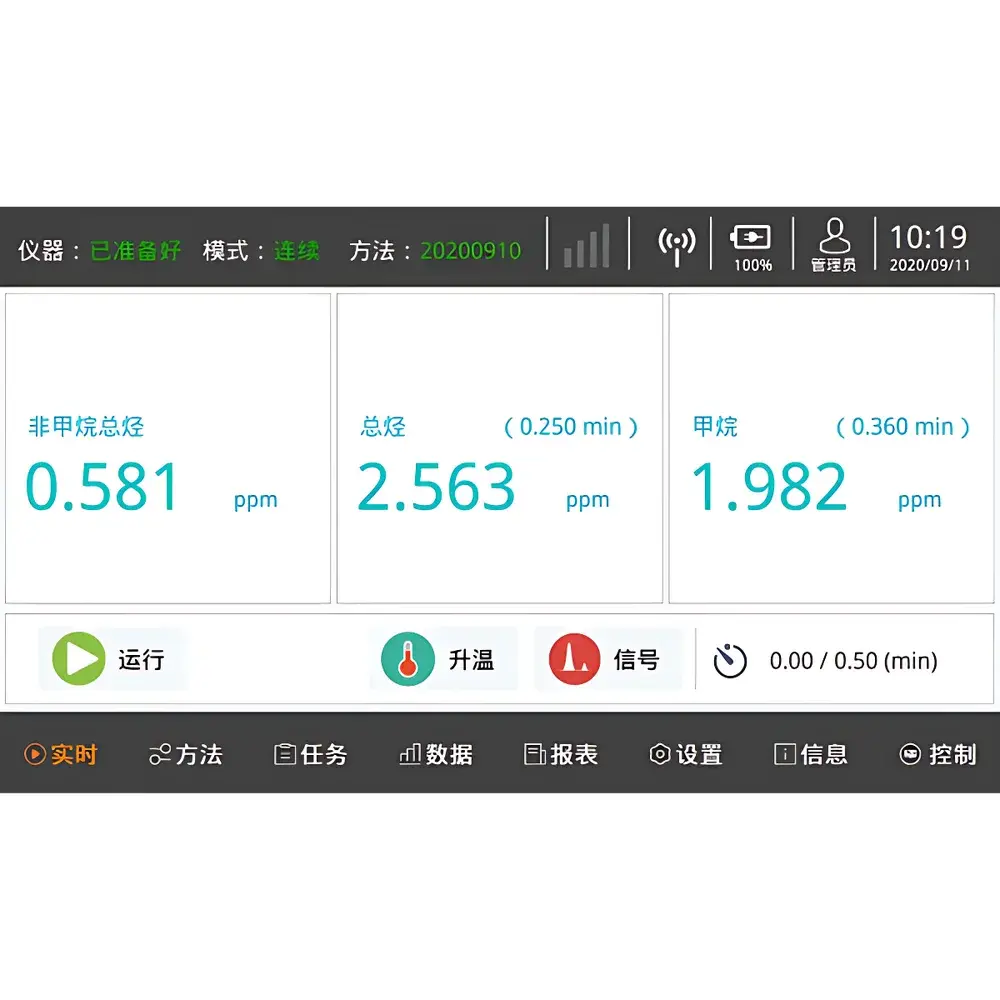
- Real-time chromatogram visualization and peak integration via embedded 7-inch capacitive touchscreen running a deterministic Linux-based firmware—no external PC required for basic operation.
- Onboard calibration verification: built-in electronic mass flow controller (MFC) enables automated span-check routines using certified gas standards (e.g., CH₄/NMHC/BTEX mixtures traceable to NIST SRMs).
- Ruggedized environmental rating: IP54 ingress protection; operating temperature range −10°C to +45°C; humidity tolerance up to 90% RH non-condensing.
Sample Compatibility & Compliance
The 3800Plus accepts gaseous samples directly from ambient air, flue gas ducts, engine exhaust manifolds, or soil gas probes via standard 1/4″ Swagelok® fittings. It meets the performance specifications outlined in HJ 1012–2018 (“Technical Requirements and Test Methods for Portable Analyzers of Total Hydrocarbons, Methane, and Non-Methane Hydrocarbons in Ambient Air and Exhaust Gases”) for precision (RSD ≤5%), accuracy (±10% of reference value), and detection limit (≤0.1 ppm for CH₄; ≤0.05 ppmC for NMHC). While not certified to EU EN 15267 or US EPA Method 25A, its GC-FID architecture aligns with ASTM D6348–21 and ISO 12039 for hydrocarbon speciation. Data output formats comply with ISO/IEC 17025 documentation requirements, supporting GLP-compliant audit trails when paired with optional external data loggers.
Software & Data Management
Instrument control, method configuration, and raw data acquisition are managed through the embedded LESHI ChromoView™ firmware. Export options include CSV, PDF reports (with embedded chromatograms and calibration logs), and XML metadata compliant with ASTM E1382. Optional USB-C or Bluetooth 5.0 connectivity enables synchronization with LESHI Cloud Analytics—a secure, ISO 27001-aligned platform supporting multi-user access control, versioned method libraries, and automated QA/QC flagging (e.g., retention time drift >0.5 s, FID baseline noise >1 pA RMS). All data handling conforms to FDA 21 CFR Part 11 requirements when configured with digital signature and electronic audit trail modules.
Applications
- Regulatory emissions monitoring at municipal wastewater treatment plants, landfills, and natural gas compressor stations per China’s “Guideline on VOCs Monitoring in Key Industries” (2022).
- In-process combustion efficiency assessment during diesel engine development—tracking CH₄ slip and NMHC unburnt fractions across load profiles.
- Leak detection and repair (LDAR) surveys in petrochemical facilities, where BTEX speciation supports root-cause analysis of fugitive emissions.
- Indoor air quality (IAQ) studies in semiconductor cleanrooms, paint booths, and tobacco processing lines—quantifying aromatic VOC breakthrough during solvent recovery cycles.
- Mobile source testing: integration with chassis dynamometers for real-time tailpipe VOC profiling under transient driving cycles (e.g., WLTC, NEDC).
- Field validation of fixed CEMS installations—serving as a portable reference analyzer for periodic performance audits.
FAQ
Does the 3800Plus require external gas supplies for routine operation?
No—it includes sealed, refillable hydrogen and synthetic air cylinders rated for ≥8 hours of continuous FID operation. Refill kits and certified gas service contracts are available through authorized LESHI service centers.
Can the instrument differentiate between individual BTEX compounds?
Yes—using its dual-column configuration and optimized temperature program, it achieves baseline separation of benzene, toluene, ethylbenzene, and xylenes (ortho/meta/para) with typical resolution (Rs) >1.5 per ASTM D5769.
Is method validation support provided for regulatory submissions?
LESHI supplies full validation documentation packages—including IQ/OQ/PQ protocols, uncertainty budgets per GUM (JCGM 100:2008), and HJ 1012–2018 conformance test reports—upon request.
What maintenance intervals are recommended for field use?
FID nozzle cleaning and detector alignment every 200 hours; column bake-out weekly (if exposed to high-humidity or particulate-laden samples); full system calibration verification every 30 days or after transport shock.
Is remote diagnostics supported?
Yes—via optional LTE module (Cat-M1) enabling secure SSH access, firmware OTA updates, and real-time sensor health telemetry monitored through LESHI Cloud Analytics dashboard.







