
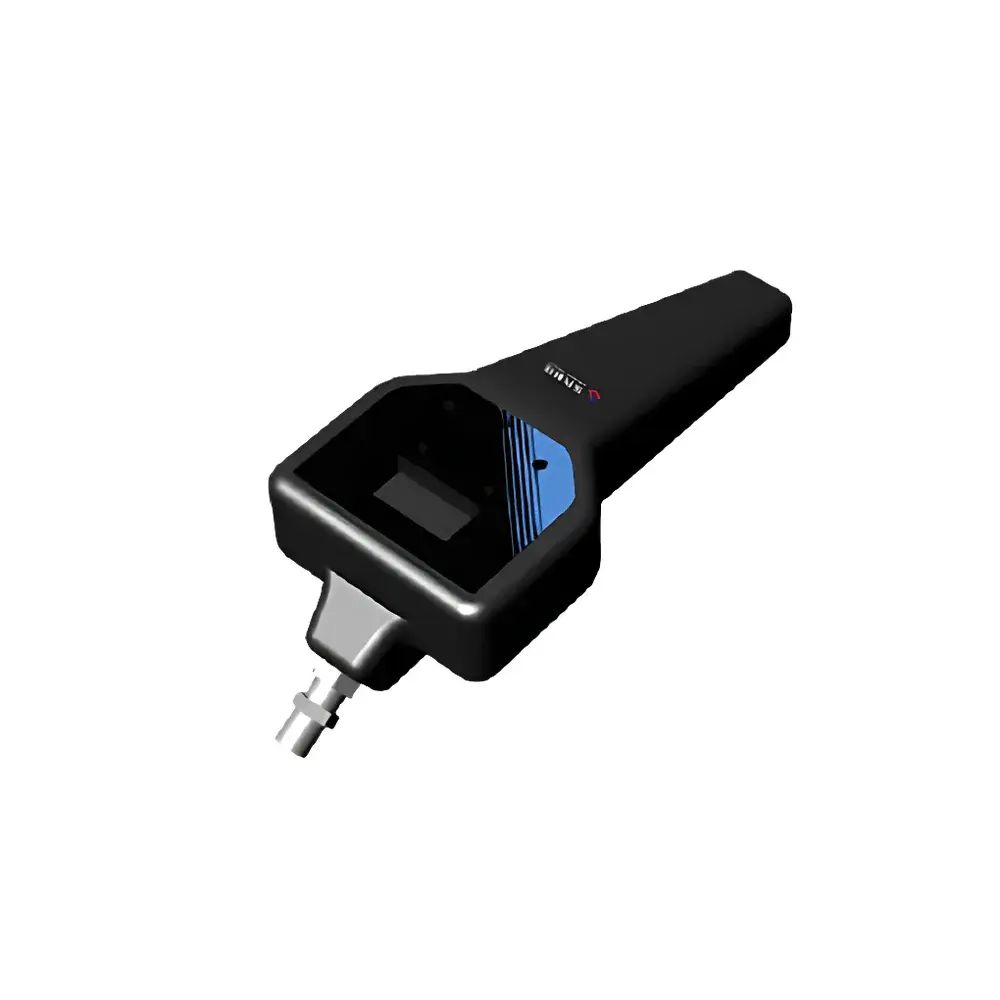
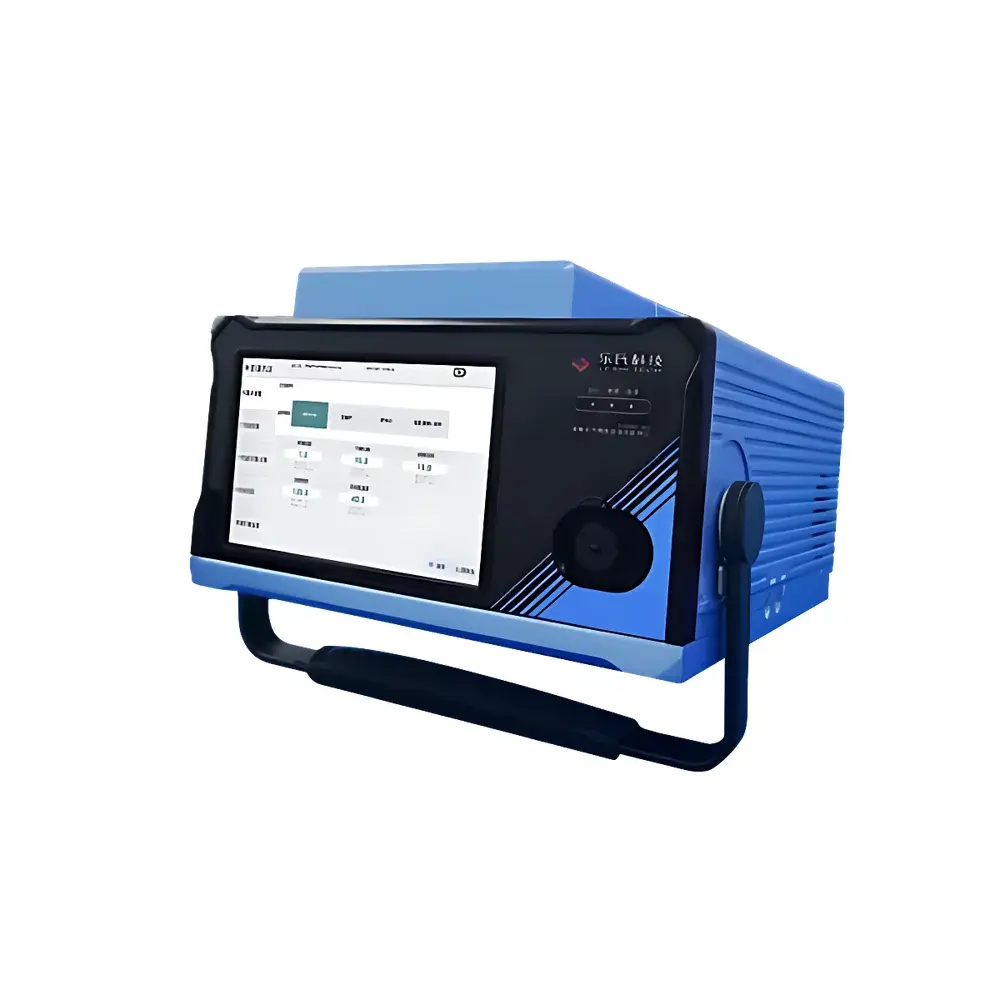
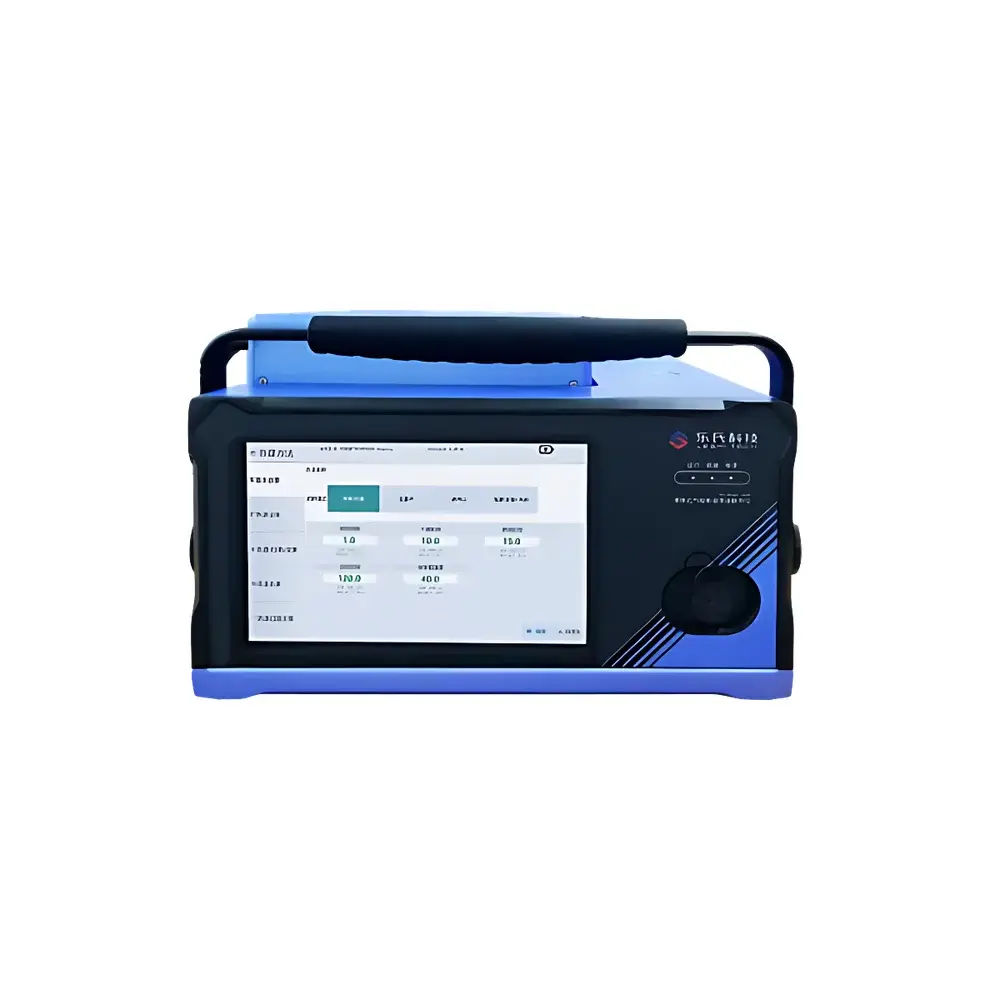
LESHI 9100GC-MS Portable Gas Chromatography Mass Spectrometry System
| Brand | LESHI |
|---|---|
| Origin | Beijing, China |
| Manufacturer Type | Authorized Distributor |
| Instrument Type | Single Quadrupole Mass Spectrometer |
| GC Architecture | Low Thermal Mass (LTM) Gas Chromatograph |
| Ion Source | High-Temperature Inert Ceramic Electron Ionization (EI) Source |
| Mass Analyzer | Precision All-Metal Quadrupole |
| Mass Range | 10–500 amu (standard configuration) |
| Detector | Electron Multiplier with High-Energy Conversion Dynode |
| Injection | Split/Splitless Injector |
| Column Interface | On-Column Heated Capillary Column |
| Carrier Gas Flow | Direct-to-Source Pneumatic Control |
| Preconcentration | Integrated Quantitative Loop and Sorbent-Based Trap (software-selectable) |
| Compliance | Designed to support EPA Method 8260D, ASTM D7622, and ISO 16000-6 workflows |
Overview
The LESHI 9100GC-MS is a field-deployable gas chromatography mass spectrometry (GC-MS) system engineered for rapid, on-site chemical identification and quantification. Built upon low thermal mass (LTM) gas chromatography architecture and a robust single quadrupole mass spectrometer, the instrument delivers laboratory-grade analytical performance in a compact, battery-operable platform. Its operational principle relies on separation of volatile and semi-volatile organic compounds via temperature-programmed capillary GC, followed by electron ionization (EI) at 70 eV, mass filtering through a high-stability all-metal quadrupole, and detection using an electron multiplier with high-energy conversion dynode. This configuration ensures high sensitivity, spectral reproducibility, and compatibility with NIST spectral library matching—critical for unambiguous compound identification in time-sensitive scenarios such as environmental incident response or forensic evidence analysis.
Key Features
- Integrated low thermal mass (LTM) GC module enabling rapid oven ramp rates (up to 120 °C/min) and sub-second temperature stabilization—reducing total analysis time without compromising resolution.
- High-temperature inert ceramic EI ion source (operable up to 350 °C), minimizing active site adsorption and enhancing signal stability for polar and thermally labile compounds.
- All-metal quadrupole mass analyzer with precision machined rods and optimized RF/DC voltage control, delivering consistent mass accuracy (< ±0.2 amu) and long-term mass calibration stability.
- Dual preconcentration architecture: software-switchable quantitative loop (1–5 mL) and sorbent-based trap (Tenax TA/Carbotrap C) for enhanced detection limits (sub-ppbv for BTEX, chlorinated solvents, and pesticides).
- On-column heated capillary interface eliminating transfer line cold spots and ensuring quantitative transfer of early-eluting analytes.
- Modular design with integrated lithium-ion battery pack (≥4 hours continuous operation) and ruggedized IP54-rated enclosure suitable for field use in ambient temperatures from −10 °C to +45 °C.
Sample Compatibility & Compliance
The 9100GC-MS supports direct injection of liquid samples (via syringe), headspace vapor (with optional portable headspace sampler), and solid-phase microextraction (SPME) desorption. It is validated for analysis of target analytes across EPA Method 8260D (Volatile Organic Compounds), ASTM D7622 (Hydrocarbon Fingerprinting in Soil), and ISO 16000-6 (Indoor Air VOCs). The system architecture adheres to fundamental requirements for GLP-compliant data acquisition—including electronic signatures, audit trail logging, and secure user access levels—as defined under 21 CFR Part 11 Annex 11 principles. While not pre-certified for regulated submission, its raw data format (.D) is fully compatible with third-party compliance-ready software platforms (e.g., Thermo Fisher TraceFinder, Agilent MassHunter) for method validation and report generation.
Software & Data Management
The instrument is controlled via LESHI GC-MS Navigator v3.2—a Windows-based application supporting real-time spectral acquisition, automated method sequencing, and library search (NIST MS Search 2.4g integrated). Raw data files are stored in vendor-neutral ANDI/NetCDF format, ensuring interoperability with open-source tools (e.g., OpenChrom, MZmine). Software features include automatic peak deconvolution for co-eluting compounds, isotopic pattern matching, and customizable reporting templates aligned with ISO/IEC 17025 documentation requirements. Audit trail records capture operator ID, method parameters, calibration events, and data modification history with timestamped entries—enabling full traceability during internal QA reviews or external accreditation audits.
Applications
- Emergency Response: Real-time detection of chemical warfare agent simulants, industrial toxic vapors (e.g., phosgene, hydrogen cyanide), and petroleum hydrocarbons at spill sites.
- Environmental Monitoring: Field screening of soil gas, groundwater purge-and-trap extracts, and ambient air for VOCs, SVOCs, and emerging contaminants (e.g., PFAS precursors).
- Forensic Toxicology: Rapid identification of drugs of abuse, accelerants in arson debris, and ignitable liquid residues per ASTM E1618 guidelines.
- Food Safety: Screening for pesticide residues, mycotoxin markers, and adulterants in raw agricultural commodities without laboratory transport delays.
- Fire Investigation: Differentiation of pyrolysis products versus ignitable liquids via retention index alignment and spectral match factor scoring.
FAQ
Is the 9100GC-MS compliant with FDA 21 CFR Part 11?
The system supports core technical controls required for Part 11 compliance—including electronic signatures, audit trails, and role-based access—but final validation must be performed by the end-user laboratory as part of their quality management system.
Can it operate without mains power?
Yes. The integrated rechargeable battery provides ≥4 hours of continuous GC-MS operation, including oven heating, vacuum pumping, and data acquisition.
What column dimensions are supported?
Standard configurations include 10 m × 0.15 mm ID fused silica columns with 0.1 µm film thickness; custom lengths and stationary phases (e.g., DB-5ms, Rxi-5Sil MS) can be installed per application-specific method requirements.
Does it support SIM mode for targeted quantitation?
Yes. Full-scan, selected ion monitoring (SIM), and hybrid scan/SIM acquisition modes are available, with dwell times configurable down to 10 ms per ion.
How is vacuum integrity maintained during transport?
The turbomolecular pump includes an auto-shutdown sequence with gate valve closure upon motion detection; residual pressure remains below 5×10⁻⁶ Torr for ≥72 hours after shutdown.
Related Products






