
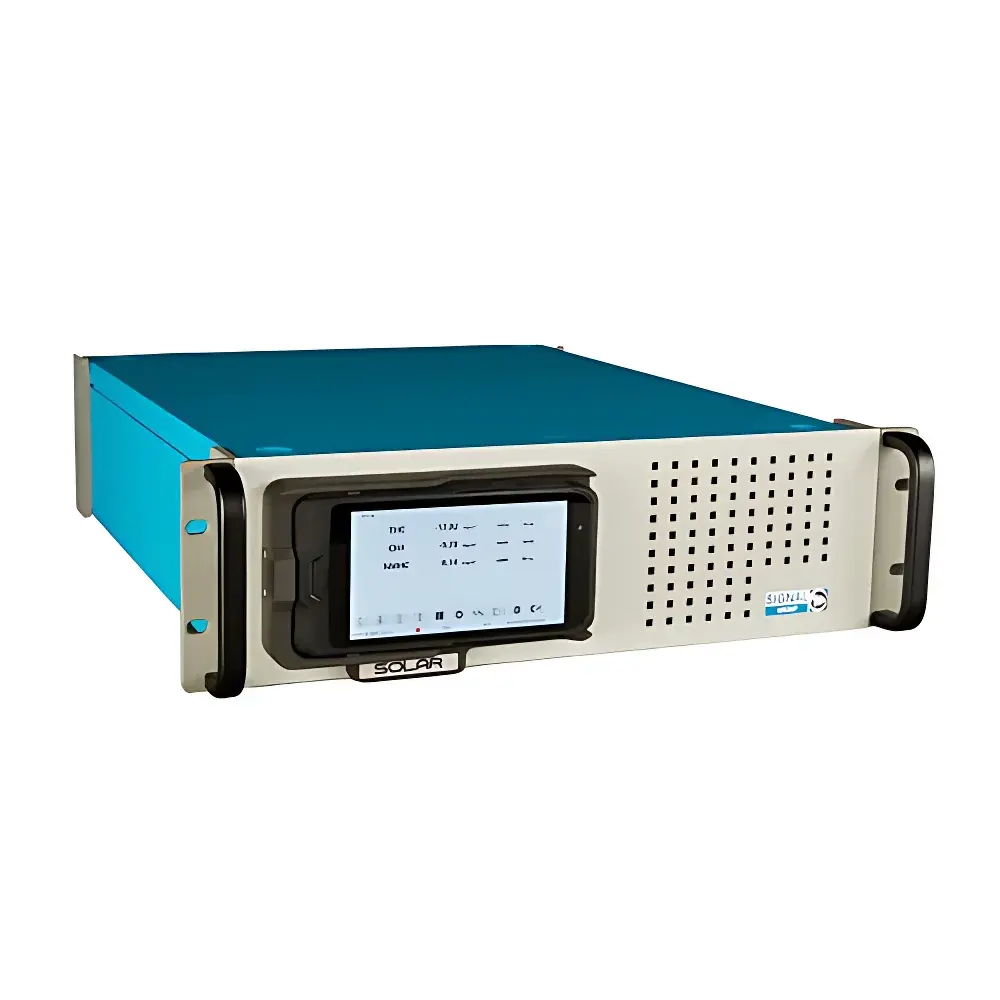
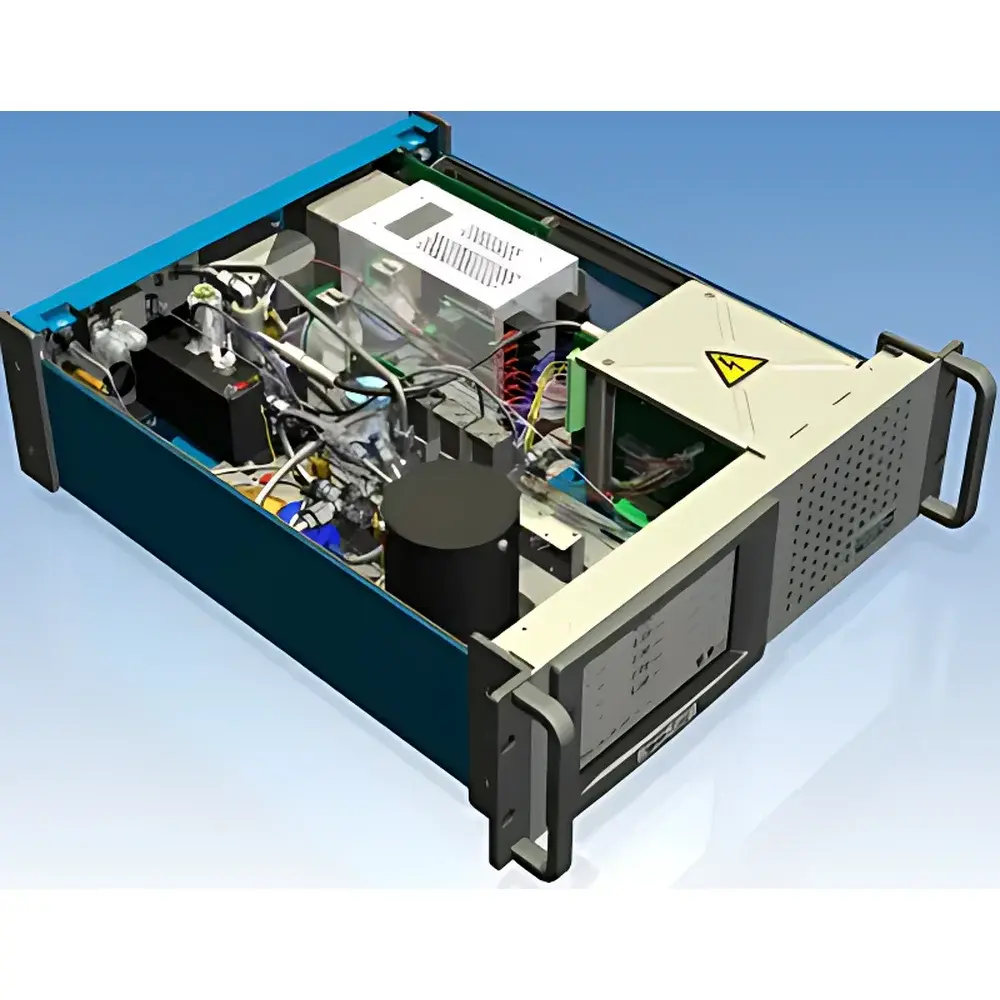
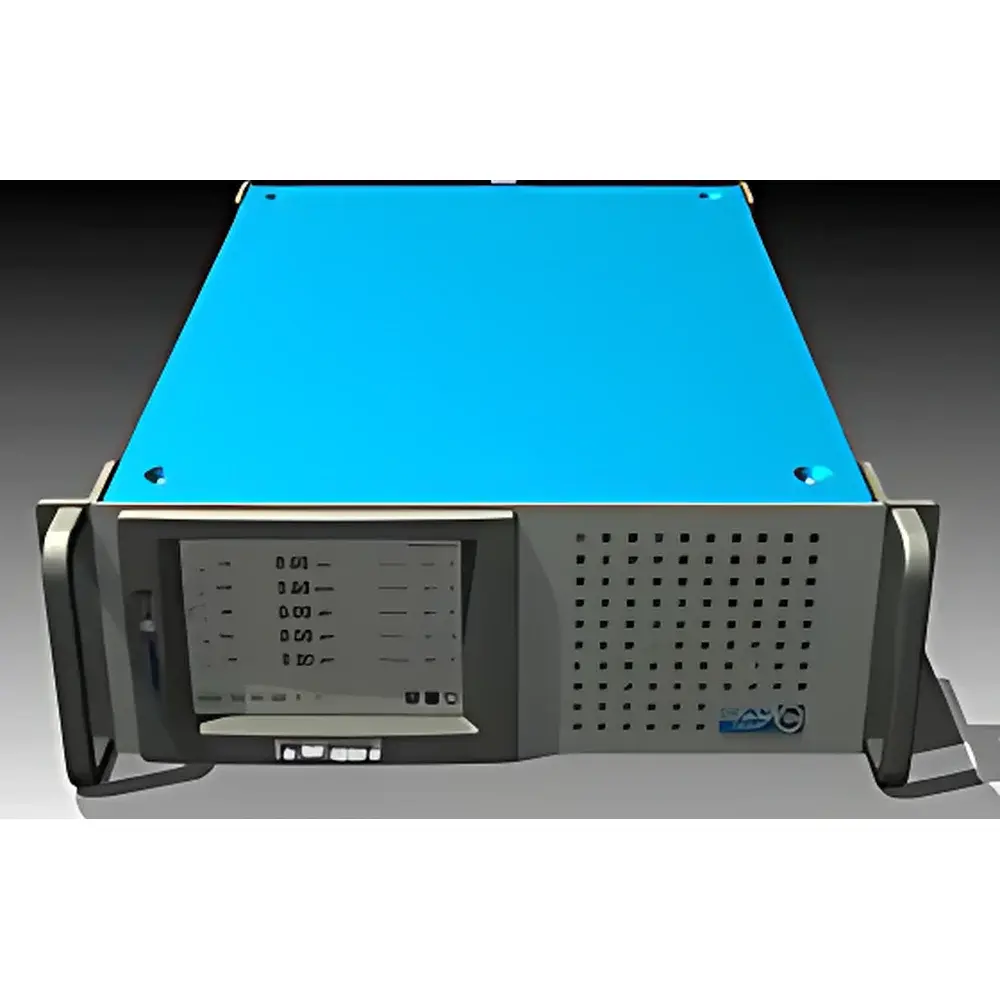
SIGNAL SOLAR Online Total Hydrocarbons / Non-Methane Hydrocarbons Analyzer
| Brand | SIGNAL |
|---|---|
| Origin | United Kingdom |
| Manufacturer Type | Authorized Distributor |
| Origin Category | Imported |
| Model | SOLAR |
| Detection Principle | Heated Flame Ionization Detector (HFID) |
| Instrument Type | Online Continuous Analyzer |
| Typical Configuration | Dual-Channel VOC & NMHC Analyzer |
| Measurement Ranges | 0–1 ppm, 0–10 ppm, 0–1,000 ppm, 0–10,000 ppm |
| Resolution | ±1% of reading |
| Accuracy | ±1% of reading |
Overview
The SIGNAL SOLAR Online Total Hydrocarbons (THC) / Non-Methane Hydrocarbons (NMHC) Analyzer is a research-grade, continuously operating gas analysis system engineered for regulatory-compliant monitoring of volatile organic compounds (VOCs) in industrial emission streams. Developed under funding from the UK Technology Strategy Board (now Innovate UK) and co-engineered by the National Physical Laboratory (NPL), BP plc, and SIGNAL Group, the SOLAR platform implements heated flame ionization detection (HFID) — a reference method recognized under EPA Method 25A, EN 12619:2013, and EN 13526 for total organic carbon quantification. Unlike ambient-temperature FID systems, the SOLAR’s fully heated sample path — maintained at 191 °C from probe tip through detector — eliminates condensation of high-boiling-point hydrocarbons (e.g., C8+ aliphatics, aromatics, esters, ketones), ensuring quantitative recovery and minimizing analyte loss during transport. This thermal integrity enables accurate measurement of wet, hot, and particulate-laden flue gases directly from combustion sources, catalytic oxidizers, solvent recovery units, and chemical process vents without dilution or conditioning.
Key Features
- Heated HFID detection system with ceramic nozzle and cylindrical collector, optimized for thermal stability and signal linearity across four decades of concentration (0–10,000 ppm C1–C12 equivalent)
- Dual-channel configuration option: simultaneous, time-synchronized THC and NMHC measurement using integrated methane-selective catalytic converter (HC cutter) and parallel HFID channels
- Integrated heated sampling train: 191 °C stainless-steel probe, heated particulate filter, mass-flow-controlled zero/ span/ calibration valve manifold, and brushless DC sampling pump
- 7-inch high-brightness color touchscreen interface with real-time chromatogram-free signal display, alarm status, and system diagnostics
- Onboard SD card logging (up to 1 year of 1-second resolution data) and USB 2.0 interface for secure data export compliant with ISO/IEC 17025 traceability requirements
- Optional PC-based control software supporting remote instrument supervision, automated calibration scheduling, audit trail generation, and 21 CFR Part 11–compliant electronic signatures
Sample Compatibility & Compliance
The SOLAR analyzer is validated for direct analysis of undiluted, humid, and thermally unstable sample matrices typical of combustion exhaust, incinerator off-gas, refinery flare stacks, and pharmaceutical coating exhaust. Its response profile is uniform across saturated and unsaturated aliphatics, aromatic hydrocarbons, oxygenated VOCs (alcohols, esters, ketones), and chlorinated solvents — all with near-equimolar sensitivity relative to propane. Regulatory alignment includes full compliance with EPA Method 25A for THC/NMHC; EN 12619:2013 for continuous emission monitoring systems (CEMS); EN 13526 for VOC determination in waste gas; and Chinese standards HJ/T 38–1999, DB51/2377–2017, Q/SH 0546–2012, and DB11/T 1367–2016. All hardware and firmware support GLP/GMP-aligned operation, including calibration verification logs, sensor drift tracking, and failure mode reporting per IEC 61508 SIL 2 functional safety principles.
Software & Data Management
The SOLAR’s embedded firmware supports configurable data acquisition intervals (1 s to 1 h), automatic zero/span validation every 24 h (user-definable), and dual-level alarm thresholds (warning and critical). The optional Windows-based SOLAR Control Suite provides comprehensive instrument management: real-time parameter adjustment, historical trend visualization with overlay capability, customizable report templates (PDF/CSV), and integration with SCADA or DCS via Modbus TCP or 4–20 mA analog outputs. Audit trails record all user actions, configuration changes, and calibration events with timestamps and operator IDs. Data files are encrypted and digitally signed to satisfy FDA 21 CFR Part 11 requirements for electronic records and signatures in regulated environments.
Applications
- Continuous emissions monitoring (CEM) of THC/NMHC from utility boilers, cement kilns, and municipal waste incinerators
- Leak detection and repair (LDAR) program support in petrochemical, refining, and pharmaceutical facilities
- Performance verification of thermal oxidizers, regenerative thermal oxidizers (RTOs), and catalytic oxidation units
- Process optimization and solvent recovery efficiency assessment in coating, printing, and adhesive manufacturing lines
- Research and development of low-VOC formulations and abatement technologies under controlled laboratory or pilot-scale conditions
FAQ
What detection principle does the SOLAR analyzer use, and why is heating critical?
It employs a heated flame ionization detector (HFID) operated at 191 °C. Heating prevents condensation of heavier hydrocarbons in the sampling line, ensuring full recovery and measurement accuracy for compounds with boiling points up to ~220 °C.
Can the SOLAR measure both THC and NMHC simultaneously?
Yes — the dual-channel configuration uses two parallel HFID detectors: one measures total hydrocarbons, while the other measures methane after selective removal of non-methane species via a catalytic HC cutter.
Is the system suitable for high-humidity or corrosive flue gas?
Yes — all wetted components are constructed from 316 stainless steel and Inconel; the heated path maintains dew point margin well above typical stack conditions, eliminating water interference.
Does the SOLAR comply with US EPA and EU regulatory requirements for CEMS?
Yes — it meets performance specifications outlined in EPA Method 25A and EN 12619:2013, including accuracy, repeatability, response time, and calibration traceability to NIST-certified standards.
What data security and audit capabilities are included?
The system generates timestamped, operator-identified audit logs for all calibrations and configuration changes; optional software supports 21 CFR Part 11–compliant electronic signatures and encrypted data export.







